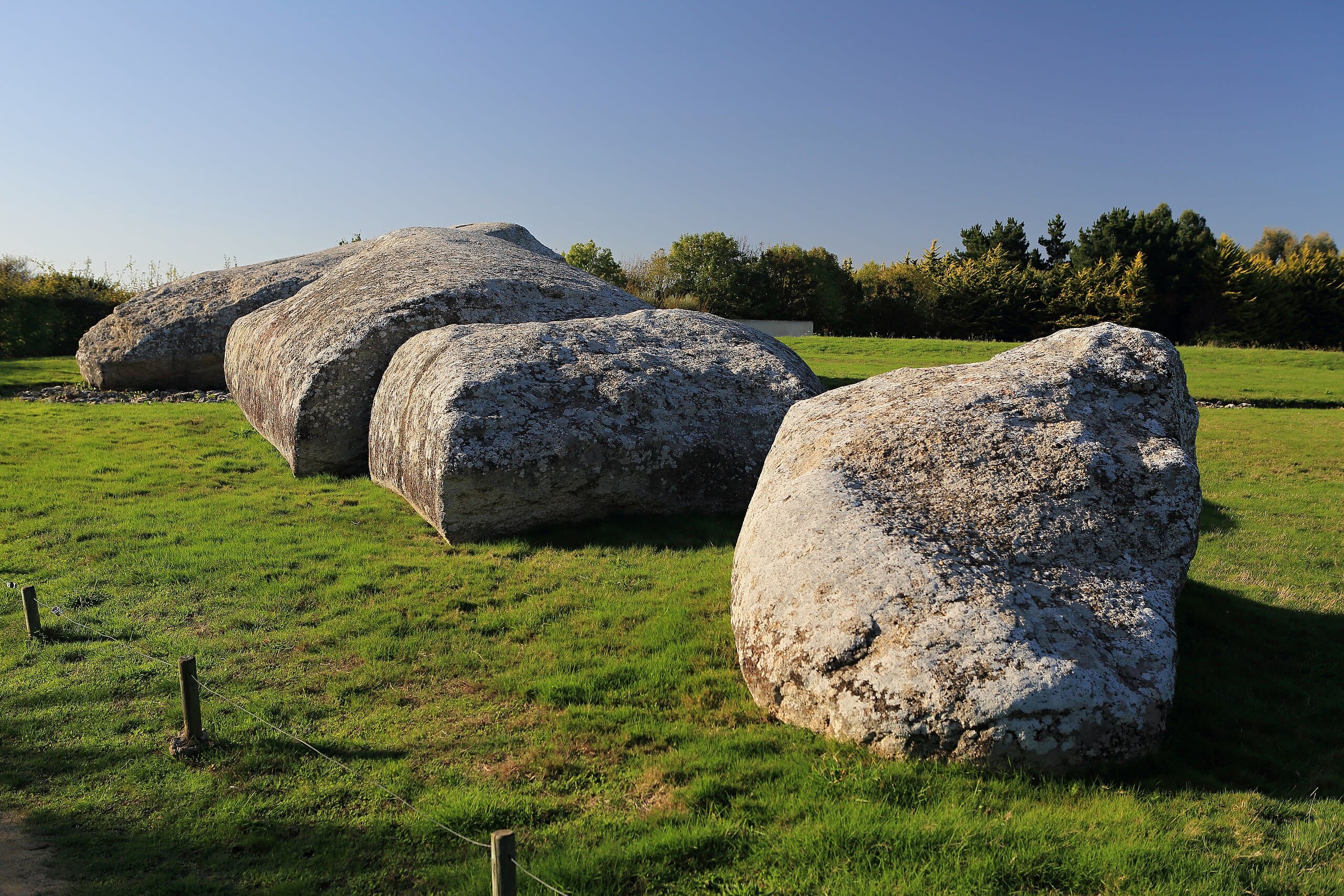
Grand Menhir Brisé d'Er Grah
The largest single stone ever moved by prehistoric hands, now lying broken where it fell
Locmariaquer, Bretagne, France
At A Glance
- Coordinates
- 47.5710, -2.9558
- Suggested Duration
- Thirty to forty-five minutes for the Grand Menhir alone. One to two hours for the full site, including La Table des Marchands and the Er-Grah tumulus. The relationship between the monuments becomes clearer when all are visited together.
- Access
- Part of Site des Megalithes de Locmariaquer, Route de Kerlogonan, 56740 Locmariaquer, France. Admission approximately 7 euros for adults, free for visitors under 26 (EU). Train stations at Auray (17 km) and Vannes (30 km); no public transport directly to site. Parking provided. The outdoor site is accessible for visitors with mobility limitations.
Pilgrim Tips
- Part of Site des Megalithes de Locmariaquer, Route de Kerlogonan, 56740 Locmariaquer, France. Admission approximately 7 euros for adults, free for visitors under 26 (EU). Train stations at Auray (17 km) and Vannes (30 km); no public transport directly to site. Parking provided. The outdoor site is accessible for visitors with mobility limitations.
- Comfortable walking shoes suitable for outdoor archaeological sites. No special dress code, but practical clothing is appropriate.
- Permitted throughout the site for personal use. Professional equipment requires advance permits. Be conscious of other visitors when composing photographs.
- This is a protected archaeological site. Do not touch, climb on, or disturb the fragments. The preservation of this monument for future generations depends on visitor restraint. The experience the site offers is contemplative, not participatory in the physical sense.
Overview
Before the pyramids rose in Egypt, Neolithic peoples on the coast of Brittany erected a standing stone over twenty meters tall, weighing more than three hundred tonnes. The Grand Menhir Brise stood for perhaps a century before falling and breaking into four pieces. Its fragments still lie where they landed, testimony to the greatest stone-moving achievement in human prehistory and the mysteries that remain about why it fell.
They moved a three-hundred-tonne stone several kilometers without wheels, without metal, without writing. They erected it as the terminus of an alignment of nineteen giant menhirs. It stood taller than any single stone ever raised by human hands before or since. Then, for reasons we do not know, it fell.
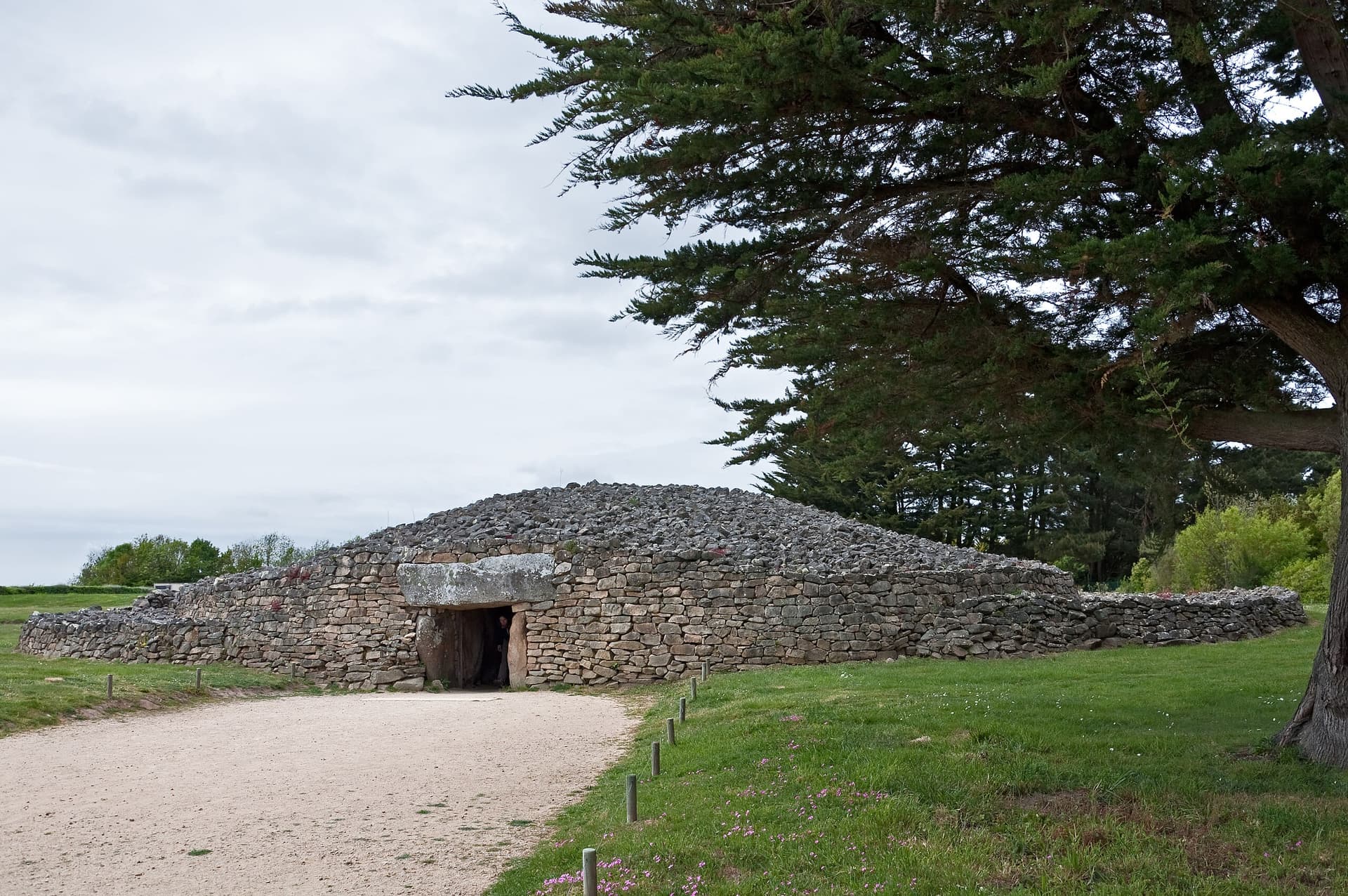
The Grand Menhir Brise lies now in four pieces on the Locmariaquer coast, part of a managed archaeological site that includes the passage grave of La Table des Marchands and the tumulus of Er Grah. The fragments are enormous, their size difficult to absorb even at ground level. The largest piece alone weighs over one hundred tonnes. Together, they testify to an ambition that challenges every assumption about what prehistoric peoples could achieve.
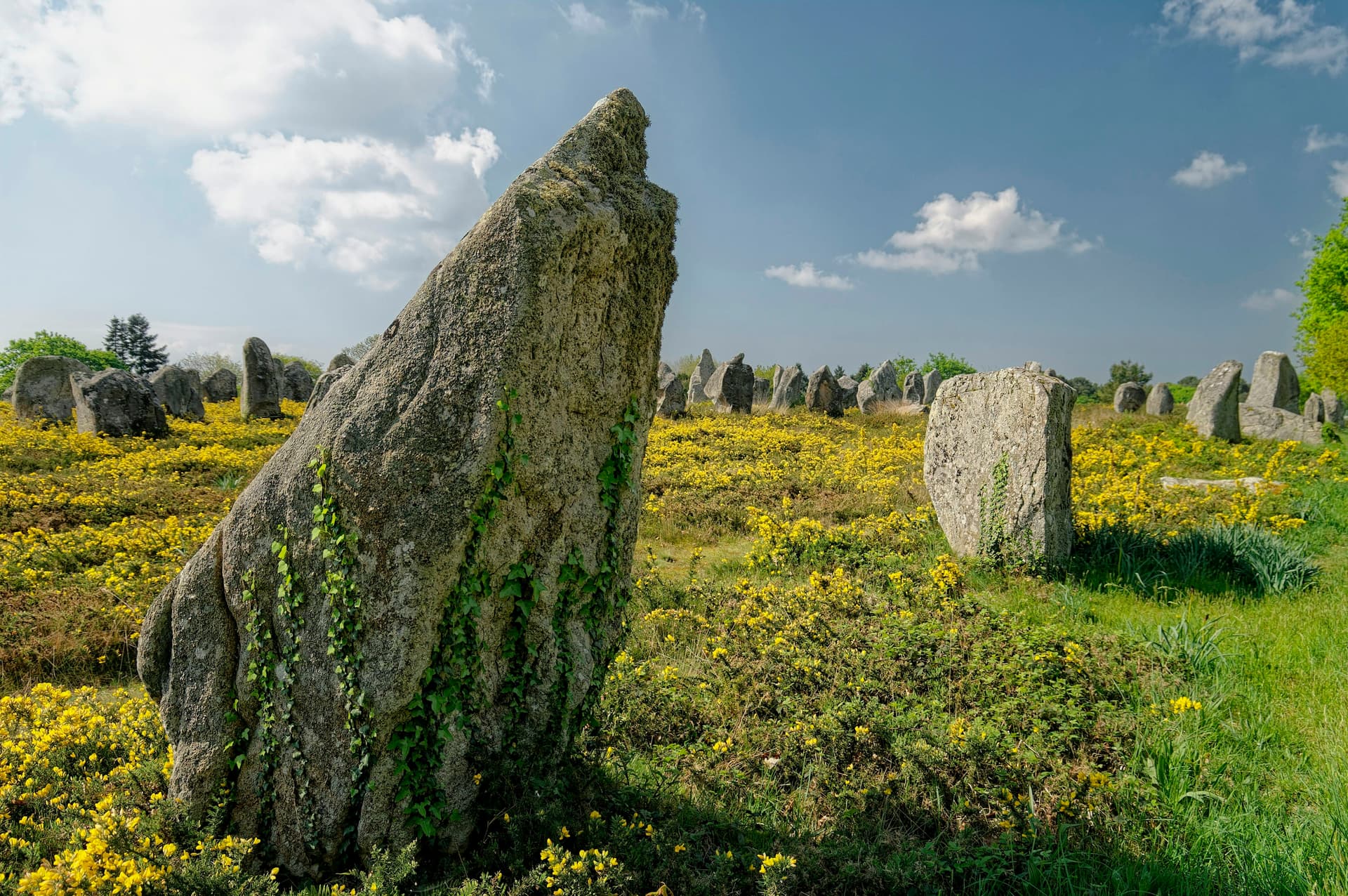
The menhir was not simply large. It was part of a complex: nineteen socket holes reveal where the alignment once stood, a procession of giants marching across the landscape. The Grand Menhir marked its end, the culminating statement of whatever purpose the alignment served. Whether astronomical observatory, ceremonial avenue, or something we cannot imagine, the scale demanded community effort on a level we rarely attribute to the Neolithic period.
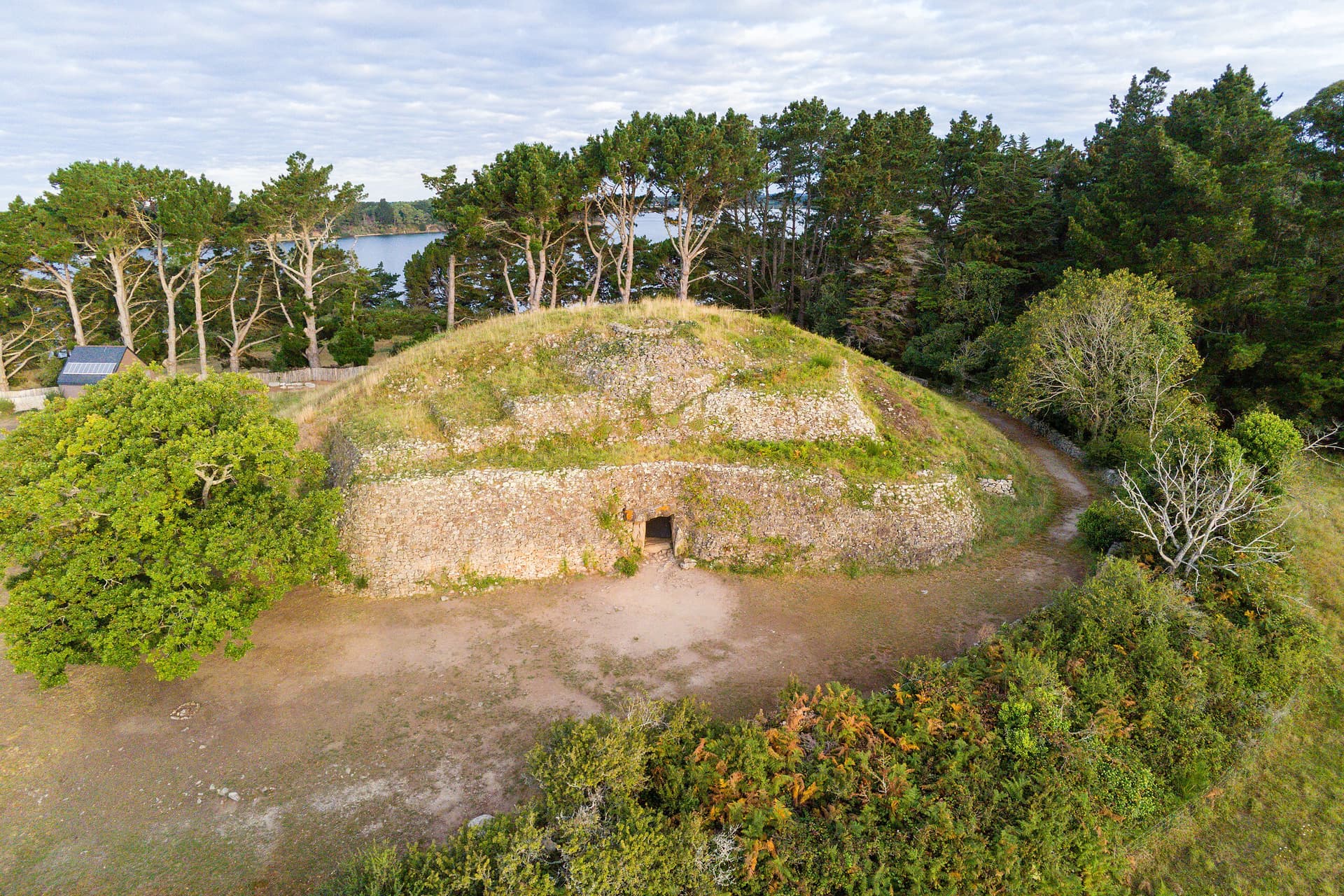
When the menhir fell, around 4000 BCE, the fragments were not abandoned but repurposed. One piece became the capstone of La Table des Marchands. Another crossed the water to the Cairn de Gavrinis. The carved decorations continue across the break lines. The sacred power of the standing stone was not destroyed by its breaking but redistributed, extended into new monuments that kept its significance alive.
The fragments remain where they landed. Unlike most megalithic sites, where stones have been moved, restored, or reconstructed, the Grand Menhir lies as it fell. This is not archaeological neglect but deliberate preservation of the moment when the greatest stone ever raised by prehistoric hands returned to earth.
Context And Lineage
The Grand Menhir Brise was erected around 4700 BCE as part of an alignment of nineteen menhirs on the Morbihan coast. At over twenty meters tall and weighing more than three hundred tonnes, it represents the largest single stone ever transported and erected by Neolithic peoples. The menhir fell and broke around 4000 BCE, and fragments were incorporated into other monuments.
The stone was quarried from a site several kilometers away, its transport requiring hundreds of workers over extended periods. Scholars estimate the effort in the thousands of worker-days. The menhir was then erected as the terminus of an alignment that included eighteen other standing stones, all of significant size though none approaching the Grand Menhir's scale.
The alignment stood for perhaps a century. Then, for reasons that remain unknown, all nineteen stones were toppled and broken. Whether a single catastrophic event brought them down or a deliberate campaign of destruction unfolded over time cannot be determined. What is clear is that the aftermath was not abandonment. The fragments were redistributed to other sacred sites, their carved surfaces incorporated into new monuments. The breaking was not an end but a transformation.
After the breaking, fragments of the Grand Menhir were transported to at least two other sites. The capstone of La Table des Marchands and a stone at the Cairn de Gavrinis both came from the fallen menhir, their carved decorations continuing across break lines that match precisely. This redistribution suggests deliberate ritual purpose: the power of the standing stone was not lost when it fell but extended through its material into new monuments.
The site was classified as a historic monument in 1889. Archaeological excavation in the 1980s and 1990s revealed the socket holes of the original nineteen-menhir alignment. The Grand Menhir is now managed as part of the Site des Megalithes de Locmariaquer, accessible to visitors year-round.
The Builders
historical
The communities of the Morbihan region who quarried, transported, and erected the Grand Menhir around 4700 BCE. Their engineering achievement surpasses anything else attempted by prehistoric peoples and suggests organizational capabilities we rarely attribute to the Neolithic period.
Men ar Hroec'h
legendary
The Stone of the Fairy or Stone of the Old Woman, the local Breton name for the fragments before archaeologists named it Grand Menhir Brise. The name suggests folk associations with supernatural beings that may preserve fragments of earlier veneration.
Why This Place Is Sacred
The Grand Menhir Brise represents the furthest reach of Neolithic ambition and the mystery of its collapse. Standing before the fragments, visitors encounter both the height of human achievement in moving stone and the humbling reality of impermanence. The site's thinness lies not in ongoing practice but in the profound questions it poses about capability, purpose, and what endures.
Sacred significance does not require temple walls or ritual practice. The Grand Menhir achieves its power through scale, mystery, and the questions it refuses to answer.
The scale is impossible to exaggerate. At over twenty meters, the menhir was taller than most buildings its builders would ever have seen. The weight, variously estimated between 280 and 330 tonnes, exceeds anything else moved by prehistoric peoples anywhere in the world. The quarry site lay several kilometers away. Every meter of transport, every degree of angle as the stone rose to vertical, required effort we can barely calculate. Hundreds of people worked together over extended periods, motivated by beliefs strong enough to demand such sacrifice.
The mystery is equally profound. Why did the alignment of nineteen menhirs exist? Why was this stone, the largest of all, placed at its terminus? Why did it fall, and was the falling deliberate or accidental? The archaeological record is silent on all these questions. We know what they built. We do not know why.
The transformation after breaking suggests that the falling was incorporated into ongoing sacred practice. The fragments were not mourned as loss but repurposed as foundation for new monuments. The carved decorations on the menhir, made when it stood upright, now look down from the capstones of passage graves. Whatever the menhir meant while standing, its meaning continued after falling.
The site's thinness is temporal as much as spatial. Standing before the fragments, you stand at the limit of what Neolithic humanity achieved and at the edge of what we can know about why. The questions the Grand Menhir poses are not answerable. They remain open, inviting contemplation rather than conclusion.
The Grand Menhir was erected around 4700 BCE as the terminal stone in an alignment of nineteen menhirs. Archaeological excavation has revealed the socket holes where the other stones once stood. The purpose of the alignment remains debated. Astronomical observation is one possibility: the stones may have served as sighting markers for lunar or solar events. Ceremonial procession is another: the avenue of giants may have framed sacred movement through the landscape. The menhir itself may have marked a culminating point, the destination of whatever journeys the alignment enabled.
The menhir stood for perhaps 100 to 200 years before all nineteen stones in the alignment were toppled and broken. Whether earthquake, lightning, deliberate ritual destruction, or structural failure caused the breaking is unknown. What is clear is that the aftermath was not abandonment but transformation. Fragments were transported to multiple sites, their carved surfaces now forming parts of other monuments. The Grand Menhir's significance evolved from standing stone to distributed presence, its material spread across the sacred landscape.
Local Breton tradition remembered the fragments as Men ar Hroec'h, the Stone of the Fairy or Stone of the Old Woman, suggesting persistent associations with supernatural beings. Archaeologists gave it its current name in the nineteenth century: the Grand Menhir Brise, the Great Broken Menhir.
Traditions And Practice
No formal ceremonies take place at the Grand Menhir Brise today. The site is managed as archaeological heritage with educational interpretation. However, the fragments invite contemplation of human ambition, impermanence, and what connects us to the prehistoric past.
The purpose of the nineteen-menhir alignment remains debated. Astronomical observation is one possibility: the alignment may have served as a lunar or solar observatory, the Grand Menhir marking significant celestial events. Ceremonial procession is another: the avenue of standing stones may have framed ritual movement through the landscape, with the largest stone as destination or threshold.
After the breaking, the deliberate redistribution of fragments to other monuments suggests ritual understanding of the event. The menhir's material was not waste but sacred substance, capable of conferring significance on the structures that incorporated it. Whatever ceremonies accompanied this redistribution are not documented but were clearly meaningful given the effort involved.
Visitors tour the site with interpretation materials provided by the Centre des Monuments Nationaux. The fragments can be approached and viewed from multiple angles, though touching is not permitted. Educational programs explain the archaeological context, the engineering achievement, and the mysteries that remain.
No formal spiritual practices are scheduled or encouraged. However, the nature of the site invites contemplation. Many visitors sit beside the fragments in silence, allowing the questions the Grand Menhir poses to become present.
Begin by simply being present with the fragments. Let their scale become real before seeking explanations. The intellectual understanding can come later. First, let the physical reality of what Neolithic peoples achieved impress itself on your perception.
Consider what it took to raise this stone. Hundreds of workers, months or years of effort, beliefs strong enough to motivate such sacrifice. Whatever they intended, they succeeded. The stone stood. Then it fell.
Before leaving, sit with impermanence. This was the greatest standing stone ever erected. It is now the greatest fallen stone. What of our own constructions will remain? What purposes will they serve when we are gone? The Grand Menhir does not answer these questions but makes them real.
Neolithic Monumental Tradition
HistoricalThe Grand Menhir Brise represents the apogee of Neolithic stone-moving achievement. At over twenty meters tall and weighing more than three hundred tonnes, it is the largest single stone known to have been transported and erected by prehistoric peoples anywhere in the world. Its erection around 4700 BCE predates the Egyptian pyramids by two millennia. The menhir was part of an alignment of nineteen giant stones, suggesting ceremonial or astronomical function.
Massive communal labor for quarrying, transporting, and erecting the stone. Possible astronomical sighting function as part of the nineteen-stone alignment. The specific ceremonies associated with the menhir are not documented but were clearly significant given the scale of effort involved.
Breton Folk Tradition
HistoricalBefore archaeologists named it Grand Menhir Brise in the nineteenth century, local Bretons called the fragments Men ar Hroec'h, the Stone of the Fairy or Stone of the Old Woman. This name suggests folk beliefs associating the fragments with supernatural beings, potentially preserving traces of earlier veneration.
Local legendary traditions whose details are not well documented. The association with fairies and old women is common throughout Breton megalithic folklore, often indicating stones understood as dwelling places or markers for otherworldly presence.
Experience And Perspectives
Visitors to the Grand Menhir Brise consistently report awe at the sheer scale of the fallen fragments, wonder at how Neolithic people achieved such transport and erection, and contemplation of impermanence. The site challenges assumptions about prehistoric capability and invites reflection on what of our own monuments will remain.
The first response is usually silence. The fragments are larger than visitors expect, even those who have read the measurements. The largest piece stretches along the ground, its surface weathered by exposure but its mass undeniable. This was once vertical. This once stood.
The engineering question follows quickly. How did they do it? Without metal tools to quarry, without wheels to transport, without cranes to erect, without written calculations to plan, people moved this stone from a quarry kilometers away and stood it upright. The knowledge that this was accomplished, that it is not speculation but archaeological fact, reframes everything visitors thought they knew about what Neolithic peoples could achieve.
A humbling recognition often follows. They built this, and it fell. Whatever they intended, whatever ceremonies they performed, whatever beliefs motivated their enormous effort, the stone now lies broken on the ground. Impermanence is not a lesson we usually associate with megaliths. The Grand Menhir teaches it directly.
Some visitors report a quality of presence around the fragments that they struggle to articulate. The stone has absorbed something, they say, or holds something. Whether this reflects the accumulated weight of human intention that raised it, or merely the psychological impact of standing before such scale, or something else entirely, the reports are consistent enough to note. The site is not merely impressive. It affects people.
The relationship to the nearby Table des Marchands becomes concrete when you understand that part of what you see here now forms the ceiling of that passage grave. The breaking did not end the stone's story. Its fragments became part of other sacred architecture, extending its significance across time and space.
Begin at the fragments. Stand beside the largest piece and let its scale become real. This was once vertical. People without our technology raised it. People without our knowledge made it fall or watched it fall.
After absorbing the fragments, consider the socket holes that mark where the nineteen-menhir alignment once stood. This was not a single achievement but a complex, a procession of giants with this stone as their culmination. Whatever purpose they served, it required not one but nineteen.
Visit La Table des Marchands afterward. Enter the passage grave and look up at the capstone. Part of the Grand Menhir now shelters the dead. The connection between standing stone and burial chamber becomes tangible. What was vertical became horizontal. What was monument became tomb. Transformation was not loss but continuation.
The Grand Menhir Brise invites interpretation from multiple angles: archaeological science, engineering analysis, and contemplative response. These perspectives do not compete but complement each other. The mystery of the site is large enough to hold them all.
Archaeological consensus confirms the Grand Menhir as the largest known single stone transported and erected by Neolithic peoples, dating to around 4700 BCE. Excavations in the 1980s and 1990s revealed socket holes for a nineteen-menhir alignment, with the Grand Menhir as terminus. The cause of breaking remains debated: earthquake, lightning, deliberate toppling (whether Neolithic or Roman period), or structural failure have all been proposed. Analysis of break patterns and carved decorations confirms that fragments were intentionally reused at La Table des Marchands and the Cairn de Gavrinis.
The engineering achievement is well documented. Modern calculations estimate the labor required in thousands of worker-days. The transport and erection methods, without metal or wheel, indicate organizational and engineering capabilities rarely attributed to the Neolithic period.
Local Breton tradition named the fragments Men ar Hroec'h, the Stone of the Fairy or Stone of the Old Woman, suggesting folk associations with supernatural beings. These names predate the archaeological designation and may preserve fragments of earlier veneration. The association with fairies and old women is common in Breton megalithic folk tradition, often indicating stones understood as dwelling places or markers for otherworldly beings.
Some theorists propose the menhir was deliberately killed in ritual, its spirit or energy redistributed through the fragments to other monuments. The nineteen-menhir alignment is sometimes interpreted as having astronomical or geodetic significance beyond current scholarly consensus. Earth-energy practitioners identify the site as a major power point. These interpretations lack archaeological support but emerge from genuine responses to the site's numinous quality.
The exact method of transport and erection is not definitively known, though plausible reconstructions exist. The purpose of the nineteen-menhir alignment is debated. Why the alignment was toppled and whether this was deliberate or accidental remains unknown. If deliberate, whether the breaking was Neolithic ritual or later destruction (Roman or Christian period) is uncertain. Much about the builders' worldview must remain inference rather than knowledge.
Visit Planning
The Grand Menhir Brise is part of the Site des Megalithes de Locmariaquer, along with La Table des Marchands and the Er-Grah tumulus. The site is managed by the Centre des Monuments Nationaux with admission fee and seasonal hours. Allow one to two hours for the full complex. The Morbihan coast offers extensive megalithic sites within easy reach.
Part of Site des Megalithes de Locmariaquer, Route de Kerlogonan, 56740 Locmariaquer, France. Admission approximately 7 euros for adults, free for visitors under 26 (EU). Train stations at Auray (17 km) and Vannes (30 km); no public transport directly to site. Parking provided. The outdoor site is accessible for visitors with mobility limitations.
Hotels and guesthouses in Locmariaquer village and throughout the Morbihan coast. The Gulf of Morbihan is a scenic tourist destination with options at all price points.
The Grand Menhir Brise is a protected archaeological site requiring respectful behavior. Do not climb on or touch the fragments. Stay on designated paths. Photography is permitted for personal use. The site's preservation depends on visitors treating it with the reverence its significance deserves.
The fragments have survived more than six thousand years since falling. What threatens them now is careless human contact: hands removing surface material, feet disturbing ground that archaeologists may yet study, objects left behind. The ethics of archaeological sites require prioritizing preservation over immediate experience.
Approach the fragments with awareness of what they represent. This is not merely an interesting geological formation but the furthest reach of Neolithic ambition, now lying broken. Whatever you believe about the people who raised it, their achievement deserves respect.
Other visitors are seeking their own encounters. Move through the site at a pace that allows others access to the most significant viewpoints. Avoid monopolizing the space closest to the fragments.
Comfortable walking shoes suitable for outdoor archaeological sites. No special dress code, but practical clothing is appropriate.
Permitted throughout the site for personal use. Professional equipment requires advance permits. Be conscious of other visitors when composing photographs.
Not appropriate at this site. Do not leave objects of any kind. The monument is protected archaeological heritage.
Do not touch or climb on the fragments. Stay on designated paths. No pets except service animals. Admission fees and hours apply; check current schedules before visiting.
Sacred Cluster
Nearby sacred places create the location cluster described in the growth plan. This block is intentionally crawlable and links into the wider regional graph.