Ellora caves, Maharashtra
Where three religions carved their heavens into the same mountain
Khuldabad, Maharashtra, India
At A Glance
- Coordinates
- 20.0258, 75.1780
- Suggested Duration
- Minimum 3-4 hours for a meaningful visit covering the major caves (Kailasa Temple, key Buddhist caves, Indra Sabha). Full day recommended to explore all 34 caves without rushing. Consider separate visits for Buddhist, Hindu, and Jain sections to appreciate each tradition fully.
- Access
- Located 30 km from Aurangabad (Chhatrapati Sambhajinagar). Accessible by taxi (~₹800-1000 round trip with waiting), auto-rickshaw, or MSRTC buses. Nearest railway station: Aurangabad (32 km). Nearest airport: Aurangabad (Chhatrapati Sambhajinagar) with connections to Mumbai, Pune, Delhi, and Hyderabad. The caves are spread over 2 km along a cliff face; comfortable walking shoes essential.
Pilgrim Tips
- Located 30 km from Aurangabad (Chhatrapati Sambhajinagar). Accessible by taxi (~₹800-1000 round trip with waiting), auto-rickshaw, or MSRTC buses. Nearest railway station: Aurangabad (32 km). Nearest airport: Aurangabad (Chhatrapati Sambhajinagar) with connections to Mumbai, Pune, Delhi, and Hyderabad. The caves are spread over 2 km along a cliff face; comfortable walking shoes essential.
- Modest clothing covering shoulders and knees. Remove shoes before entering active worship spaces. Comfortable walking shoes essential for the 2 km site. Sun protection recommended—much of the walk between caves is in open sun.
- Photography permitted without flash or tripods. Be discreet or refrain during active worship. The dim cave interiors benefit from a small flashlight rather than flash photography. Drone photography is prohibited.
- Respect the active worship occurring at the Kailasa Temple. Do not photograph during pujas without permission. At Ghrushneshwar Temple, non-Hindus may have restricted access to the inner sanctum—follow local guidance. The caves are also an archaeological site; do not touch sculptures, paintings, or rock surfaces. Flash photography damages ancient surfaces.
Overview
Over four centuries, Buddhist monks, Hindu devotees, and Jain ascetics carved 34 temples and monasteries into a basalt cliff in western India—side by side, in the same stone. The Kailasa Temple, carved top-down as a single monolith representing Shiva's celestial abode, remains the largest rock-cut structure in the world. Ellora is not a museum of dead religions but a landscape where three living traditions created sacred space together.
In the Charanandri hills of Maharashtra, a two-kilometer cliff face holds one of humanity's most remarkable expressions of religious devotion—and tolerance. Between roughly 600 and 1000 CE, followers of Buddhism, Hinduism, and Jainism excavated 34 cave temples into the volcanic basalt, sometimes working simultaneously, creating sanctuaries for their different paths within the same stone.
The Buddhist monks came first, carving monasteries with meditation cells, kitchens, and water cisterns—entire communities designed for the contemplative life. Hindu devotees followed, creating temples to Shiva, Vishnu, and the great narratives of the Ramayana and Mahabharata. Jain ascetics carved sanctuaries to the Tirthankaras, those who crossed the river of rebirth and pointed the way for others.
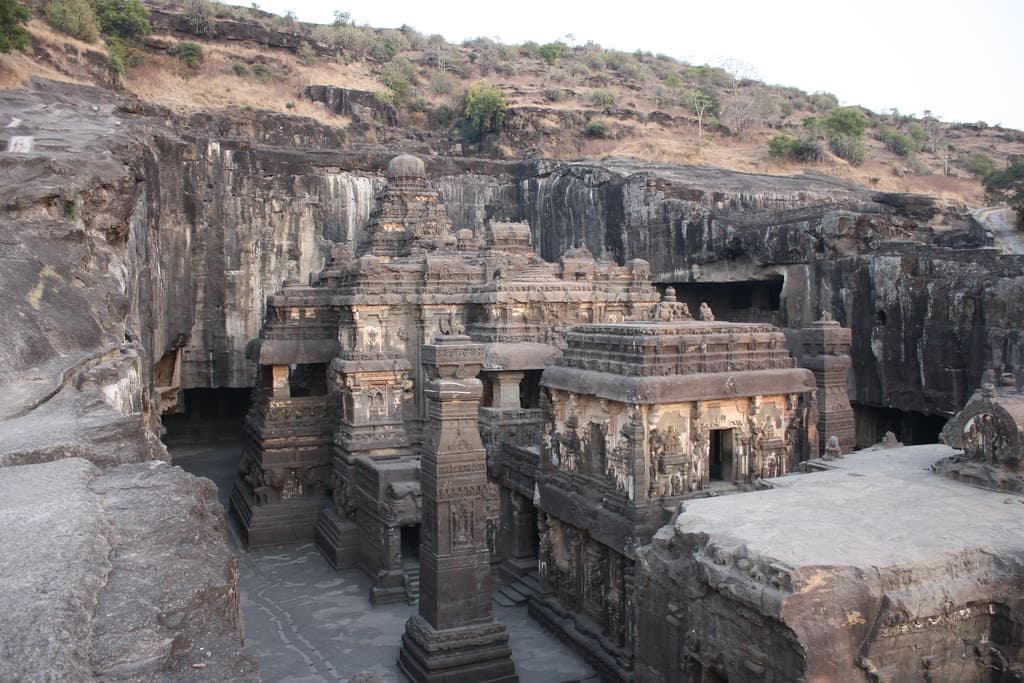
At the center of it all stands the Kailasa Temple, Cave 16, representing Mount Kailash—the celestial abode of Lord Shiva. Unlike any other structure of its scale, it was carved from the top down, the craftsmen removing an estimated 200,000 tonnes of rock to reveal a free-standing temple within the cliff. There is no foundation, no scaffolding, no additional material—just precise carving in volcanic stone over generations. The result is one of the boldest architectural achievements in human history.
Ellora demonstrates that in certain times and places, religious difference was honored rather than destroyed. The caves have never been lost to memory—pilgrims and travelers have visited continuously since their creation. Today, the Kailasa Temple remains an active place of worship, with Maha Shivaratri drawing devotees for all-night vigils. The nearby Ghrushneshwar Temple houses one of the twelve Jyotirlingas, making this region doubly sacred for Shaivites. Three traditions carved their heavens here, and the faithful still come.
Context And Lineage
Between 600 and 1000 CE, followers of Buddhism, Hinduism, and Jainism excavated 34 cave temples into a basalt cliff in Maharashtra under the patronage of the Rashtrakuta and Yadava dynasties. The site's location on an ancient trade route made it both a pilgrimage destination and a commercial center.
The Kailasa Temple represents Mount Kailash, the celestial abode of Lord Shiva where he dwells with his consort Parvati. The temple was primarily constructed during the reign of Rashtrakuta king Krishna I (c. 756-773 CE), though work continued through successive generations. Rather than building upward, the craftsmen carved downward—removing an estimated 200,000 tonnes of rock to reveal a free-standing temple within the cliff. The sculptural program depicts scenes from the great Hindu epics, with the famous panel of Ravana attempting to lift Mount Kailash representing the triumph of divine order over demonic arrogance. When Ravana tried to uproot the mountain, Shiva simply pressed down with his toe, trapping the demon king for a thousand years.
The caves represent the continuity and coexistence of three Indian religious traditions. Buddhist monasticism at Ellora connects to the broader Mahayana tradition that flourished in India before its decline from the 8th century onward. Hindu patronage under the Rashtrakutas represents the Shaivite tradition's dominance in medieval Deccan. Jain excavation under later Yadava patronage reflects the Digambara sect's presence in western India. The site's continuous visitation from the 8th century to the present—documented by travelers from Al-Mas'udi in the 10th century to modern pilgrims—demonstrates that Ellora has never been a lost or abandoned site but a living sacred landscape.
Krishna I
Rashtrakuta king and primary patron
Dantidurga
Early Rashtrakuta king
Why This Place Is Sacred
Ellora inverts the normal logic of sacred construction. Rather than building upward toward heaven, the craftsmen carved downward—removing what concealed the sacred form already present within the mountain. For seekers, this becomes a powerful metaphor: the divine was always there, waiting to be revealed.
Most sacred architecture builds upward. Stone is quarried, transported, lifted, assembled—human effort constructing a bridge toward the divine. Ellora reverses this logic entirely. The sacred form was already present within the mountain; the task was to remove what concealed it.
This is most dramatic at the Kailasa Temple, where craftsmen began at the top of the cliff and carved downward, removing 200,000 tonnes of rock over generations to reveal a free-standing temple. There was no margin for error—a miscalculation would not add material that needed replacing but remove stone that could never be restored. The precision required was not merely technical but devotional. Each stroke of the chisel was an act of uncovering.
The metaphor extends beyond the physical. In the traditions represented at Ellora, spiritual practice often follows a similar logic. The Buddha nature is already present; practice removes the obscurations that conceal it. Shiva already dwells within; worship reveals his presence. The soul is already liberated; ignorance is what must be removed. The caves make this philosophy tangible.
Then there is the matter of coexistence. For roughly four centuries, followers of three different religions carved sanctuaries into the same cliff face, sometimes working simultaneously. The Buddhist monasteries are at one end, the Jain caves at the other, with the Hindu temples—including the massive Kailasa—in between. They did not merely tolerate each other; they created sacred space together, in the same stone, sharing the same mountain.
What permitted this? Scholarship points to royal patronage, trade routes, and the intellectual culture of medieval India. But something else is at work here—a recognition that the mountain was sacred before any particular tradition claimed it, and that multiple paths could honor that sacredness without mutual destruction. The Arab geographer Al-Mas'udi visited in the 10th century and found the caves already ancient, already pilgrimage sites for multiple faiths.
For contemporary seekers, Ellora offers something rare: evidence that religious pluralism is not a modern invention but an ancient possibility. The caves do not argue that all religions are the same—the Buddhist meditation halls are distinct from the Shaivite temples, which are distinct from the Jain sanctuaries. But they demonstrate that difference need not mean conflict, that three paths can carve their heavens into the same mountain.
The Buddhist caves (1-12) were monasteries (viharas) and prayer halls (chaityas) for Mahayana monks, serving as centers of education, meditation, and communal living. The Hindu caves (13-29) were temples for worship, with Cave 16 (Kailasa Temple) representing Mount Kailash, the abode of Lord Shiva. The Jain caves (30-34) were sanctuaries for Digambara ascetics, featuring images of Tirthankaras arranged in the Sarvatobhadra pattern. All caves served simultaneously as artistic expressions, sites of worship, and demonstrations of royal and mercantile patronage. The site's location on an ancient trade route made it commercially significant as well as spiritually important.
The caves were excavated in overlapping phases from approximately 600 to 1000 CE. Buddhist construction began earliest (c. 550-730 CE), then Hindu and Jain work continued through the 10th century and beyond. Unlike nearby Ajanta, Ellora was never 'lost'—continuous pilgrimage and visitation is documented from the 10th century onward. The Buddhist monasteries ceased active use as Buddhism declined in India, but the Hindu and Jain caves maintained living traditions. The Kailasa Temple remains an active worship site, particularly during Maha Shivaratri. In 1983, UNESCO inscribed Ellora as a World Heritage Site, recognizing both its artistic achievement and its demonstration of religious tolerance. Today, the Archaeological Survey of India manages the site while accommodating ongoing Hindu worship.
Traditions And Practice
The Kailasa Temple remains an active Hindu worship site, with Maha Shivaratri drawing devotees for all-night vigils. The nearby Ghrushneshwar Temple (one of the twelve Jyotirlingas) has daily worship. Jain pilgrimage to the caves continues, though Buddhist practice at the site has ceased.
Hindu worship at the Kailasa Temple follows Shaivite tradition. The central Shivalinga in the sanctum receives daily offerings. Devotees perform pradakshina (circumambulation) of the temple, offer flowers, water, and bilva leaves to the lingam, and receive prasad (blessed food). Abhishekam (ritual bathing) of the lingam occurs on auspicious occasions. The nearby Ghrushneshwar Temple, housing one of the twelve Jyotirlingas, maintains elaborate daily pujas with particular significance during Shravan month. Historically, Buddhist monks at Ellora practiced meditation, scriptural study, and communal rituals in the monastery caves. Jain practice focused on darshan (viewing) of Tirthankara images and contemplation of liberation.
Maha Shivaratri (February/March) is the primary festival at the Kailasa Temple. Devotees gather for all-night vigils, continuous chanting of 'Om Namah Shivaya,' abhishekam, and special pujas. The temple compound fills with the sound of devotion and the light of oil lamps through the night. The Ellora-Ajanta Festival (December) brings classical music and dance performances to the cave complex—artists performing before ancient stone audiences. Hindu devotees offer prayers at the Kailasa Temple throughout the year. Jain communities continue to visit the Jain caves for darshan, particularly Indra Sabha and Jagannath Sabha.
Visitors are welcome to observe worship at the Kailasa Temple. Attending Maha Shivaratri transforms the site from heritage monument to living sacred space. The Ghrushneshwar Temple (1 km away) welcomes visitors for darshan following standard Hindu temple protocols. The December Ellora-Ajanta Festival offers classical performances in an extraordinary setting. Even without participating in formal worship, walking the caves with awareness—pausing in the Buddhist meditation cells, standing before the Shivalinga, contemplating the Jain Tirthankaras—becomes a form of practice.
Hinduism (Shaivism)
ActiveThe Hindu caves (13-29) represent the dominant tradition at Ellora, with the Kailasa Temple (Cave 16) as the masterwork. This largest monolithic structure in the world represents Mount Kailash, Shiva's celestial abode. The temple contains a Shivalinga in the sanctum and sculptural programs depicting the great Hindu epics. The nearby Ghrushneshwar Temple houses one of the twelve Jyotirlingas, making this region doubly sacred for Shaivites.
The Kailasa Temple remains an active worship site. Daily offerings are made to the Shivalinga. Maha Shivaratri is celebrated with all-night vigils, continuous chanting, abhishekam, and special pujas. Devotees perform pradakshina, offer flowers and bilva leaves, and receive prasad. The Ghrushneshwar Temple maintains daily worship with particular devotion during Shravan month.
Mahayana Buddhism
HistoricalThe Buddhist caves (1-12) are the earliest at Ellora, excavated between the 5th and 8th centuries CE. They include monasteries (viharas) with living quarters, kitchens, and water cisterns, as well as Cave 10 (Vishwakarma), the only chaitya (prayer hall) at the site. The caves reflect Mahayana philosophy and served as centers of monastic education. Cave 12's mandala reliefs demonstrate sophisticated tantric Buddhist practice.
No active Buddhist worship occurs at Ellora today. Historically, monks lived in the monastery caves, practicing meditation, scriptural study, and communal rituals. Cave 10 continues to receive veneration from local woodworkers who identify Buddha with Vishwakarma, their patron deity—a unique syncretistic tradition that has persisted for centuries.
Jainism (Digambara)
ActiveThe Jain caves (30-34) belong to the Digambara sect and were excavated between the 9th and 12th centuries. Cave 32 (Indra Sabha) and Cave 33 (Jagannath Sabha) feature images of Tirthankaras arranged in the Sarvatobhadra pattern, representing the four cardinal directions. The caves contain some of the earliest Samavasarana images—the hall where Tirthankaras preach after attaining liberation. A 1235 CE inscription describes the site as a 'holy tirtha' for Jains.
Jain pilgrimage to Ellora continues. Visitors practice darshan (viewing) of the Tirthankara images, circumambulation of the sanctuaries, and contemplation of the figures who achieved liberation. The delicate sculptural detail of the Jain caves invites close attention and meditative observation.
Experience And Perspectives
Visitors consistently describe being overwhelmed by the Kailasa Temple's scale and the realization that it was carved top-down from a single piece of rock. Moving between Buddhist meditation halls, Hindu temples, and Jain sanctuaries creates a sense of walking through different worlds that somehow coexist in the same stone.
The approach to Ellora does not prepare you. The cliff face stretches for two kilometers, cave openings visible along its length, but the scale only registers when you stand before the Kailasa Temple. Looking down from the cliff top, you see what appears to be a free-standing temple in a courtyard—until you realize the courtyard is carved from the same rock, the walls are the cliff itself, and the entire structure was revealed by removing the mountain that surrounded it.
The temple complex includes a gateway, a shrine for Shiva's bull Nandi, the main temple with its shikhara (tower), and subsidiary shrines, all carved from a single piece of basalt. The sculptural program is overwhelming: Shiva and Parvati on Mount Kailash, Ravana shaking the mountain in his arrogance, scenes from the Ramayana and Mahabharata covering the walls. The famous panel of Ravana lifting Kailash shows the demon king straining beneath the mountain while Shiva, undisturbed, presses down with his toe.
The Buddhist caves offer a different quality of space. Cave 10, the Vishwakarma cave, is a chaitya hall with a ribbed ceiling that resembles wooden beams—though everything is stone. A Buddha sits before a stupa, the space designed for circumambulation and meditation. Local woodworkers still visit to venerate Buddha as Vishwakarma, their patron deity—a syncretism that has persisted for centuries. Caves 11 and 12 (Do Thal and Teen Tal) are multi-story monasteries with cells, kitchens, and cisterns, communicating how monks actually lived.
The Jain caves at the northern end have a different character entirely—more intimate, with exquisitely delicate carvings. Indra Sabha (Cave 32) features images of Tirthankaras arranged in the Sarvatobhadra pattern, representing the four cardinal directions and the cosmic order. The figures are serene, their bodies marked by the long ears and renunciate stillness of those who have crossed beyond attachment.
Walking the entire complex takes hours. The experience is not one of viewing art but of moving through a landscape shaped by devotion over centuries. The Buddhist meditation halls give way to Hindu temples where worshippers still offer flowers; the exuberance of Shaivite sculpture contrasts with the austere calm of Jain ascetics. Three religions, three aesthetics, three paths—all carved into the same mountain, all present in the same afternoon.
The 34 caves are numbered sequentially along the cliff face, running roughly south to north. Buddhist caves (1-12) are at the southern end, Hindu caves (13-29) in the center including the Kailasa Temple (16), and Jain caves (30-34) at the northern end. Most visitors begin at the Kailasa Temple (Cave 16), which dominates the site. From there, explore south to the Buddhist caves or north to the Jain caves based on interest and time. The caves are spread over 2 km; comfortable walking shoes are essential. Start early (9:00 AM opening) for cooler temperatures and fewer crowds at the Kailasa Temple. Allow at least 3-4 hours; a full day permits unhurried exploration.
Ellora invites multiple readings: as artistic achievement, as religious tolerance embodied in stone, as evidence of medieval India's cosmopolitan culture, or as a living sacred landscape where worship continues today.
Art historians consider Ellora the climax of rock-cut architecture in India. The Kailasa Temple is recognized as the largest monolithic structure in the world—an achievement that no later Indian dynasty was able to match. UNESCO's inscription recognizes both the artistic merit and the site's demonstration of religious tolerance, noting that Ellora 'illustrates the spirit of tolerance that was characteristic of ancient India.'
Scholars emphasize that the caves were created by teams working simultaneously on Buddhist, Hindu, and Jain excavations. This was not tolerance as mere coexistence but active collaboration within a shared sacred landscape. The Rashtrakuta dynasty's patronage of multiple religions, combined with the site's location on major trade routes, created conditions for this pluralistic flowering.
Archaeological evidence shows continuous pilgrimage from at least the 8th century. Unlike Ajanta, which was 'lost' and rediscovered, Ellora has been visited continuously throughout its history. The 10th-century Arab geographer Al-Mas'udi described the caves, and successive travelers documented ongoing religious practice.
For Hindu devotees, the Kailasa Temple is not merely a representation of Mount Kailash but a manifestation of it—sacred geography made present through devotion. The Shivalinga in the sanctum connects to the network of sacred Shaivite sites across India, and the proximity of Ghrushneshwar (one of the twelve Jyotirlingas) makes this region doubly significant for Shiva worship.
For Jains, the caves at Ellora are a tirtha—a sacred crossing point. A 1235 CE inscription describes a donor 'converting Charanandri into a holy tirtha' for Jains. The Sarvatobhadra arrangement of Tirthankaras in Indra Sabha represents cosmic order, and the Samavasarana images depict the hall where liberated beings preach.
The Buddhist perspective, while historically documented through the caves themselves, is not maintained by a living community at Ellora today. The caves stand as testament to a tradition that once flourished here but has since moved elsewhere.
Some visitors experience the caves as repositories of accumulated spiritual energy from centuries of worship and meditation. The acoustic properties of certain caves, particularly the chaitya halls with their ribbed ceilings, have attracted attention from those interested in sacred sound. The persistent veneration of Buddha as Vishwakarma by local craftsmen represents a living syncretism outside formal religious categories.
The sheer scale of devotion expressed at Ellora—200,000 tonnes of rock removed by hand over generations—prompts reflection on what modern cultures might devote equivalent effort to, and whether anything we build will still inspire visitors a millennium from now.
Fundamental questions about Ellora remain. How was the precise planning for the Kailasa Temple coordinated? The top-down carving left no room for error, requiring visualization of the complete structure before the first stone was removed. No planning documents survive. What rituals were performed in the Buddhist meditation cells? The caves preserve the architecture of contemplative life but not its content. Why did Buddhist construction cease while Hindu and Jain work continued? The broader decline of Buddhism in India is documented, but the specific circumstances at Ellora are not fully understood.
Visit Planning
Located 30 km from Aurangabad. Entry: ₹40 (Indian) / ₹600 (foreign). Open 9:00 AM - 5:30 PM, closed Tuesdays. Best visited November-February. Allow 3-4 hours minimum.
Located 30 km from Aurangabad (Chhatrapati Sambhajinagar). Accessible by taxi (~₹800-1000 round trip with waiting), auto-rickshaw, or MSRTC buses. Nearest railway station: Aurangabad (32 km). Nearest airport: Aurangabad (Chhatrapati Sambhajinagar) with connections to Mumbai, Pune, Delhi, and Hyderabad. The caves are spread over 2 km along a cliff face; comfortable walking shoes essential.
Most visitors stay in Aurangabad (Chhatrapati Sambhajinagar), which offers a full range of accommodation from budget to luxury. Some visitors combine Ajanta and Ellora in a 2-3 day itinerary based in Aurangabad. Simple facilities are available near the Ellora site entrance.
Modest dress is expected at this active worship site. Remove shoes before entering shrines. Photography is permitted without flash. The site is closed Tuesdays.
Ellora is both a UNESCO World Heritage Site and an active place of worship, requiring attention to both heritage preservation and religious respect. The Archaeological Survey of India manages the site while accommodating ongoing Hindu worship at the Kailasa Temple.
Dress modestly, particularly when visiting the shrines. Shoulders and knees should be covered. At the Ghrushneshwar Temple (1 km away), more formal temple attire may be expected. Remove shoes before entering any active worship space—this is both religious respect and site preservation.
Photography is permitted throughout the caves without flash or tripods. Flash damages ancient paint and surfaces. During active worship, be discreet with cameras or refrain entirely. The caves' interiors can be dim; a small flashlight helps for seeing details without flash photography.
The site is closed on Tuesdays (while nearby Ajanta closes on Mondays—plan accordingly for combined visits). Arrive at 9:00 AM opening for cooler temperatures and fewer crowds. The caves stretch over 2 km; wear comfortable walking shoes.
Engaging a local guide enriches the experience considerably. The iconography, narratives, and religious significance of the sculptures are not immediately apparent; a knowledgeable guide reveals layers of meaning.
Modest clothing covering shoulders and knees. Remove shoes before entering active worship spaces. Comfortable walking shoes essential for the 2 km site. Sun protection recommended—much of the walk between caves is in open sun.
Photography permitted without flash or tripods. Be discreet or refrain during active worship. The dim cave interiors benefit from a small flashlight rather than flash photography. Drone photography is prohibited.
Hindu devotees may offer flowers, water, bilva leaves, and other traditional items at the Kailasa Temple and Ghrushneshwar Temple. Offerings are not expected from non-Hindu visitors. The most appropriate 'offering' is respectful attention and support for site preservation.
Closed on Tuesdays. Hours: 9:00 AM - 5:30 PM, last entry 5:00 PM. Do not touch sculptures, paintings, or rock surfaces. Stay on designated paths. Flash photography and tripods prohibited. Some areas may be closed for conservation. At Ghrushneshwar Temple, non-Hindus may have restricted access to the inner sanctum.
Sacred Cluster
Nearby sacred places create the location cluster described in the growth plan. This block is intentionally crawlable and links into the wider regional graph.
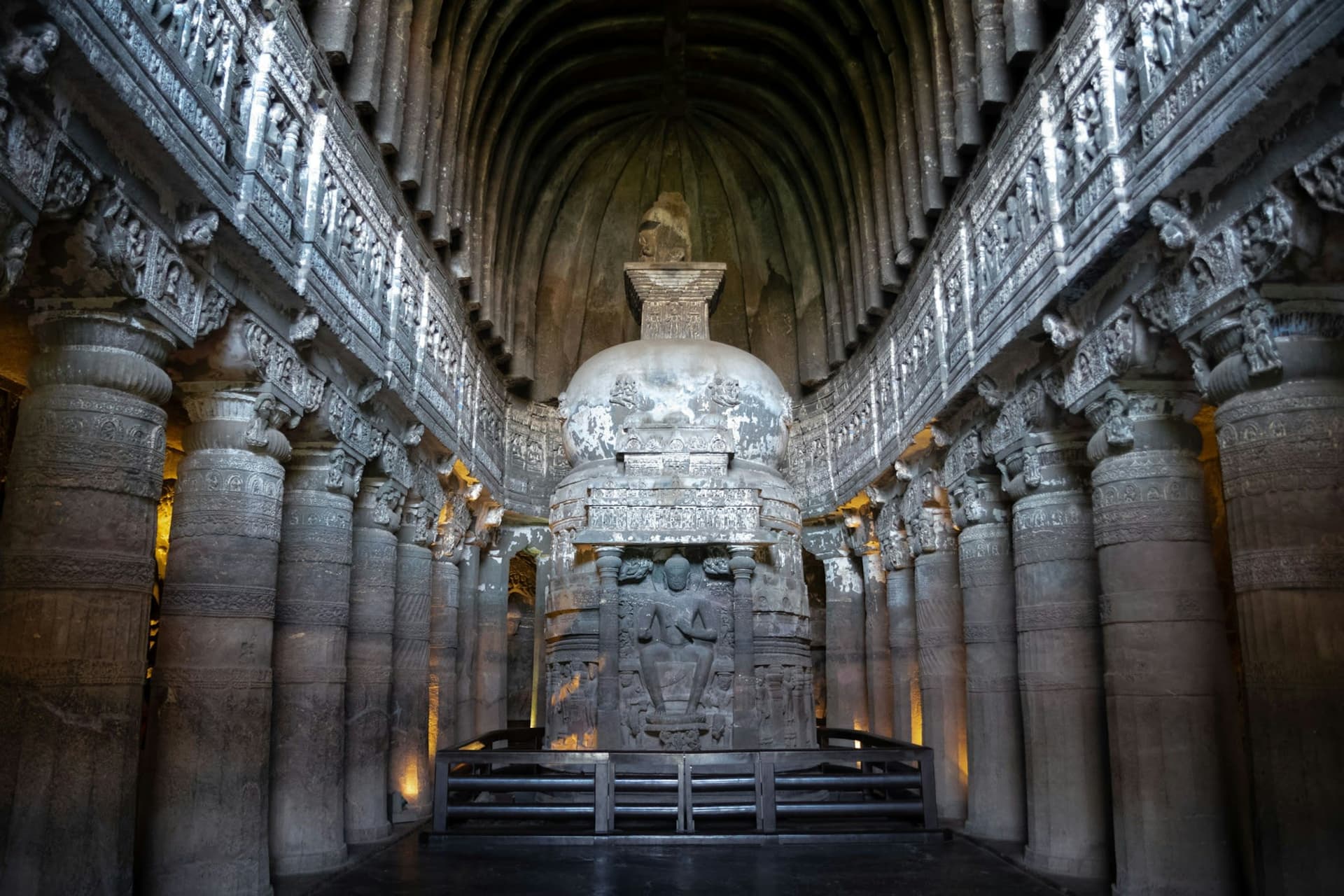
Ajanta caves, Maharashtra
Phardapur, Maharashtra, India
80.1 km away
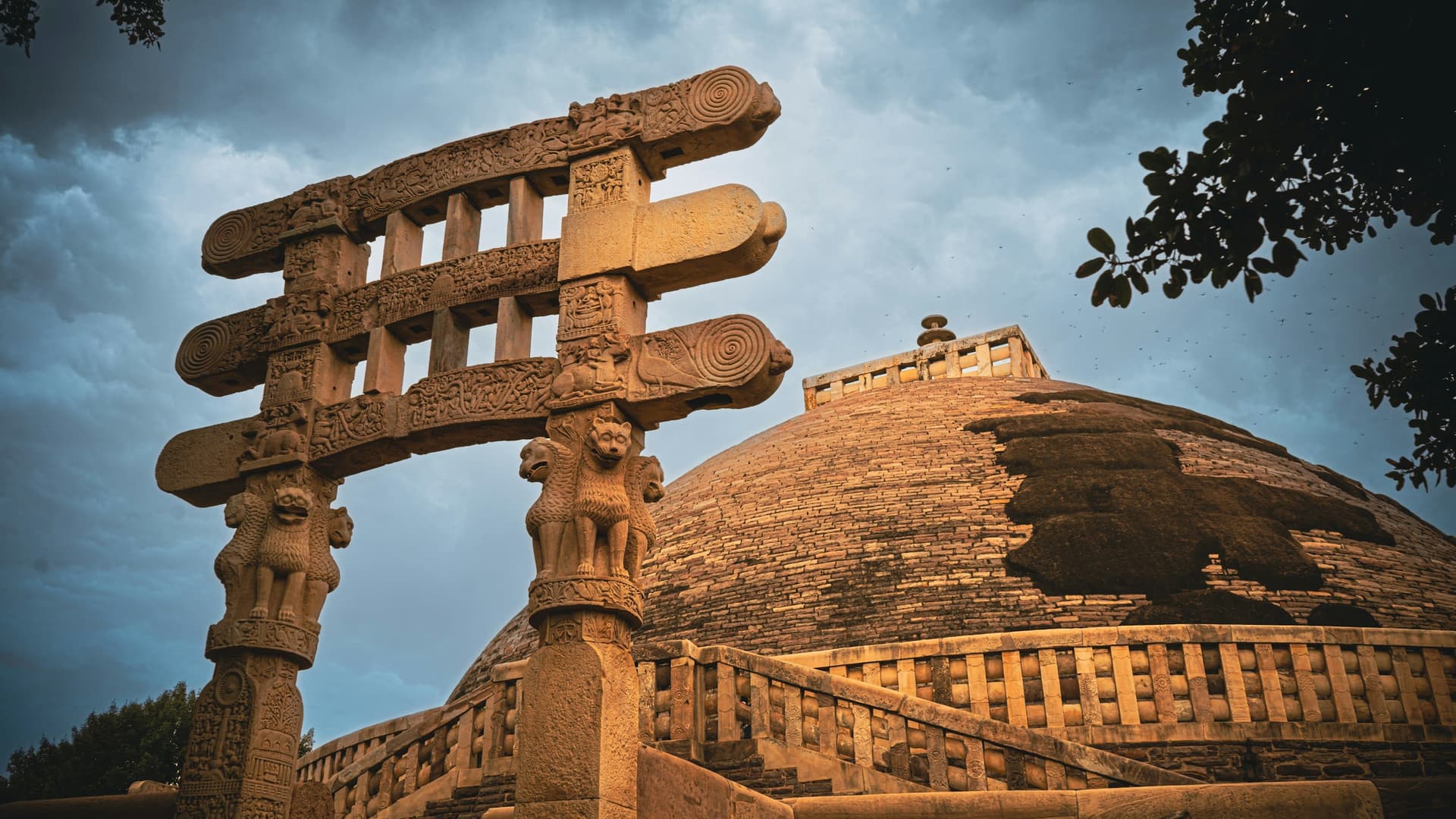
Buddhist Monuments at Sanchi
Amkhera, Madhya Pradesh, India
466.3 km away
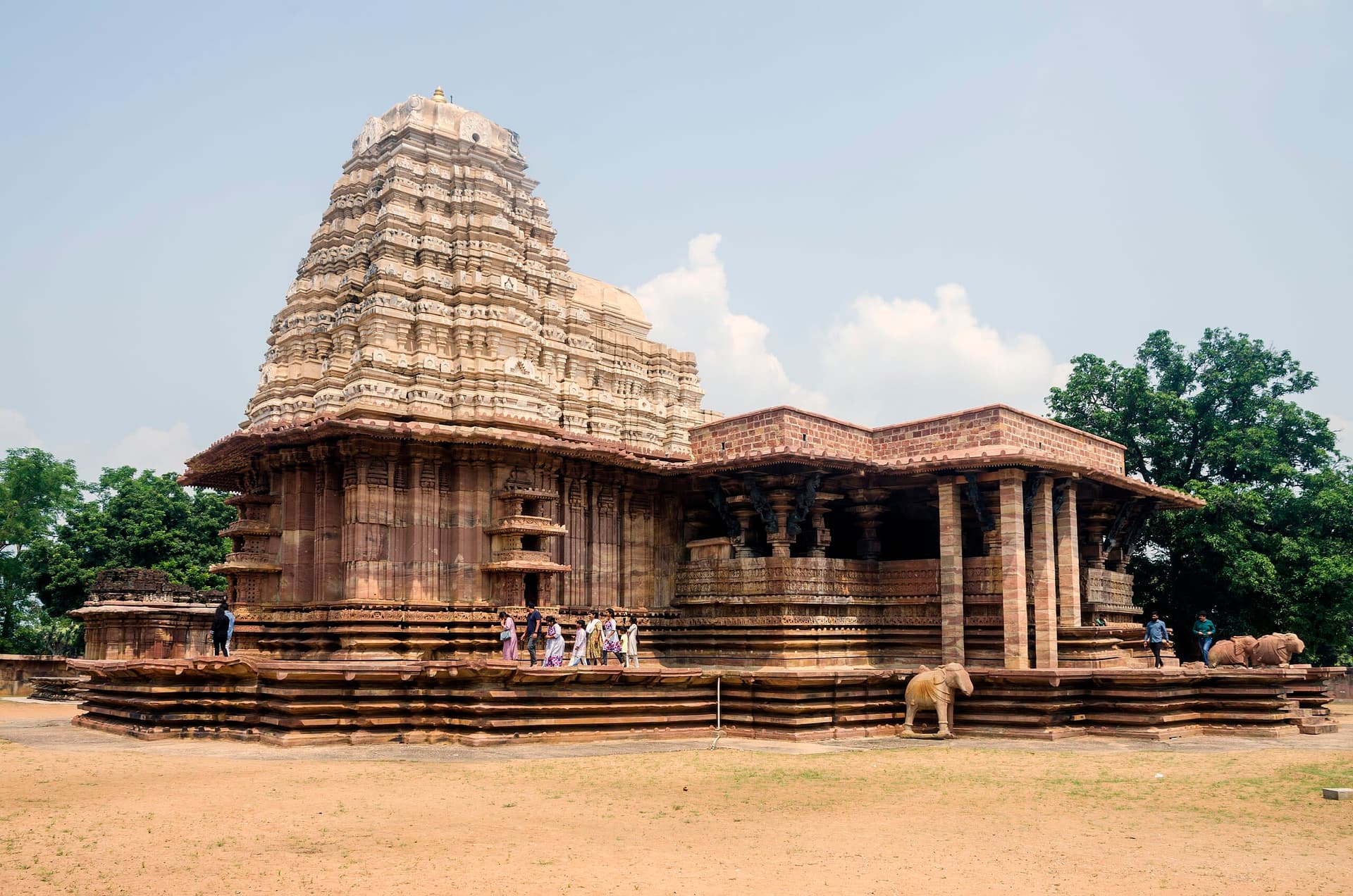
Kakatiya Rudreshwara Ramappa Temple, Telangana
Palampet, Telangana, India
537.7 km away
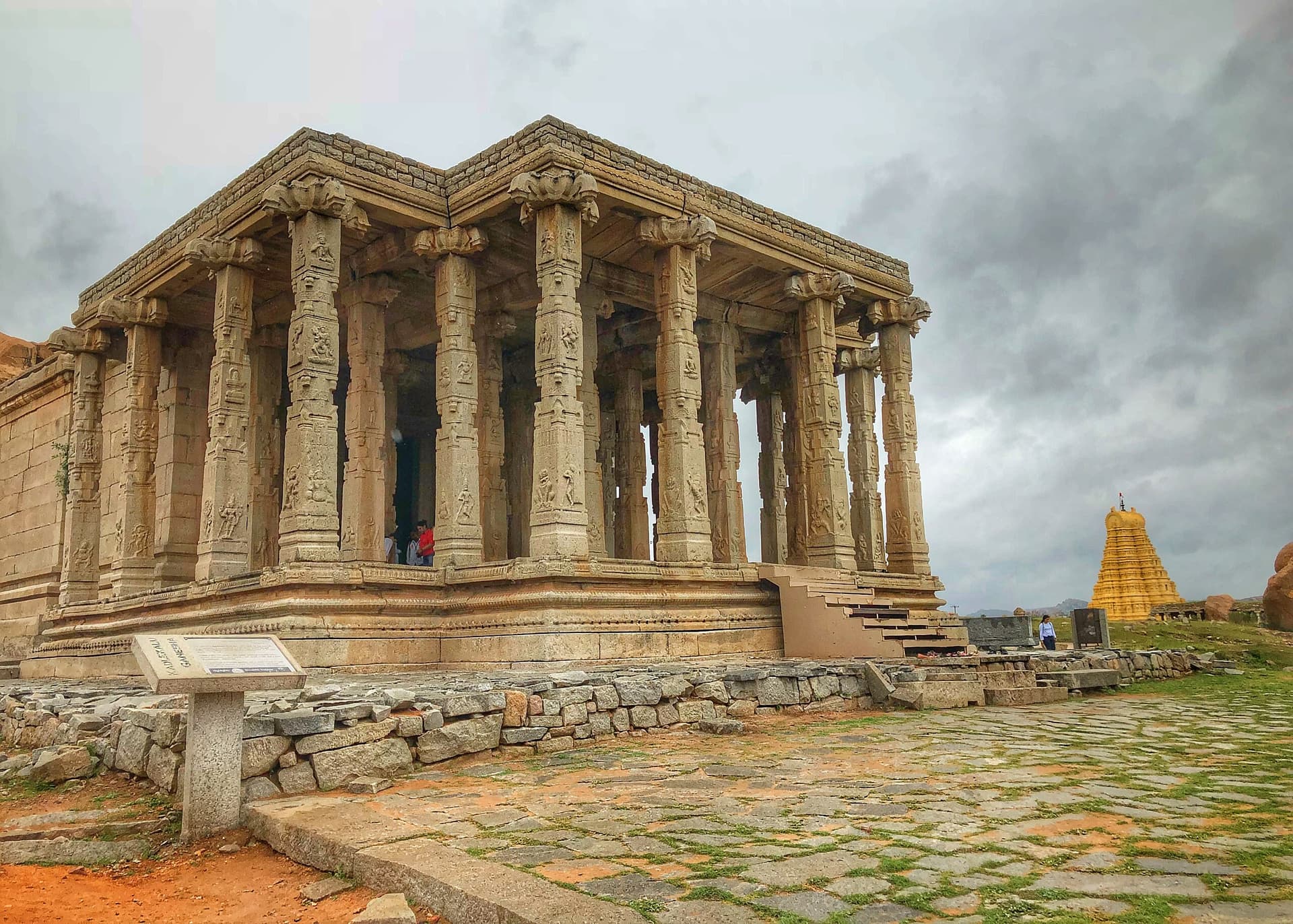
Kadalekalu Ganesha Temple, Hampi, Karnataka
Hampi, Karnataka, India
538.9 km away