Dunamuck North Stone Row
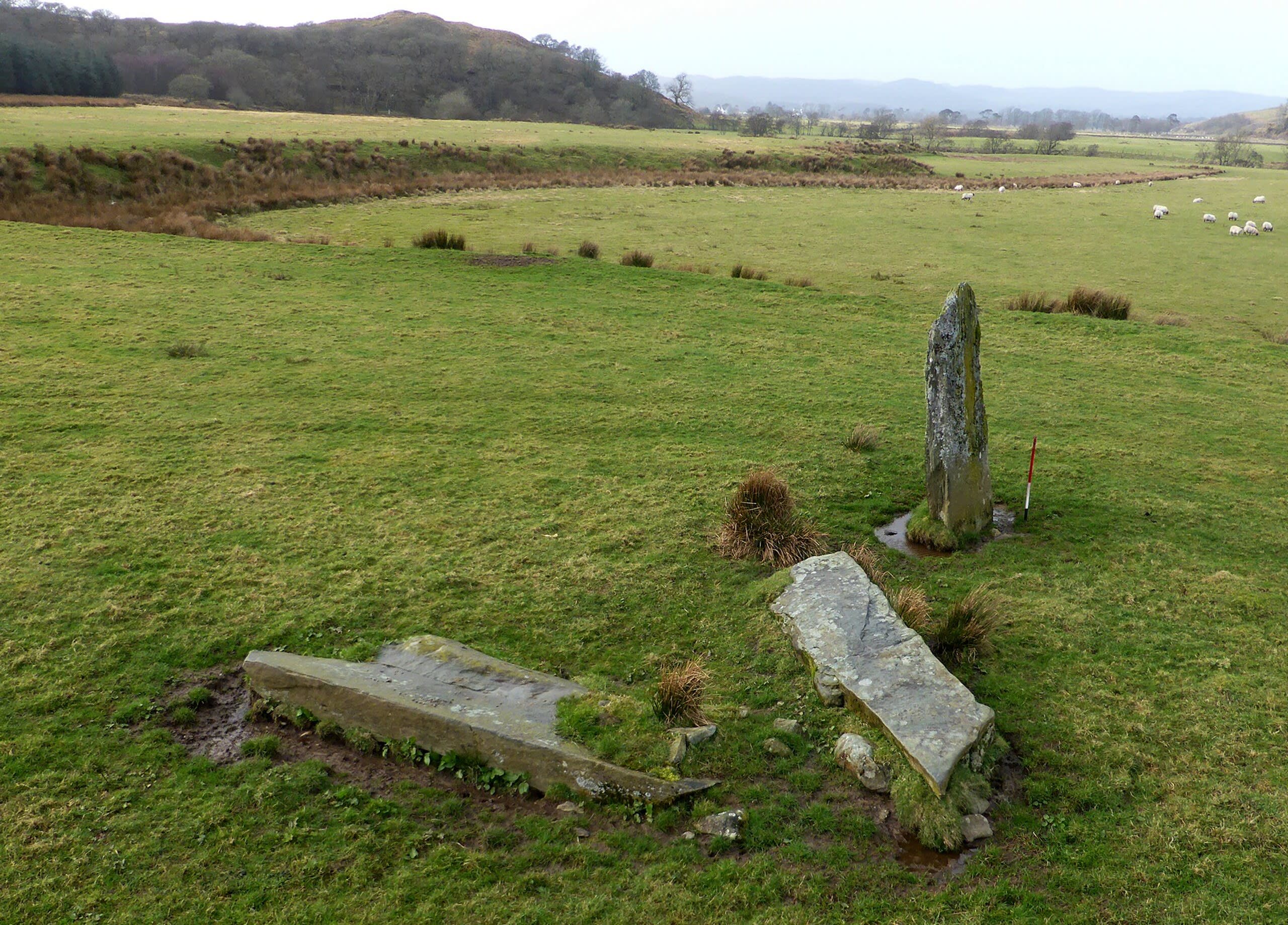
A solitary orthostat and fallen slabs aligned across Kilmartin Glen's ancient valley floor
Kilmartin, Argyll and Bute, United Kingdom
At A Glance
- Coordinates
- 56.0945, -5.5272
- Suggested Duration
- 20-40 minutes at the stone row itself, including the approach walk. Allow a full day to explore the wider Kilmartin Glen monuments.
- Access
- From parking near Dunamuck (approximately NR 84994 92222), head north across the field. Follow the farm track northwest to approximately NR 84580 92595, then look northeast for the standing stone visible roughly 350 meters away. The terrain is uneven and often boggy. Waterproof footwear is essential. The site is not wheelchair accessible.
Pilgrim Tips
- From parking near Dunamuck (approximately NR 84994 92222), head north across the field. Follow the farm track northwest to approximately NR 84580 92595, then look northeast for the standing stone visible roughly 350 meters away. The terrain is uneven and often boggy. Waterproof footwear is essential. The site is not wheelchair accessible.
- No dress code. Sturdy waterproof boots are essential as the ground is frequently boggy. Layers accommodate Scotland's changeable weather. Wind exposure on open ground can make temperatures feel considerably lower than forecast.
- Freely permitted. Low-angle light at dawn or dusk produces the most dramatic results, casting long shadows from the orthostat. The alignment toward Dunamuck South can be captured effectively with a wide-angle lens.
- Respect the archaeological integrity of the monument. Do not attempt to move, excavate, or mark the stones. The site is a scheduled monument and any damage constitutes a criminal offense. Close gates behind you when crossing farmland and do not disturb livestock.
Overview
On the flat ground west of the River Add, where Kilmartin Glen opens into moorland and rough pasture, Dunamuck North Stone Row stands in quiet witness. A single orthostat rises 2.57 meters above the grass, flanked by two large recumbent slabs stretching across 7.1 meters of alignment oriented from north-northwest to south-southeast. Across the fields, the Dunamuck South stone pair echoes the same line, suggesting these monuments once spoke to each other across the valley floor. This is one of the lesser-visited monuments in a glen that holds the densest concentration of prehistoric remains in mainland Scotland.
The stones at Dunamuck North do not announce themselves. There is no car park at their feet, no heritage board with reconstruction drawings. To reach them, you walk across farmland, following tracks that cattle have worn smoother than any path a heritage body might lay. The tall orthostat becomes visible some distance away, a dark vertical interruption in the horizontal sweep of grass and sedge, and you walk toward it as people have walked toward standing stones for four thousand years: with something between curiosity and recognition.
What you find is a row of three stones spanning just over seven meters. The tallest stands upright, weathered and lichen-covered, its surface rough beneath the hand. Two companion slabs lie flat, their original positions debated but their presence deliberate. The alignment runs NNW-SSE, and if you follow its direction with your eye, you find it points toward the Dunamuck South stone pair, which stands in its own patch of ground some distance away. The two sites were almost certainly contemporary, linked by sight-line and purpose, part of the same gesture across the landscape.
That gesture is what matters here. Kilmartin Glen holds more than eight hundred ancient monuments within a six-mile radius, and more than a hundred and fifty of those are prehistoric. Stone circles, burial cairns, cup-marked rocks, henges, hillforts: the valley was a place of sustained ceremonial investment across two millennia. Dunamuck North participates in this extraordinary density, but quietly, without the fame of Temple Wood or the dramatic elevation of Dunadd. It asks nothing of its visitors except attention.
Context And Lineage
Dunamuck North Stone Row was erected during the Bronze Age, likely between 2000 and 1500 BCE, as part of the extraordinary concentration of prehistoric monuments in Kilmartin Glen, Argyll. The glen holds the most significant cluster of Neolithic and Bronze Age remains in mainland Scotland, with over 800 ancient monuments within a six-mile radius of Kilmartin village. The stone row is visually aligned with the Dunamuck South stone pair, suggesting the two monuments were contemporary and functionally linked.
No origin narratives survive from the prehistoric builders of Dunamuck North. The stones predate written language in Scotland by many centuries. The name Dunamuck derives from Gaelic and refers to the settlement and surrounding land rather than any mythological association with the stone row. What survives is the physical evidence of deliberate placement: stones selected, transported, and arranged in a specific alignment within a landscape already dense with ceremonial monuments.
Dunamuck North Stone Row was created by anonymous Bronze Age communities whose identities and beliefs cannot be recovered. The monument appears to have had no subsequent ceremonial use in recorded history, distinguishing it from sites like Ballymeanoch where folk practices persisted into the modern era. Today it is managed as part of Scotland's archaeological heritage, a scheduled monument protected by law but not actively interpreted on site. Its lineage is one of silence: built with purpose, then left to stand while the world around it transformed utterly.
Unknown Bronze Age peoples of western Scotland
Why This Place Is Sacred
Dunamuck North carries the particular quality of a monument that has escaped the apparatus of heritage tourism. Standing beside the tall orthostat in the silence of open farmland, with the wider Kilmartin landscape stretching away in every direction, visitors encounter something raw and unmediated. The alignment toward the South stone pair gestures toward a network of meaning that once animated this valley but now survives only as geometry and stone.
The thinness of Dunamuck North resides partly in its obscurity. The better-known monuments of Kilmartin Glen draw most visitors: Temple Wood with its atmospheric stone circles, the Nether Largie cairns with their accessible burial chambers, Dunadd with its carved footprint and kingly associations. Dunamuck North receives far fewer visitors, and this relative neglect creates space for encounter. You are unlikely to share the site with anyone else. The stones are yours, and the silence around them is yours, and the questions they raise have no interpretive panel to answer them.
The alignment between the North row and the South pair adds a spatial dimension to the thinness. These are not isolated monuments but partners in dialogue, their positions calculated to relate to each other across open ground. Standing at one and looking toward the other, you glimpse something of the prehistoric mind at work: the insistence that stones should not merely stand but should connect, forming lines and networks across the landscape. What those connections meant remains unknown, but the intention is unmistakable.
There is also the matter of scale. The orthostat at 2.57 meters is taller than most people, and encountering a stone that exceeds your own height on open ground produces a specific physical response. You look up. The stone has stood here for roughly four thousand years, through every season and every weather, while everything around it has changed. That duration, apprehended physically rather than intellectually, is where the thinness lies.
The original purpose of Dunamuck North Stone Row remains unknown. Its classification as a Type S2 stone row places it within a recognized category of prehistoric monument, but the specific ceremonial, astronomical, or territorial function it served cannot be determined from the surviving evidence. The alignment with Dunamuck South suggests the two sites operated as part of a larger system, possibly involving processional movement or observation of celestial events. The investment of labor in quarrying, transporting, and raising the stones indicates the monument held genuine importance for its builders.
Little is known about the evolution of Dunamuck North beyond its initial construction, likely during the Bronze Age. The two recumbent slabs may have originally stood upright and fallen at unknown dates, or they may have been deliberately placed in their current positions. The site does not appear in folk tradition or historical record in the way that some other Kilmartin monuments do. It has remained essentially static: a row of stones in a field, visited occasionally, disturbed minimally, enduring.
Traditions And Practice
No organized rituals or ceremonies occur at Dunamuck North. The site functions as a place of quiet encounter, archaeological interest, and personal reflection within the wider Kilmartin Glen landscape.
The original Bronze Age practices associated with the stone row are unknown. The monument's alignment and its visual relationship with the Dunamuck South stone pair suggest ceremonial or astronomical functions, but no specific rituals can be reconstructed from the surviving evidence. Unlike some nearby sites, Dunamuck North does not appear in folk tradition with any recorded customs or practices.
No formal ceremonies or organized gatherings take place at Dunamuck North. Visitors come for archaeological interest, contemplation, and the experience of walking through a prehistoric landscape. Some engage in personal meditation or quiet reflection among the stones.
Walk slowly toward the stones rather than rushing. Allow the approach across farmland to build a sense of intention. When you arrive, spend time with each stone individually before considering the row as a whole. Look along the alignment toward Dunamuck South and notice how the monuments relate to each other across the landscape. Sit with the stones for a while. The quietness of the site rewards those who stay longer than the stones require to be seen.
Bronze Age Ceremonial
HistoricalThe stone row was erected as part of Kilmartin Glen's extensive prehistoric ceremonial landscape. The deliberate alignment and visual connection with the Dunamuck South stone pair indicate that these monuments participated in a larger system of ritual or observational purpose spanning the valley floor.
Unknown. The monument type and landscape position suggest possible ceremonial processions, astronomical observations, or territorial marking, but no specific practices can be reconstructed from the surviving evidence.
Experience And Perspectives
Reaching Dunamuck North requires a walk across farmland, following tracks and fording boggy ground. The approach builds anticipation as the tall orthostat becomes visible across the fields. Arriving at the stones, visitors find themselves alone in open landscape, surrounded by the wider monuments of Kilmartin Glen. The experience is one of quietness, exposure, and encounter with deep time in an unmediated setting.
The approach sets the tone. From the nearest parking area, you head north across fields, joining a farm track that leads through working agricultural land. Sheep graze nearby. The ground can be wet underfoot, particularly after rain, and sturdy boots prove their worth within the first few minutes. The walk is not long, perhaps twenty minutes at a steady pace, but it creates a sense of intention. You are going somewhere specific, across ground that resists casual strolling.
The orthostat announces itself first. Rising above the grass, dark against the sky, it draws the eye from several hundred meters away. As you approach, the recumbent slabs come into view at its base, their flat surfaces disappearing into the turf. The row is modest in extent but not in presence. The standing stone commands its patch of ground with the authority of four millennia.
Touching the stone brings a shift in register. The surface is rough, cold, dense with the particular weight of geological time overlaid with human intention. Lichens pattern the face in subtle greys and greens. Looking along the alignment toward the south-southeast, the eye travels across open ground toward where the Dunamuck South stones stand, and the geometry of the ancient landscape becomes briefly legible.
The silence here is notable. Without the foot traffic of more popular sites, the soundscape belongs to wind, birds, and the occasional distant tractor. On still days, the quietness feels ancient, as though it has accumulated alongside the stones. Sitting among the monuments, letting time slow, visitors report a sense of the landscape holding them rather than the other way around.
The stone row lies northwest of Dunamuck farm, west of the River Add. From the parking area near Dunamuck, head north across the field toward the farm track. Follow the track northwest, then look for the standing stone visible to the northeast approximately 350 meters from the track. The row runs NNW-SSE. For full context, visit the Kilmartin Museum first, then explore the glen's monuments progressively.
Dunamuck North Stone Row resists definitive interpretation. Archaeological classification provides a framework, but the specific purpose, beliefs, and experiences of its builders remain beyond recovery. The monument exists now as a question posed in stone, one that rewards contemplation precisely because it refuses easy answers.
Archaeologists classify Dunamuck North as a Type S2 stone row within the gazetteer of British stone rows. No doubts have been expressed regarding its prehistoric interpretation. The visual alignment between the North row and the Dunamuck South stone pair strongly suggests the two sites were broadly contemporary and linked in purpose, forming part of the extraordinary density of ceremonial monuments in Kilmartin Glen. The glen has been interpreted by scholars as a major ritual landscape, with good correlations documented between stone alignments and the rising and setting of the midwinter sun and the major standstill moon at other nearby sites. Whether these astronomical associations extend specifically to the Dunamuck stones has not been formally tested.
No continuous traditional or indigenous interpretation survives for Dunamuck North. Unlike some Kilmartin monuments that attracted folk practices into the modern era, such as the betrothal customs at Ballymeanoch's holed stone, this stone row appears in no recorded folklore or oral tradition.
Some contemporary visitors perceive the Kilmartin Glen landscape, including the Dunamuck monuments, as a network of spiritual energy or earth power. Ley line enthusiasts have noted alignments between various monuments in the glen. These interpretations cannot be verified against the archaeological record but represent ways in which modern seekers make meaning of genuinely mysterious remains.
Nearly everything about the specific purpose of Dunamuck North remains unknown. Why were three stones placed in this particular alignment? Why does the row point toward the South stone pair? What ceremonies, observations, or beliefs animated the space between these monuments? Why did the builders choose this particular stretch of ground west of the River Add? The answers are not withheld by the stones; they were never inscribed there in any form recoverable by modern inquiry. The mystery is genuine, and acknowledging it honestly is the most respectful response to what the builders left behind.
Visit Planning
Dunamuck North Stone Row offers free open access at all times. The site is reached by a 15-20 minute walk across farmland from parking near Dunamuck. No facilities exist at the site. The Kilmartin Museum provides context, toilets, and refreshments.
From parking near Dunamuck (approximately NR 84994 92222), head north across the field. Follow the farm track northwest to approximately NR 84580 92595, then look northeast for the standing stone visible roughly 350 meters away. The terrain is uneven and often boggy. Waterproof footwear is essential. The site is not wheelchair accessible.
Limited accommodation in the immediate area. Kilmartin Hotel offers rooms near the village. More options are available in Lochgilphead (approximately 6 km) and Oban (approximately 30 km). For immersive experience, staying nearby allows dawn and dusk visits.
Dunamuck North is a scheduled archaeological monument in agricultural land. Visitors should respect both the monument and the working farm. Walk on established paths where possible, close gates, and leave no trace.
The etiquette at Dunamuck North arises from two intersecting considerations: respect for an archaeological monument protected by law, and courtesy toward the farmers whose land you cross to reach it.
The stones have endured four thousand years of weathering. They do not need protection from gentle touch, and running your hand across the orthostat's surface can deepen the encounter. But do not climb on the stones, scratch or mark them, attempt to move the recumbent slabs, or excavate around their bases. These are the remains of a monument whose full extent and condition are still imperfectly understood.
The agricultural landscape through which you walk deserves equal respect. Close gates behind you. Keep dogs on leads around livestock. Stay on established tracks and paths where they exist, and walk on the margins of fields rather than through crops or newly sown ground. The access that visitors enjoy here depends on the goodwill of landowners.
If you encounter other visitors, which is unlikely, give them space. A monument this quiet rewards solitude, and the courtesy of distance allows each person to have their own encounter with the stones.
No dress code. Sturdy waterproof boots are essential as the ground is frequently boggy. Layers accommodate Scotland's changeable weather. Wind exposure on open ground can make temperatures feel considerably lower than forecast.
Freely permitted. Low-angle light at dawn or dusk produces the most dramatic results, casting long shadows from the orthostat. The alignment toward Dunamuck South can be captured effectively with a wide-angle lens.
Leaving offerings is not historically traditional at this site. If you feel moved to leave something, ensure it is natural, biodegradable, and will not harm grazing livestock.
Scheduled monument: damaging the site is a criminal offense under the Ancient Monuments and Archaeological Areas Act. Do not dig, remove stones or soil, or use metal detectors without permission from Historic Environment Scotland.
Sacred Cluster
Nearby sacred places create the location cluster described in the growth plan. This block is intentionally crawlable and links into the wider regional graph.
Ri Cruin Cairn
Kilmartin, Argyll and Bute, United Kingdom
3.0 km away
Dunadd sacred hill, Lochgilphead, Scotland
Bridgend, Scotland, United Kingdom
3.2 km away
Ballygowan Rock Art
Kilmartin, Argyll and Bute, United Kingdom
3.2 km away
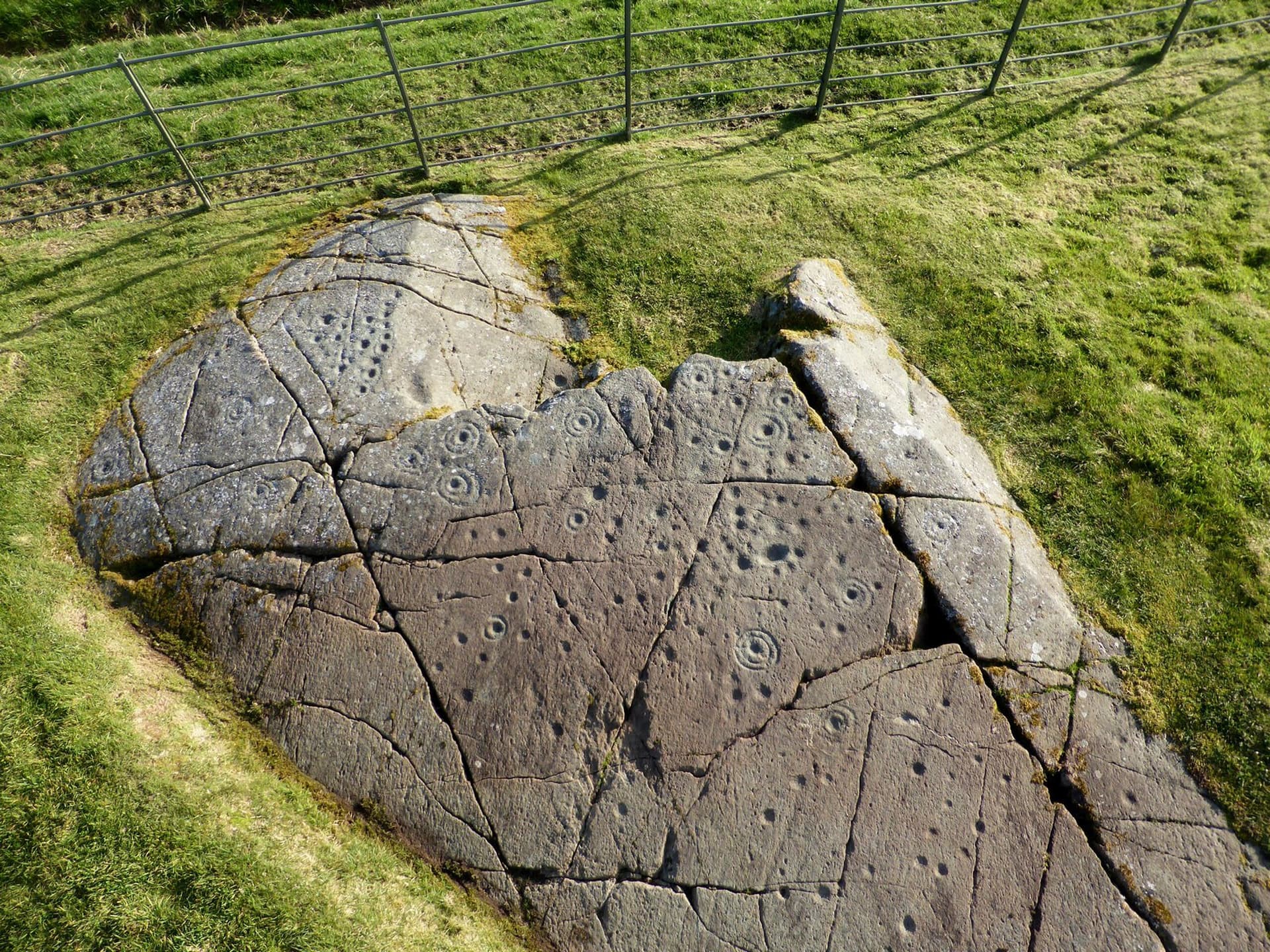
Baluachraig Cup and Ring Marks
Kilmartin, Argyll and Bute, United Kingdom
3.3 km away