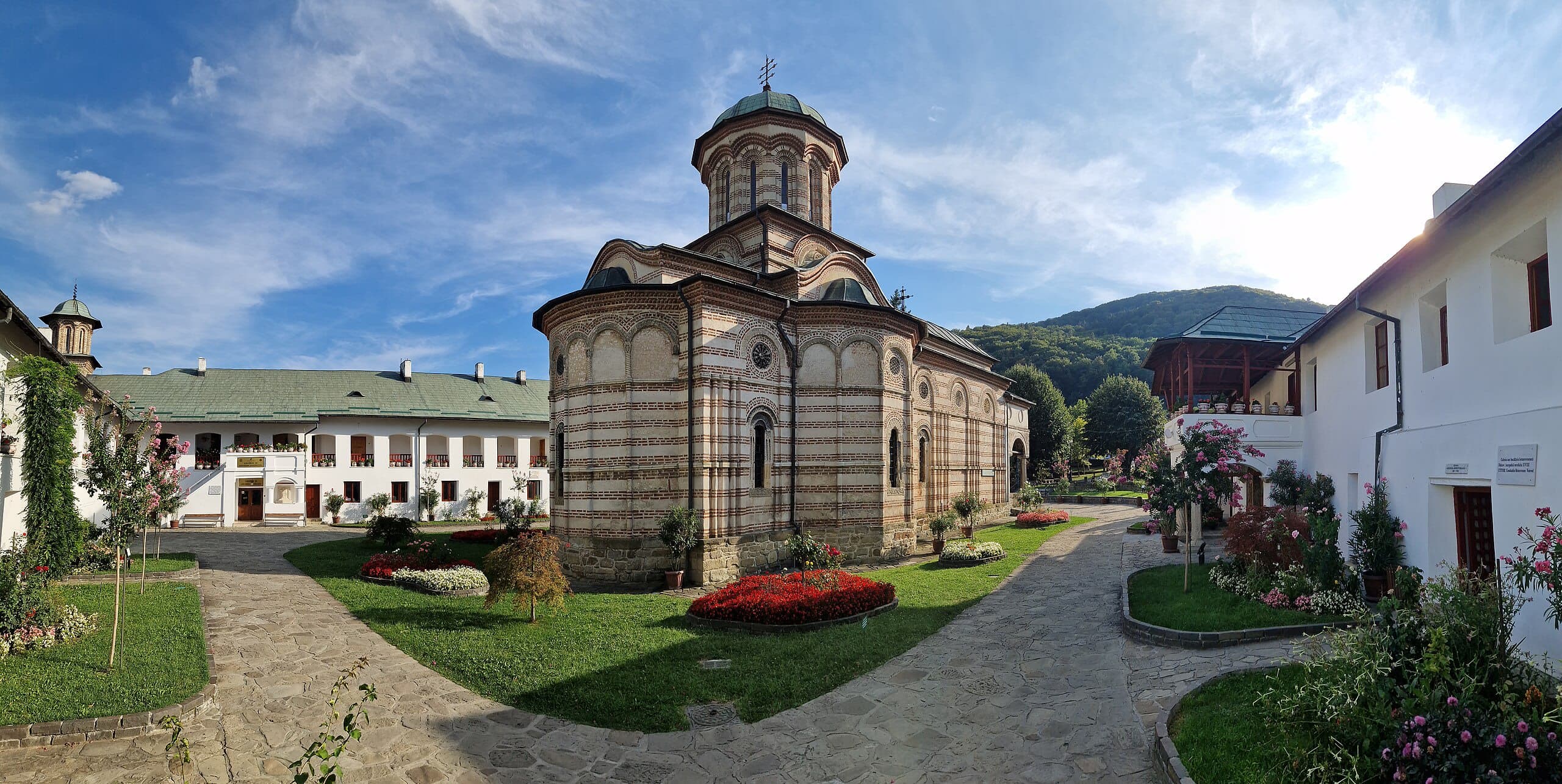
Cozia Monastery, Romania
A 14th-century fortified monastery on the Olt River where a medieval prince rests among original frescoes
Calimanesti, Vâlcea, Romania
At A Glance
- Coordinates
- 45.2717, 24.3157
- Suggested Duration
- One to two hours for a thorough visit of the main church, Bolnita church, fortification walls, museum, and grounds. Allow additional time for hiking in Cozia National Park or exploring the dam lake. A full day can be spent combining the monastery with the surrounding natural attractions.
- Access
- Located on the right bank of the Olt River near Calimanesti, Valcea County, southern Romania. Approximately 3 km from the spa resort of Calimanesti-Caciulata and 20 km north of Ramnicu Valcea. Accessible by car via the DN7 (E81) highway between Sibiu and Ramnicu Valcea. Bus service from Ramnicu Valcea to Caciulata runs regularly, approximately 30 to 40 minutes, for 5 to 10 RON. The Olt Valley railway serves Calimanesti station. The monastery is visible from the main road. Mobile phone signal is generally available in the area. For current visiting hours and service schedules, contact the monastery or check with the Valcea County tourism office.
Pilgrim Tips
- Located on the right bank of the Olt River near Calimanesti, Valcea County, southern Romania. Approximately 3 km from the spa resort of Calimanesti-Caciulata and 20 km north of Ramnicu Valcea. Accessible by car via the DN7 (E81) highway between Sibiu and Ramnicu Valcea. Bus service from Ramnicu Valcea to Caciulata runs regularly, approximately 30 to 40 minutes, for 5 to 10 RON. The Olt Valley railway serves Calimanesti station. The monastery is visible from the main road. Mobile phone signal is generally available in the area. For current visiting hours and service schedules, contact the monastery or check with the Valcea County tourism office.
- Modest dress required. Women: covered shoulders, long skirts or dresses, headscarves recommended. Men: long trousers, hats removed inside the church.
- Exterior photography is permitted. Interior photography of the frescoes may require permission from the monks and should be done without flash. Be discreet when photographing near the tomb or during any monastic activity.
- Cozia remains an active monastery. Visitors should respect the monastic schedule and not disturb monks during prayer times. The medieval frescoes are irreplaceable and must not be touched. Keep noise to a minimum throughout the complex.
Overview
Cozia Monastery occupies a dramatic position on the bank of the Olt River in the Valcea region of southern Romania. Founded in 1388 by Voivode Mircea the Elder, it is one of the oldest and most important medieval monuments in Wallachia. The Church of the Holy Trinity preserves original frescoes over 630 years old, and the tomb of the founder connects visitors to a foundational chapter of Romanian history. An active male monastic community continues the daily cycle of Orthodox worship.
The Olt River has carved its way through the Southern Carpathians for millennia, creating a gorge where the forested slopes of Cozia Mountain descend steeply to the water. On the right bank, where the mountain meets the river, Mircea the Elder built a monastery in the final years of the 14th century. The choice of location was deliberate. The gorge was a natural borderland, a place of passage and defense, and the fortified monastery served both spiritual and strategic purposes in a Wallachia threatened by Ottoman expansion.
More than six centuries later, the monastery endures. The Church of the Holy Trinity, consecrated in 1388, still holds its original Byzantine frescoes from 1390-1391, among the oldest surviving painted surfaces in Wallachia. The images that emerge from the plaster are not restored reconstructions but the actual pigment applied by painters whose names are lost, working in a style that shows clear influence from the Serbian Morava school. The theological program includes depictions of the Ecumenical Councils, an iconographic choice that speaks to the monastery's role in affirming Orthodox doctrine during a period of existential threat.
Mircea the Elder himself lies buried here. His tomb, within the church he commissioned, connects the visitor to one of the most consequential figures in Romanian history, a voivode who defended Wallachia's independence against both Ottoman and Hungarian pressure while establishing institutions of learning and faith that would outlast his reign. The votive portrait inside the church shows Mircea holding a model of the monastery alongside his son Mihail, offering their creation to God in the manner of Byzantine princely founders.
The fortified walls, partially restored, still define the monastic enclosure. The Bolnita church, an infirmary chapel added in 1543, stands within the complex as evidence of the monastery's evolution across centuries. The presence of a living monastic community, the daily cycle of services performed in the same church where Mircea once prayed, gives the site a continuity that transforms historical interest into something more immediate.
Context And Lineage
Founded by Mircea the Elder between 1387 and 1391 as a statement of Orthodox faith and princely authority, Cozia served as spiritual center, fortification, necropolis, and school. It remains an active male monastery with a living community maintaining the daily offices.
Mircea the Elder, who ruled Wallachia from 1386 to 1418, chose the Olt gorge for his foundation with characteristic precision. The location combined natural beauty with strategic value, guarding a critical passage through the Southern Carpathians. Construction began in 1387, and the Church of the Holy Trinity was consecrated in 1388, with frescoes completed by 1391.
The architectural style reveals extensive contact with the Serbian Morava school, the most sophisticated church-building tradition in the medieval Balkans. Whether Serbian master builders were directly involved or Wallachian craftsmen had trained in the Serbian tradition remains debated, but the influence is unmistakable in the triconch plan and the decorative stonework. The monastery became the model for subsequent Wallachian ecclesiastical architecture.
Mircea was not merely a patron of faith. He was a military and diplomatic figure of the first order, defending Wallachia against Ottoman expansion while navigating the competing pressures of the Kingdom of Hungary and the emerging Ottoman Empire. His foundation of Cozia served both spiritual and political purposes, establishing an institution that would promote Orthodox doctrine, educate clergy, preserve manuscripts, and project princely legitimacy. By 1415, a monastic school was operational, making Cozia an early center of Romanian learning.
Cozia belongs to the Romanian Orthodox tradition and exemplifies the Wallachian pattern of princely monastic foundation, in which voivodes established monasteries as centers of faith, culture, education, and defense. Mircea the Elder's foundation served as a model followed by subsequent Wallachian rulers, including the later foundations at Curtea de Arges and the painted monasteries of northern Wallachia. The fortified cloister is the only preserved Byzantine-style monastic cloister in Romania, placing Cozia in a direct architectural lineage with the broader Byzantine monastic world.
Mircea the Elder (Mircea cel Batran)
Voivode of Wallachia (1386-1418) and founder of the monastery. One of the most revered figures in Romanian history, he defended Wallachian independence against Ottoman expansion while establishing institutions of faith and learning. His tomb within the church he founded makes Cozia a site of national as well as spiritual significance.
Unknown Serbian-influenced master builders
The architects and craftsmen who created the Church of the Holy Trinity in the Morava school style. Their identities are lost, but their work established the architectural template for Wallachian church building that endured for centuries.
Unknown fresco painters (1390-1391)
The Byzantine-trained painters who created the original frescoes in the Church of the Holy Trinity. Their iconographic program, including depictions of the Ecumenical Councils, represents one of the most significant surviving medieval painting ensembles in Wallachia.
Voivode Radu Paisie
Wallachian prince who commissioned the Bolnita infirmary church in 1543, demonstrating continued princely patronage of the monastery more than a century after its founding.
Why This Place Is Sacred
Over 630 years of continuous worship in a single church with original frescoes, the tomb of a medieval prince who shaped a nation, a fortified position where mountain and river create natural enclosure, and a living monastic community performing the same offices as those who came before.
The Olt gorge setting does something that no amount of historical knowledge can replicate on its own. The river runs fast and dark below the monastery walls. The forested slopes of Cozia Mountain rise behind, steep enough that the sky is a narrow band above the treeline. The monastery occupies a ledge between water and forest, held in a natural enclosure that enhances the sense of sacred separation from the world beyond.
The original name of the monastery was Nucetul, meaning walnut grove, and the word Cozia itself derives from the Cuman or Turkic word for walnut. This etymology roots the site in a landscape older than its Christian identity, a place named for the trees that grew here before any builder arrived. The walnut tree carries its own associations in Romanian folk tradition: protection, wisdom, the threshold between worlds.
Inside the Church of the Holy Trinity, the frescoes create an interior atmosphere that over six centuries of candlelight, incense, and prayer have deepened into something beyond decoration. The colors are muted by time but still legible. The faces of saints and prophets look down from walls that have witnessed the entire arc of Romanian statehood, from medieval principality through Ottoman suzerainty, the modern kingdom, communist repression, and democratic renewal. The presence of Mircea's tomb adds a dimension of ancestral reverence that extends the contemplative space beyond the purely religious.
The fortification walls, though no longer serving their defensive purpose, contribute to the enclosed quality of the complex. You enter through a gate and leave the world of the road behind. The dam lake visible behind the monastery adds a contemporary note but does not diminish the effect. If anything, the still water behind and the moving river before create a sense of the monastery as a fixed point between flowing elements.
Mircea the Elder founded the monastery between 1387 and 1391 as both a center of Orthodox faith and a fortified position guarding the Olt gorge. The dedication to the Holy Trinity, the central mystery of Orthodox theology, reflects the voivode's intention to create a monument of doctrinal significance. The monastery also served as a princely necropolis, a center of learning with a monastic school operational by 1415, and a diplomatic asset in the complex politics of medieval southeastern Europe.
The monastery's history follows the arc of Wallachia itself. Major additions in the 16th century included the Bolnita infirmary church built under Voivode Radu Paisie in 1543. The Brancoveanu era of the late 17th and early 18th centuries brought further embellishments. The monastic school that began by 1415 produced manuscripts and educated clergy. Through Ottoman suzerainty, the monastery maintained its religious and cultural function. Modern restoration has preserved the medieval fabric while accommodating the needs of the current monastic community and the visitors who come in increasing numbers.
Traditions And Practice
An active male monastic community maintains the daily Orthodox offices in a church consecrated over six centuries ago. The principal feast is Pentecost Sunday. Memorial services at Mircea the Elder's tomb add a dimension of national remembrance.
The liturgical life of Cozia follows the full Orthodox monastic cycle: Midnight Office, Matins, Hours, Divine Liturgy, Vespers, and Compline. These services are performed in the Church of the Holy Trinity, the same space consecrated in 1388, creating a continuity of worship that spans more than six centuries. The principal annual feast is the Sunday of the Holy Trinity, observed on Pentecost, fifty days after Easter. This movable feast, typically falling in late May or June, celebrates the theological mystery to which the church is dedicated and draws the largest annual gathering of pilgrims.
Traditional Orthodox celebrations mark the major feasts: Pascha with its midnight procession and triumphant liturgy, the Nativity of Christ, Theophany with the blessing of waters, and the Dormition of the Theotokos in August. Memorial services at the tomb of Mircea the Elder connect the liturgical calendar to the monastery's historical identity.
The current monastic community maintains daily services that visitors are welcome to attend. The Pentecost celebration remains the most significant annual event. The monastery's museum and grounds are open to visitors throughout the year, and the combination of active worship and cultural heritage creates an environment where spiritual seekers and history enthusiasts share the same space without conflict. Candles can be purchased and lit. The monastery receives visitors throughout the year, with the warmer months from April to October being the most popular period. Boat tours on the dam lake behind the monastery are available seasonally.
Enter the Church of the Holy Trinity with the awareness that you are walking into one of the oldest continuously used sacred spaces in Wallachia. Let the frescoes emerge from the dimness rather than searching for them. Stand before Mircea's tomb in silence. The votive portrait nearby shows the founder holding a model of what you are standing inside, an image that collapses six centuries into a single gesture.
If you have time, sit in the courtyard between the main church and the Bolnita chapel. The enclosed space, defined by the fortification walls, creates a quality of stillness that the modern world outside the gate does not diminish. The sound of the Olt River, if you listen, underlies everything.
Romanian Orthodox Christianity
ActiveCozia Monastery has been a center of Orthodox worship and monastic life since its consecration in 1388. Founded by Mircea the Elder as both a spiritual center and a statement of Orthodox faith during Ottoman expansion, it played a crucial role in the defense and promotion of Orthodoxy in Wallachia. Its frescoes include depictions of Ecumenical Councils, emphasizing its role in Orthodox doctrinal tradition.
Daily Orthodox monastic cycle of services in the Church of the Holy Trinity. The Pentecost celebration on Holy Trinity Sunday draws the largest annual gathering. Veneration at the tomb of Mircea the Elder. Monastic hospitality for pilgrims. Traditional Orthodox feast day celebrations throughout the liturgical year.
Wallachian princely monastic patronage
HistoricalCozia exemplifies the Wallachian tradition of princely monastery founding, in which voivodes established monasteries as centers of faith, culture, education, and defense. Mircea the Elder's foundation established a model followed by subsequent Wallachian rulers. The use of the monastery as a royal necropolis and the establishment of a monastic school by 1415 reflect the multiple functions that princely monasteries served in medieval Wallachian society.
Princely endowment and fortification of monasteries, establishment of monastic schools and scriptoria, use of monasteries as royal necropolises and diplomatic centers. The votive portrait tradition, in which the founder is depicted offering a model of the monastery to God, is preserved in Cozia's original frescoes.
Experience And Perspectives
The Olt gorge setting creates a natural threshold. Inside the 14th-century church, original frescoes and the founder's tomb generate a sense of compressed time. The fortified walls, the Bolnita chapel, and the surrounding national park extend the visit into landscape and contemplation.
Approaching from the south along the DN7 highway, the monastery appears on the right bank of the Olt as a walled compound set against dense forest. The river is wide here, moving with purpose through the gorge. The transition from road to monastery is abrupt, from modern traffic to medieval stone in a matter of steps.
The fortification walls establish the boundary. Passing through the entrance gate, you enter a space organized around the Church of the Holy Trinity, which anchors the complex with a presence disproportionate to its modest dimensions. The church is not large. Its scale is human, its proportions intimate. The triconch plan, influenced by the Serbian Morava school, creates an interior that feels gathered rather than expansive.
The frescoes require time. Allow your eyes to adjust to the dimness. The original paintings from 1390-1391 reveal themselves gradually, their pigments softened by centuries but still communicating the theological vision of their unknown creators. The depictions of the Ecumenical Councils are of particular significance, a visual argument for Orthodox doctrinal authority painted at a moment when that authority was under existential threat. Notice the votive portrait of Mircea the Elder and his son Mihail, holding a model of the monastery and offering it to God.
The tomb of Mircea lies within the church. Standing before it, you are in the presence of a ruler who died in 1418 after three decades of defending Wallachian independence. The weight of that history, concentrated in a single stone marker within a church he built, gives the visit a dimension that few Romanian sacred sites can match.
The Bolnita church, added in 1543, stands nearby within the fortified enclosure. Its smaller scale and later paintings offer a counterpoint to the main church. The museum on the grounds holds objects and documents that expand the historical context.
Beyond the walls, Cozia National Park rises into the mountains. For visitors with time, hiking trails lead through ancient forest to viewpoints overlooking the gorge. The dam lake behind the monastery offers boat tours in season. The combination of medieval monument and natural landscape creates a full-day experience for those willing to linger.
Arrive early if possible, before tour groups. Enter the church first and spend at least fifteen minutes allowing the frescoes and the tomb to register. Visit the Bolnita church and the museum afterward. If time allows, explore the fortification walls and the grounds. For those combining with Cozia National Park, the monastery serves as either beginning or end of a hiking day.
Cozia can be read as medieval architecture, as the tomb of a national hero, as a fortified bastion of Orthodox faith, or as a place where the Olt River and Carpathian forest create a natural threshold between the ordinary world and something older.
Art historians and architectural scholars recognize Cozia as one of the most important medieval monuments in Wallachia, exemplifying the Serbian Morava school's influence on Wallachian architecture. The triconch plan, the fortified cloister that is the only preserved Byzantine-style monastic cloister in Romania, and the original frescoes from 1390-1391 are of exceptional significance. The iconographic program, including depictions of Ecumenical Councils, reflects a sophisticated theological and political agenda promoting both Orthodox doctrine and princely legitimacy. Princeton University's Mapping Eastern Europe project has documented the monastery's architectural and art-historical significance in detail, placing it within the broader network of Serbian-influenced ecclesiastical architecture in the region.
For Romanians, Cozia Monastery is inseparable from the figure of Mircea the Elder, revered as one of the greatest Wallachian rulers and a defender of national independence and Orthodox faith against Ottoman expansion. The monastery embodies the Romanian ideal of the princely founder who unites spiritual devotion with political and military strength. Its location in the Olt gorge, a natural borderland, reinforces its symbolic role as a bastion of Romanian identity. Pilgrims who come here come not only to pray but to stand in the presence of a foundational moment in their national story.
The monastery's position in the Olt gorge, between mountain and river, is sometimes interpreted as occupying a liminal space between worlds, a natural threshold that enhances spiritual receptivity. The fortified monastery as a spiritual fortress resonates with contemplative traditions that view monastic life as a form of spiritual discipline conducted at the boundary of the known world. The walnut tree symbolism contained in both the original name Nucetul and the Turkic etymology of Cozia connects to widespread folk beliefs about walnut trees as protective and sacred, suggesting layers of meaning beneath the Christian foundation.
The specific identity of the master builders and fresco painters who created the monastery remains largely unknown. The Serbian Morava school influence is clear, but whether Serbian craftsmen were directly involved or Romanian builders had trained in Serbia is debated. The full extent of the original monastic complex and fortification before later additions has not been completely established archaeologically. The monastery's early manuscript collection and the output of its monastic school, operational by 1415, have not survived intact, leaving gaps in understanding its role as a center of medieval Romanian learning.
Visit Planning
Located on the Olt River near Calimanesti, approximately 20 km north of Ramnicu Valcea. Open daily, free entry. Accessible by car, bus, or train. Allow 1-2 hours for the monastery, more if combining with Cozia National Park.
Located on the right bank of the Olt River near Calimanesti, Valcea County, southern Romania. Approximately 3 km from the spa resort of Calimanesti-Caciulata and 20 km north of Ramnicu Valcea. Accessible by car via the DN7 (E81) highway between Sibiu and Ramnicu Valcea. Bus service from Ramnicu Valcea to Caciulata runs regularly, approximately 30 to 40 minutes, for 5 to 10 RON. The Olt Valley railway serves Calimanesti station. The monastery is visible from the main road. Mobile phone signal is generally available in the area. For current visiting hours and service schedules, contact the monastery or check with the Valcea County tourism office.
Calimanesti-Caciulata, 3 km from the monastery, is an established spa resort with hotels and guesthouses ranging from budget to mid-range. Ramnicu Valcea, 20 km south, offers a wider range of accommodations. The Olt Valley setting provides a base for combining monastery visits with hiking and spa treatments.
Modest dress required for all visitors. Silence and respect for the monastic community expected. The medieval frescoes are fragile and must not be touched.
Cozia is a working monastery whose monastic community coexists with a steady flow of visitors drawn by history, faith, or both. The etiquette is straightforward but essential.
Dress modestly. Women should cover their shoulders and wear long skirts or dresses. Headscarves are traditional and respectful. Men should wear long trousers and remove hats upon entering the church. Shorts, tank tops, and revealing clothing are not appropriate.
The church interior requires particular care. The frescoes are over 630 years old and are irreplaceable. Do not touch the walls, the paintings, or any surface of the medieval fabric. Flash photography should be avoided entirely, as light damage to medieval pigment is cumulative and irreversible.
Respect the monastic schedule. If you arrive during a service, remain quietly at the back of the church or wait outside until it concludes. Do not move around the interior during active worship. The monks are present for prayer, and their practice takes precedence over visitor convenience.
Modest dress required. Women: covered shoulders, long skirts or dresses, headscarves recommended. Men: long trousers, hats removed inside the church.
Exterior photography is permitted. Interior photography of the frescoes may require permission from the monks and should be done without flash. Be discreet when photographing near the tomb or during any monastic activity.
Entrance is free. Donations for monastery maintenance are welcomed and appreciated. Candles can be purchased at the monastery.
Do not touch the medieval frescoes. Certain areas of the monastic enclosure may be off-limits to visitors. Do not disturb the monks during prayer times. No food or drink inside the churches. Keep noise to a minimum.
Sacred Cluster
Nearby sacred places create the location cluster described in the growth plan. This block is intentionally crawlable and links into the wider regional graph.
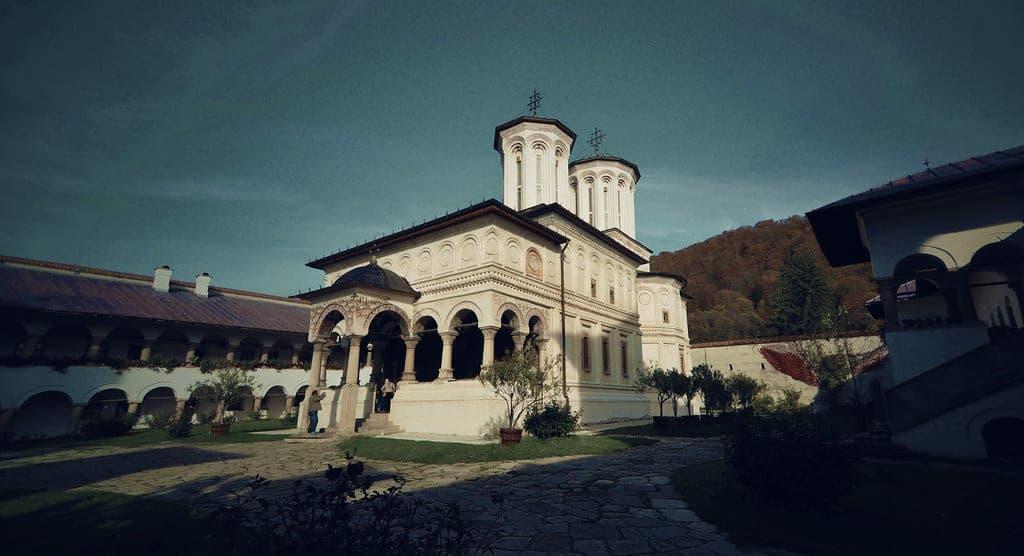
Hurezi (Horezu) Monastery
Romanii de Jos, Vâlcea, Romania
26.7 km away
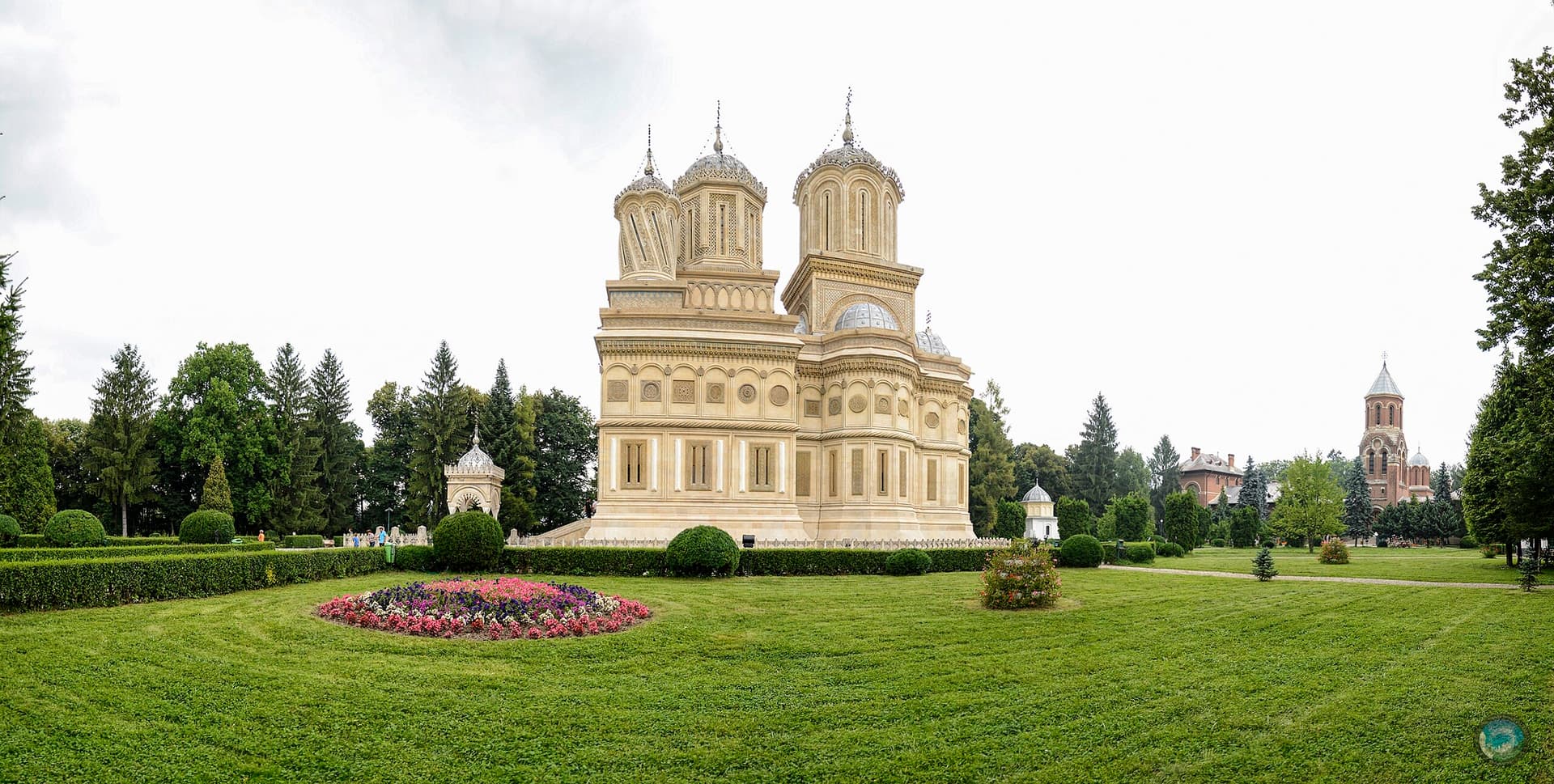
Curtea De Arges Monastery, Romania
Curtea de Argeș, Argeș, Romania
30.9 km away
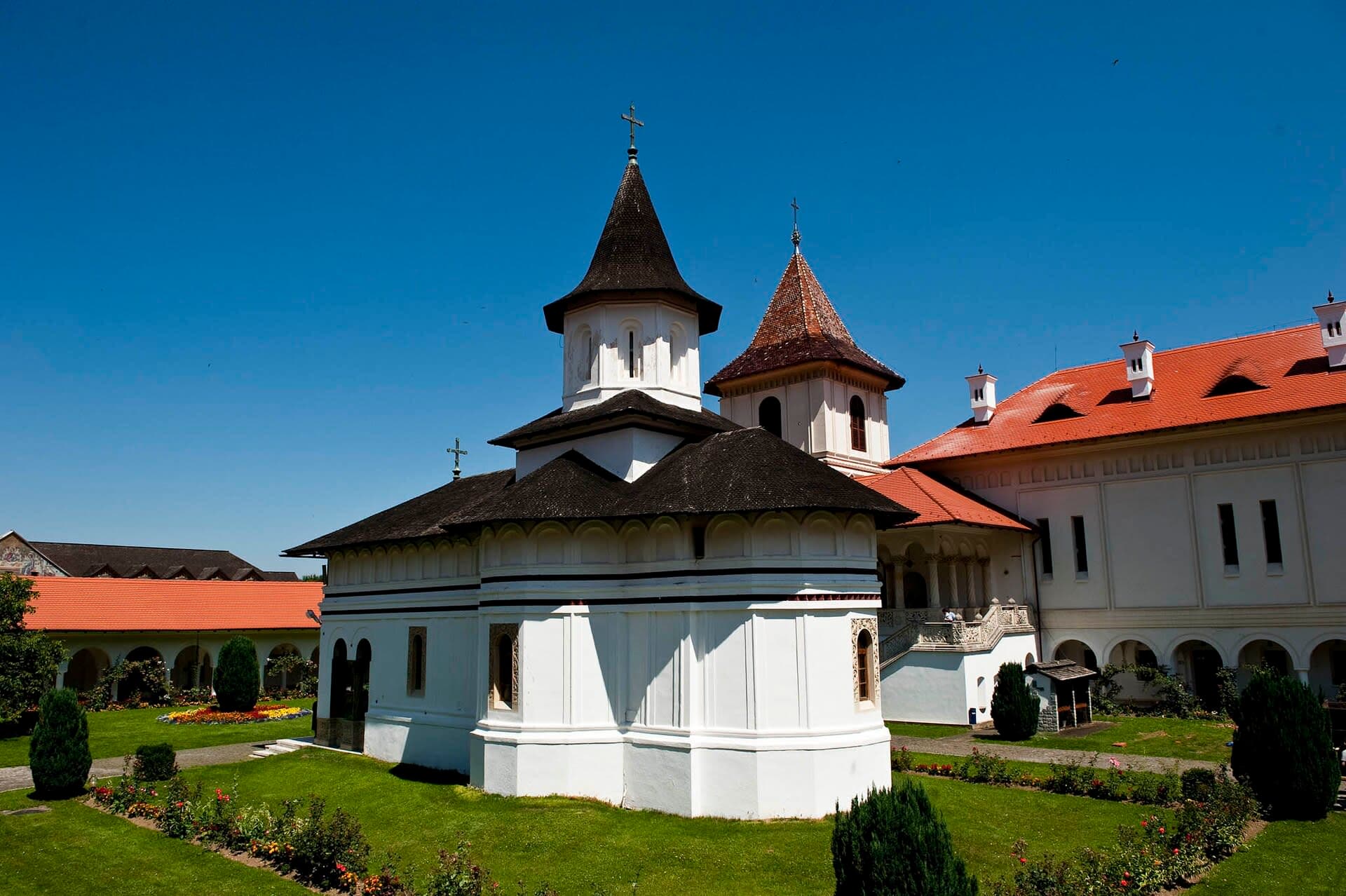
Sambata Brancoveanu Monastery, Romania
Stațiunea Climaterică Sâmbăta, Brașov, Romania
59.7 km away
Rupestra Sinca Veche Monastery, Romania
Șinca Veche, Brașov, Romania
85.4 km away