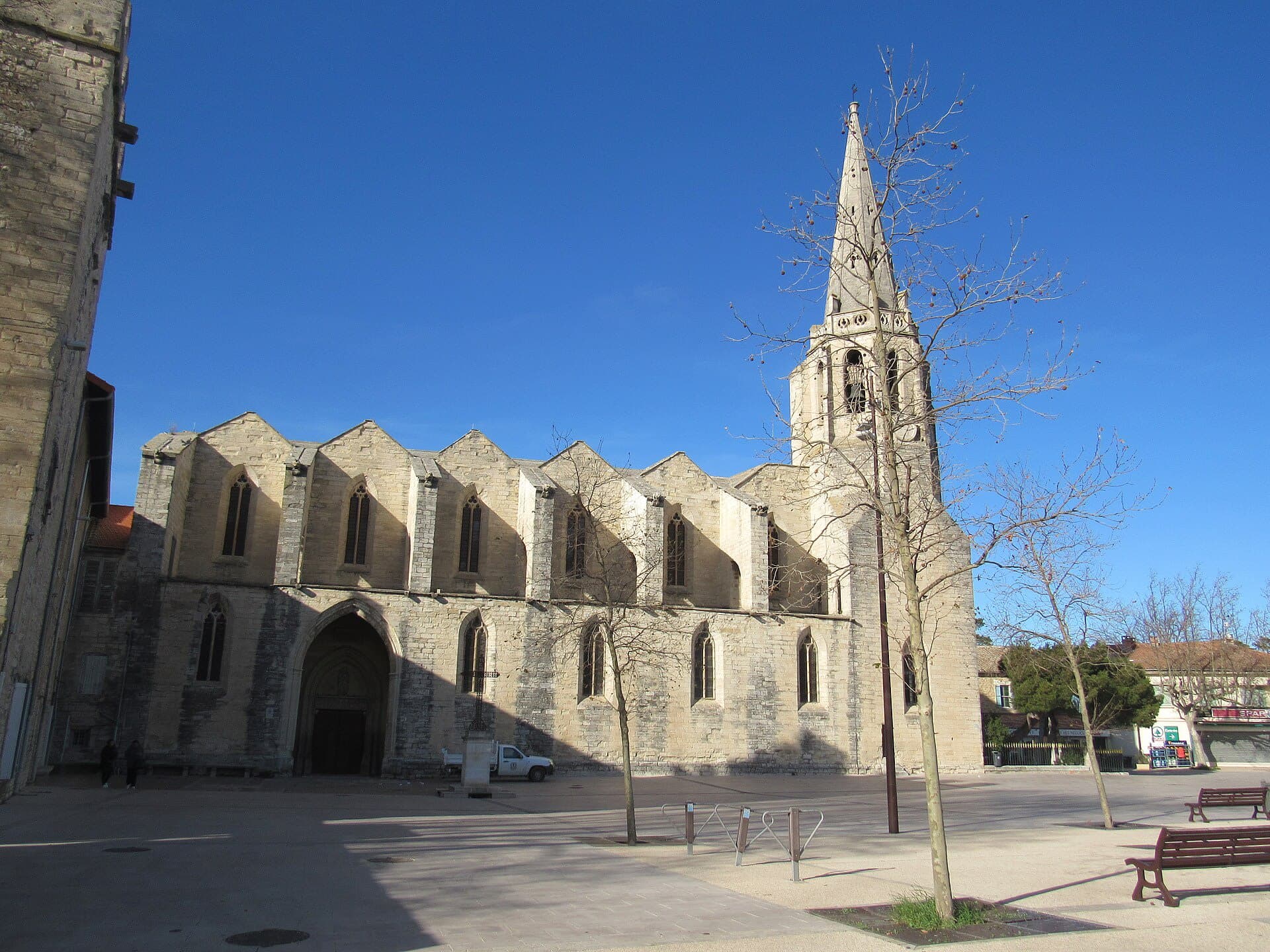
Church of Our Lady of Good Repos
A cardinal's gift of rest to Our Lady, enduring seven centuries in Avignon's countryside
Montfavet, Provence-Alpes-Côte d'Azur, France
At A Glance
- Coordinates
- 43.9401, 4.8333
- Suggested Duration
- 30 minutes to 1 hour for thorough visit
Pilgrim Tips
- Modest dress appropriate for Catholic church. Cover shoulders and knees.
- Generally permitted. Be discreet during services. Flash not recommended for historic artwork.
- Opening hours are listed as 'unsecured,' meaning they may vary. Confirm with the parish before visiting if timing is critical. The church is active during services; visitors should be respectful.
Overview
In the village of Montfavet, outside Avignon, a Gothic church carries the name its cardinal founder chose in 1341: Notre-Dame de Bon Repos, Our Lady of Good Rest. Built during the Avignon Papacy as both monastery and burial place, the church preserves a 14th-century statue of the Virgin and figured corbels depicting human virtues and vices. Less touristed than Avignon's famous sites, it offers encounter with medieval devotion.
The name tells you what was sought here. 'Bon Repos'—good rest, good repose. Cardinal Bertrand de Montfavès chose this site in 1341 for a monastery where he would be buried, naming it for Our Lady and the peace she might grant. He died before seeing his church completed, but his vision endured.
The building that rose in the 1340s reflects the era of the Avignon Papacy, when cardinals built magnificent residences throughout the region. Notre-Dame de Bon Repos follows the Southern Gothic pattern: a single nave bordered by chapels set between buttresses, all vaulted with ribbed arches that fall onto corbels carved with figures. Some represent virtues; others, vices. Charity. Lust. Pride. A singing monk. Medieval humanity in stone, watching over seven centuries of prayer.
The 14th-century statue of the Virgin and Child still stands here—1.6 meters of stone that has witnessed the passage of Augustinians, Récollets, Capuchins, revolutionary closure, and restoration as parish church. Through all of it, she has held her child. Through all of it, the name has persisted: Good Rest.
This is not one of Avignon's famous monuments. Tourists crowd the Papal Palace while Montfavet's church stands quieter, serving its parish as it has since 1840. For those willing to seek it out, it offers something the famous sites cannot: medieval sanctity without the crowds, a cardinal's prayer for rest still echoing.
Context And Lineage
Notre-Dame de Bon Repos was founded in 1341 by Cardinal Bertrand de Montfavès during the Avignon Papacy. The cardinal died before seeing his church completed, but was buried before its altar. After centuries of occupation by various religious orders, the Revolution closed the monastery. Restored as a parish in 1840, the church was classified as a Historic Monument in 1908.
Cardinal Bertrand de Montfavès—born around 1270 in Castelnau-Montratier, apostolic protonotary and canon-count of Lyon—purchased the fief of Montfavet in 1341. He named it 'Notre-Dame de Bon Repos' and planned a monastery where he would be buried. But the cardinal died in late 1342 or early 1343, before the masons Bertrand and Pierre Folcoaud of Avignon had completed their work.
Construction continued for four years after the cardinal's death, finishing in 1347. His body was laid under a flagstone before the altar—a tomb that has since been lost. The church he never saw completed would stand for nearly seven centuries, carrying his name and his hope for rest.
The monastery passed through several religious orders after the cardinal's death. Connected first to the Abbey of Saint-Ruf, then to the monastery of Aygueboune, it was transferred to the Œuvre du pont d'Avignon in 1452. Récollet friars arrived in 1613; Capuchins replaced them in 1759. The Revolution closed the monastery in 1794, expelling the religious and nationalizing the property.
The church survived by finding new purpose. It became a chapel-annex of Saint-Agricol parish in 1807, then an independent parish of Montfavet in 1840. Classification as a Historic Monument in 1908 protected the building; additional elements were inscribed in 2017. Today diocesan priests serve what Cardinal Bertrand founded nearly seven centuries ago.
Cardinal Bertrand de Montfavès
founder
French cardinal, born c. 1270, who purchased the Montfavet property in 1341 and founded the church as his burial place. He died in 1342/1343 before seeing the work completed, but was buried before the altar. The church carries his name to this day.
Bertrand and Pierre Folcoaud
builders
Master masons of Avignon who completed the church after the cardinal's death, finishing the work by 1347.
Pierre de Cohorn
notable burial
Swedish exile whose tomb from 1486 survives in a side chapel, with a funerary inscription recounting his 'unusual odyssey.' One of the few medieval graves that remains visible.
Why This Place Is Sacred
Notre-Dame de Bon Repos draws its sacred quality from the intersection of Avignon Papacy power and simple Marian devotion. The cardinal who founded it sought rest—spiritual peace and final burial. The 14th-century architecture, the ancient statue, and nearly seven centuries of continuous worship have created a space where medieval Christianity remains accessible.
The Avignon Papacy (1309-1377) transformed this region of Provence. Popes ruled from Avignon rather than Rome; cardinals built palaces and country residences throughout the territory. Notre-Dame de Bon Repos belongs to this world—a cardinal's livrée, a residence that included church and monastery where his soul would be prayed for after death.
Cardinal Bertrand de Montfavès purchased the property in 1341 and gave it its name. He wanted both retreat and tomb. But he died in 1342 or 1343, before his masons Bertrand and Pierre Folcoaud had finished the church. They buried him under a flagstone before the altar—a grave that has since been lost, though his foundation endures.
The architecture carries the weight of intention. Gothic arches rise toward heaven; figured corbels remind worshippers of human weakness and strength. A 14th-century statue of the Virgin, 1.6 meters tall, has stood here since the church's beginning. She is the Lady of Good Rest, the one to whom the cardinal commended his soul.
After the cardinal's death, various religious orders occupied the monastery: Augustinians connected to the Abbey of Saint-Ruf, then Récollet friars in 1613, then Capuchins in 1759. The Revolution ended this succession in 1794, expelling the religious and nationalizing the property. But the church survived, becoming a chapel-annex of Saint-Agricol in 1807 and finally an independent parish in 1840.
The 1908 classification as Historic Monument recognized what time had preserved: a complete example of Southern Gothic architecture from the Avignon Papacy, still serving as a place of worship.
Cardinal Bertrand de Montfavès founded the church as a monastery where he would be buried and his soul prayed for. The name 'Bon Repos' (Good Rest) expresses both the spiritual peace sought through Marian devotion and the final rest of death.
After centuries of monastic occupation by various orders, the Revolution closed the monastery and expelled the religious. The church's survival depended on its reintegration into parish life—first as chapel-annex, then as independent parish. Today it serves both as active place of worship and classified historic monument.
Traditions And Practice
Notre-Dame de Bon Repos functions as an active parish within the Diocese of Avignon. Mass is celebrated regularly. Visitors may attend services or explore the historic monument during open hours.
The cardinal founded the church for Masses to be said for his soul after death. This practice of memorial Masses was central to medieval Catholicism—the living praying for the dead, seeking to shorten their time in purgatory. The various religious orders who occupied the monastery maintained daily offices and private Masses for this and other intentions.
If possible, attend Mass to experience the church as living worship rather than solely as historic monument. For visiting without service, take time with the figured corbels—each one tells a story in stone. Find the 14th-century Virgin and Child and consider what it has witnessed. Look for the tomb of Pierre de Cohorn with its inscription from 1486.
Roman Catholic
ActiveNotre-Dame de Bon Repos has served as a Catholic place of worship since its 14th-century founding. Built during the Avignon Papacy by a cardinal seeking his burial place, the church now functions as an active parish within the Diocese of Avignon.
Regular parish Mass; veneration of the 14th-century Virgin and Child; parish community life.
Avignon Papacy Heritage
HistoricalThe church represents the era when popes ruled from Avignon and cardinals built palaces throughout Provence. Cardinal Bertrand de Montfavès's livrée exemplifies this period of ecclesiastical building and power.
Memorial Masses for the cardinal's soul; monastic offices by successive religious orders.
Experience And Perspectives
Visiting Notre-Dame de Bon Repos offers encounter with medieval Gothic architecture in a setting less crowded than Avignon's famous sites. The figured corbels, the ancient statue of the Virgin, and the atmosphere of continuous worship create conditions for quiet reflection on mortality, devotion, and the persistence of faith.
The church sits in Montfavet, a district of Avignon that lacks the tourist infrastructure of the city center. You arrive at something real—a parish church still in use, a historic monument that has not been transformed into museum. The facade, flanked by the towers of the old livrée (cardinal's residence), announces medieval origins without demanding attention.
Inside, the single nave opens before you—37 meters long, bordered by twelve chapels between the buttresses. Light falls through windows onto stone that has stood since the 1340s. The ribbed vaults draw the eye upward, their ribs falling onto corbels carved with figures: human types and moral themes in stone, weathered by centuries.
The 14th-century Virgin and Child anchors the space. She is not small—1.6 meters of stone, present here since the church was built. The child in her arms, the expression on her face, belong to medieval devotion. Later centuries added furnishings: a main altar from the Collégiale Saint-Pierre d'Avignon, a Christ on the Cross painting with a 13th-century wooden frame. Layers of time, gathered into one space.
What you will not find here is crowds. Avignon's Papal Palace draws the tourists. Notre-Dame de Bon Repos receives those who seek it out—pilgrims, students of architecture, travelers who have exhausted the famous sites and want something quieter. The parish is described as 'lively,' which means this is not a dead monument but a living church, still used for what Cardinal Bertrand intended: worship of God and petition to the Lady of Good Rest.
Approach the church as both historic monument and active parish. The architectural features—ribbed vaults, figured corbels, lateral chapels—reward careful looking. The 14th-century Virgin and Child deserves time. If Mass is being celebrated, you are welcome to attend.
Montfavet itself is modest. There is no pilgrimage infrastructure, no tourist shops. This is Avignon's countryside, a church serving its neighborhood. Let the simplicity be part of the experience.
Notre-Dame de Bon Repos invites interpretation through the lens of medieval ecclesiastical power, Gothic architecture, and continuous Marian devotion. Scholars see an example of cardinalate building during the Avignon Papacy. The faithful see a parish church where the Virgin grants the rest her name promises.
Art historians recognize Notre-Dame de Bon Repos as an example of Southern Gothic ('Gothique méridional'), characterized by a single nave with lateral chapels between buttresses. The figured corbels represent medieval allegorical thinking in stone. The church is part of the broader phenomenon of cardinalate 'livrées' built during the Avignon Papacy—residences that combined domestic, administrative, and religious functions.
The 1908 classification and 2017 extension as Historic Monument recognize the site's architectural and historical significance. The 14th-century Virgin and Child statue is noted as a significant medieval artifact.
Catholic tradition sees the church as a place of Marian devotion dedicated to 'Good Rest'—the peace that Mary grants to those who seek her. The cardinal's founding intention—to be buried here and prayed for—reflects medieval Catholic understanding of death, purgatory, and the communion of saints. The parish continues this tradition today.
What became of Cardinal Bertrand's tomb? Sources describe it as 'lost'—meaning the original flagstone before the altar is no longer identifiable. The circumstances of this loss are not documented. The cardinal who founded Notre-Dame de Bon Repos now rests somewhere beneath the floor he never saw completed, his grave unmarked.
Visit Planning
Notre-Dame de Bon Repos is located in Montfavet, a district of Avignon. The church is free to visit and open daily, though hours may vary. Mass times are available on the parish website.
Avignon offers lodging at all price points. Montfavet is a district of the city, accessible by short drive or bus from central accommodations.
Notre-Dame de Bon Repos is an active parish church and classified historic monument. Visitors are welcome to explore respectfully. Modest dress is expected; quiet behavior during services is required.
The church serves dual functions: parish worship and historic monument. During Mass or other services, visitors should remain quiet and respectful, participating or waiting until the service concludes. Outside service times, you are free to explore the architecture and artwork.
This is not a museum with guards and ropes. The space belongs to the parish; your presence is a guest's privilege. Treat it accordingly.
Modest dress appropriate for Catholic church. Cover shoulders and knees.
Generally permitted. Be discreet during services. Flash not recommended for historic artwork.
Donations appreciated for maintenance of this historic building.
Opening hours may vary; confirm with parish. Respectful behavior required. The church is accessible but may have limited facilities.
Sacred Cluster
Nearby sacred places create the location cluster described in the growth plan. This block is intentionally crawlable and links into the wider regional graph.
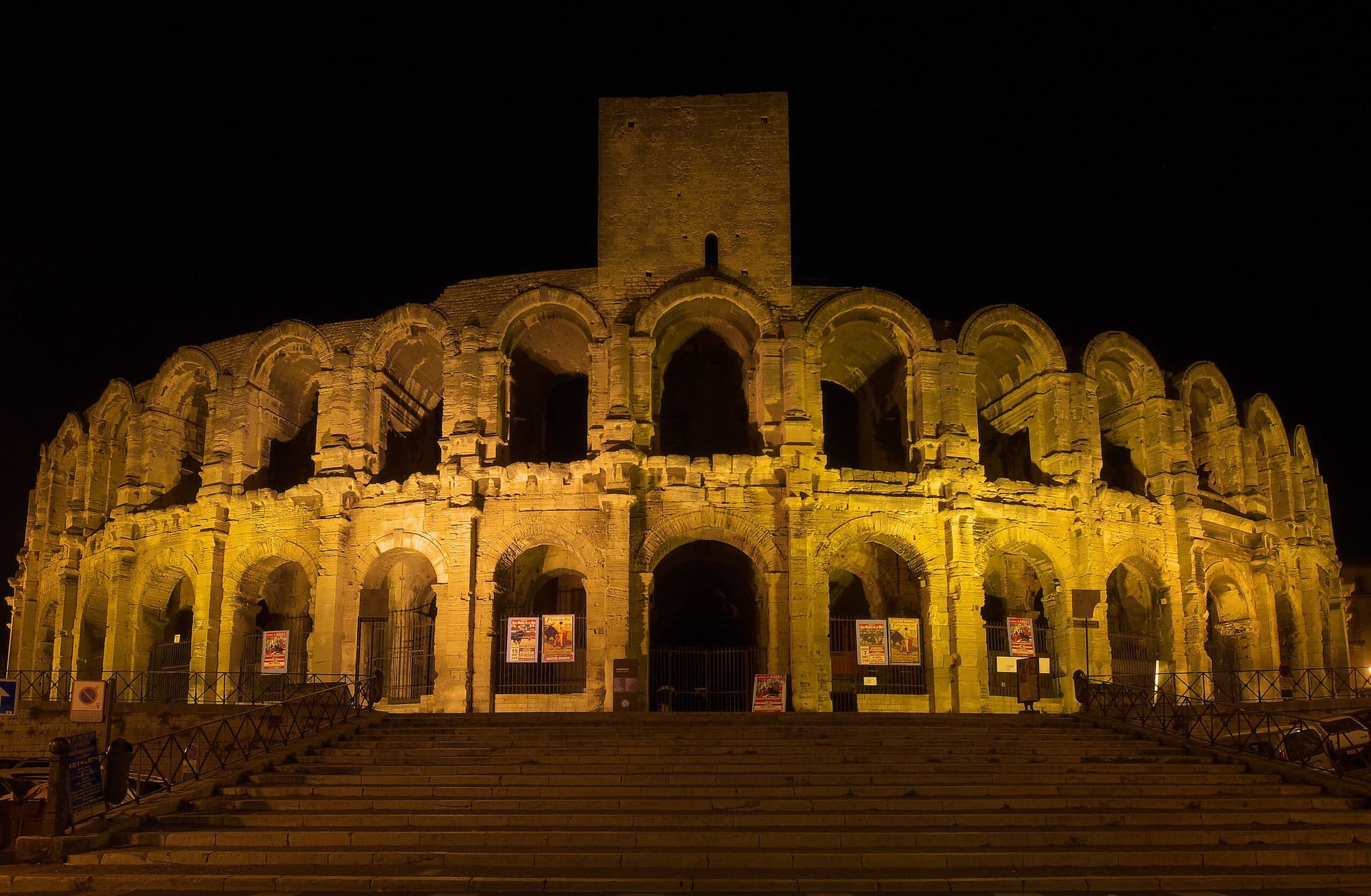
Arles
Arles, Provence-Alpes-Côte d'Azur, France
33.6 km away

Saint Sarah
Saintes-Maries-de-la-Mer, Provence-Alpes-Côte d'Azur, France
63.3 km away
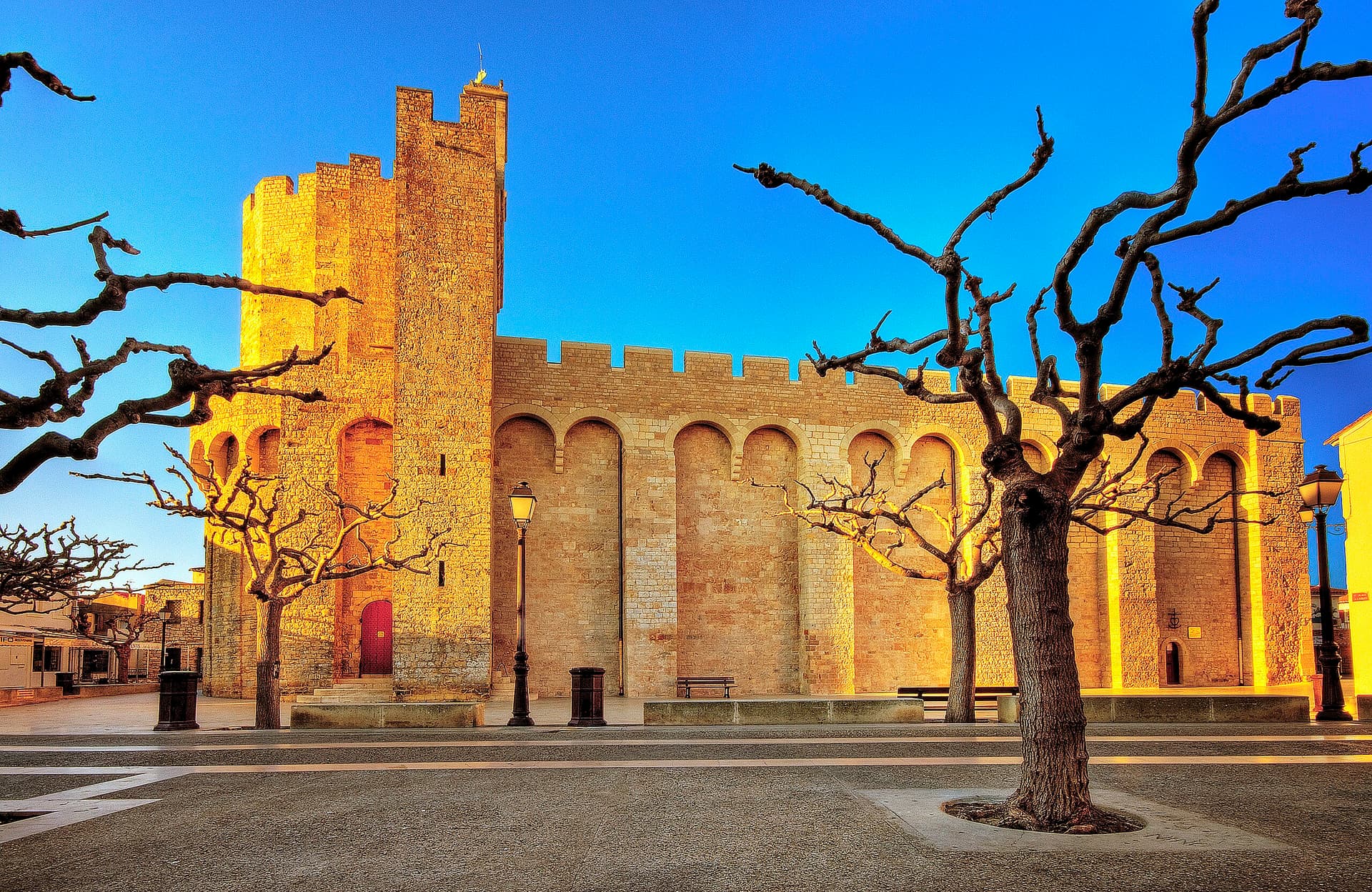
Church of the Saintes Maries de la Mer
Saintes-Maries-de-la-Mer, Provence-Alpes-Côte d'Azur, France
63.3 km away
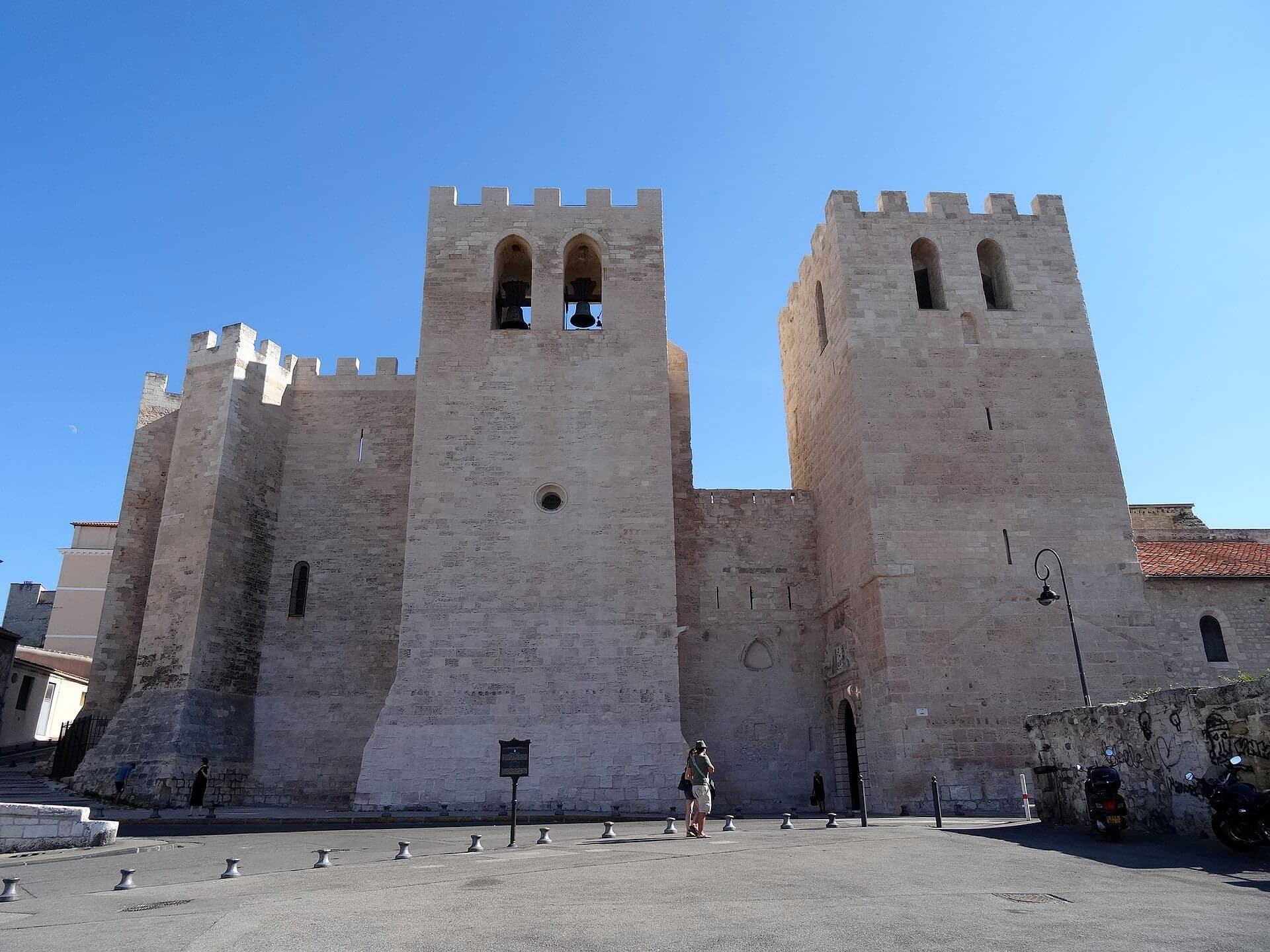
Abbey of Saint-Victor
Marseille, Provence-Alpes-Côte d'Azur, France
84.0 km away