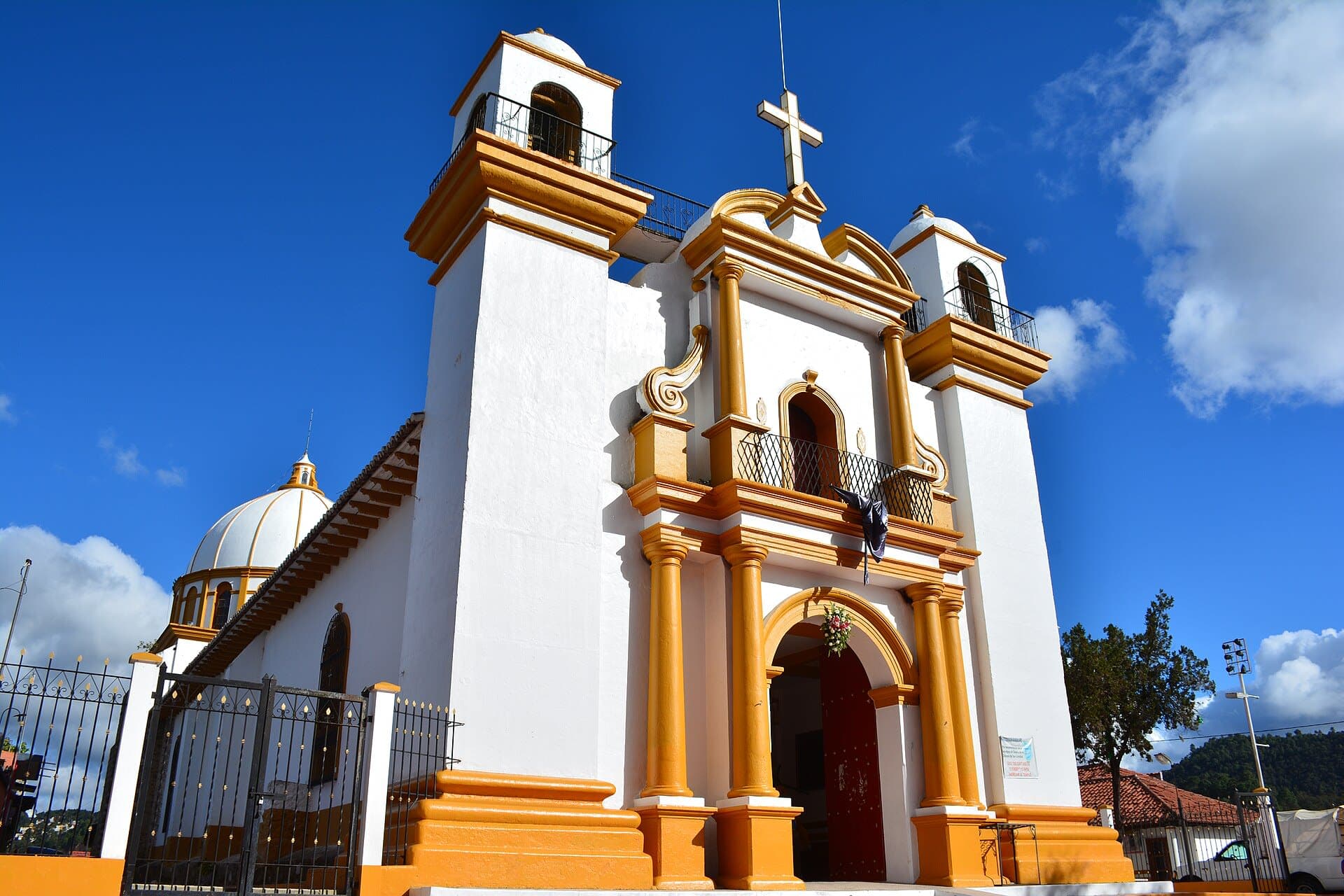
Church of Guadalupe, San Cristobal
Where pilgrims climb toward La Morenita on a hilltop above the highland city
San Cristóbal, Chiapas, Mexico
At A Glance
- Coordinates
- 16.7378, -92.6258
- Suggested Duration
- A minimum of 30 minutes allows for the climb, a brief church visit, and appreciation of the views. One to one-and-a-half hours provides time to enjoy the climb at a contemplative pace, explore the church interior, and take in the panoramas from multiple vantage points. Two or more hours allows for sunset viewing or attending a service.
- Access
- The church stands on Cerro de Guadalupe at the eastern end of Real de Guadalupe street in the Barrio de Guadalupe neighborhood. Walk east along Real de Guadalupe, a pedestrian street, from the main plaza. At the street's end, 79 stone steps climb the hill to the church. Alternatively, taxis can drive to the top via a back road for those unable to climb. The coordinates are approximately 16.7396, -92.6313.
Pilgrim Tips
- The church stands on Cerro de Guadalupe at the eastern end of Real de Guadalupe street in the Barrio de Guadalupe neighborhood. Walk east along Real de Guadalupe, a pedestrian street, from the main plaza. At the street's end, 79 stone steps climb the hill to the church. Alternatively, taxis can drive to the top via a back road for those unable to climb. The coordinates are approximately 16.7396, -92.6313.
- Modest dress is expected, appropriate to an active Catholic church. Shoulders and knees should be covered. Remove hats upon entering. Avoid shorts, tank tops, or revealing clothing. The altitude makes layers practical in any case, as temperatures can shift quickly.
- Photography is generally permitted both inside and outside the church. Be discreet, particularly during services. Do not use flash if it would disturb worshippers. Ask permission before photographing individuals at prayer. Remember that the church is a place of worship first; compose your images without treating devotees as subjects.
- This is an active place of worship. Visitors should maintain respectful behavior at all times, particularly during services. If Mass is in progress, either join quietly or wait outside. The church may close during midday hours, and access may be limited during special services.
Overview
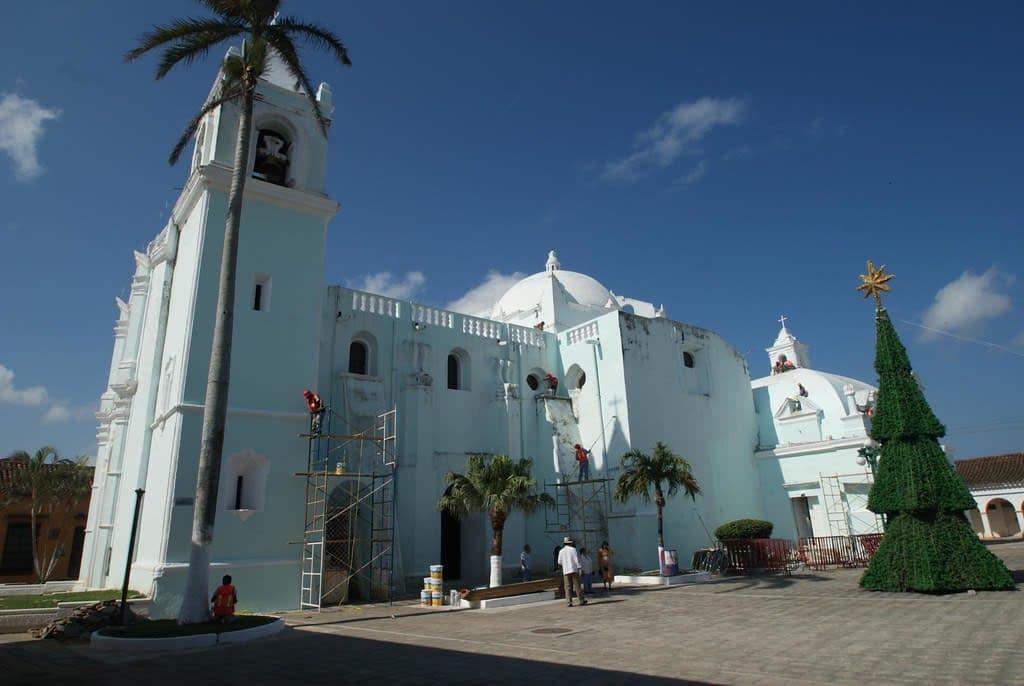
Rising above San Cristobal de las Casas on Cerro de Guadalupe, this 19th-century church draws devotees who climb its 79 stone steps to honor Mexico's most beloved sacred figure. The Virgin of Guadalupe, patroness of the nation and bridge between indigenous and Catholic worlds, receives pilgrims here year-round, with particular intensity on December 12.
Seventy-nine steps rise from the end of Real de Guadalupe street to a small white church on the hill. Each step carries the weight of nearly two centuries of devotion to La Morenita, the dark-skinned Virgin who appeared on Tepeyac Hill in 1531 and became the spiritual heart of Mexico.
The Church of Guadalupe is not grand. It lacks the Baroque splendor of Santo Domingo down in the colonial center, the historical weight of the 16th-century cathedral. What it has is elevation, and the particular power that comes from making pilgrimage physical. The climb matters. Benches offer rest along the way for those who need it, but the effort itself becomes prayer.
From the hilltop, the city spreads below, red-tiled roofs and church towers emerging from the highland valley. Behind the church, agricultural plots descend toward distant mountains. The vista opens something, an expansion of perspective that mirrors what many seek from La Morenita herself: to see their lives from a larger vantage.
This is Chiapas, land of the Tzotzil and Tzeltal Maya, where Catholicism has woven itself into indigenous traditions over five centuries. The Virgin of Guadalupe, who spoke Nahuatl to Juan Diego and whose image carries indigenous symbolism beneath its Catholic surface, holds particular resonance here. She is both fully Catholic and something more, a presence that honors what came before.
Context And Lineage
Built in 1834-1835 as the Barrio de Guadalupe neighborhood expanded from colonial San Cristobal de las Casas, this church honors Mexico's patron saint with nearly two centuries of continuous devotion. The Virgin of Guadalupe, whose 1531 apparition to Juan Diego created one of history's most powerful religious symbols, receives particular veneration here in the Maya highlands, where indigenous and Catholic traditions have interwoven for five centuries.
The founding narrative of Guadalupan devotion occurred in 1531, ten years after the Spanish conquest of the Aztec empire. A Nahua man named Juan Diego encountered a woman on Tepeyac Hill near Mexico City, at a site where the goddess Tonantzin had long been honored. The woman spoke to him in Nahuatl, his native language, and asked that a temple be built in her honor. When the bishop demanded proof, she instructed Juan Diego to gather roses from the hilltop, though it was December and no roses grew there. When he opened his tilma to release the flowers before the bishop, her image had been miraculously imprinted on the cloth.
La Morenita, the little brown one, became Mexico's spiritual mother. Her dark skin, her indigenous features, her appearance at a sacred site of the conquered people, speaking their language, transformed Catholic devotion into something distinctively Mexican. The novelist Carlos Fuentes wrote that one cannot truly be considered Mexican unless one believes in the Virgin of Guadalupe. She is the bond that holds a disparate nation together.
The Church of Guadalupe in San Cristobal de las Casas participates in this national devotion while adding local dimensions. Here in Chiapas, the largest population of indigenous Maya in Mexico has developed its own relationship with La Morenita, incorporating her into spiritual frameworks that predate Spanish arrival by millennia.
The Diocese of San Cristobal de las Casas, established in 1539, is one of the oldest in the Americas. It takes its name from Bartolome de las Casas, the Dominican friar who defended indigenous rights against Spanish colonial cruelty. This legacy of advocacy continued through Bishop Samuel Ruiz, who translated the Bible into Tzotzil and Tzeltal languages and defended Maya communities during the Zapatista conflict of the 1990s. The Church of Guadalupe belongs to this diocesan tradition of bridging Catholic faith with indigenous heritage.
Our Lady of Guadalupe
deity/sacred_figure
The Virgin Mary in her Mexican apparition, appearing with dark skin and indigenous features. Patroness of Mexico and the most venerated Catholic figure in the Americas. The canvas painting on the main altar depicts her traditional image.
Juan Diego
saint
The Nahua man to whom the Virgin appeared in 1531. Canonized in 2002, he is the first indigenous saint of the Americas. His encounter on Tepeyac Hill created the foundation for Guadalupan devotion.
Bishop Carlos Maria Colina y Rubio
historical
Bishop of Chiapas who oversaw architectural improvements to the church during his tenure (1854-1864). He received the Order of Guadalupe from President Santa Anna, connecting ecclesiastical and national devotion.
Bishop Samuel Ruiz Garcia
historical
Bishop of the Diocese of San Cristobal de las Casas (1959-1999) who pioneered inculturation and indigenous rights. His legacy shapes the character of Catholicism throughout this region, honoring the intersection of Maya and Christian traditions.
Why This Place Is Sacred
The Church of Guadalupe draws its sacred quality from the convergence of physical ascent, nearly 200 years of continuous devotion, and its dedication to Mexico's most potent religious symbol. For the Maya communities of highland Chiapas, who have incorporated Guadalupan devotion into their own spiritual practice, this hilltop sanctuary connects Catholic pilgrimage with deeper traditions of honoring elevated sacred sites.
Hilltops carry significance across human cultures. The elevation, the effort of ascent, the changed perspective at the summit, the sense of being closer to sky than earth. The Church of Guadalupe participates in this ancient grammar of sacred geography, requiring pilgrims to climb, to work for their arrival.
The Virgin of Guadalupe herself appeared on a hill, Tepeyac, where the Aztec goddess Tonantzin had been honored for centuries before. She spoke to Juan Diego in his own language, appeared with dark skin like his own, and left her image on his tilma surrounded by indigenous symbolism that his people would have immediately recognized: the blue-green mantle of the divine couple, the sign of pregnancy at her belt, the nahui-ollin symbol of the cosmos. She was Catholic and she was something else, someone who honored the sacred that was already present.
This layering continues in Chiapas. The Diocese of San Cristobal de las Casas, of which this church is part, became known under Bishop Samuel Ruiz for pioneering inculturation: translating scripture into indigenous languages, incorporating local customs into Catholic practice, recognizing that the faith brought by Spanish missionaries had been transformed by those who received it into something distinctively their own. In nearby Tzotzil Maya communities, Catholic churches contain pine needle floors, copal incense smoke, and prayers in ancient languages. The boundary between traditions has become permeable.
The Church of Guadalupe stands at this threshold. Visitors report the usual thin-place qualities: a sense of peace that exceeds the surroundings, moments of unexpected clarity, the feeling that something listens. Whether this reflects accumulated human devotion, the psychological effects of physical pilgrimage, or something beyond measurement, the consistency of such reports suggests something worth attending to.
The church was built in 1834-1835 as the Barrio de Guadalupe neighborhood expanded from the colonial center into the hills. It was constructed to serve the local community and to honor Mexico's patroness. Historical records indicate the area was still sparsely populated in 1844, with the church standing somewhat isolated on its hilltop above the growing city.
Architectural improvements during Bishop Carlos Maria Colina y Rubio's tenure in the mid-19th century enhanced the structure. In 1850, Cathedral Dean Lino Garcia donated a carved image of the Virgin that remains in the side chapel today. The church experienced the upheavals of Mexican history, including violent confrontations during the anti-reelectionist struggle of 1866, when its isolated hilltop position made it strategically significant. Through these changes, the church has maintained its essential character as a neighborhood parish and pilgrimage destination, continuing to draw those who climb the steps seeking La Morenita's presence.
Traditions And Practice
The Church of Guadalupe hosts regular Catholic worship and serves as a pilgrimage destination, particularly for the Feast of the Virgin of Guadalupe on December 12. Visitors may attend Mass, sit in contemplation, or climb the steps as an act of devotion. The church welcomes those who come seeking La Morenita's presence.
Pilgrims climb the 79 steps to the church as an act of devotion combining physical effort with spiritual intention. Some may climb on their knees as penance or gratitude. Upon reaching the church, devotees venerate the images of the Virgin on the main altar and in the side chapel, lighting candles and laying flowers. Traditional offerings include roses, particularly meaningful given their role in the original apparition story, and marigolds, the flower of the dead in Mexican tradition.
Regular Masses serve the Barrio de Guadalupe neighborhood throughout the year. On December 12, the Feast of the Virgin of Guadalupe, the church becomes the center of celebration as pilgrims and torch-bearers arrive from across Chiapas. The altar disappears beneath flowers brought by devotees. Fireworks crack through the night. Processions wind through the streets. The cockerel's crow sounds as the night-long vigil continues into dawn. This festival extends through December 21, part of the larger celebration of San Cristobal de las Casas.
In nearby Tzotzil Maya communities, Guadalupan devotion incorporates indigenous elements: copal incense, prayers in native languages, pine needles and candles arranged in traditional patterns. The Virgin serves as a bridge, allowing ancestral practice to continue within Catholic form.
If you seek connection rather than sightseeing, climb the steps with intention. You need not be Catholic, only sincere. Carry a question, a gratitude, or simply open attention. Let the effort of the climb be your offering.
Inside the church, sit quietly before the image of La Morenita. Notice what arises. If you are comfortable, light a candle, a small gesture that joins your presence to centuries of pilgrims who have done the same.
If you visit during December, particularly around December 12, expect crowds but also an intensity of devotion rarely encountered in more secular contexts. You will witness faith as lived practice, not museum exhibit.
Roman Catholicism
ActiveThe Church of Guadalupe is an active parish within the Diocese of San Cristobal de las Casas, serving the Barrio de Guadalupe neighborhood and drawing pilgrims from across Chiapas. The diocese, named for Bartolome de las Casas and shaped by Bishop Samuel Ruiz's legacy of inculturation, represents a Catholicism distinctively woven with Maya heritage.
Regular Mass celebrations serve the local community. The Feast of the Virgin of Guadalupe on December 12 brings pilgrims who climb the steps to the flower-covered altar. Devotees light candles, lay flowers, and venerate the images of La Morenita on the main altar and in the side chapel.
Guadalupan Devotion
ActiveThe Virgin of Guadalupe is Mexico's patron saint and the most beloved religious figure in the nation. Carlos Fuentes called her 'the rubber band that binds this disparate nation into a whole.' As a mestiza figure, La Morenita bridges indigenous and Spanish heritage. This church on the hill serves as a local shrine to this universal Mexican symbol.
Climbing the 79 steps is itself an act of devotion, combining physical effort with spiritual intention. Pilgrims bring flowers, especially roses recalling the apparition miracle. The December 12 celebrations include torch-bearer processions, all-night vigils, fireworks, and music. The altar disappears beneath offerings as the community honors their patroness.
Indigenous Maya Catholic Syncretism
ActiveHighland Chiapas is home to over two million Maya people, primarily Tzotzil and Tzeltal. Catholic practice in this region has incorporated indigenous traditions for five centuries, creating a distinctive synthesis honored by the diocese's policy of inculturation. The Virgin of Guadalupe, with her indigenous features and her connection to pre-Christian sacred geography, serves as a natural bridge between worlds.
While syncretic practices are more visible in Maya community churches like San Juan Chamula, their influence pervades the region. Indigenous devotees may pray in Tzotzil or Tzeltal. The burning of copal incense, the use of traditional flowers and candles, and the integration of indigenous cosmological concepts into Catholic practice reflect centuries of creative adaptation. The act of climbing to an elevated church resonates with Maya traditions of honoring high places.
Experience And Perspectives
Visitors describe the climb as rewarding both physically and contemplatively, with panoramic views from the summit offering perspective over the highland valley. The small church interior holds an ornate concentration of religious imagery centered on the Virgin of Guadalupe. Many report a sense of peace and accomplishment upon reaching the hilltop sanctuary.
The approach matters. Walking east along Real de Guadalupe, the pedestrian street that gives the church its landmark name, the hill rises gradually into view. The 79 steps begin where the street ends, climbing through the neighborhood toward the white church above.
Benches line the stairway at intervals for those who need to rest. The altitude of San Cristobal de las Casas, over 7,000 feet above sea level, makes even modest climbs more demanding than visitors from lower elevations expect. Taking this slowly is not weakness but wisdom, and the pauses offer chances to look back as the city unfolds below.
The church itself is modest in scale but rich in devotional imagery. Crucifixes concentrate on the walls in unusual density. The canvas painting of the Virgin of Guadalupe on the main altar commands attention, her serene gaze meeting pilgrims who have climbed to see her. In a side chapel, the carved Virgin donated in 1850 receives particular veneration.
Many visitors describe watching sunset from the church steps or the vista point behind the building, the highland light turning golden over the valley as evening approaches. Others come in early morning, when the air is cool and the climb less strenuous. Those who attend Mass experience the church as the local community knows it, a place of weekly worship rather than tourist destination.
The emotional tenor varies. Some feel simple satisfaction at reaching the summit and enjoying the view. Others find themselves moved in ways they did not anticipate, tears arriving without clear cause, the sense of having arrived somewhere they needed to be. The reports do not promise transformation but suggest receptivity to whatever the seeker brings.
The Church of Guadalupe responds to how you approach it. If you climb quickly, photograph the view, and leave, it offers a pleasant vista and a small colonial church. If you climb slowly, perhaps carrying a question or intention, and sit in the church's quiet before the image of La Morenita, something else may become available.
Consider visiting twice: once for exploration and photography, once to simply be present. The second visit, with the novelty resolved, allows subtler qualities to emerge. If you are comfortable in Catholic practice, attending Mass connects you with the community for whom this place is home. If you come from another tradition or none, the church welcomes quiet presence and does not require confession of faith.
The Church of Guadalupe invites understanding from multiple angles: as colonial heritage, as living parish, as pilgrimage site, and as a place where indigenous and Catholic spirituality have woven together over centuries. Each perspective illuminates something true while remaining incomplete on its own.
Scholars recognize the Church of Guadalupe as part of the 19th-century expansion of San Cristobal de las Casas beyond its colonial core. While less architecturally significant than the 16th and 17th-century churches in the historic center, it exemplifies the continuing centrality of Guadalupan devotion in Mexican Catholicism. The hilltop placement follows a pattern seen across Latin America, where churches were often deliberately positioned on elevated sites, sometimes overlaying locations sacred to pre-colonial peoples. The Virgin of Guadalupe herself is understood by scholars as Mexico's most potent religious and national symbol, representing a creative synthesis of Catholic and indigenous traditions that enabled evangelization while preserving elements of native spirituality.
For the Tzotzil and Tzeltal Maya communities of highland Chiapas, Guadalupan devotion has been incorporated into a syncretic Catholic practice that preserves elements of indigenous spirituality. The Virgin of Guadalupe, with her dark skin and her appearance on a hill sacred to the goddess Tonantzin, resonates with indigenous sensibilities. In this region, the Diocese of San Cristobal de las Casas pioneered inculturation under Bishop Samuel Ruiz, translating scripture into indigenous languages and honoring local customs within Catholic worship. The hilltop church, requiring physical ascent, connects to Maya traditions of honoring elevated sacred sites.
Whether Cerro de Guadalupe held any pre-colonial sacred significance to the Maya remains undocumented. The specific circumstances of the 1866 conflict at the church during the anti-reelectionist struggle are unclear. The complete provenance and artistry of the 1850 carved Virgin image in the side chapel awaits fuller research. These gaps remind us that even well-visited sites hold mysteries.
Visit Planning
The Church of Guadalupe sits at the eastern end of Real de Guadalupe street, reached by climbing 79 stone steps from the historic center. Free admission. Open during daytime hours with possible midday closure. The altitude of over 7,000 feet makes the climb more strenuous than expected. December 12 brings the most significant celebrations.
The church stands on Cerro de Guadalupe at the eastern end of Real de Guadalupe street in the Barrio de Guadalupe neighborhood. Walk east along Real de Guadalupe, a pedestrian street, from the main plaza. At the street's end, 79 stone steps climb the hill to the church. Alternatively, taxis can drive to the top via a back road for those unable to climb. The coordinates are approximately 16.7396, -92.6313.
San Cristobal de las Casas offers lodging at all price points throughout the historic center, from hostels to boutique hotels. Many accommodations are within walking distance of the Guadalupe steps. The city serves as a base for exploring the Maya highlands of Chiapas.
As an active Catholic church, the Church of Guadalupe asks visitors to dress modestly, maintain quiet respect, and avoid disturbing worshippers. Photography is generally permitted but should be practiced discretely. The church welcomes visitors between services.
The essential principle is remembering that this is someone's church. While visitors are welcome, local parishioners come here for prayer, Mass, and devotion. Their experience takes precedence over visitor curiosity or photography.
Maintain a quiet and reverent demeanor inside the church. Silence mobile phones. Do not interrupt those at prayer. If Mass is in progress when you arrive, either join quietly at the back or wait outside until it concludes.
The climb to the church passes through a residential neighborhood. Be respectful of residents whose homes line the stairs. This is not a theme park approach but a walk through people's daily lives.
Modest dress is expected, appropriate to an active Catholic church. Shoulders and knees should be covered. Remove hats upon entering. Avoid shorts, tank tops, or revealing clothing. The altitude makes layers practical in any case, as temperatures can shift quickly.
Photography is generally permitted both inside and outside the church. Be discreet, particularly during services. Do not use flash if it would disturb worshippers. Ask permission before photographing individuals at prayer. Remember that the church is a place of worship first; compose your images without treating devotees as subjects.
Flowers, particularly roses and marigolds, are traditional offerings to the Virgin of Guadalupe. Candles may be lit at the church. Small monetary donations support the church's maintenance. During the December 12 feast, devotees traditionally cover the altar in flowers.
The church may close during midday hours. Some visitors have found it closed by 6pm. Access may be limited during special services. The church is always open on December 12 for feast day celebrations, though expect large crowds.
Sacred Cluster
Nearby sacred places create the location cluster described in the growth plan. This block is intentionally crawlable and links into the wider regional graph.