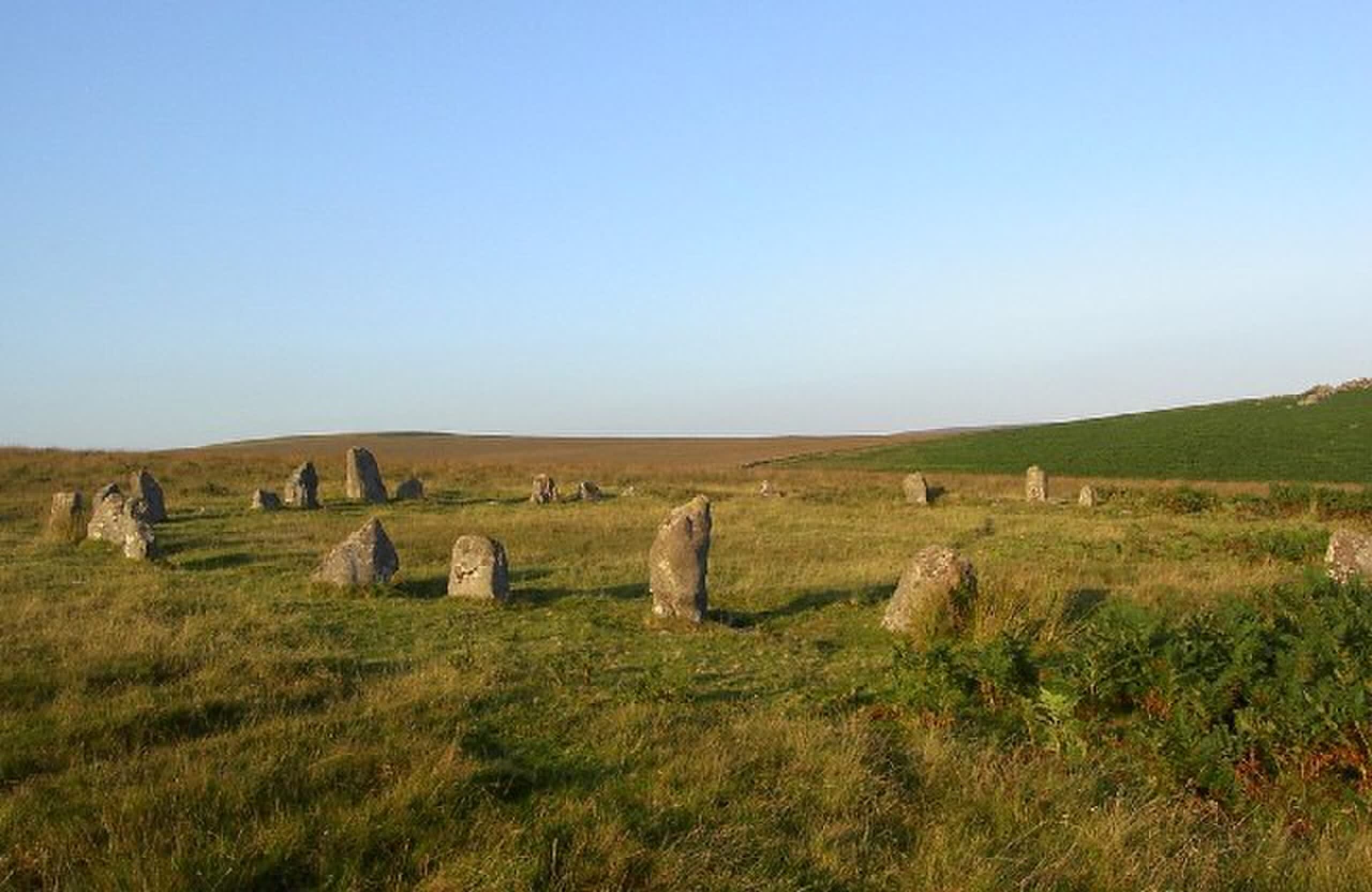
Brisworthy Stone Circle
A Bronze Age circle on Dartmoor where time slows and the moor speaks
Shaugh Prior, Devon, United Kingdom
At A Glance
- Coordinates
- 50.4716, -4.0240
- Suggested Duration
- Half a day combining Brisworthy with the nearby Ringmoor stone row and cairn circle
- Access
- Brisworthy Stone Circle lies on Ringmoor Down within Dartmoor National Park, at grid reference SX 564 654. The nearest approach is from Brisworthy hamlet, reached via narrow Devon lanes from Shaugh Prior or the B3212. Limited informal parking exists near the hamlet. Alternative access from Cadover Bridge adds distance but offers easier parking. The site requires walking several hundred metres across open moorland with uneven, potentially boggy ground. Not wheelchair accessible. An OS map (Explorer OL28 Dartmoor) is strongly recommended.
Pilgrim Tips
- Brisworthy Stone Circle lies on Ringmoor Down within Dartmoor National Park, at grid reference SX 564 654. The nearest approach is from Brisworthy hamlet, reached via narrow Devon lanes from Shaugh Prior or the B3212. Limited informal parking exists near the hamlet. Alternative access from Cadover Bridge adds distance but offers easier parking. The site requires walking several hundred metres across open moorland with uneven, potentially boggy ground. Not wheelchair accessible. An OS map (Explorer OL28 Dartmoor) is strongly recommended.
- No specific dress requirements. Practical outdoor clothing is essential: sturdy waterproof boots, layers for changing weather, waterproof jacket. The moor can be cold and wet even in summer. In winter, full hillwalking equipment may be appropriate.
- Photography is freely permitted. The remote setting and weathered stones offer rich opportunities. Be mindful of others who may be seeking quiet contemplation.
- The site's remoteness, while contributing to its atmosphere, requires practical awareness. Check weather before setting out; Dartmoor mist can descend rapidly. Carry an OS map and know how to use it. Inform someone of your plans. The ground can be boggy, especially after rain. Mobile phone signal is unreliable. These cautions are practical rather than spiritual, the site itself posing no dangers beyond those of any remote moorland location.
Overview
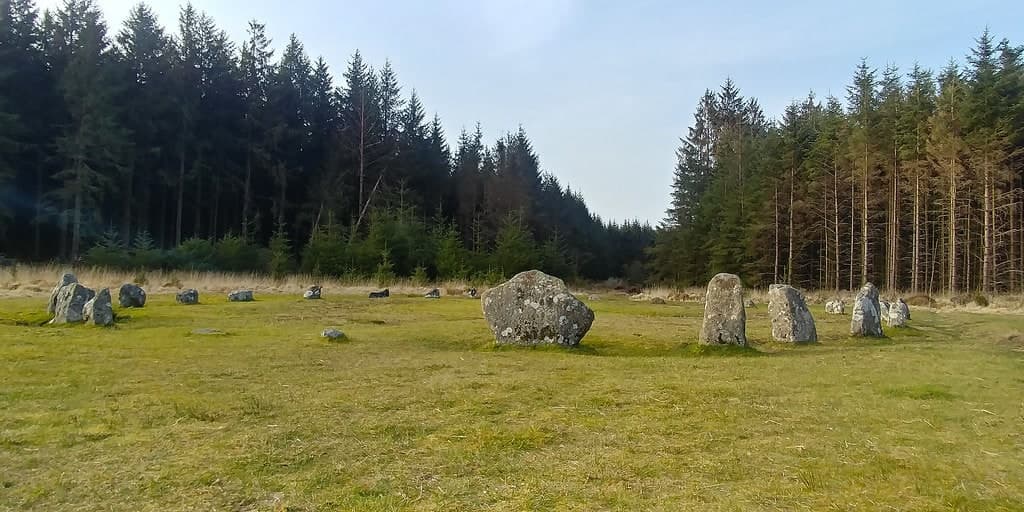
On the windswept heights of Ringmoor Down, twenty-four weathered granite stones mark a space where Bronze Age communities gathered four thousand years ago. Brisworthy Stone Circle stands apart from Dartmoor's more famous monuments, requiring a walk across open moorland to reach, rewarding those who make the journey with solitude and atmosphere. The graded height of the stones, ascending from south to north, hints at processional routes lost to time. Local folklore whispers of buried treasure, while contemporary seekers find something more valuable: quiet connection with prehistoric Britain.
The stones of Brisworthy wait in patient silence on Ringmoor Down. To reach them requires crossing open moorland, stepping over rough ground where Bronze Age farmers once walked, passing through a landscape dense with their monuments. This is not a site that reveals itself from a car park. It must be sought.
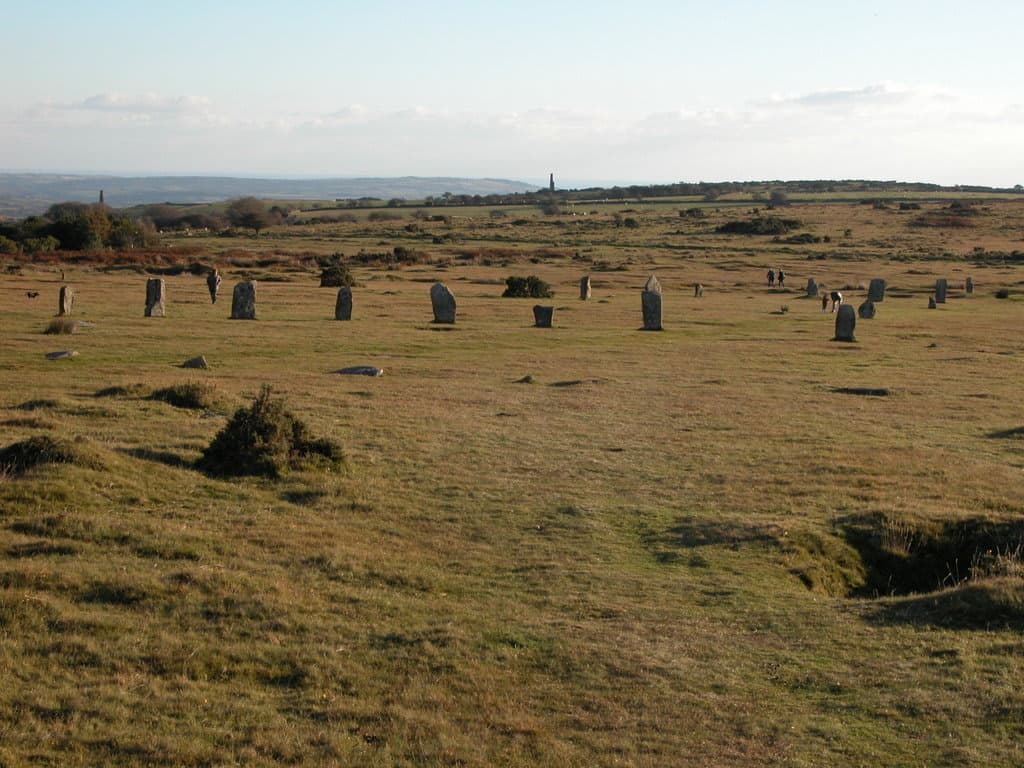
The circle forms a slightly flattened oval, roughly eighty feet across. Twenty-four stones remain upright, the tallest barely reaching chest height, the smallest rising knee-high from the grass. They are arranged with deliberate care, graded in height from south to north, suggesting processions or orientations we can no longer reconstruct. A low rubble bank, visible only to trained eyes or LIDAR data, once surrounded most of the circumference.
What the Bronze Age builders intended here remains unknown. The nearby stone row, the scattered cairns across the moor, the settlement enclosures visible as grassy banks, all speak of a landscape organized around meanings we have lost. Archaeologist Aubrey Burl proposed that Brisworthy served as a focal centre for the scattered farming communities of the Upper Plym Valley, a place where people from isolated homesteads could gather. The charcoal found during early excavation hints at fires, perhaps for feasting or ceremony. Beyond such fragments, the site keeps its secrets.
Today the circle draws walkers, archaeologists, and seekers. Contemporary pagans find in its remote setting a place for meditation away from crowds. The treasure legend, claiming that discovery of what lies buried here would allow 'all England to plough with a golden share,' preserves folk memory of ancient significance. What visitors take away is less material: the sense of stepping outside ordinary time, of standing where others stood millennia ago, of being small beneath the Dartmoor sky.
Context And Lineage
Brisworthy Stone Circle was constructed during the Bronze Age, approximately 2500-1500 BCE, by farming communities who left no written records but shaped Dartmoor's landscape with monuments that endure. The circle forms part of an extensive ceremonial complex in the Upper Plym Valley, alongside stone rows, cairns, and settlement enclosures. In 1909, the heavily fallen circle was restored, re-erecting stones to their presumed original positions.
The Bronze Age farmers who built Brisworthy remain anonymous. We know them only through what they constructed: the stone circles and rows, the cairns containing their dead, the enclosure walls around their settlements. Beginning around 2500 BCE, communities in the Upper Plym Valley began marking the landscape with monuments that required communal effort. Granite boulders were selected, transported, and erected in precise arrangements. Generation after generation contributed to what we now call a ceremonial landscape, a concentrated area of ritual significance. At Brisworthy, they created an oval ring of perhaps forty or more stones, graded in height from south to north, surrounded by a low rubble bank. Why here? What did the circle mean to them? What ceremonies occurred within its perimeter? These questions have no answers. What we have is the stones themselves, grey granite witnesses to beliefs that died with their makers.
The lineage at Brisworthy spans four thousand years of unknowing. The Bronze Age builders left only stones and questions. No continuous tradition connects us to their beliefs. Medieval and early modern farmers worked the surrounding land, perhaps viewing the stones with the mixture of fear and curiosity common to such monuments. The treasure legend, promising that buried wealth would allow all England to plough with a golden share, hints at folk memory of ancient significance. Nineteenth-century antiquarians documented what they found, though systematic study came only with the 1909 restoration. Today's visitors include archaeologists seeking to understand, pagans seeking to connect, and walkers seeking the particular quality of solitude the moor provides. Each brings their own meaning to a place whose original meaning is lost.
Breton and the Dartmoor Barrow Committee
R.H. Worth
Aubrey Burl
Why This Place Is Sacred
Brisworthy's quality as a thin place emerges from its remoteness, its age, and its integration with a wider ceremonial landscape. The effort required to reach it creates natural threshold crossing. The knowledge that forty generations have passed since its construction connects visitors to deep time. And the surrounding monuments, the stone rows and cairns and enclosures visible across the moor, reinforce the sense of entering sacred Bronze Age space.
The walk to Brisworthy is itself a ritual. Leaving the enclosed farmland near the hamlet, crossing a stile onto open moor, scanning the horizon for the small grey shapes of stones against the grass, all this creates gradual transition from ordinary into liminal space. By the time you reach the circle, you have earned your arrival.
Scale operates differently here than at Avebury or Stonehenge. These are not towering megaliths but modest uprights, the tallest barely exceeding a metre. Yet their arrangement in precise oval formation, their graded heights suggesting ancient orientation, their survival across four thousand years of Dartmoor weather, creates its own power. The intimacy allows direct encounter. You can walk among them, touch their rough granite surfaces, sit within the space they define.
The surrounding landscape amplifies the effect. Within a few hundred metres stand the Ringmoor stone row and cairn circle. The Legis Lake encircled cairn lies nearby. The rare cup-marked boulder known as the Brisworthy Cup Stone, one of only two or three on all of Dartmoor, sits incorporated into a wall near the hamlet entrance. This concentration of prehistoric monuments creates what archaeologists call a ceremonial landscape: a place where Bronze Age communities invested sustained effort over generations, marking the land with structures that outlasted their makers by millennia.
Time behaves strangely in such places. An hour passes unnoticed. The wind that crosses the moor has crossed it for thousands of years. The granite beneath your feet formed three hundred million years ago. The stones were placed here when Mesopotamia was developing writing and Egypt was building pyramids. These temporal scales exceed comprehension, yet somehow the body senses them. Visitors report feeling connected to something larger than themselves, to deep time, to the continuity of human presence in landscape.
The original purpose of Brisworthy Stone Circle remains genuinely unknown. Archaeologist Aubrey Burl proposed it served as a ritual centre for the scattered farming settlements visible across the Upper Plym Valley. The graded height of stones from south to north may indicate processional routes or directional significance now lost. Trial excavation in 1909 yielded only charcoal and a single flint flake, consistent with findings at other Dartmoor circles where charcoal suggests ceremonial fires. The absence of burial evidence within the circle itself, combined with numerous funerary cairns nearby, suggests possible distinction between spaces for the living and the dead. Researcher Gerrard proposed the low rubble bank might indicate this was originally a ring cairn rather than a pure stone circle. The honest answer is that we cannot reconstruct what ceremonies occurred here or what beliefs motivated the construction.
Brisworthy's meaning has transformed across millennia. Bronze Age communities understood it within a cosmology we cannot recover. What happened in the intervening centuries remains obscure, likely a gradual abandonment as belief systems changed. By the early twentieth century, the circle had fallen into considerable disrepair: only four stones remained standing, with another twenty-one lying roughly in place. Local legend preserved the treasure story, hinting at folk memory of ancient significance. In 1909, Breton and the Dartmoor Barrow Committee restored the circle, re-erecting fallen stones, though no detailed record survives of which stones were moved. This restoration preserved the site but introduced uncertainty about original arrangements. Today Brisworthy functions as archaeological monument, landscape destination, and place of pilgrimage for those drawn to prehistoric Britain.
Traditions And Practice
No continuous tradition of practice survives at Brisworthy. Contemporary visitors engage through walking contemplation, meditation among the stones, and quiet presence. The site's remoteness makes it more suitable for individual or small group practice than for large gatherings. The act of pilgrimage across the moor is itself considered spiritually meaningful.
Original Bronze Age practices remain unknown. Evidence from Brisworthy and similar Dartmoor circles suggests ceremonial fires, as charcoal deposits have been found at multiple sites. The graded height of stones from south to north may indicate processional routes. The circle's position within a landscape of funerary cairns suggests possible connection with ancestor veneration, though no burials have been found within the circle itself. Beyond these fragments, honest archaeology acknowledges we cannot reconstruct what ceremonies occurred here.
Contemporary practice at Brisworthy is largely informal and individual. Pagans and those interested in earth-based spirituality visit for meditation, seasonal celebrations, and personal ritual. The solstices and equinoxes may see small gatherings, though the site's remoteness keeps numbers modest. Landscape walking connecting Brisworthy to nearby prehistoric sites creates what some practitioners call pilgrimage circuits. The walk across the moor, requiring effort and attention, becomes preparation for whatever practice occurs at the stones themselves.
For individual seekers, approach Brisworthy as pilgrimage rather than visit. The walk across the moor is part of the experience; do not rush it. Arrive without agenda, prepared to spend longer than planned. Walk the perimeter of the circle, noticing how the stone heights grade from south to north. Touch the stones if moved to do so, noting texture, temperature, whatever arises. Sit within the circle in silence. Let the moor speak. Before leaving, consider walking north to the Ringmoor stone row and cairn circle, experiencing the wider ceremonial landscape. Return the way you came, carrying the silence with you.
Bronze Age Ceremonial Practice
HistoricalBrisworthy Stone Circle was constructed during the Bronze Age as part of a wider ceremonial landscape in the Upper Plym Valley. The monument's association with nearby stone rows, cairn circles, and the Legis Lake encircled cairn suggests it served as a focal point for the scattered farming communities of the area. The effort required to select, transport, and erect dozens of granite stones in precise arrangement indicates profound importance to the builders.
Original rituals remain unknown. Evidence from similar Dartmoor circles suggests ceremonial fires, possibly for feasting or ritual purposes. The graded height of stones from south to north may indicate processional routes. The absence of burial evidence within the circle itself, combined with nearby funerary cairns, suggests possible distinction between spaces for the living and the dead.
Contemporary Paganism and Earth-Based Spirituality
ActiveSince the late twentieth century, stone circles like Brisworthy have been adopted as sacred sites by practitioners of contemporary paganism, Neo-Druidism, Wicca, and various earth-based spiritualities. The circle's atmospheric setting on Dartmoor and its relative seclusion compared to more famous sites make it appealing for personal spiritual practice.
Meditation within the circle, celebration of seasonal festivals, energy work, and quiet contemplation. Visitors report heightened awareness and connection with the ancient landscape. The act of walking across the moor to reach the circle is itself considered spiritually meaningful, creating threshold crossing from ordinary to sacred space.
Landscape Pilgrimage
ActiveWalking to Brisworthy forms part of a broader tradition of landscape pilgrimage across Dartmoor, where the journey through prehistoric landscape is as significant as the destination. The Upper Plym Valley contains multiple prehistoric sites that can be visited on a single walk, creating pilgrimage routes through Bronze Age sacred space.
Walking routes connecting Brisworthy to the Ringmoor stone row, Drizzlecombe stone rows, and other prehistoric sites. The practice involves slow, attentive walking, silence, and openness to encounter. Many visitors combine the circle with exploration of the wider ceremonial landscape, experiencing the density of prehistoric monuments in this area.
Experience And Perspectives
Visitors describe the approach to Brisworthy as half the experience. Crossing open moorland with views of tors and prehistoric monuments, following sheep tracks through rough grass, creates gradual transition into contemplative state. The circle itself offers intimate encounter: stones you can touch, space you can inhabit, silence that seems to listen. Many find themselves circling, pausing, sitting, staying longer than planned.
The journey begins at the hamlet of Brisworthy, a cluster of working farms down narrow Devon lanes. From here, a path crosses enclosed farmland before a stile leads onto the open moor. The transition is palpable: walls and hedges give way to rough grass, bracken, and granite. The horizon opens. Somewhere ahead, perhaps half a mile, the stones wait.
Finding them requires attention. The circle sits on Ringmoor Down, not dramatic or elevated, easy to walk past if you do not know where to look. This obscurity is part of the experience. Unlike famous monuments visible from miles away, Brisworthy reveals itself gradually, the grey granite shapes emerging from the moorland colours as you approach.
Inside the circle, the world contracts. The stones define a space perhaps eighty feet across, large enough to feel open, small enough to feel contained. You can see them all at once, trace their oval arrangement, notice how the heights grade from south to north. Some have fallen and been re-erected; others lean at slight angles, weathered by four millennia of Dartmoor wind and rain.
The quality of silence here is distinctive. Not absence of sound, for the wind moves through the grass and birds call across the moor, but something more like presence. Visitors speak of the landscape listening, of feeling observed, of being held in attention. Whether this reflects accumulated human intention, landscape geomancy, or psychological effect of threshold crossing, the experience is remarkably consistent.
Time behaves strangely. What feels like twenty minutes reveals itself as an hour. The urge to leave diminishes. Many visitors find themselves walking the perimeter multiple times, sitting against stones, lying in the grass at the circle's centre. The stones become presences rather than objects, worn granite faces that have witnessed more sunrises than any human mind can hold.
Most visitors approach from Brisworthy hamlet to the southwest. A path crosses farmland before a stile leads onto the open moor. From there, aim northeast across Ringmoor Down, roughly 400 metres, keeping watch for the grey stones against the moorland. Those continuing to the Ringmoor stone row should head north from the circle. An OS map (Explorer OL28 Dartmoor) is strongly recommended; the moor offers few landmarks and mist can descend quickly. For a fuller experience of the ceremonial landscape, combine Brisworthy with the nearby stone row and cairn circle, and consider walking west to the Drizzlecombe complex on a separate occasion.
Brisworthy Stone Circle admits multiple interpretations while resolving into none. Archaeological scholarship provides material facts but cannot reconstruct meaning. Local folklore preserves fragments of cultural memory. Contemporary seekers bring their own frameworks of understanding. The site's power may lie precisely in this openness, a place ancient enough to predate our categories, mysterious enough to accommodate our questions.
Archaeology dates Brisworthy to the Bronze Age, approximately 2500-1500 BCE, based on comparison with similar monuments. The circle forms part of an extensive ceremonial landscape in the Upper Plym Valley containing stone rows, cairns, and settlement enclosures. Aubrey Burl proposed the circle served as a focal centre for scattered local communities. The graded height of stones from south to north may indicate processional or directional significance. Trial excavation in 1909 yielded charcoal and a flint flake, consistent with findings at other Dartmoor circles where charcoal suggests ceremonial fires. Researcher Gerrard suggested the low rubble bank surrounding most of the circle might indicate it was originally a ring cairn rather than a pure stone circle. The 1909 restoration complicates interpretation, as no detailed record survives of which stones were re-erected. Scholarly consensus acknowledges that we cannot reconstruct the beliefs or specific practices of the builders.
No continuous tradition survives from the Bronze Age builders. Local folklore preserves one striking fragment: a treasure legend claiming that if what lies buried near the circle could be discovered, 'all England might plough with a golden share.' This legend, of uncertain date, may preserve folk memory of prehistoric offerings or deposits, or may represent later invention. The story suggests the site retained numinous associations in local culture long after its original meaning was lost. Like many British prehistoric monuments, Brisworthy attracted curiosity and speculation before systematic archaeological study developed in the nineteenth and twentieth centuries.
Contemporary pagans and earth-based spiritual practitioners view Brisworthy as a place of accumulated sacred energy. The circle's position within a landscape of multiple prehistoric monuments is understood as evidence of ancient recognition of the site's significance. Some visitors report heightened awareness, subtle energies, or feeling of connection with ancestors. The graded stone heights are sometimes interpreted as having astronomical or energetic significance beyond what archaeology can verify. The surrounding Dartmoor landscape, with its dramatic tors and sense of timelessness, enhances the site's appeal for those seeking connection with prehistoric spiritual consciousness. These interpretations cannot be proved or disproved; they represent contemporary meaning-making in relation to genuine mystery.
What remains unknown is substantial. We do not know why Bronze Age communities chose this particular location for a stone circle. The specific ceremonies performed here, the beliefs that motivated construction, the meaning of the graded stone heights, all escape us. The relationship between the circle and nearby funerary monuments raises questions about how Bronze Age people understood the connection between ceremonial space and the dead. The original number and arrangement of stones before the 1909 restoration remains uncertain. The treasure legend's origins and what, if anything, it preserves of genuine tradition are unclear. These unknowns are not failures of research but honest acknowledgments of the limits of knowledge when dealing with a preliterate society separated from us by four thousand years.
Visit Planning
Brisworthy Stone Circle is freely accessible on open moorland within Dartmoor National Park. Reaching it requires a walk of several hundred metres across rough ground. No facilities exist at the site. A full visit including the walk and exploration of nearby monuments takes two to three hours minimum. An OS map and appropriate footwear are essential.
Brisworthy Stone Circle lies on Ringmoor Down within Dartmoor National Park, at grid reference SX 564 654. The nearest approach is from Brisworthy hamlet, reached via narrow Devon lanes from Shaugh Prior or the B3212. Limited informal parking exists near the hamlet. Alternative access from Cadover Bridge adds distance but offers easier parking. The site requires walking several hundred metres across open moorland with uneven, potentially boggy ground. Not wheelchair accessible. An OS map (Explorer OL28 Dartmoor) is strongly recommended.
Limited accommodation exists in the immediate area. Plymouth offers full range of options approximately 8 miles southwest. Yelverton, Tavistock, and villages around Dartmoor provide B&Bs and inns. The White Thorn Inn at Shaugh Prior offers food and drink. Camping is possible at designated sites within Dartmoor National Park.
Brisworthy welcomes all visitors. The primary etiquettes are respect for the ancient monument, consideration for others who may be seeking solitude, and care for the agricultural land crossed to reach the moor. Take nothing, leave nothing but footprints.
As a Scheduled Ancient Monument, Brisworthy receives legal protection. Do not climb on the stones, dig around them, or remove anything from the site. The lichen growing on the granite surfaces has developed over centuries and is easily damaged. Touch gently if moved to touch at all.
The site's remoteness means you may have it to yourself, or you may encounter others seeking the same solitude. Maintain awareness and distance. If someone is clearly engaged in meditation or personal ritual, allow them space. The moor is large enough for everyone.
The approach crosses private farmland before reaching open access moorland. Stay on established paths through the enclosed fields. Close gates behind you. During lambing season, be particularly careful not to disturb livestock. Dogs should be kept on leads near sheep.
If you feel called to leave an offering, choose something biodegradable that will not harm grazing animals. Better still, consider that your presence and attention may be offering enough.
No specific dress requirements. Practical outdoor clothing is essential: sturdy waterproof boots, layers for changing weather, waterproof jacket. The moor can be cold and wet even in summer. In winter, full hillwalking equipment may be appropriate.
Photography is freely permitted. The remote setting and weathered stones offer rich opportunities. Be mindful of others who may be seeking quiet contemplation.
Traditional offerings are not part of documented practice at Brisworthy. If you wish to leave something, ensure it is biodegradable and poses no risk to grazing sheep. Water poured at a stone's base or flower petals that will scatter naturally are appropriate. Remove any litter you find.
The circle is a Scheduled Ancient Monument. Do not damage or disturb the stones, dig at the site, or remove any material. The surrounding moorland is open access land; respect grazing livestock and agricultural operations. Access requires crossing private land near Brisworthy hamlet; stay on paths and close gates.
Sacred Cluster
Nearby sacred places create the location cluster described in the growth plan. This block is intentionally crawlable and links into the wider regional graph.