Beppu
Where Buddhist hells rise steaming from the earth, transformed by prayer into places of healing
Beppu, Oita Prefecture, Japan
At A Glance
- Coordinates
- 33.3194, 131.4422
- Suggested Duration
- Two to three hours allows for visiting all seven hells at a reasonable pace. Add additional time for foot baths, food, or full onsen bathing.
- Access
- The hells are open from 8:00 AM to 5:00 PM daily. Combined tickets for all seven hells are available and represent good value. From Beppu Station, buses run to the Kannawa area, taking approximately twenty minutes. The two hell areas are walkable from each other or connected by bus.
Pilgrim Tips
- The hells are open from 8:00 AM to 5:00 PM daily. Combined tickets for all seven hells are available and represent good value. From Beppu Station, buses run to the Kannawa area, taking approximately twenty minutes. The two hell areas are walkable from each other or connected by bus.
- Casual attire is appropriate for viewing the hells. Comfortable walking shoes are recommended as the tour involves walking between pools and between the two areas. For onsen bathing, you will be provided with towels and enter the baths unclothed.
- Photography is permitted and encouraged throughout the viewing areas.
- The pools range from 50 to 99 degrees Celsius and can cause severe burns or death. Safety barriers and signage must be strictly observed. These are viewing pools only; bathing is available at separate facilities.
Overview
The Hells of Beppu have inspired awe and terror for over a millennium. These boiling, steaming pools of vivid color gave physical form to Buddhist visions of the suffering realms. In 1276, the monk Ippen Shonin offered prayers that transformed these fearsome places into healing springs. Today visitors walk through landscapes that shaped Japanese religious imagination.
Long before the Beppu Hells became one of Japan's most visited natural attractions, they were places of genuine fear. For over a thousand years, the violently bubbling pools, erupting steam, and otherworldly colors convinced people they were witnessing actual manifestations of Buddhist hell. The region called Kannawa was cursed land, dangerous to approach. Then in 1276, the wandering monk Ippen Shonin came to this fearsome place and offered prayers that calmed the hells. What had terrified was transformed into what healed. The hot springs that emerge from these hellish depths now restore rather than destroy. Today, visitors walking among the seven hells encounter the world's second largest source of thermal spring water after Yellowstone, a landscape of primordial power recognized as a national Place of Scenic Beauty. The Chinoike Jigoku, or Blood Pond Hell, is the oldest natural hell in Japan, its red waters evoking centuries of contemplation about suffering and transformation. Beppu offers not just geological spectacle but an encounter with the places that shaped how Japanese people understood the cosmos.
Context And Lineage
The Beppu Hells shaped Japanese Buddhist imagination for over a millennium before transformation into places of healing through a wandering monk's prayers.
For centuries, the region called Kannawa was described as cursed land. Gas explosions, bubbling mud, steaming waters, and boiling pools convinced people that hell itself had broken through to the surface. No one dared approach. Then in 1276, during the Kamakura period, the wandering Buddhist monk Ippen Shonin came to this fearsome place. Ippen was the founder of the Ji sect of Pure Land Buddhism, known for his dancing nembutsu practice and his travels throughout Japan. At Kannawa, he offered prayers that calmed the hells, enabling people to safely enjoy the hot springs. This transformation from terror to healing became the foundational narrative of Beppu as a resort destination, demonstrating the Buddhist teaching that even hell can become paradise through proper practice.
The Beppu Hells represent the convergence of Japanese geological phenomena with Buddhist cosmological teaching. The imagery of hell in Japanese Buddhism derives from Chinese and ultimately Indian sources, but the Beppu manifestation gave abstract teaching physical form. The transformation narrative connects to broader Pure Land Buddhist themes of salvation and the power of spiritual practice to transform even the worst circumstances. The continuing use of the term jigoku (hell) preserves this Buddhist framework even as the site has become primarily touristic.
Ippen Shonin
Buddhist monk who pacified the hells
Why This Place Is Sacred
The Hells of Beppu embody the boundary between worlds, where geological fury gave form to Buddhist cosmology and was transformed by spiritual practice.
The thinness at Beppu arises from the visceral encounter with forces beneath the earth breaking through to the surface. Standing before pools that boil at temperatures approaching 100 degrees Celsius, watching steam rise in great plumes, seeing waters colored blood red or cobalt blue by minerals forced up from underground, visitors confront powers that dwarf human scale. This confrontation is precisely what made the hells sacred. For Japanese people shaped by Buddhist teaching, these phenomena were not metaphors for hell but hell itself made visible. The pools demonstrated that the suffering realms described in sutras were not distant abstractions but present realities, accessible right here. This conflation of the geological and the spiritual created religious urgency. The transformation through Ippen Shonin's prayers added another layer of sacredness, demonstrating that spiritual practice could transform even hell into healing. Every steaming pool now carries this double significance: evidence of underground fury and testimony to the possibility of transformation.
The hells were initially understood as places where the boundary between the human world and Buddhist hell realms had broken down, allowing the suffering realms to manifest visibly. After Ippen Shonin's intervention, the area evolved into a place of healing, where the same forces that had inspired terror now offered therapeutic hot spring bathing.
Over more than a millennium, the Beppu Hells evolved from cursed land avoided by all into one of Japan's most popular tourist destinations. This transformation mirrors the spiritual narrative: what was feared became valued, what destroyed now heals. The modern development includes seven distinct hells with viewing platforms, foot baths, and adjacent facilities for full bathing. The designation as a national Place of Scenic Beauty recognizes the area's importance in Japanese cultural imagination.
Traditions And Practice
Contemporary practices focus on the jigoku meguri (hell tour), foot baths, and bathing at adjacent facilities, while the spiritual dimension invites contemplation of Buddhist cosmology.
Historical practices centered on the Buddhist understanding of the hells as manifestations of the suffering realms. Pilgrims came to contemplate impermanence and the consequences of negative karma. After Ippen Shonin's transformation, onsen bathing emerged as a healing practice, with the hot spring waters believed to cure various ailments. Prayers were offered at sites associated with Ippen's pacification of the hells.
Modern visitors engage primarily through the jigoku meguri, touring all seven hells and experiencing each one's distinct character. Foot baths at several locations allow direct contact with the geothermal waters at safe temperatures. Full bathing is available at adjacent onsen facilities that draw from the same geological sources. Some visitors purchase eggs cooked in the geothermal steam, a tangible connection to the underground heat. Seasonal flower viewing at Umi Jigoku adds natural beauty to the experience.
Allow the scale of the geological forces to humble everyday concerns. At each hell, pause before moving on, letting the reality of what you are witnessing settle. At Chinoike Jigoku, consider how this blood-red pool shaped centuries of Japanese imagination about the afterlife. If time permits, end your visit with bathing at one of the adjacent onsen, experiencing how the same forces that create hell appearances also heal human bodies. This transformation from terror to therapy embodies a core Buddhist teaching.
Buddhist Spirituality / Onsen Culture
ActiveThe jigoku terminology derives from Buddhist cosmology, with the hells representing physical manifestations of the suffering realms described in sutras. The transformation through Ippen Shonin's prayers embodies Pure Land Buddhist teaching about salvation.
Contemplation of the hells as Buddhist imagery, hot spring healing at adjacent bathhouses, pilgrimage to sites associated with Ippen Shonin
Experience And Perspectives
Visitors encounter primordial geological forces manifest in boiling, steaming pools of vivid color that once defined Japanese visions of hell.
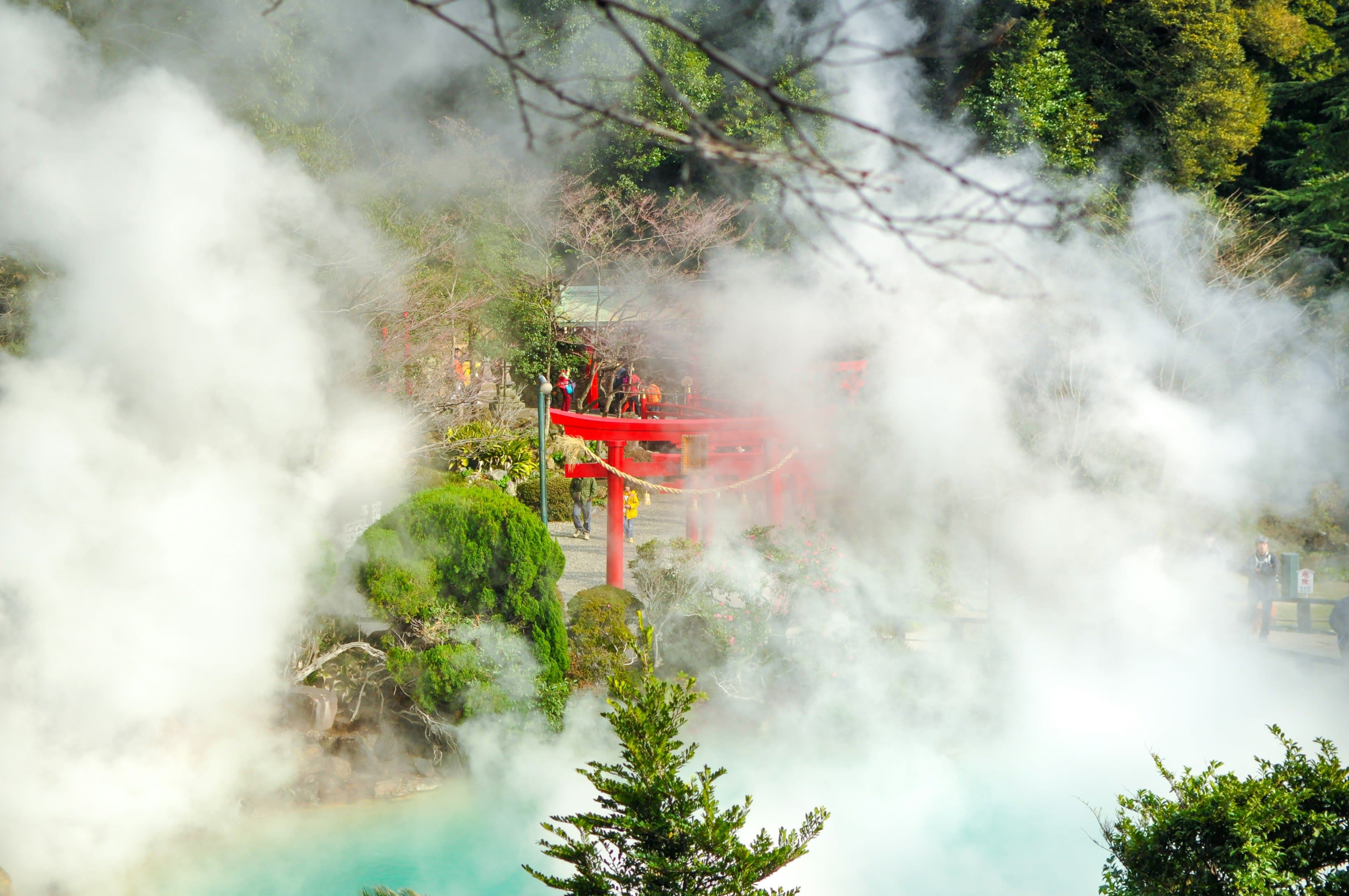
Approaching the Beppu Hells, visitors first sense the change in atmosphere as steam rises above the landscape. The air carries sulfurous traces, the smell of the deep earth. Each hell offers a distinct experience. Umi Jigoku, the Sea Hell, presents an expanse of cobalt blue water at 98 degrees Celsius, beautiful and deadly. Chinoike Jigoku, the Blood Pond Hell, shocks with its rust-red waters, the color of oxidized iron creating an image directly from Buddhist hell paintings. Kamado Jigoku demonstrates cooking in geothermal steam, while Oniyama Jigoku houses crocodiles in its heated grounds. The smaller hells offer their own phenomena: bubbling mud, erupting geysers, steaming pools in various colors. Throughout, the heat is palpable, rising from the pools, pervading the air. Visitors walk paths between pools that could kill in moments, reminded constantly that they are witnessing forces beyond human control. The overall effect is of encountering the living earth, seeing what usually remains hidden underground burst forth into visibility.
The Beppu Hells are distributed across two areas: the Kannawa district containing five hells and the Shibaseki district containing two. A combined ticket provides access to all seven. Most visitors begin at either Umi Jigoku or Chinoike Jigoku and work through the adjacent hells before traveling to the second area. A full tour takes two to three hours. Viewing platforms provide safe vantage points; the pools themselves are strictly off-limits due to extreme temperatures.
The Beppu Hells invite multiple modes of understanding, from geological to religious to cultural, each illuminating different aspects of these extraordinary phenomena.
Academic analysis situates the Beppu Hells within the study of how geological phenomena shape religious imagination. The application of Buddhist hell imagery to natural thermal features demonstrates the integration of imported religious cosmology with local landscape. The transformation narrative through Ippen Shonin follows patterns found at other Japanese sacred sites where dangerous natural phenomena are tamed by religious figures. The ongoing use of jigoku terminology preserves Buddhist framing even as the site has become secularized, illustrating how religious concepts persist in cultural memory.
In Buddhist understanding, the visual appearance of these pools genuinely evokes the suffering realms described in sutras. The heat, the colors, the bubbling and steaming all correspond to textual descriptions of hell. Ippen Shonin's prayers represent authentic spiritual power transforming dangerous forces into beneficial ones, demonstrating that even hell can become a place of healing through proper practice. This transformation embodies core Pure Land teachings about the possibility of salvation.
Some interpreters view the geothermal activity as representing Earth's living energy, with the hells serving as openings to underground realms of power. The healing properties of the hot springs are understood as gifts from chthonic forces, energy from the earth's depths offered to those who approach with respect. The transformation from fear to healing reflects not just spiritual practice but humanity's evolving relationship with natural forces.
Mysteries remain about the full extent of geothermal activity beneath the region and how it may change over time. The original nature of veneration at these sites before Buddhist influence arrived in Japan remains unclear. Why specific hells developed their unique colors and properties involves geological processes not fully understood.
Visit Planning
A two to three hour tour accessible from Beppu Station by bus, best enhanced by extending with onsen bathing at the numerous facilities nearby.
The hells are open from 8:00 AM to 5:00 PM daily. Combined tickets for all seven hells are available and represent good value. From Beppu Station, buses run to the Kannawa area, taking approximately twenty minutes. The two hell areas are walkable from each other or connected by bus.
Beppu is one of Japan's premier onsen resort towns with extensive accommodation options at all price levels. Many ryokan offer their own hot spring baths. The city provides opportunities to extend the healing experience begun at the hells.
Standard tourist site protocols apply, with strict adherence to safety barriers essential due to extreme temperatures.
The Beppu Hells are primarily tourist attractions rather than active religious sites, so formal religious etiquette does not apply. However, an attitude of respect for the natural forces on display is appropriate. Safety is paramount: the pools are genuinely dangerous, and barriers exist for good reason. Follow all signage and staff instructions. Photography is permitted throughout and is a major activity for most visitors. When bathing at adjacent onsen facilities, standard Japanese onsen etiquette applies: wash thoroughly before entering the bath, keep towels out of the water, and maintain quiet.
Casual attire is appropriate for viewing the hells. Comfortable walking shoes are recommended as the tour involves walking between pools and between the two areas. For onsen bathing, you will be provided with towels and enter the baths unclothed.
Photography is permitted and encouraged throughout the viewing areas.
{"Do not cross safety barriers","Do not touch or enter the thermal pools","Standard onsen etiquette at adjacent bathhouses"}
Sacred Cluster
Nearby sacred places create the location cluster described in the growth plan. This block is intentionally crawlable and links into the wider regional graph.