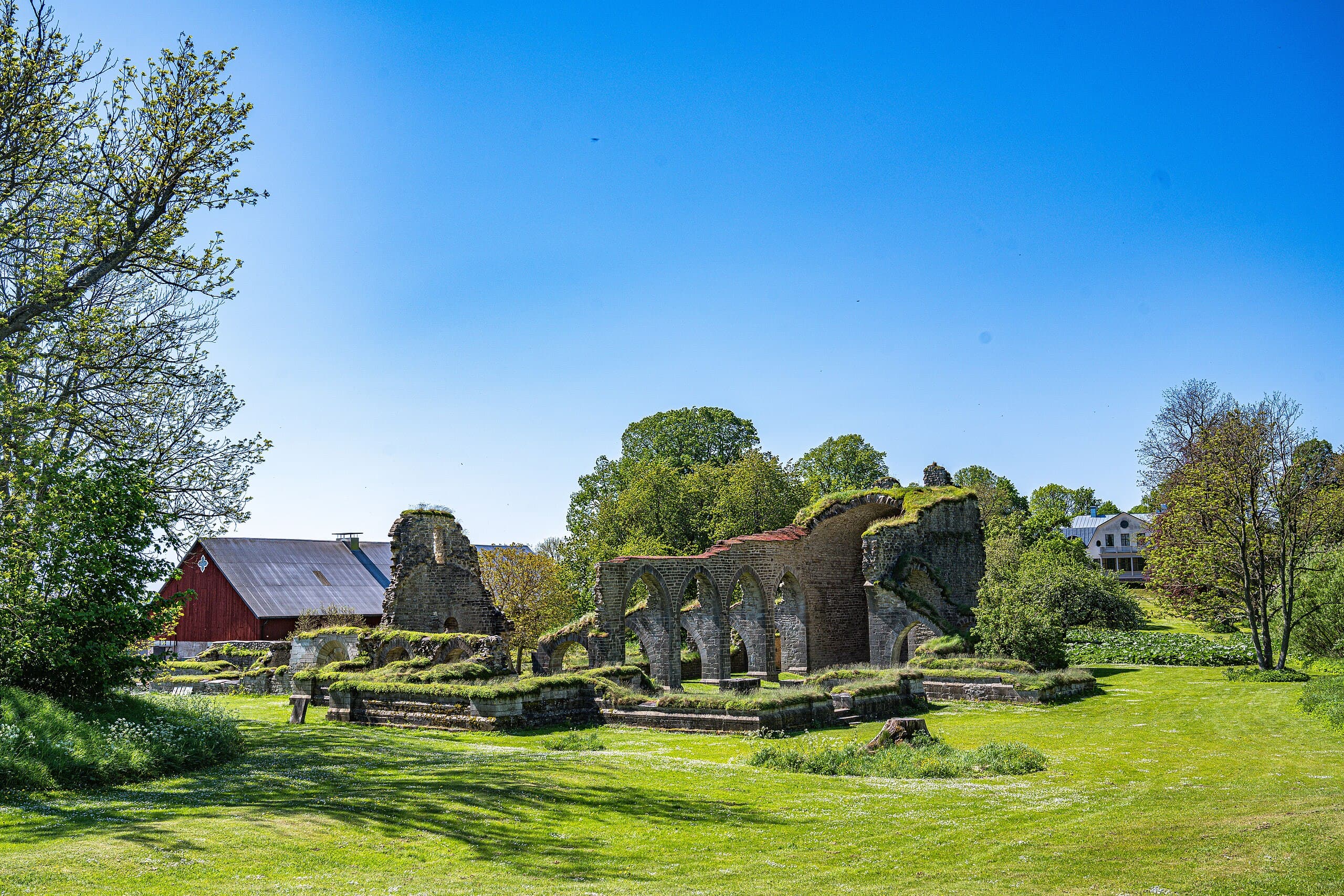
Alvastra Abbey
Sweden's first Cistercian monastery, where Saint Birgitta received the visions that changed European Christianity
Västra Tollstad, Östergötlands län, Sweden
At A Glance
- Coordinates
- 58.2967, 14.6584
- Suggested Duration
- One to two hours for the ruins. Half day or full day if combining with pilgrim trail, Mount Omberg hiking, or nearby sites.
- Access
- Located at the foot of Mount Omberg, Odeshog Municipality, Ostergotland. Free admission. Parking available. Facilities include tables, benches, and toilets. Tourist information: Odeshog tourist office, +46(0)144-351 67, tourism@odeshog.se.
Pilgrim Tips
- Located at the foot of Mount Omberg, Odeshog Municipality, Ostergotland. Free admission. Parking available. Facilities include tables, benches, and toilets. Tourist information: Odeshog tourist office, +46(0)144-351 67, tourism@odeshog.se.
- No strict dress code for visiting the ruins. Respectful attire recommended if attending pilgrim mass. Sturdy footwear for exploring ruins and walking pilgrim trails.
- Photography is permitted throughout the ruins. Be discreet during pilgrim masses.
- The ruins contain uneven ground and exposed stone foundations. Sturdy footwear essential. The site is exposed to weather with limited shelter. Respect the atmosphere during pilgrim masses.
Overview
At the foot of Mount Omberg beside Lake Vattern, the ruins of Sweden's oldest and most important monastery stand open to the sky. Founded in 1143 by French monks from Clairvaux, Alvastra served as the spiritual center of medieval Sweden for nearly four hundred years. Here Saint Birgitta received the divine revelations that led to the founding of the Bridgettine Order and her recognition as co-patron saint of Europe. Adjacent to the ruins, a five-thousand-year-old Neolithic pile dwelling marks even older sacred use of this landscape.
Alvastra Abbey stands where five millennia of sacred use converge at the foot of Mount Omberg. The monastery ruins, rising from meadow-land beside Lake Vattern, are what remain of Sweden's first and most powerful Cistercian foundation, established in 1143 by monks from Clairvaux Abbey in France at the invitation of King Sverker the Elder. For nearly four centuries, until the Reformation dissolved it in 1527, Alvastra was the spiritual engine of medieval Sweden: the mother house of three daughter monasteries, the origin of Sweden's first archbishop, and the burial place of kings.
But it is not the institution that gives Alvastra its deepest resonance. It is what happened here to one woman. In 1344, Birgitta Birgersdotter, a Swedish noblewoman recently widowed after her husband Ulf Gudmarsson died at the monastery, remained in a small building beside the abbey. In that period of grief and prayer, she began receiving divine revelations that would transform her from a bereaved wife into one of the most consequential mystics in Christian history. She was called to be 'Christ's bride and mouthpiece.' Her confessors at Alvastra, including Prior Peter Olafsson, translated her visions into Latin. The Revelationes she produced led to the founding of the Bridgettine Order and her recognition as co-patron saint of Europe.
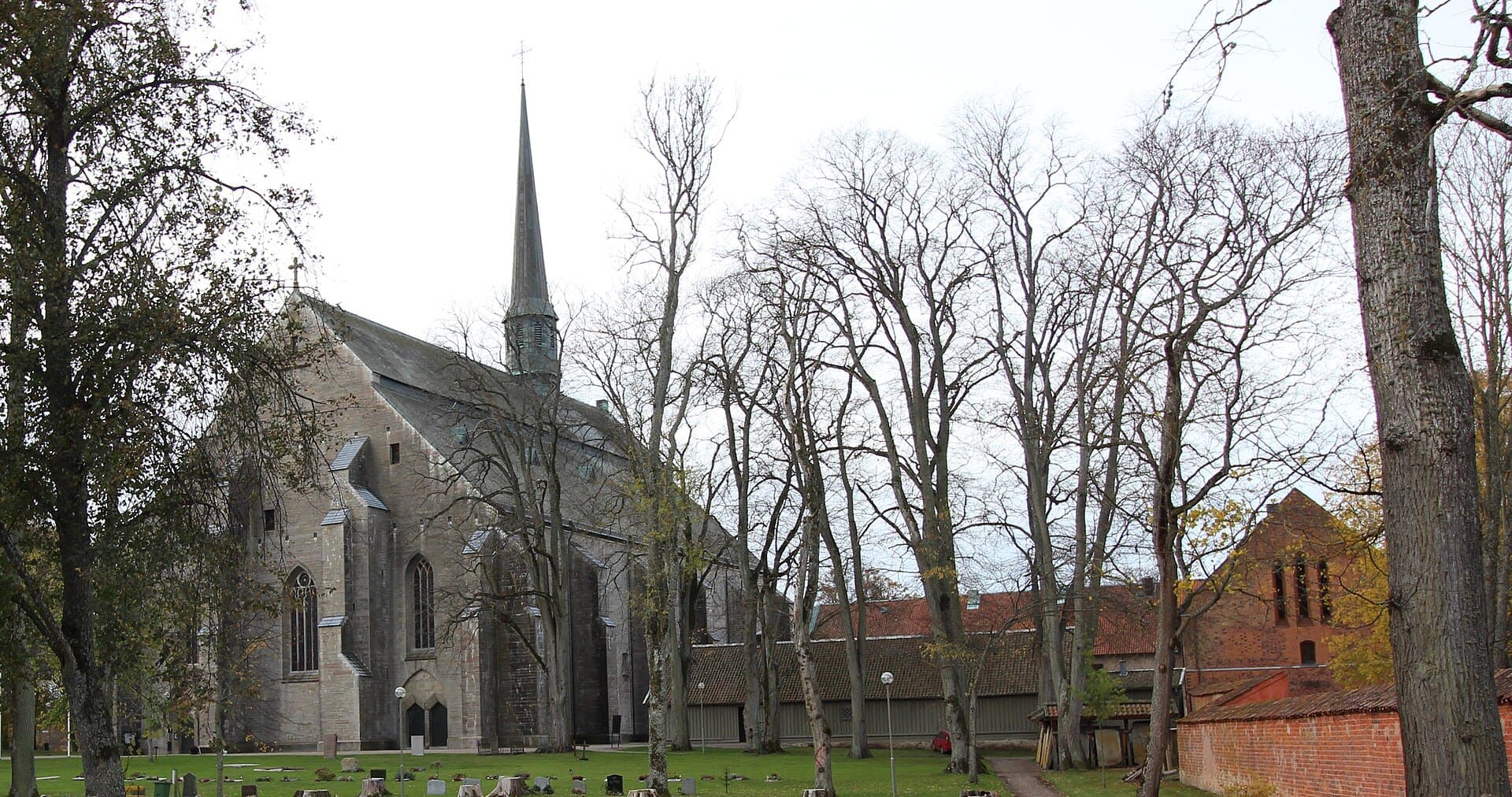
The ruins preserve the architectural skeleton of a once-vast complex. Church walls still rise to considerable height, framing the sky where the roof once sealed a space of perpetual prayer. Columns mark the nave's rhythm. Foundations trace the cloister and chapter house. The stone is weathered but articulate, speaking a language of medieval sacred architecture readable even in ruin.
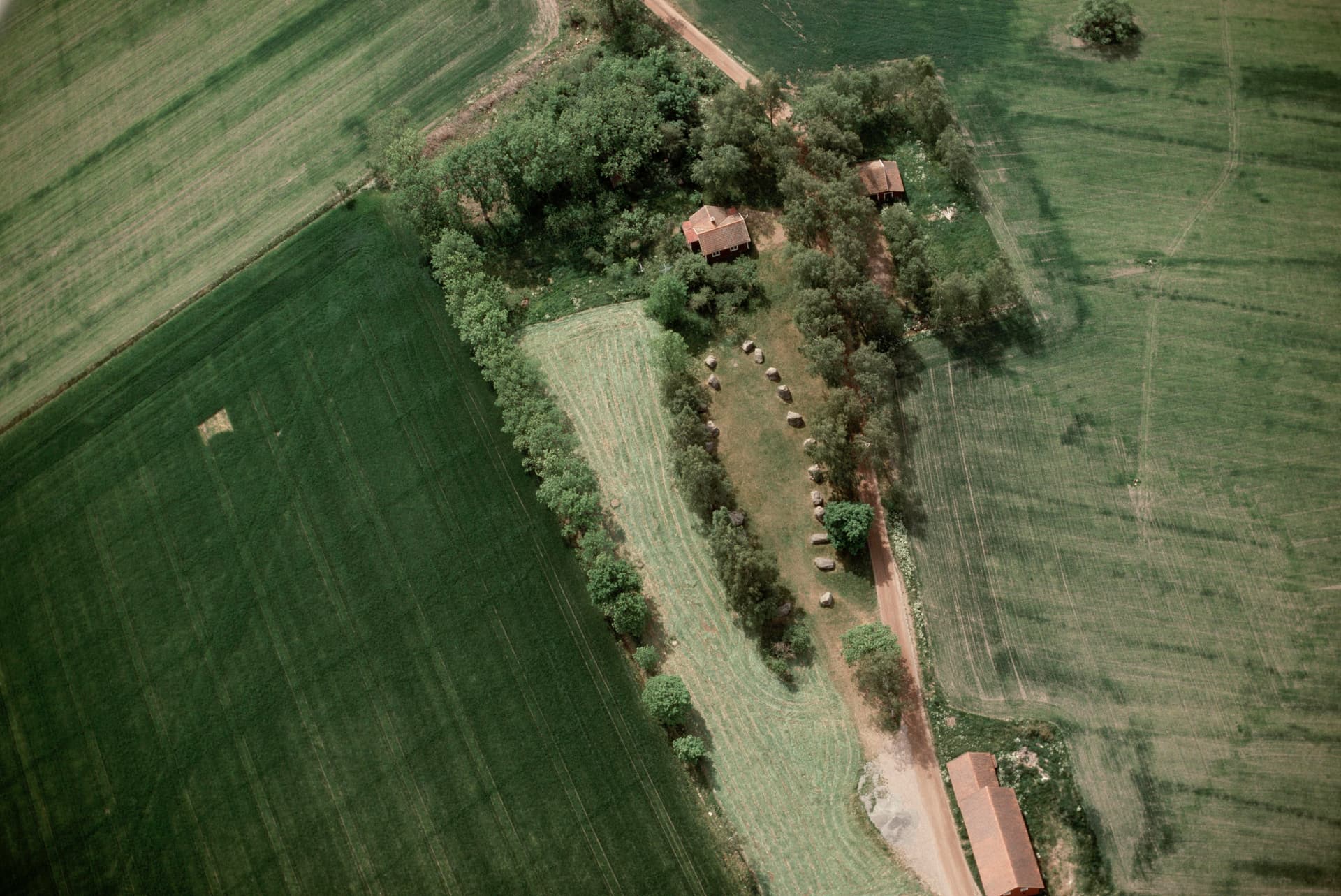
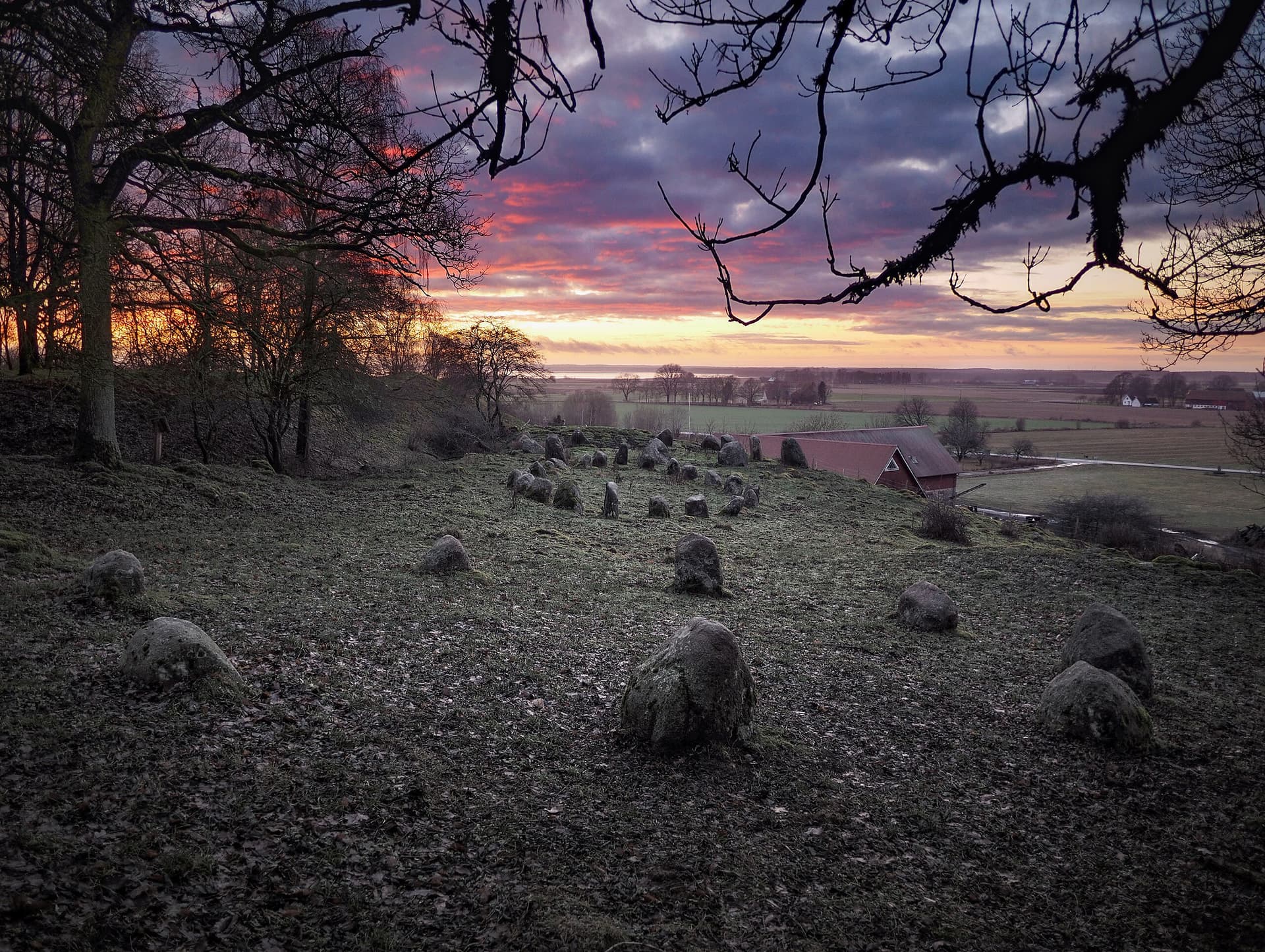
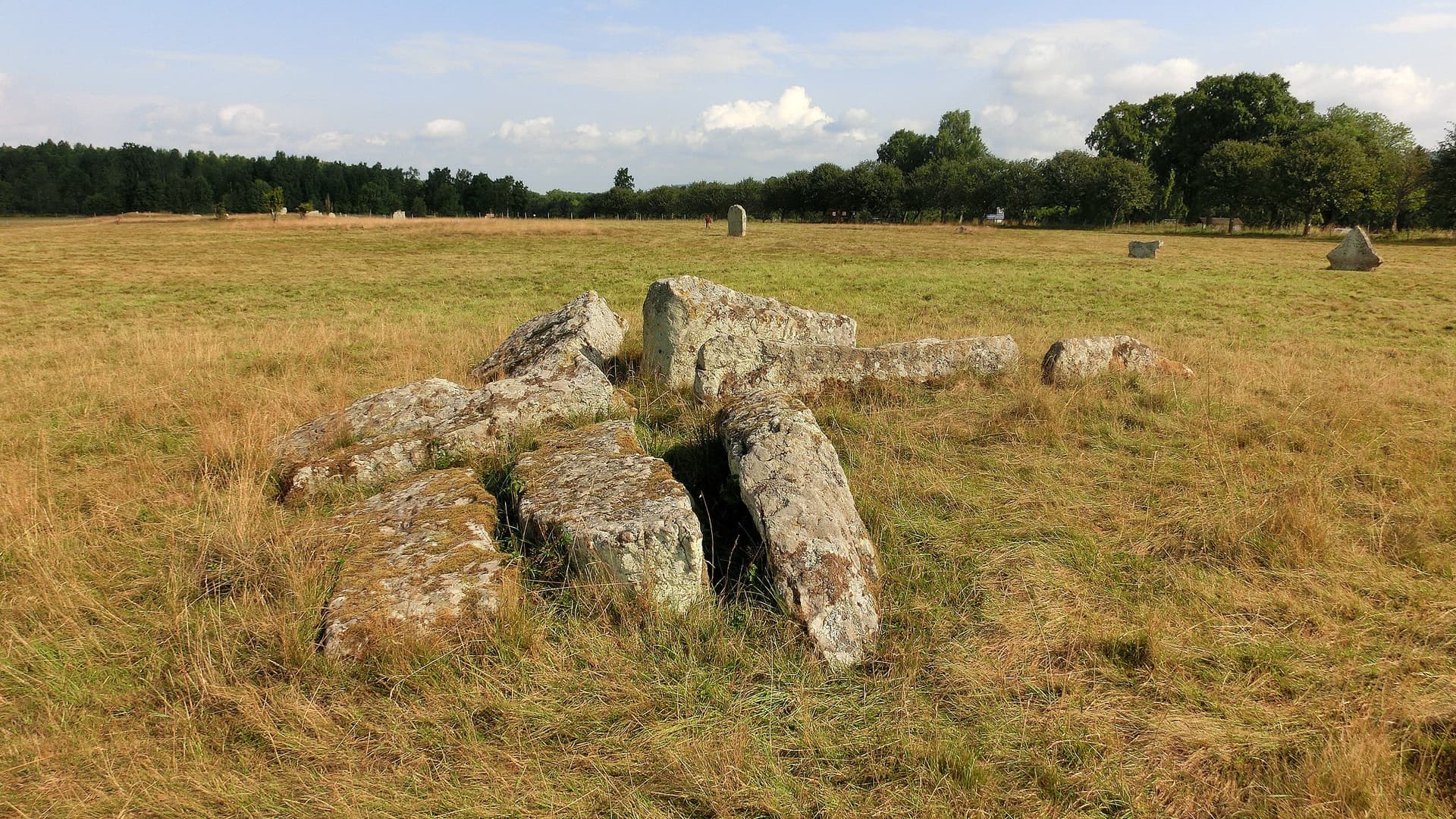
Beyond the monastery, the landscape holds an even older layer. The Alvastra pile dwelling, Sweden's only known Neolithic pile dwelling, is a wooden platform built over marshland around 3000 BC. This was not a home but a ceremonial gathering place where two distinct cultures met for seasonal rituals. The proximity of a five-thousand-year-old ritual site to the medieval monastery raises the question of whether the landscape itself drew sacred activity across millennia.
Today, summer pilgrim masses in the ruins reconnect the site to its vocation. The Alvastraleden trail links the abbey to other sacred sites, and the developing Saint Birgitta Ways aim to establish long-distance pilgrimage routes converging on Vadstena through Alvastra. The ruins have come alive again, receiving prayer as they have for nearly nine hundred years.
Context And Lineage
Sweden's first Cistercian monastery, the site of Saint Birgitta's revelations, and a landscape of sacred use spanning five millennia.
In 1143, King Sverker the Elder, recently bereaved of his wife Ulfhild, donated land at the foot of Mount Omberg for the establishment of a Cistercian monastery. Monks from Clairvaux Abbey, the great French mother house founded by Saint Bernard, traveled to this remote Swedish location and established what would become the largest and most influential monastery in the Nordic countries.
For nearly four centuries, Alvastra shaped Swedish Christianity. A monk from the abbey, Stephen, became the first Archbishop of Uppsala in 1164. Three daughter monasteries were founded from Alvastra: Varnhem, Julita, and Gudsberga. Swedish kings and queens were buried within its walls, interweaving royal authority with monastic sanctity.
The transformative moment came two centuries after the foundation. In 1344, the noblewoman Birgitta Birgersdotter arrived at the abbey with her dying husband Ulf Gudmarsson. After Ulf's death on February 12, Birgitta remained, entering a period of intense prayer and mourning. During the five years she spent beside the monastery (1344-1349), she received divine revelations of extraordinary power and specificity. She was called to be Christ's bride and mouthpiece. Her confessors at Alvastra translated her visions into Latin. These Revelationes led to the founding of the Bridgettine Order and earned Birgitta recognition as co-patron saint of Europe.
Alvastra connects to the Cistercian network that spread from Citeaux through Clairvaux to monasteries across Europe. As the fortieth abbey affiliated with Clairvaux, it brought the Cistercian reform movement, the Rule of Saint Benedict, and French monastic agricultural techniques to Sweden. The Birgitta connection extends the lineage into the mystical tradition of medieval Christianity, linking Alvastra to Vadstena, Rome, and the broader Bridgettine network. The adjacent Neolithic pile dwelling extends the sacred lineage to approximately 3000 BC.
Saint Birgitta of Sweden
Mystic who received her foundational divine revelations while living beside the abbey (1344-1349), co-patron saint of Europe, founder of the Bridgettine Order
King Sverker the Elder
Swedish king who donated land for the monastery's foundation following the death of his wife Ulfhild
Stephen (first Archbishop of Uppsala)
Monk from Alvastra who became Sweden's first archbishop in 1164, establishing the ecclesiastical structure of the Swedish Church
Prior Peter Olafsson (Petrus of Alvastra)
Birgitta's confessor at the abbey who translated her revelations from Swedish into Latin
Why This Place Is Sacred
Five thousand years of sacred use, the revelations of Europe's co-patron saint, and summer masses celebrated among medieval ruins create a layered threshold between past and present.
The thinness at Alvastra presents itself in multiple registers. The first is architectural. Roofless monasteries possess a quality that intact buildings lack: the sky enters the sacred space. Where Cistercian monks once prayed beneath vaulted ceilings, the clouds now move overhead, the weather participates in the experience, and the boundary between interior and exterior worship dissolves. The church walls still define a nave, still mark out the proportions of a space designed for prayer, but the enclosure is no longer complete. Something has been opened.
The second register is biographical. Birgitta's revelations at Alvastra were not the product of comfortable piety but of grief. Her husband died here. She remained. In the depth of her mourning, something broke through. The visions she received, transcribed by her Alvastra confessors, addressed popes and kings, demanded reform of the Church, and articulated a relationship with the divine that was direct, intense, and uncompromising. Standing in the ruins where this occurred, the visitor encounters not a museum of medieval religion but a place where one person's anguish became the portal for an experience that reshaped European Christianity.
The third register is temporal. Adjacent to the monastery, the Neolithic pile dwelling establishes that this landscape was recognized as significant at least three thousand years before the first monks arrived from France. The pile dwelling was a gathering place, not a home, built over marshland on a wooden platform for seasonal ceremonies that brought two distinct cultures together. Five thousand years separate the Neolithic rituals from the summer pilgrim masses held today in the monastery ruins, yet the pattern persists: people continue to gather at this place for purposes that transcend the everyday.
The setting amplifies everything. Mount Omberg rises steeply behind the ruins, its wooded western slope descending to Lake Vattern. The landscape has a quality of compression: mountain, lake, ruin, and meadow gathered within a short radius, creating a sense of concentrated significance. The pilgrim masses, held on Thursday evenings in summer, bring this compression to a point. Worshippers sit among medieval stones, beneath the open sky, at the foot of a mountain, beside a lake, in a landscape that has hosted sacred activity since the third millennium BC.
A Cistercian monastery founded in 1143 as a center of monastic worship, agricultural innovation, and ecclesiastical authority. The adjacent Neolithic pile dwelling served as a ceremonial gathering place around 3000 BC.
Alvastra served as Sweden's most important monastery for nearly four centuries, producing the country's first archbishop and receiving royal burials. Saint Birgitta's revelations during 1344-1349 added a mystical dimension that outlasted the institution itself. The Reformation dissolved the monastery in 1527, and King Gustav Vasa used its stones to build Vadstena Castle. The ruins were preserved as a cultural heritage monument. The adjacent pile dwelling was excavated 1909-1930. Summer pilgrim masses, pilgrim trails, and the developing Saint Birgitta Ways have restored active spiritual use to the ruins.
Traditions And Practice
Summer pilgrim masses in the ruins, pilgrim trail walks, and contemplative engagement with the monastery's layered history and Saint Birgitta's legacy.
Cistercian daily offices observed by the monastic community for nearly four hundred years. Royal burials within the monastery. Birgitta's extended period of prayer, contemplation, and reception of divine revelations between 1344 and 1349. Neolithic seasonal gatherings and inter-cultural ritual activities at the pile dwelling around 3000 BC.
Weekly pilgrim masses in the monastery ruins during summer (Thursdays at 7:00 PM, late June through early August). Pilgrim walks along the Alvastraleden trail. Guided tours during tourist season. The developing Saint Birgitta Ways long-distance pilgrimage routes from Hamburg, Trondheim, and Uppsala/Stockholm to Vadstena pass through Alvastra. Personal prayer and contemplation among the ruins.
If possible, time your visit to include a Thursday evening pilgrim mass in summer. The experience of worship within the ruined church, with the sky visible above and the medieval walls framing the congregation, connects contemporary spiritual practice to the centuries of prayer that preceded it.
Outside of mass times, enter the church ruins and stand in the nave. Close your eyes and listen. Cistercian worship was organized around the canonical hours, a rhythm of prayer that punctuated every day from before dawn to after dark. For four hundred years, this space held the sound of chanting voices. The silence you hear now is the silence of their absence, which is a different thing from mere quiet.
Walk the cloister foundations. The cloister was the monastery's contemplative heart, the covered walkway where monks walked in meditation between services. Follow the path their feet wore and consider the practice of walking meditation, which the Cistercians refined to an art.
If you walk the Alvastraleden pilgrim trail, the journey connects Alvastra to other sacred sites in the region, including Heda Church with its prayer chapel. Walking between sites rather than driving between them changes the quality of the experience, embedding the visit in physical effort and sustained attention.
Visit the pile dwelling site to encounter the Neolithic layer. The wooden platform is no longer visible, but the marshland where it stood remains, and knowing that five thousand years ago people gathered here for ceremonies adds depth to the monastery visit that follows.
Cistercian Monasticism
HistoricalAlvastra was the first Cistercian monastery in Sweden and one of the first in the Nordic countries, founded in 1143. For nearly four hundred years, it was Sweden's largest and most important monastery, serving as the mother house for three daughter monasteries. A monk from Alvastra became the first Archbishop of Uppsala. The monastery was dissolved in 1527 during the Reformation.
The monks followed the Rule of Saint Benedict with Cistercian reforms emphasizing manual labor, self-sufficiency, and liturgical worship. They brought advanced agricultural technology and construction techniques from France. The canonical hours structured every day with prayer from before dawn through the night.
Saint Birgitta Pilgrimage
ActiveSaint Birgitta of Sweden, co-patron saint of Europe, received her foundational divine revelations while living beside the abbey from 1344 to 1349. Her husband died at the monastery, and in her grief she experienced visions that led to the founding of the Bridgettine Order. Modern pilgrim masses, pilgrim trails, and the developing Saint Birgitta Ways maintain the site's connection to living pilgrimage.
Summer pilgrim masses in the ruins on Thursday evenings. Walking the Alvastraleden pilgrim trail. Personal prayer and contemplation at the site of Birgitta's revelatory experience. The developing Saint Birgitta Ways aim to create long-distance pilgrim routes from Hamburg, Trondheim, and Uppsala/Stockholm to Vadstena through Alvastra.
Neolithic Ritual Gathering
HistoricalAdjacent to the monastery, the Alvastra pile dwelling is Sweden's only known Neolithic pile dwelling, dating to approximately 3000 BC. The wooden platform over marshland served as a ceremonial gathering place where two distinct cultures, the Funnel Beaker and Pitted Ware, met for seasonal festivities and ritual activities.
Seasonal summer gatherings on the wooden platform for communal festivities, ritual activities, and inter-cultural meetings. The platform was connected to dry land by a wooden causeway and surrounded by a palisade of oak poles.
Experience And Perspectives
Walk among the ruins of Sweden's first monastery, attend a summer pilgrim mass in the open-air church, and trace the footsteps of Saint Birgitta at the foot of Mount Omberg.
Alvastra Abbey lies at the foot of Mount Omberg's western slope, reached by roads that wind through the Ostergotland countryside toward Lake Vattern. Parking, benches, and basic facilities are available at the site. The ruins are freely accessible at all times, with no admission charge and no fencing.
Approach the ruins from the parking area and the monastery's scale declares itself immediately. The church walls rise to considerable height, their weathered stone outlining a building that was substantial even by European Cistercian standards. Enter through the openings where doors once stood and you find yourself in the nave, the columns marking the original rhythm of the arcade, the absence of the roof opening the space to whatever the sky is doing overhead.
The church is the heart of the experience. Stand in the nave and register the proportions: the distance from where you stand to the east end where the altar stood, the width between the arcades, the height of the surviving walls. Cistercian architecture aimed at severity and proportion, stripping away decoration in favor of mathematical harmony. Even in ruin, this discipline is legible.
Explore the cloister foundations and the surrounding monastic buildings. Traces of the chapter house, the refectory, and the monks' quarters can be identified with the help of information boards. The layout follows the standard Cistercian plan, the same spatial logic applied at Citeaux and Clairvaux adapted to a Swedish landscape.
Birgitta's connection to the site is marked but understated. She lived beside the monastery, not within it, and the specific building she occupied no longer stands. Her presence must be imagined rather than seen, felt in the knowledge that somewhere in this immediate area, a woman in grief received visions that would reshape the Church.
If your visit falls on a Thursday evening in summer, between late June and early August, attend the pilgrim mass at 7:00 PM. These services are held within the church ruins, the congregation gathered among the medieval stones. The combination of liturgy, open sky, and ancient architecture creates a worship experience that is both rooted in tradition and unlike anything that occurs within a conventional church building.
The surrounding area rewards extension. The Alvastraleden pilgrim trail connects the abbey to other sacred sites in the region. Mount Omberg, rising directly behind the ruins, offers hiking trails with panoramic views over Lake Vattern. The Rok runestone, bearing the world's longest runic inscription, is a ten-minute drive away.
Alvastra Abbey is located at the foot of Mount Omberg, Odeshog Municipality, Ostergotland. The ruins are freely accessible year-round. Parking, tables, benches, and toilets are available at the site. Contact the Odeshog tourist office for guided tour information: +46(0)144-351 67.
Alvastra draws interpretation from Cistercian monastic history, Birgitta studies, Neolithic archaeology, and the lived experience of contemporary pilgrimage. Each perspective illuminates a different layer of a site whose sacred significance spans five millennia.
Historians recognize Alvastra as Sweden's first Cistercian monastery and one of the most important medieval religious foundations in Scandinavia. Archaeological research, including a major interdisciplinary project begun in 1992, has illuminated the monastery's role in medieval statehood development. Saint Birgitta's period at Alvastra is well-documented through her Revelationes and the accounts of her confessors. The adjacent Neolithic pile dwelling, excavated 1909-1930 by Otto Frodin, represents a unique prehistoric ritual site that has contributed significantly to understanding of Neolithic ceremonial practices in Scandinavia.
In Christian tradition, Alvastra is venerated as the place where Saint Birgitta first received her divine calling. The site is part of a sacred geography connecting Alvastra, Vadstena, and the broader Birgitta pilgrimage network. The ruins carry the memory of nearly four centuries of continuous Cistercian prayer, and the burial of Swedish monarchs within the monastery walls imbued the site with royal sacred authority. The Reformation's dissolution represents a rupture in this sacred tradition that the modern pilgrim masses are gradually healing.
Some spiritual seekers note the remarkable continuity of sacred use at Alvastra, spanning from the Neolithic pile dwelling through the medieval monastery to modern pilgrimage. This continuity is sometimes interpreted as evidence that certain landscapes possess inherent qualities that draw human sacred activity regardless of specific cultural or religious traditions. The site's position where mountain, lake, and plain converge is viewed as a natural point of concentrated energy.
The exact location and condition of all royal burials within the monastery remains uncertain. Whether the Cistercian monks were aware of or influenced by the Neolithic remains nearby is an open question. The full extent of what was lost when Gustav Vasa dismantled the monastery for building material, including manuscripts, artworks, and sacred objects, is unknown. The specific content and sequence of Birgitta's revelations at Alvastra, as distinct from those received elsewhere, is not always clearly distinguished in the historical record.
Visit Planning
At the foot of Mount Omberg, Odeshog Municipality. Free admission year-round. Summer pilgrim masses Thursdays at 7:00 PM. Allow one to two hours.
Located at the foot of Mount Omberg, Odeshog Municipality, Ostergotland. Free admission. Parking available. Facilities include tables, benches, and toilets. Tourist information: Odeshog tourist office, +46(0)144-351 67, tourism@odeshog.se.
Vadstena Klosterhotel offers accommodation for pilgrims. Odeshog and the surrounding area provide hotels and guesthouses. Mount Omberg has STF (Swedish Tourist Association) accommodation.
Respectful behavior at a historic sacred site. Attend pilgrim masses with appropriate reverence. Do not climb on or remove stones from the ruins.
Alvastra Abbey is both a protected cultural heritage monument and an active pilgrimage site. The atmosphere is generally contemplative, reflecting the site's monastic origins and continuing spiritual use.
During pilgrim masses, which take place on Thursday evenings in summer, the ruins function as a place of worship. Visitors attending should observe appropriate reverence: quiet voices, respectful posture, and willingness to participate in or respectfully observe the service.
Outside of services, the ruins are freely accessible for exploration and contemplation. Do not climb on fragile walls or remove stones. The ruins have survived nearly five centuries since the Reformation; each visitor bears responsibility for ensuring they survive further.
No strict dress code for visiting the ruins. Respectful attire recommended if attending pilgrim mass. Sturdy footwear for exploring ruins and walking pilgrim trails.
Photography is permitted throughout the ruins. Be discreet during pilgrim masses.
No formal offerings expected. Donations may be welcome during pilgrim mass.
Do not climb on fragile ruins or remove stones. Respectful behavior during pilgrim masses. Dogs may be restricted during events.
Sacred Cluster
Nearby sacred places create the location cluster described in the growth plan. This block is intentionally crawlable and links into the wider regional graph.