Iran
Fars Province
2 sites

Persepolis
Persepolis (; Old Persian: 𐎱𐎠𐎼𐎿, romanized: Pārsa; New Persian: تخت جمشید, romanized: Takht-e Jamshīd, lit. 'Throne of Jamshid') was the ceremonial capital of the Achaemenid Empire (c. 550–330 BC). It is situated in the plains of Marvdasht, encircled by the southern Zagros mountains, Fars province of Iran. It is one of the key Iranian cultural heritage sites and a UNESCO World Heritage Site since 1979. The earliest remains of Persepolis date back to 515 BC. The city, acting as a major center for the empire, housed a palace complex and citadel designed to serve as the focal point for governance and ceremonial activities. It exemplifies the Achaemenid style of architecture. The complex was taken by the army of Alexander the Great in 330 BC, and soon after, its wooden parts were completely destroyed by fire, likely deliberately. The function of Persepolis remains unclear. It was not one of the largest cities in ancient Iran, let alone the rest of the empire, but appears to have been a grand ceremonial complex that was only occupied seasonally; the complex was raised high on a walled platform, with five "palaces" or halls of varying size, and grand entrances. It is still not entirely clear where the king's private quarters actually were. Until recently, most archaeologists held that it was primarily used for celebrating Nowruz, the Persian New Year, held at the spring equinox, which is still an important annual festivity in Iran. The Iranian nobility and the tributary parts of the empire came to present gifts to the king, as represented in the stairway reliefs. It is also unclear what permanent structures there were outside the palace complex; it may be better to think of Persepolis as only one complex rather than a "city" in the usual sense. The exploration of Persepolis from the early 17th century led to the modern rediscovery of cuneiform writing and, from detailed studies of the trilingual Achaemenid royal inscriptions found on the ruins, the initial decipherment of cuneiform in the early 19th century.

Shiraz
Shiraz (; Persian: شیراز [ʃiːˈɹɒːz] ) is the fifth-most-populous city of Iran and the capital of Fars province, which has been historically known as Pars (پارس) and Persis. As of the 2016 national census, the population of the city was 1,565,572 people, and its built-up area with Sadra was home to almost 1,800,000 inhabitants. A census in 2021 showed an increase in the city's population to 1,995,500 people. Shiraz is located in southwestern Iran on the rudkhaneye khoshk (lit. 'dry river') seasonal river. Founded in the early Islamic period, the city has a moderate climate and has been a regional trade center for over a thousand years. The earliest reference to the city, as Tiraziš, is on Elamite clay tablets dated to 2000 BCE. The modern city was founded by the Sasanian dynasty and restored by the Umayyad Caliphate in 693 CE and grew prominent under the successive Iranian Saffarid and Buyid dynasties in the 9th and 10th–11th centuries, respectively. In the 13th century, Shiraz became a leading center of the arts and letters, due to the encouragement of its ruler and the presence of many Persian scholars and artists. Two famous poets of Iran, Hafez and Saadi, are from Shiraz, whose tombs are located on the north side of the current city boundaries. Shiraz is one of the top tourist cities in Iran and is known as the city of poets, literature, and flowers. It is also considered by many Iranians to be the city of gardens due to the presence of many gardens and fruit trees that can be seen throughout the city, such as Eram Garden. Shiraz is also a famous tourist destination in the world. Every year many tourists come from around the world to visit the city. Shiraz has historically had major Jewish and Christian communities. The crafts of Shiraz consist of inlaid mosaic work of triangular design; silverware; pile carpet-weaving and weaving of kilim, called gilim and jajim in the villages and among the tribes. Dominant industries in the city include the production of cement, sugar, fertilizers, textile products, wood products, metalwork, and rugs. Shiraz also has a major oil refinery and is a major centre for Iran's electronic industries: 53 percent of Iran's electronic investment has been centred in Shiraz. The city is home to Iran's first solar powerplant. Recently, Shiraz's first wind turbine has been installed above Mount Babakuhi near the city.
Golestan Province
1 site

Shrine of Khalid Nabi, Golestan Province
Shrine of Khalid Nabi, Golestan Province, Iran is a site of sacred significance. Approximate coordinates: 37.74184, 55.41085. Located in دهستان تمران, استان گلستان, ایران.
Hamadan Province
1 site

Tomb of Esther and Mordechai, Hamadan
Tomb of Esther and Mordechai, Hamadan, Iran is a site of sacred significance. Approximate coordinates: 34.79799, 48.51282. Located in شهر همدان, استان همدان, ایران.
Isfahan
1 site
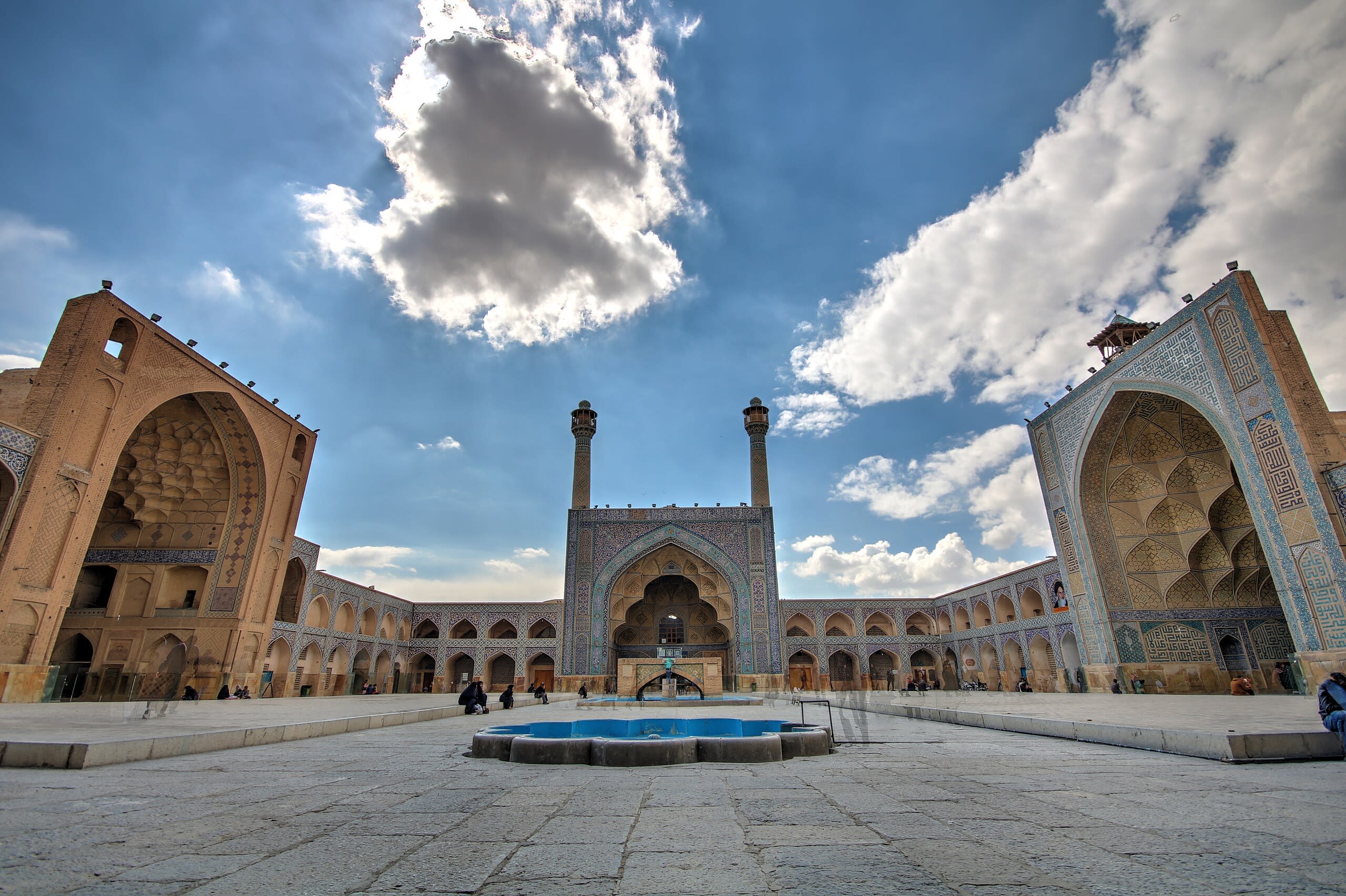
Jame' Mosque of Isfahan
For additional information:https://whc.unesco.org/en/list/362/https://www.atlasobscura.com/places/ghadames-oasishttps://en.wikipedia.org/wiki/Atiq_Mosque_(Ghadames)?wprov=sfti1#
Isfahan Province
1 site

Kashan
Kashan (Persian: کاشان; [kɒːˈʃɒːn] ) is a city in the Central District of Kashan County, in the northern part of Isfahan province, Iran, serving as capital of both the county and the district.
Kerman Province
2 sites
Bam
Bam or BAM may refer to:
Mahan
Mahan or Mahaan may refer to:
Qom Province
3 sites
Jam Karan
Jam Karan is a mosque of sacred significance. Approximate coordinates: 34.58406, 50.91443. Attributes: built, cultural, pilgrimage. Tradition: Islam. Located in شهر قم, استان قم, ایران.
Qum
Qum is a site of sacred significance. Approximate coordinates: 34.64170, 50.87958. Located in شهر قم, استان قم, ایران.
Shrine of Fatemeh Masumeh, Qom
Shrine of Fatemeh Masumeh, Qom, Iran is a site of sacred significance. Approximate coordinates: 34.64182, 50.87894. Located in شهر قم, استان قم, ایران.
Razavi Khorasan
1 site

Mashhad
Mashhad ( mə-SHAD; Persian: مشهد [mæʃˈhæd] ), historically also known as Mashad, Meshhed, or Meshed in English, is the second-most-populous city in Iran, located in the relatively remote north-east of the country about 900 kilometres (560 miles) from Tehran. In the Central District of Mashhad County, it serves as the capital of Razavi Khorasan province, the county, and the district. It has a population of about 3,400,000 (2016 census), which includes the areas of Mashhad Taman and Torqabeh. The city was governed by different ethnic groups over the course of its history. Mashhad was previously a small village, which by the 9th century had been known as Sanabad, and which was located—along with Tus and other villages—on the ancient Silk Road connecting them with Merv to the east. Mashhad would eventually outgrow all its surrounding villages. It gained its current name meaning "place of martyrdom" in reference to the Imam Reza shrine, where the eighth Shia Imam, Ali al-Rida, is buried. The Abbasid caliph Harun al-Rashid is also buried within the same shrine. The shrine is an important place of pilgrimage, visited by 25 millions each year in what is often described as "the holiest city in Iran". Mashhad later also became associated with Ferdowsi, the Persian poet and author of the Shahnameh, who was born in Tus (with many institutions in Mashhad named after him). Mashhad enjoyed relative prosperity in the Mongol period, and continued to grow. Between 1736 and 1796, Mashhad became the capital of Afsharid Iran which was ruled by the Afsharid dynasty founded by Nader Shah, whose tomb is located in the city. In the modern era, Mashhad continued to expand and became the hometown of some of the most significant literary figures and artists of modern Iran, such as the poet Mehdi Akhavan-Sales, and the traditional Iranian singer and composer Mohammad-Reza Shajarian. On 30 October 2009 (the anniversary of Imam Reza's martyrdom), Iran's then-President Mahmoud Ahmadinejad declared Mashhad to be "Iran's spiritual capital".
Tehran Province
3 sites
Rey
Rey or REY may refer to: Rey (given name), a given name Rey (surname), a surname Rey Skywalker, a character in the Star Wars films Rey, Iran, a city in Iran Ray County, in Tehran Province of Iran Rey (film), a 2015 Indian film The Rey Commission of the European Union Rey (band), a Japanese band who perform theme songs Corey Lewis, a comic book creator also known as "Rey"
Shrine of Shah Abdul Azim, Tehran
Shrine of Shah Abdul Azim, Tehran, Iran is a site of sacred significance. Approximate coordinates: 35.58572, 51.43547. Located in شهر تهران, شهرستان تهران, ایران.

Tehran
Tehran (; Persian: تهران [t̪ʰeɦˈɹɒːn] , Tehrân) is the capital and largest city of Iran. In addition to serving as the capital of Tehran province, the city is the administrative center for Tehran County and its Central District. With a population of around 9.8 million in the city as of 2025, and 16.8 million in the metropolitan area, Tehran is the most populous city in Iran and Western Asia, the second-largest metropolitan area in the Middle East after Cairo, and the 24th most populous metropolitan area in the world. Greater Tehran includes several municipalities, including, Karaj, Eslamshahr, Shahriar, Qods, Malard, Golestan, Pakdasht, Qarchak, Nasimshahr, Parand, Pardis, Andisheh and Fardis. In the classical antiquity, part of the territory of present-day Tehran was occupied by Rhages (now Ray), a prominent Median city almost entirely destroyed in the medieval Arab, Turkic, and Mongol invasions. Modern Ray was absorbed into the metropolitan area of Greater Tehran. Tehran was first chosen as the capital of Iran by Agha Mohammad Khan of the Qajar dynasty in 1786, because of its proximity to Iran's territories in the Caucasus, then separated from Iran in the Russo-Iranian Wars, to avoid the vying factions of the previously ruling Iranian dynasties. The capital has been moved several times throughout history, however, and Tehran became the 32nd capital of Iran. Large-scale construction works began in the 1920s, and Tehran became a destination for mass migrations from all over Iran since the 20th century. Tehran is home to many historical sites, including the World Heritage Site Golestan Palace of Qajar dynasty and Sa'dabad, Niavaran and Marmar Palace of Pahlavi dynasty. Tehran's landmarks include the Azadi Tower, a memorial built in 1971 to mark the 2,500th anniversary of the Persian Empire, the Milad Tower, the world's sixth-tallest self-supporting tower, completed in 2007, another famous landmark in Tehran is the Tabiat Bridge, completed in 2014. Most of the population are Persian, with roughly 99% of them speaking the Persian language, alongside other ethnolinguistic groups in the city which became Persianised and assimilated. Tehran is served by Imam Khomeini International Airport, alongside the domestic Mehrabad Airport, a central railway station, Tehran Metro, the Tehran Bus Rapid Transit system, trolleybuses, and a large network of highways. Plans to relocate the capital from Tehran to another area due to air pollution and earthquakes have not been approved so far. A 2016 survey of 230 cities across the globe by Mercer ranked Tehran 203rd for quality of life. According to the Global Destinations Cities Index in 2016, Tehran is among the top ten fastest growing destinations. In 2016, the Tehran City Council declared 6 October to be Tehran Day, celebrating the date in 1907 when the city officially became the capital of Iran.
West Azerbaijan Province
2 sites
Monastery of Saint Thaddeus
Monastery of Saint Thaddeus, Iran is a site of sacred significance. Approximate coordinates: 39.09228, 44.54437. Located in دهستان ببه جیک, استان آذربایجان غربی, ایران.
Takhte Soleiman
Takhte Soleiman is a site of sacred significance. Approximate coordinates: 36.60470, 47.23485. Located in دهستان چمن, استان آذربایجان غربی, ایران.
Yazd Province
1 site
Chak Chak
Chak Chak may refer to: Chak Chak, Fars, a village in Iran Chak Chak, Yazd, a village in Iran Shak-shak (AKA Chack-chack), an Antillean musical instrument Çäkçäk, a sweet dessert of Tatar, made of honey and pastry