The King's Grave (Kungagraven)
Scandinavia's only Bronze Age burial with rock-carved walls depicting an entire ritual world
Kivik, Skåne län, Sweden
At A Glance
- Coordinates
- 55.6827, 14.2339
- Suggested Duration
- Forty-five minutes to one and a half hours for the cairn and chamber. Allow additional time for Kivik's Museum in town and the Cafe Sagmollan.
- Access
- Located on the outskirts of Kivik in northern Simrishamn Municipality, southeastern Skane. Accessible by car via coastal roads. Kivik is a small town known for its apple orchards and annual apple market. Parking is available near the site. No mobile phone signal information was available at time of writing; the proximity to Kivik village suggests standard network coverage. Contact the site or Simrishamn Municipality tourist office for current opening hours and entrance fees.
Pilgrim Tips
- Located on the outskirts of Kivik in northern Simrishamn Municipality, southeastern Skane. Accessible by car via coastal roads. Kivik is a small town known for its apple orchards and annual apple market. Parking is available near the site. No mobile phone signal information was available at time of writing; the proximity to Kivik village suggests standard network coverage. Contact the site or Simrishamn Municipality tourist office for current opening hours and entrance fees.
- Comfortable walking shoes recommended due to coarse stone paving around the cairn. No specific dress code.
- Check current signage regarding photography inside the chamber. If permitted, photograph without flash and without touching the slabs. The carvings are most visible in even, indirect light.
- Do not touch the carved stone slabs. The carvings are 3,500 years old and extremely fragile. The oils from skin contact contribute to erosion. Check current signage regarding photography restrictions inside the chamber. The path to the chamber includes coarse stone paving that may be difficult for wheelchairs, prams, or walkers.
Overview
The King's Grave at Kivik is singular. Beneath a cairn seventy-five meters across, a stone cist bears rock carvings depicting solar crosses, chariots, processional figures, musicians playing lurs, and ships. These 3,500-year-old images constitute the only decorated Bronze Age burial chamber in all of Scandinavia, and they open a window into a religious world centered on the sun, the sea, and the mystery of adolescent death.
In 1748, two farmers quarrying stone from a massive cairn on the outskirts of Kivik broke through into a burial chamber. What they found, and what subsequent generations have tried to understand, is the most elaborately decorated Bronze Age tomb in Scandinavia.
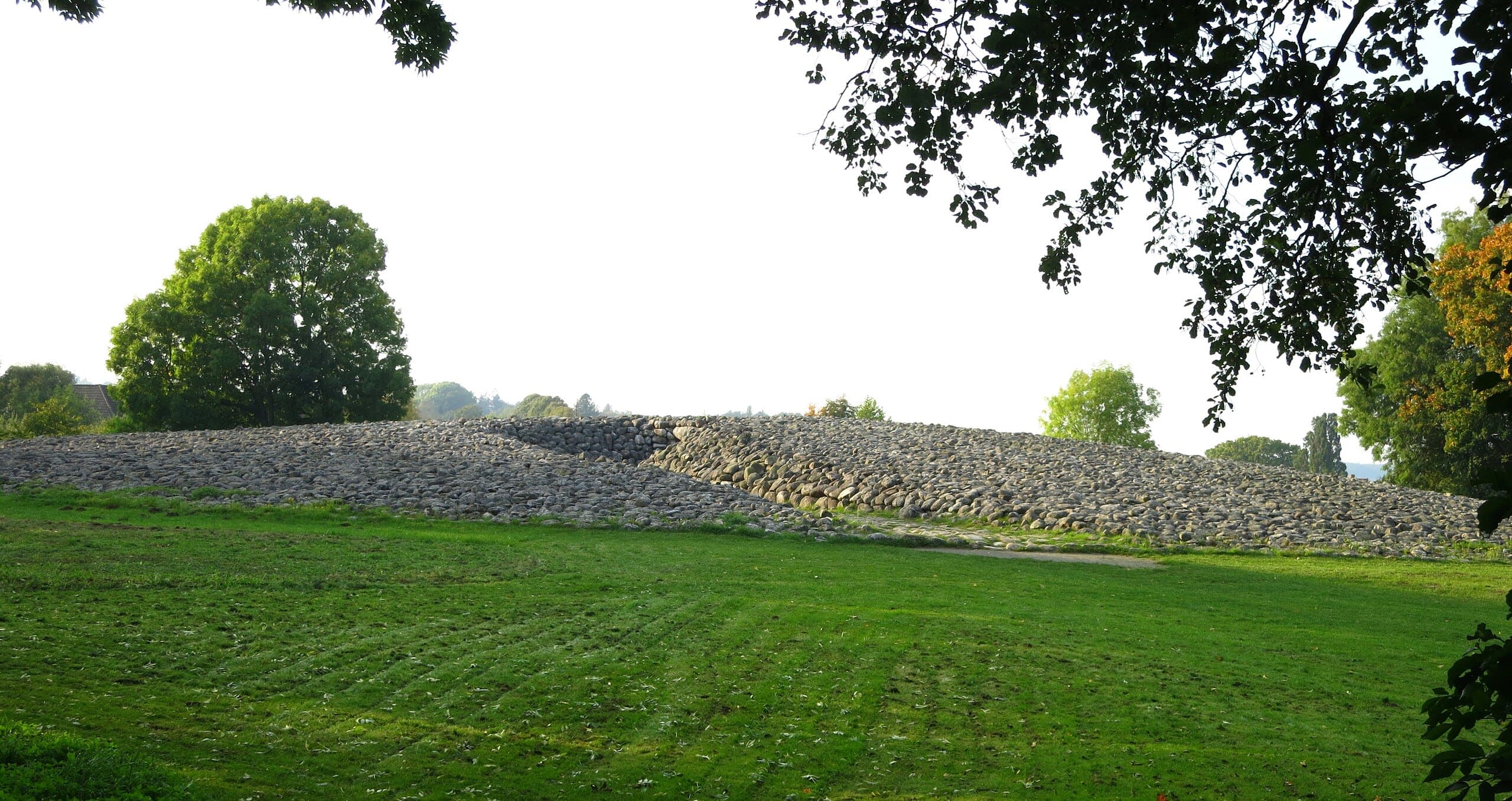
The cairn originally measured seventy-five meters in diameter and may have stood fifteen meters high. The sheer scale places it among the largest Bronze Age burial monuments in northern Europe. But size alone does not account for the King's Grave's significance. What matters is what was carved into the stone slabs lining the burial cist.
Eight decorated slabs bear images that compose a ritual world. Solar crosses, wheel crosses with four spokes, appear alongside chariots drawn by horses. A figure stands upon a chariot, possibly a priest, possibly a ruler, possibly a deity. Lines of figures follow a male dancer. Musicians play curved horns, the lurs whose reconstructed sound reverberates across Scandinavian Bronze Age studies. Ships move through carved water. The imagery connects directly to the bronze sun disc found at Trundholm in Denmark, confirming a shared religious framework across Bronze Age Scandinavia centered on the sun's journey.
But the dead themselves complicate any simple interpretation. At least five individuals were found in the cist, and they were predominantly adolescents, aged thirteen to twenty. The burials spanned approximately six hundred years, from around 1400 to 800 BCE, meaning the chamber was reopened periodically to receive new remains. Bronze artifacts, including a sword pommel and a fibula, indicate elite status.
Why teenagers? The question haunts every visit. Whether they died in initiation rites, were victims of sacrifice, succumbed to epidemic disease, or represent some other practice entirely, no one can say. The carved slabs that surround their remains depict ceremonies of power and cosmic significance, but whether those ceremonies celebrated life, mourned death, or enacted something beyond either category remains among Scandinavian archaeology's most compelling mysteries.
Context And Lineage
The King's Grave was constructed around 1400 BCE during the Nordic Bronze Age and received burials for approximately six hundred years. Discovered by farmers in 1748, excavated by Gustaf Hallstrom in the 1930s, the site's carved slabs connect Kivik to the pan-Scandinavian Bronze Age solar cult.
A Stone Age settlement occupied the site before the cairn was built, indicating that the location held significance before the Bronze Age monument was conceived. Around 1400 BCE, a community of sufficient power and ambition to mobilize the labor required for a seventy-five-meter cairn chose this location for an elaborately decorated burial chamber.
The 1748 discovery was accidental and destructive. Farmers quarrying stone for building purposes broke into the chamber and removed many artifacts that were subsequently lost. What survived, primarily the carved stone slabs and some bronze objects, became the basis for all subsequent study. Gustaf Hallstrom's systematic excavation in 1931-1933 documented the remaining evidence and established the site's archaeological significance.
The King's Grave connects to the pan-Scandinavian Bronze Age solar cult that produced the Trundholm Sun Chariot in Denmark, the rock carvings at Tanum in Bohuslan, and the lur horns found across the region. The solar crosses, chariots, and ship imagery at Kivik participate in a shared religious visual language that extended across northern Europe during the Bronze Age.
Recent research has suggested that Kivik may have been an important trading center, with connections to copper and amber trade networks that linked Scandinavia to central and southern Europe. The site's coastal location, near the sacred mountain of Stenshuvud, places it within a landscape corridor where Bronze Age power, trade, and ritual converged.
Bronze Age Builders
Elite community that constructed the cairn and carved the stone slabs, possibly connected to a regional chieftain or priestly class
Gustaf Hallstrom
Archaeologist who conducted the systematic excavation of 1931-1933 and documented the carved slabs
The Adolescent Dead
At least five individuals, predominantly teenagers aged 13-20, deposited in the chamber over approximately 600 years
Why This Place Is Sacred
The King's Grave concentrates multiple forms of sacred significance: the only rock-carved Bronze Age burial chamber in Scandinavia, solar cult imagery connecting to a pan-northern European religious framework, the mystery of adolescent burial spanning six centuries, and the massive cairn marking the site's importance for miles around.
The carved slabs at Kivik are not decorations. They are statements about the nature of reality as the Bronze Age builders understood it.
The solar cross appears repeatedly: a circle divided by four spokes, representing the sun in its journey across the sky. This is not unique to Kivik. The same symbol appears on the Trundholm Sun Chariot, on Scandinavian rock panels, and on bronze artifacts from across northern Europe. But at Kivik, the solar cross is combined with chariots, processions, and ship imagery in what appears to be a coherent ceremonial narrative carved directly onto a burial chamber's walls. The dead rested within the imagery of the cosmos that governed their world.
The chariot scene is particularly significant. A figure stands on a vehicle with four-spoked wheels, drawn by horses. In Bronze Age Scandinavian cosmology, the sun was understood to travel across the sky in a chariot or ship, pulled by horses during the day and carried by boat through the underworld at night. The Kivik chariot scene may depict this cosmic journey, or it may represent a human ceremony reenacting it. The distinction may not have mattered to the builders.
The processional figures suggest communal ritual. Lines of people follow a male dancer, and musicians play lurs, the curved bronze horns that are among the most distinctive artifacts of Scandinavian Bronze Age culture. These are not solitary acts of devotion. They are community ceremonies involving movement, music, and performance, enacted at or for the burial site.
The ship imagery connects death to voyage. Whether the ships represent the sun's night journey, the soul's passage to an afterlife realm, or actual maritime activities associated with the burial, they link the terrestrial tomb to cosmic waters.
And through all of this, the adolescent dead. Their presence in a tomb of such elaboration and scale raises questions that the carved imagery cannot answer. The six-hundred-year span of burials indicates that whatever practice placed teenagers here was not a one-time event but a sustained tradition maintained across many generations.
The cairn was constructed around 1400 BCE over the remains of an earlier Stone Age settlement, suggesting the site held significance predating the Bronze Age monument. The decorated stone cist functioned as a burial chamber for what appear to be elite individuals, predominantly adolescents, deposited over approximately six hundred years. The carved imagery indicates the burials were embedded within a religious framework centered on solar worship, processional ceremony, and maritime symbolism.
The 1748 discovery by stone-quarrying farmers resulted in the loss of many artifacts and the disturbance of the original burial deposits. Gustaf Hallstrom's excavation of 1931-1933 systematically documented what remained, including the carved slabs that have become the site's primary significance. The monument has been restored and opened to the public, with a modern entrance structure providing access to the burial chamber. The adjacent Cafe Sagmollan in a historic sawmill building offers refreshments and replica artifacts.
Traditions And Practice
The carved slabs depict funerary and solar cult rituals including processions with music, chariot ceremonies, and ship voyages. The chamber received burials over approximately six hundred years, indicating sustained ritual maintenance of the site across generations.
The carved imagery depicts ceremonies that likely accompanied burial: processional scenes with figures following a dancer, musicians playing lurs, chariot ceremonies involving solar symbolism, and ship voyages that may represent the soul's journey. The multi-phase deposition of human remains over six hundred years indicates that the chamber was maintained as an active burial site across many generations, periodically reopened to receive new remains.
The solar crosses and chariot imagery connect to the broader Bronze Age sun cult, in which the sun was understood to travel across the sky in a chariot by day and through the underworld in a ship by night. The ceremonies depicted on the slabs may have reenacted this cosmic journey as part of the funerary ritual.
The site functions as a major archaeological attraction. The adjacent Cafe Sagmollan offers refreshments and Bronze Age replica jewelry and ceramics. Kivik's Museum in town provides additional archaeological context. The Kivik apple market, held annually, draws visitors to the town though it is unrelated to the Bronze Age site.
Enter the chamber and stand with the carved slabs surrounding you. Allow the imagery to register as a coherent ensemble rather than individual images. The solar crosses, the chariots, the processions, the ships, and the musicians compose a single vision of how this community understood the relationship between life, death, and the cosmos.
Focus on the chariot slab. A figure stands on a vehicle drawn by horses with four-spoked wheels. Whether this represents a deity, a priest, a ruler, or a ceremonial enactment, the image captures a moment of movement and authority that has survived thirty-five centuries.
Consider the musicians. The lurs they play have been reconstructed from surviving examples found elsewhere in Scandinavia. The sound they produce is haunting and resonant. Standing in the chamber, imagine that sound filling the stone-enclosed space during a burial ceremony.
Before leaving the chamber, acknowledge the dead. Primarily adolescents. Deposited here across six hundred years. Whatever brought them to this elaborately decorated tomb, they deserve a moment of recognition.
Nordic Bronze Age Solar Cult
HistoricalThe carved slabs depict solar crosses, chariots, and processional scenes connecting the King's Grave to the widespread Bronze Age sun cult of northern Europe. The imagery parallels the Trundholm Sun Chariot from Denmark, suggesting a shared religious framework centered on the sun's journey across the sky and the role of ritual in maintaining cosmic order.
Ritual processions involving music (lurs), dance, and chariot ceremonies, likely enacted during funerary events. The solar crosses and chariot imagery may represent ceremonial reenactments of the sun's cosmic journey. The multi-phase use of the tomb over six hundred years indicates sustained ritual engagement with the site across many generations.
Bronze Age Elite Mortuary Tradition
HistoricalThe massive scale of the cairn (75 meters diameter), the decorated stone cist, and the bronze grave goods indicate that the King's Grave served as a burial site for individuals of elite status. The deposition of primarily adolescents across six hundred years raises profound questions about Bronze Age attitudes toward youth, death, and social hierarchy.
Multi-phase deposition of human remains within a decorated stone cist, maintained as an accessible burial site over approximately six hundred years. Grave goods including bronze weapons and ornaments were placed with the dead. The periodic reopening of the chamber indicates organized maintenance of the burial site across generations.
Archaeological Research and Public Interpretation
ActiveSince Gustaf Hallstrom's 1931-1933 excavation, ongoing research has continued to refine understanding of the King's Grave. The 2009 Antiquity publication established the multi-phase burial sequence. Current interpretation emphasizes the carved slabs as the primary surviving evidence for Bronze Age religious practice in Scandinavia.
Archaeological excavation and publication, site restoration and public access management, museum interpretation at Kivik's Museum, and integration with the broader Osterlen cultural tourism infrastructure.
Experience And Perspectives
Visitors enter the burial chamber through a modern access structure and stand face to face with 3,500-year-old carved imagery depicting an entire Bronze Age ceremonial world. The encounter is intimate: the chamber is small, the carvings close, and the knowledge that adolescents were deposited here across six centuries adds emotional weight.
The cairn's exterior has been reconstructed to approximate its original profile, and the scale registers from a distance. Seventy-five meters across is large for any period; for the Bronze Age, it is extraordinary. The cairn dominates its surroundings the way a barrow or tumulus should: asserting the importance of what lies within through sheer mass.
The modern entrance leads down into the burial chamber. The transition from daylight to the chamber's enclosed darkness mirrors what must have been the original experience of entering the cairn, though the original approach would have involved moving through layers of stone rather than walking through a corridor.
Inside, the carved slabs occupy the chamber walls. The carvings are not large individually, but their proximity creates an immersive effect. The solar crosses, the chariots, the processional figures, the musicians, the ships surround the visitor on multiple sides. The experience is less like viewing art in a gallery and more like standing inside the art, enclosed by the Bronze Age imagination.
Each slab rewards close attention. The chariot slab, with its figure standing on a horse-drawn vehicle with four-spoked wheels, is perhaps the most arresting single image. But the processional scenes, with their lines of figures following a dancer, offer the most vivid impression of ceremony. The musicians and their lurs suggest a dimension of sound that the silent stones can only imply.
The knowledge that predominantly adolescents were found here adds a dimension that shifts the experience from historical interest to emotional encounter. Thirteen-year-olds. Seventeen-year-olds. Twenty-year-olds at most. Deposited over six hundred years within these carved walls. Whatever brought them here, whether honor or sacrifice, disease or initiation, the conjunction of youth and death and elaborate cosmic imagery produces a response that transcends archaeological curiosity.
The cafe in the adjacent historic sawmill building provides a space for reflection after the chamber visit. Replica Bronze Age jewelry and ceramics are available, tangible connections to the culture that built the grave.
Enter the burial chamber with awareness of what you are approaching: Scandinavia's only decorated Bronze Age burial cist. Allow your eyes to adjust to the lower light inside the chamber.
Spend time with individual slabs rather than trying to absorb all the imagery at once. The chariot slab, the processional scenes, the ship panels, and the solar cross imagery each merit sustained attention. Look for the relationship between adjacent slabs: the carvings may constitute a narrative sequence rather than isolated images.
Consider the adolescent dead. The carved imagery around them depicts ceremonies of cosmic significance, solar journeys, processional music, and maritime voyaging. Whatever the relationship between the ceremonies depicted and the individuals buried, the conjunction is deliberate.
After the chamber, walk the perimeter of the reconstructed cairn to appreciate its scale. Seventy-five meters is the distance from a penalty spot to the halfway line of a football pitch. The community that built this devoted immense labor to containing their dead.
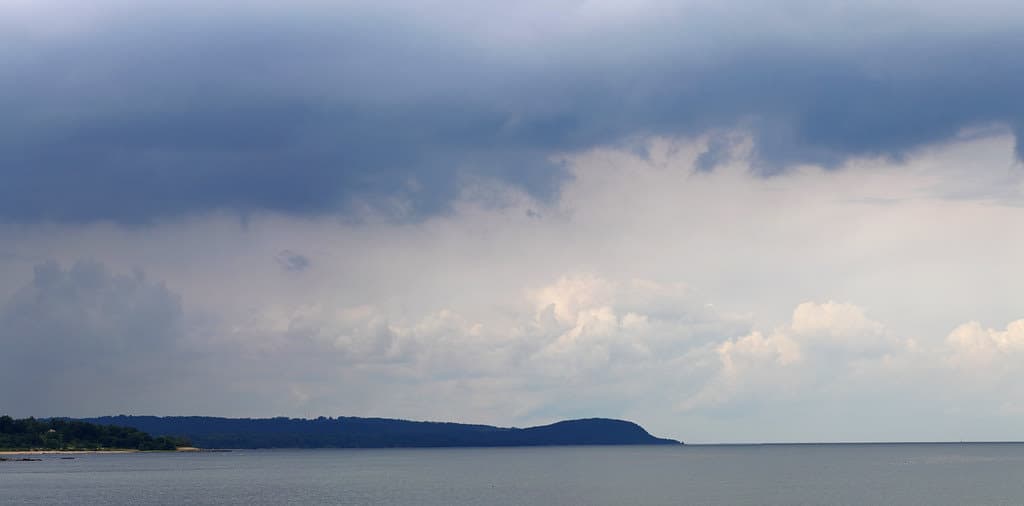
Combine the visit with Stenshuvud National Park, the sacred mountain visible to the south, to experience the broader sacred landscape corridor along the southeastern Skane coast.
The King's Grave raises more questions than it answers, and the carved slabs that make it exceptional also make it enigmatic. Each attempt to decode the imagery opens new interpretive pathways without closing others.
Archaeologists recognize the King's Grave as one of the most significant Bronze Age monuments in northern Europe. The 2009 peer-reviewed study in Antiquity (Bredaror on Kivik) established the multi-phase construction and burial sequence. The carved slabs are interpreted as depicting funerary and solar cult rituals, though the exact meaning of individual scenes remains debated. The predominance of adolescent burials is a distinctive feature that has generated interpretations ranging from elite warrior initiation to sacrificial practices. Recent research connects the site to Bronze Age trade networks in copper and amber.
No specific indigenous traditions survive for this site. The name Kungagraven (King's Grave) reflects a later folk tradition of attributing large burial mounds to kings or chiefs, a common Scandinavian practice that reveals cultural memory of the monument's importance even when the specific identity of the buried is lost.
The solar cross imagery and chariot scenes have attracted interest from those studying Bronze Age religion as a precursor to later Norse mythology. The ship symbolism is sometimes interpreted as representing the soul's journey to an afterlife realm, while the solar crosses are seen as evidence of a sun religion that later evolved into aspects of Norse theology. Some interpret the processional scenes as depicting initiation rites rather than purely funerary ceremonies, which might explain the adolescent dead.
Why predominantly adolescents were buried here remains the central mystery. Whether this represents human sacrifice, deaths during initiation rites, epidemic deaths, or some other practice is unknown. What the complete processional scenes depicted on the slabs represent, whether a funeral, a solar festival, a coronation, or something else, remains open to interpretation. What was lost during the 1748 looting can never be recovered. The exact relationship between the Stone Age settlement that preceded the cairn and the Bronze Age community that built it is unclear.
Visit Planning
The King's Grave is located on the outskirts of Kivik in southeastern Skane, accessible by car via coastal roads. The adjacent cafe operates May through September. Combine with Stenshuvud National Park for a full day exploring the sacred landscape corridor.
Located on the outskirts of Kivik in northern Simrishamn Municipality, southeastern Skane. Accessible by car via coastal roads. Kivik is a small town known for its apple orchards and annual apple market. Parking is available near the site. No mobile phone signal information was available at time of writing; the proximity to Kivik village suggests standard network coverage. Contact the site or Simrishamn Municipality tourist office for current opening hours and entrance fees.
Kivik offers seasonal accommodations. Simrishamn, approximately 15 km south, provides a broader range of hotels and guesthouses. The Osterlen area is a popular summer destination with many seasonal rental options.
The King's Grave contains fragile 3,500-year-old rock carvings and the remains of at least five individuals. Do not touch the carved slabs, stay on designated paths, and maintain appropriate respect within the burial chamber.
The carved slabs within the burial chamber are irreplaceable. No other Bronze Age burial in Scandinavia bears rock carvings, and the images at Kivik constitute a primary source for understanding Bronze Age religion in northern Europe. Physical contact with the carvings, however gentle, contributes to their erosion.
Stay on designated paths within and around the cairn. The reconstructed cairn and the chamber access are designed to protect the archaeological features while providing visitor access. The coarse stone paving can be uneven and requires appropriate footwear.
The chamber held the remains of at least five individuals, predominantly adolescents. Treat the space with the respect due to a burial place, regardless of the time that has passed since the last interment.
Comfortable walking shoes recommended due to coarse stone paving around the cairn. No specific dress code.
Check current signage regarding photography inside the chamber. If permitted, photograph without flash and without touching the slabs. The carvings are most visible in even, indirect light.
Do not leave objects in the burial chamber or on the cairn. The site is a protected archaeological monument.
Do not touch the carved stone slabs. Stay on designated paths. The coarse stone paving may be difficult for wheelchairs or prams. Dogs are allowed on leash.
Sacred Cluster
Nearby sacred places create the location cluster described in the growth plan. This block is intentionally crawlable and links into the wider regional graph.