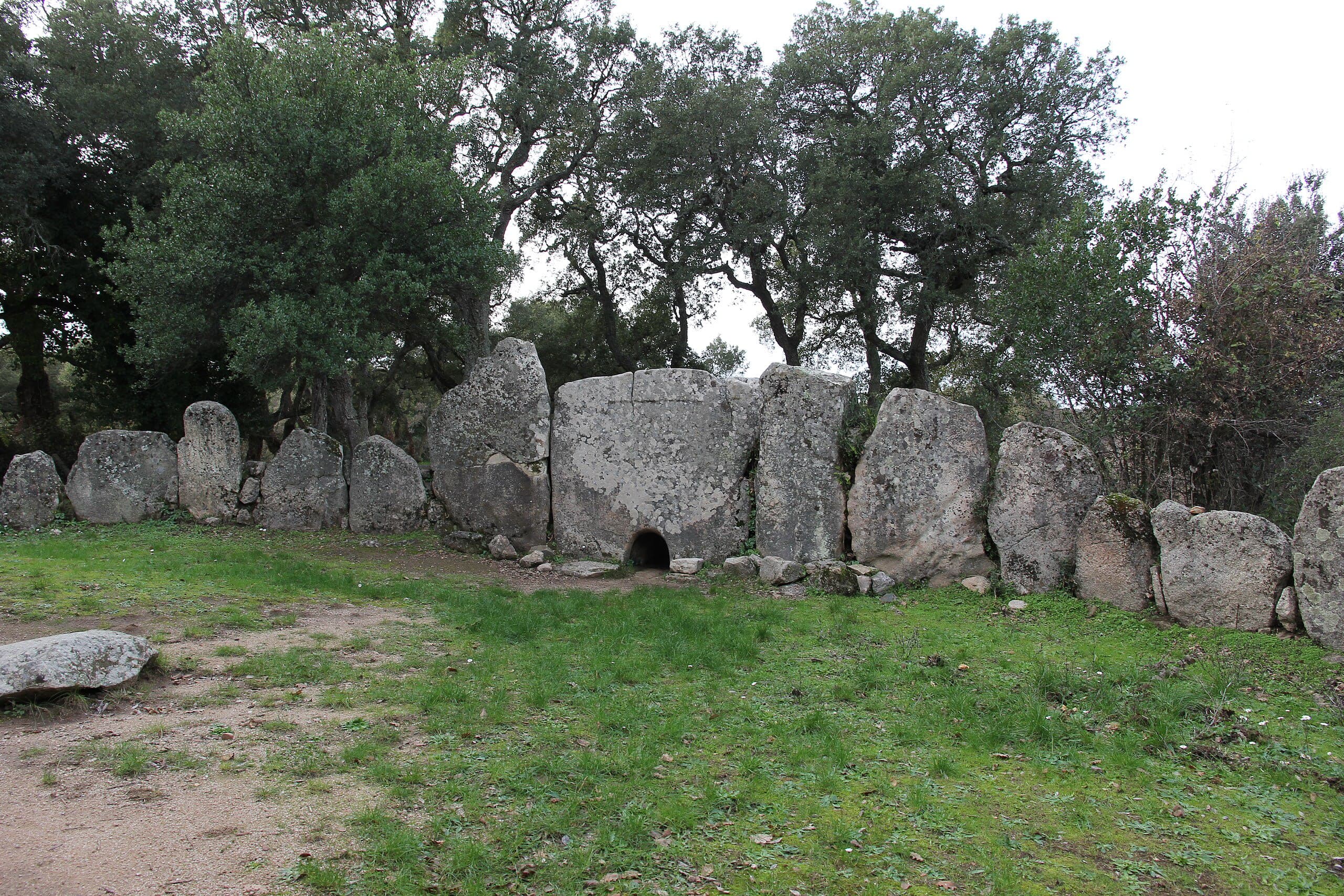
The Giants' Tomb of Pascaredda
Through cork oak forest to a tomb of rebirth, where a stone obelisk marks the cycle of death into life
Caragnani/Calangianus, Sardinia, Italy
At A Glance
- Coordinates
- 40.9081, 9.1741
- Suggested Duration
- 1-1.5 hours including walk and site visit.
Pilgrim Tips
- No specific requirements. Comfortable walking shoes for forest path.
- Photography permitted.
- Forest path may be challenging. Bridge crossing required. Comfortable walking shoes needed.
Overview
The path to Pascaredda winds through cork oak forest, crossing Rio Badu Mela by wooden bridge before arriving at a Giants' Tomb that speaks of renewal. Near the entrance stands a betile—a stone obelisk that symbolized the Nuragic belief in rebirth after death. The 18.40-meter exedra curves beneath Monte di Deu, the Mountain of God, creating a sacred landscape where burial architecture and natural setting unite.
The Giants' Tomb of Pascaredda lies hidden in the cork oak forests of Gallura, reached by path through landscape that feels designed for pilgrimage. Cross the wooden bridge over Rio Badu Mela, follow the trail through ancient oaks, and arrive at a tomb that makes visible the Nuragic understanding of death as passage rather than ending.
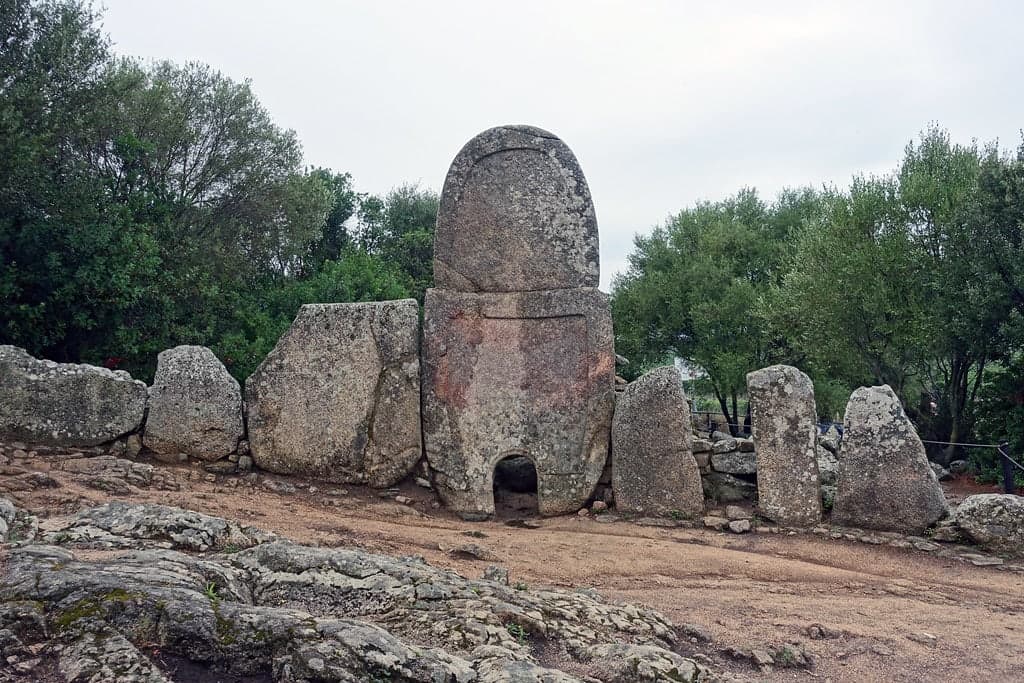
Near the entrance stands a betile—a stone obelisk that modern Sardinian still recognize as a symbol of regeneration. The Nuragic people placed these stones at significant locations to mark the cycle of death into rebirth. At Pascaredda, the betile announces what the tomb embodies: death is transformation within an ongoing sacred cycle.
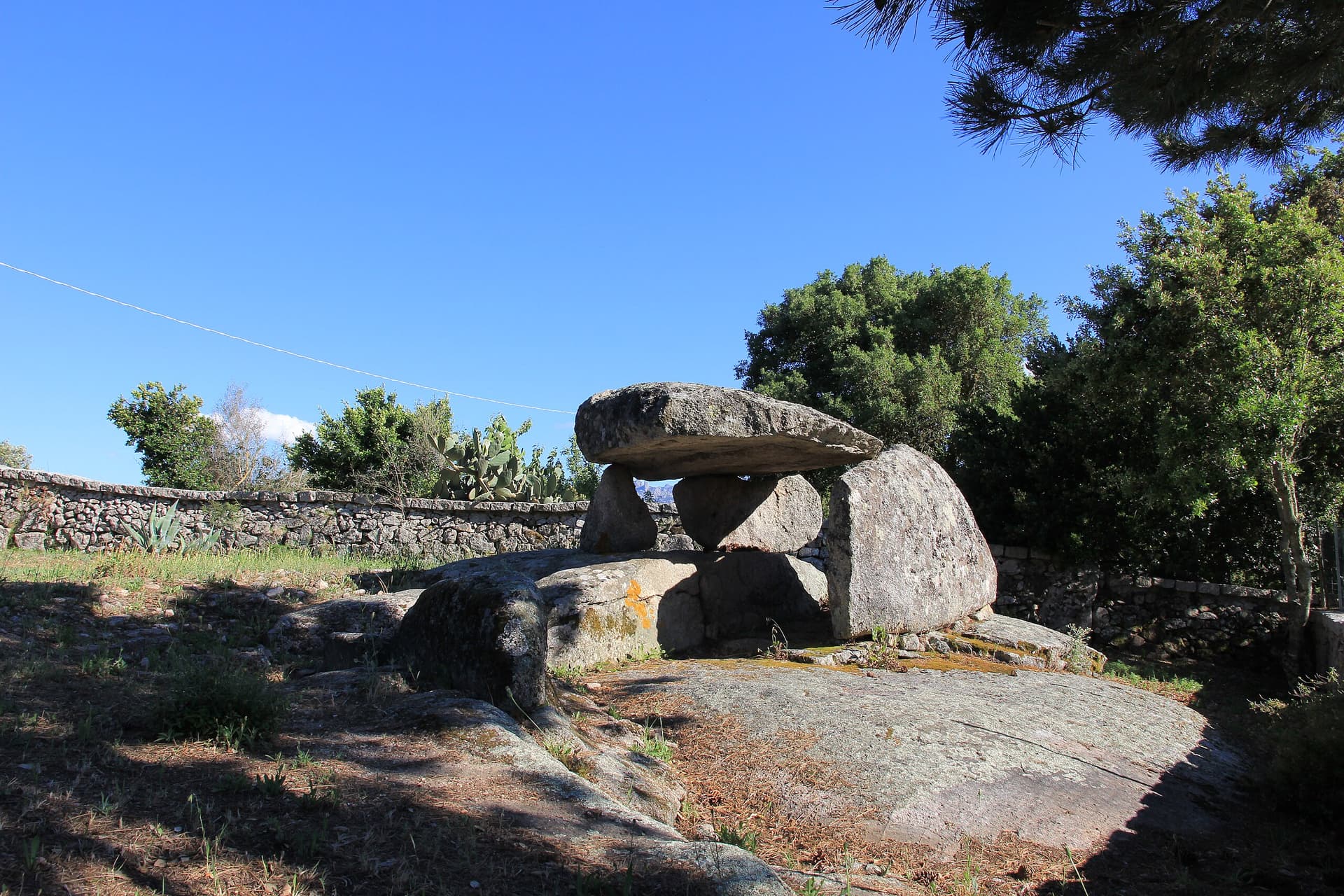
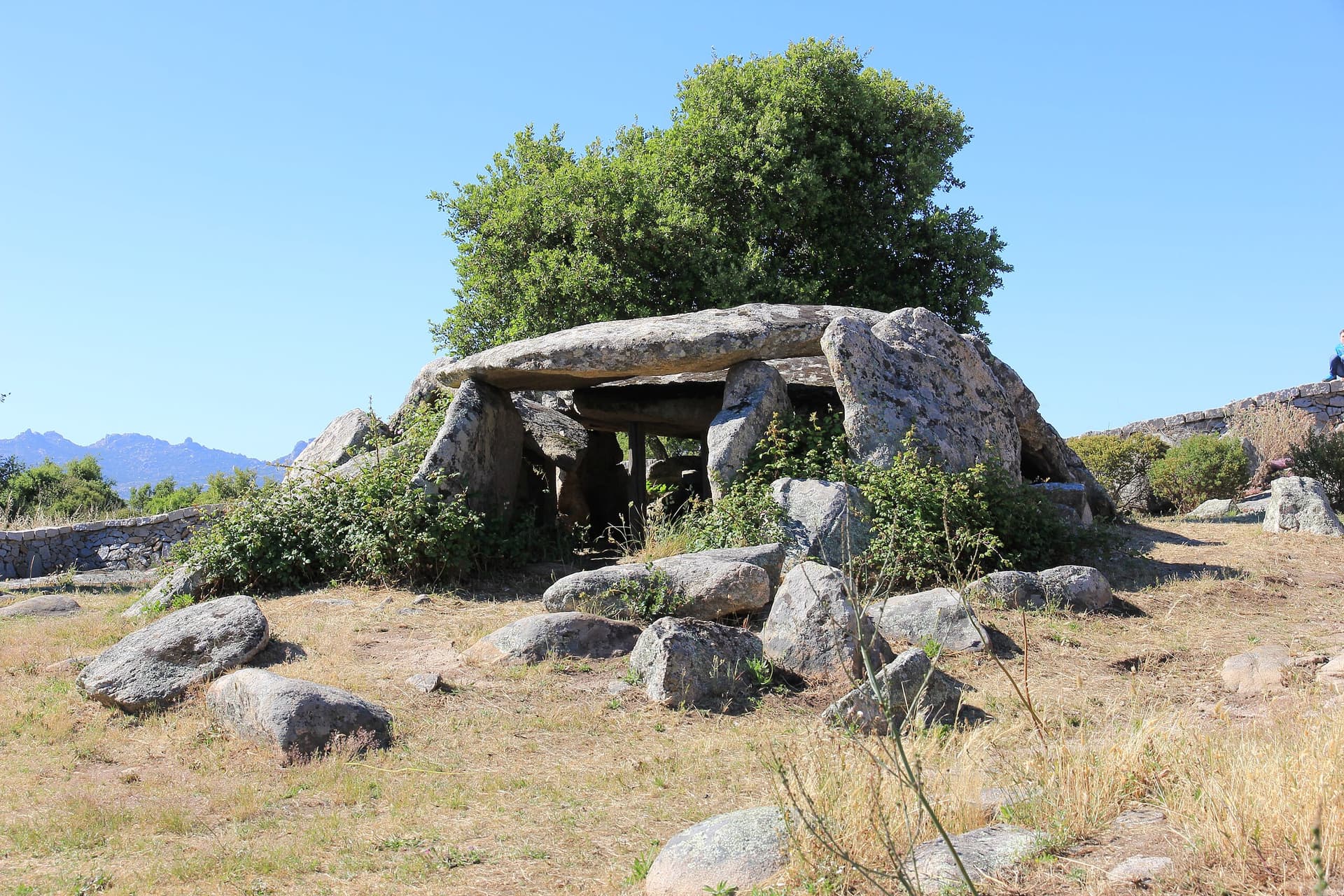
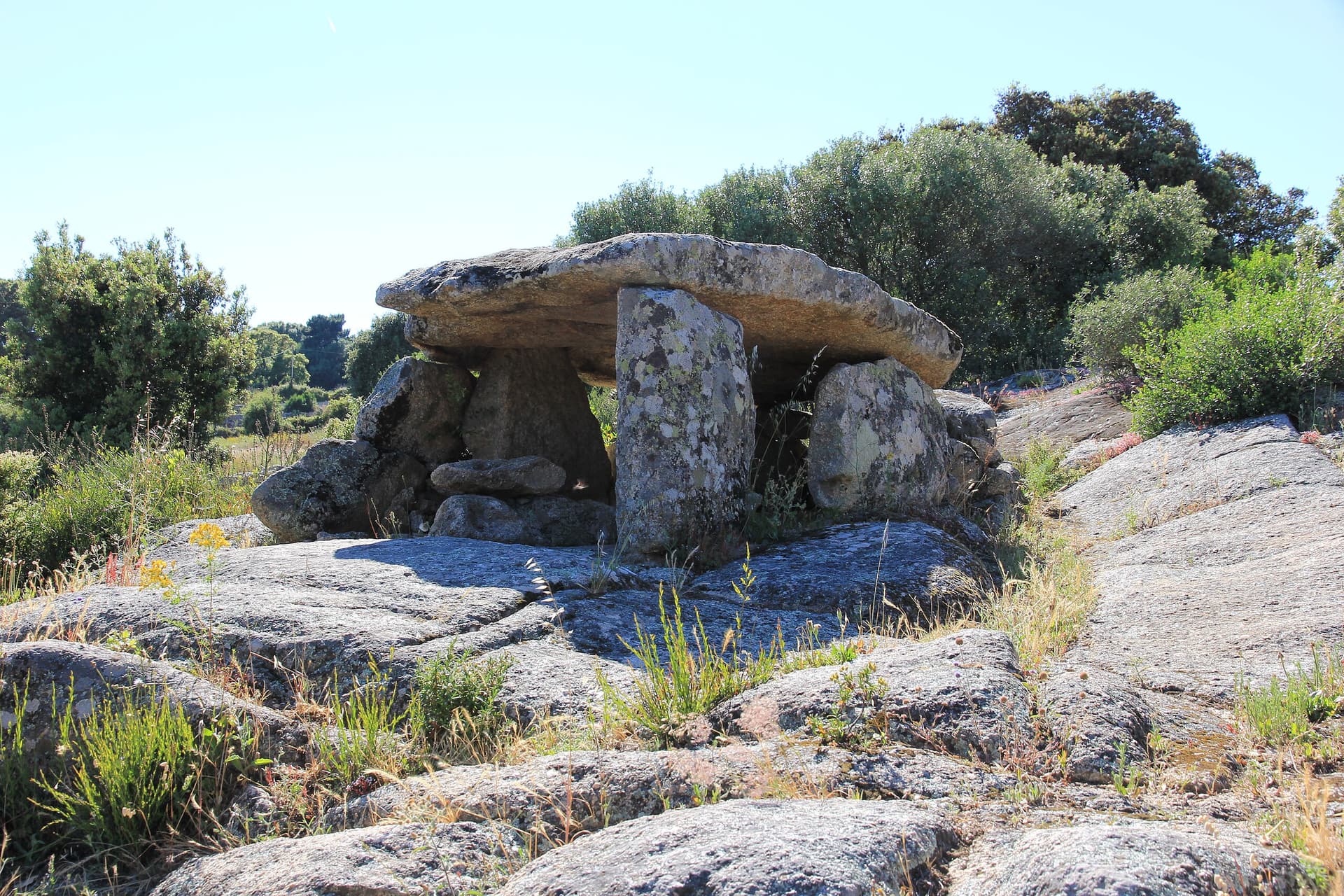
The exedra extends 18.40 meters, formed by large granite orthostats decreasing in height from center to edges. Twelve transverse roof slabs remain in place—exceptional preservation that allows visitors to understand how the corridor tomb was originally covered. The 12.5-meter funeral corridor extends behind, holding whatever remains of the community that was gathered here across generations.
The setting amplifies sacred dimension. Monte di Deu—Mountain of God—rises beyond the tomb, its name preserving awareness of the landscape's numinous character. Cork oak forest surrounds the path, creating approach through vegetation that has grown for centuries. The crossing of Rio Badu Mela by wooden bridge adds ritual element to arrival.
The 1998 excavation and restoration revealed the tomb's construction during the Middle or Late Bronze Age, approximately 1700-1400 BC. The Gallura region developed distinctive Giants' Tomb traditions, and Pascaredda represents one of the finest examples—row burial with centered stele, exedra forming bull's-horn embrace, betile marking the belief that death opens into new life.
Context And Lineage
Pascaredda represents the Gallura tradition of Giants' Tomb construction, with betile marking rebirth symbolism and exceptional preservation of roof slabs.
The Giants' Tomb of Pascaredda was built during the Middle or Late Bronze Age, approximately 1700-1400 BC, by the Nuragic civilization of the Gallura region in northeastern Sardinia.
The builders chose a location in cork oak forest beneath what would be named Monte di Deu—Mountain of God. Whether this name predates or follows the tomb, the landscape was understood as sacred territory appropriate for the dead.
The architecture follows Gallura tradition: row burial with centered stele, curved exedra of granite orthostats, long funeral corridor. What distinguishes Pascaredda is the betile near the entrance—a stone obelisk symbolizing the Nuragic belief in regeneration after death. The betile announced the tomb's theological meaning: death as passage rather than ending.
The 1998 excavation and restoration revealed exceptional preservation. Twelve transverse roof slabs remain in place, allowing visitors to understand how the 12.5-meter corridor was originally covered. This covering is rare among surviving Giants' Tombs.
The 18.40-meter exedra creates ceremonial space where funerary rites were performed. The low bench around the hemicycle provided seating for ceremonies and possibly for incubation sleepers seeking ancestral dreams.
Built by Nuragic civilization (Middle/Late Bronze Age, 1700-1400 BC). Excavated and restored 1998. Freely accessible through forest path.
The Nuragic Community of Gallura
Builders and Users
Why This Place Is Sacred
Pascaredda's thin quality emerges from the betile symbolizing rebirth, from the forest path creating pilgrimage approach, and from the Mountain of God rising beyond the tomb.
The thinness at Pascaredda crystallizes in the betile. This stone obelisk, standing near the tomb entrance, was not decorative but theological. The Nuragic people understood death within a cycle that continued into renewal. The betile marked this understanding, making visible the belief that the dead did not simply cease but transformed.
This is thin place as threshold—specifically, as threshold between states of being. The dead who entered the corridor tomb were understood to be in passage. The betile announced the nature of that passage: not ending but transformation, not loss but change of form. To be buried at Pascaredda was to enter a process that continued beyond the cessation of breath.
The forest approach adds contemplative dimension. Cork oaks have grown here for centuries, creating canopy that filters light and sound. The path through forest, the crossing of Rio Badu Mela by wooden bridge, the gradual emergence of the tomb from vegetation—these elements compose an experience of transition that mirrors the transition the tomb was built to facilitate.
Monte di Deu—Mountain of God—rises beyond the tomb, its name preserving awareness of sacred geography. Whether the Nuragic people named this mountain or later traditions assigned the name, the landscape was understood as marked by divine presence. The tomb sits within this presence, drawing meaning from its position beneath the Mountain of God.
The exceptional preservation—twelve roof slabs remaining in place—allows visitors to experience something close to original architectural intention. Most Giants' Tombs have lost their covering; Pascaredda retains enough to convey how the corridor was enclosed, how the darkness of the tomb was created and maintained.
Visitors who make the forest walk, cross the bridge, and encounter the tomb with its betile and its covered corridor experience something of what the Nuragic people intended. The thinness here is architectural and contextual—betile, tomb, forest, mountain composing a unity that communicates across three and a half millennia.
Built during Middle/Late Bronze Age (1700-1400 BC) as collective burial site. The betile near the entrance symbolized the Nuragic belief in rebirth after death. The 18.40-meter exedra and 12.5-meter corridor served funerary ceremonies and collective interment.
Excavated and restored in 1998. Twelve transverse roof slabs remain in place—exceptional preservation. Now freely accessible through forest path.
Traditions And Practice
No active religious practices continue. Visitors engage through forest pilgrimage to the tomb and contemplation of the betile's rebirth symbolism.
Collective burial with funerary rites. The betile symbolized regenerative cycle of death into rebirth. The low bench around the exedra may have served funeral ceremonies and incubation practices.
Archaeological appreciation and cultural tourism. The forest setting and exceptional preservation attract visitors seeking contemplative experience.
Approach the forest walk as pilgrimage. Notice the cork oaks and the transition the path creates. Spend time with the betile, contemplating its rebirth symbolism. Explore the covered corridor with its twelve remaining roof slabs.
Gallura Nuragic Burial with Rebirth Symbolism
HistoricalPascaredda represents Gallura burial traditions with explicit rebirth symbolism through the betile. The tomb embodies Nuragic understanding of death as transformation within an ongoing cycle.
Collective burial in 12.5-meter corridor. Funerary ceremonies in 18.40-meter exedra. Betile marking the belief in regeneration after death. Possible incubation practices on the low bench.
Experience And Perspectives
The path through cork oak forest leads to a well-preserved Giants' Tomb with betile marking rebirth symbolism and twelve remaining roof slabs. Monte di Deu rises beyond.
From Tempio Pausania, take SS 127 toward Calangianus. At the Nuchis junction, approximately five kilometers along, turn right onto the natural road and cross the railway. Follow tourist signs, taking the path right for approximately 800 meters until you reach the wooden bridge over Rio Badu Mela.
The bridge crossing marks transition into sacred landscape. Behind you lies the road, the railway, ordinary travel. Before you, cork oak forest closes around the path leading to the tomb. Let this transition work on you; the Nuragic pilgrims made similar passage.
The forest path requires approximately fifteen to twenty minutes of walking. Notice the cork oaks—their bark harvested in cycles that have continued for centuries, their shade creating dappled light. The vegetation that surrounds the tomb was not cleared by its builders; they chose a location already marked as special by natural growth.
The tomb emerges from the forest with quiet authority. The betile—stone obelisk symbolizing rebirth—stands near the entrance. This was not grave marker but theological statement: death opens into new life. The Nuragic community that buried here understood their dead as in passage, not as ended.
The 18.40-meter exedra extends arms of granite, the bull's-horn shape creating enclosed ceremonial space. Walk the curve, touching the orthostats if permitted, feeling how the stones decrease in height from center to edges. The low bench around the interior would have provided seating for ceremonies.
The funeral corridor extends 12.5 meters behind the exedra, remarkably preserved with twelve transverse roof slabs still in place. This covering is exceptional—most Giants' Tombs have lost their roofs. Peer into the darkness and imagine the accumulated dead, generation after generation gathered in this enclosed space.
Monte di Deu rises beyond, the Mountain of God that gives the landscape its name. The tomb sits within this named presence, drawing sacred significance from both architecture and setting.
From Tempio Pausania, take SS 127 toward Calangianus. After ~5 km at Nuchis junction, turn right, cross railway. Follow tourist signs, take path right ~800m, cross wooden bridge over Rio Badu Mela. Free access. Allow 1-1.5 hours including walk.
Pascaredda can be understood as evidence of Nuragic rebirth beliefs, as exceptionally preserved funerary architecture, or as sacred site within landscape named for divine presence.
The 1998 excavation established Pascaredda as well-preserved example of row-type Giants' Tomb with centered stele. The granite construction and preservation of twelve roof slabs make it valuable for understanding Nuragic funerary architecture.
The name 'Monte di Deu' (Mountain of God) for the nearby mountain suggests broader sacred significance in local tradition.
The betile's symbolism of death and rebirth attracts interest in ancient spiritual practices. The forest setting invites sacred landscape research.
The specific contents of the burial corridor await full documentation. The relationship to Monte di Deu requires further research. The nature of rituals performed with the betile is not recorded.
Visit Planning
Located in cork oak forest near Calangianus. Forest walk required including bridge crossing. Free access. Allow 1-1.5 hours.
Accommodation available in Calangianus, Tempio Pausania, and surrounding area.
Respect the forest environment and ancient tomb through careful movement and contemplative behavior.
Pascaredda lies within cork oak forest that has grown for centuries. Respect both the natural setting and the ancient tomb that forest conceals.
No specific requirements. Comfortable walking shoes for forest path.
Photography permitted.
Not appropriate at archaeological sites.
Stay on marked path. Cross bridge carefully. Respect restored structures.
Sacred Cluster
Nearby sacred places create the location cluster described in the growth plan. This block is intentionally crawlable and links into the wider regional graph.