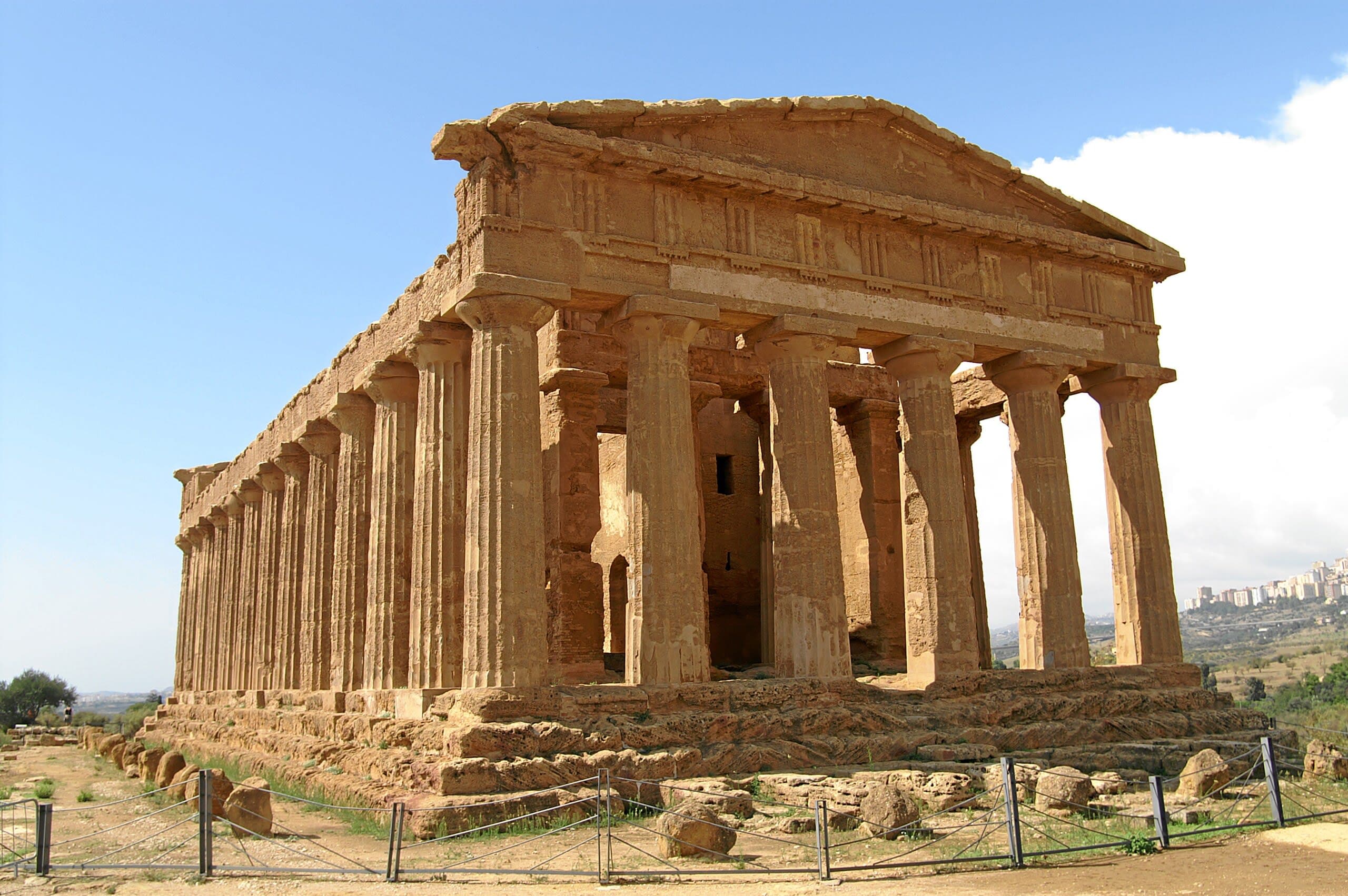
Temple of Concordia
The best-preserved Doric temple outside Athens, standing where it has stood for 2,400 years
Agrigento, Sicily, Italy
At A Glance
- Coordinates
- 37.2898, 13.5920
- Suggested Duration
- 2-3 hours for thorough visit along the Via Sacra.
Pilgrim Tips
- Practical clothing suitable for walking in Mediterranean conditions. Comfortable shoes essential for the paths.
- Photography is permitted throughout the site. Evening illumination creates exceptional photographic opportunities.
- The site is extensive; plan for 2-3 hours minimum. Summer heat can be intense; bring water and sun protection. Evening visits offer cooler temperatures and dramatic lighting.
Overview
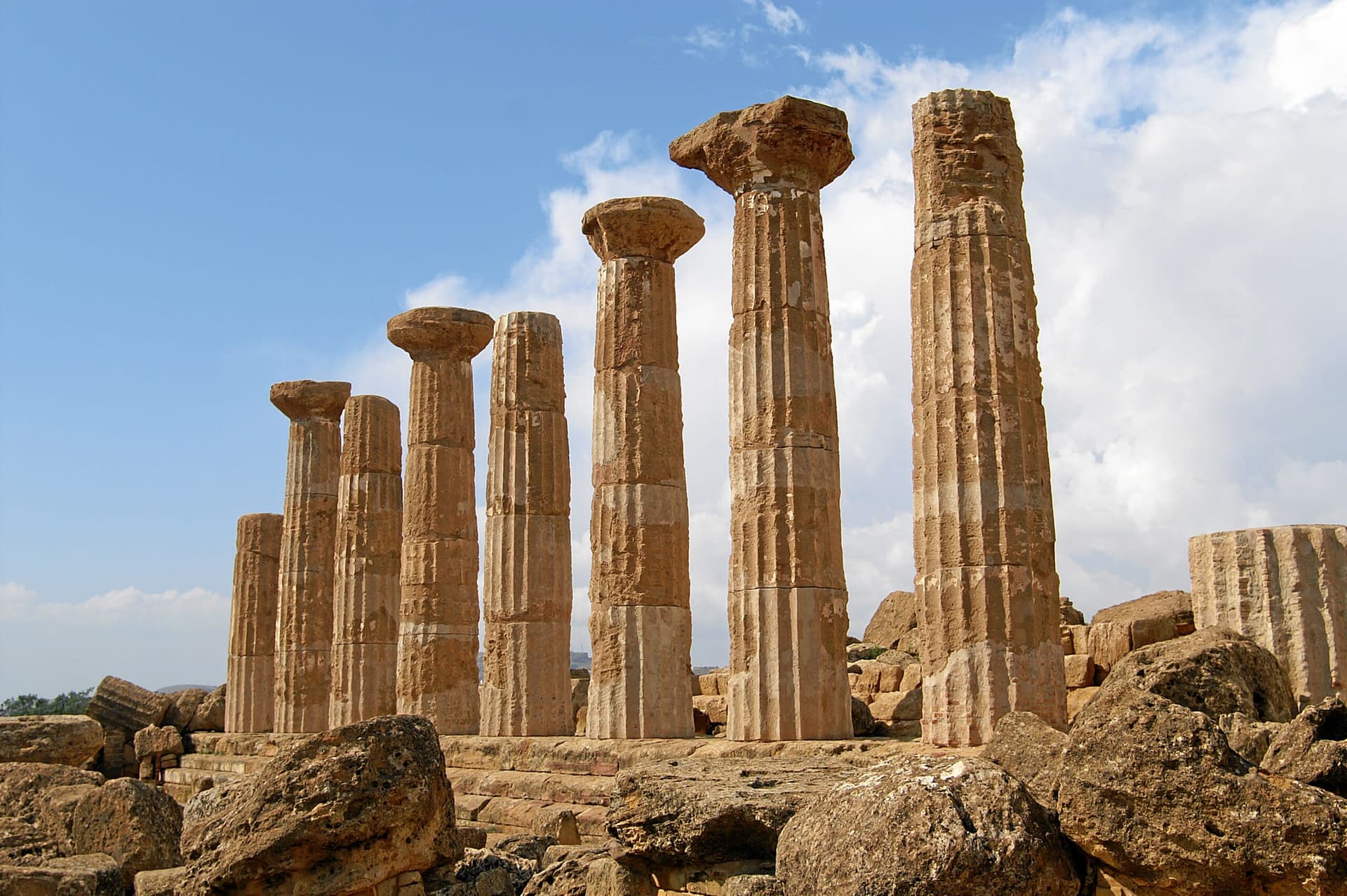
On a ridge overlooking the Mediterranean, the Temple of Concordia rises in near-perfect preservation, its thirty-four columns intact, its pediments complete, its proportions so harmonious they inspired the UNESCO World Heritage emblem. Built around 430 BC in the wealthy Greek colony of Akragas, the temple survived through conversion to a Christian church and the soft clay beneath its foundations that absorbed earthquake tremors. It stands today as the finest surviving example of Greek sacred architecture in the world outside the Parthenon.
The philosopher Empedocles, a native of ancient Akragas, reportedly observed that his fellow citizens 'built as if they would live forever, and ate as if they would die tomorrow.' The Temple of Concordia embodies that first impulse: construction for eternity.
Akragas, modern Agrigento, was one of the wealthiest cities of the ancient Mediterranean. Founded in 580 BC, it accumulated fortune through agriculture and trade, then poured that fortune into temples along a ridge overlooking the sea. The Valley of the Temples, as the site is now called, contained at least seven major sanctuaries, designed to impress visitors approaching by ship with the city's power and piety.
The Temple of Concordia was built between 440 and 430 BC, roughly contemporary with the Parthenon in Athens. Its proportions follow Greek mathematical ratios, its thirty-four columns, six on each short side and thirteen on each long side, display the classical features of the Doric order. The entablature, pediments, and much of the original structure survive intact.
The name 'Concordia' was assigned in the sixteenth century by the historian Tommaso Fazello, based on a Roman inscription found nearby. The original deity is unknown, perhaps the Dioscuri, perhaps Demeter and Persephone, perhaps another god entirely. This uncertainty adds to the temple's contemplative power: it stands as a monument to Greek sacred architecture itself rather than to any particular cult.
In 597 AD, Bishop Gregory II converted the temple into a church dedicated to Saints Peter and Paul. The conversion required significant modification, including cutting twelve arches into the cella walls, but it also ensured the temple's survival through the medieval period. In 1748, the Christian modifications were removed and the temple restored to approximate its original appearance.
Modern scholars believe the temple's extraordinary preservation owes partly to the soft clay beneath its rock foundation, which may have acted as a natural shock absorber during earthquakes. Whether the ancient engineers exploited this feature intentionally is unknown but tantalizing. Either way, the result is a temple that stands today almost exactly as it stood when Greek priests performed sacrifices before its altar 2,400 years ago.
Context And Lineage
Built at the height of Akragas's wealth and power, the temple represents the apex of Greek colonial civilization in Sicily. Its survival through Christian conversion and natural resistance to earthquakes makes it the best-preserved Doric temple outside Athens.
Akragas was founded in 580 BC by colonists from Gela, itself a colony of Rhodes and Crete. The site was strategically chosen: a ridge overlooking the sea, easily defended, blessed with the fertile soil that would make Akragas one of the wealthiest cities in the ancient Mediterranean.
By the fifth century BC, Akragas had accumulated enormous wealth through agriculture, particularly the export of grain and olive oil, and through the labor of enslaved people captured in wars. This wealth was directed into temple construction on a scale that rivaled Athens. The Valley of the Temples eventually contained at least seven major sanctuaries, creating a sacred landscape that announced Akragas's power to every ship approaching the coast.
The Temple of Concordia was built between 440 and 430 BC, during the period of greatest prosperity. Its dimensions conform to Greek mathematical ratios: the stylobate measures 39.42 by 16.92 meters, the columns stand approximately 7 meters high (8.93 meters including capitals), the proportions relate through the mathematical harmonies the Greeks believed reflected cosmic order.
The original deity remains unknown. The name 'Concordia' was assigned in the sixteenth century by Tommaso Fazello, the Dominican friar known as the Father of Sicilian History, based on a first-century Roman inscription found nearby reading 'CONCORDIAE AGRIGENTINORUM SACRUM RESPUBLICA LILIBITANORUM' ('Dedicated to the unity of the people of Agrigento'). There is no historical connection between this inscription and the temple. Scholarly speculation suggests the Dioscuri (Castor and Pollux, protectors of seafarers) or Demeter and Persephone (goddesses of fertility, whose cult was central to Akragas) as possible dedications.
In 406 BC, Carthage besieged and sacked Akragas, beginning a long decline. The city was rebuilt but never recovered its former glory. In 597 AD, Bishop Gregory II of Agrigento converted the temple into a Christian church dedicated to Saints Peter and Paul, a transformation that required cutting twelve arches into the cella walls but also ensured the building's survival through the medieval period. In 1748, the church modifications were removed and the temple restored to approximate its original appearance.
From Greek polytheistic worship through Christian church to archaeological monument. The original cultic tradition is extinct; the temple now serves as a monument to Greek sacred architecture and a UNESCO World Heritage Site.
Empedocles
Philosopher and native son
Bishop Gregory II of Agrigento
Church converter
Tommaso Fazello
Historian
Why This Place Is Sacred
Near-perfect preservation creates a direct encounter with Greek sacred architecture as the Greeks experienced it. The temple's proportions embody the mathematical harmony the Greeks believed reflected cosmic order. To stand here is to feel what the ancients felt, unmediated by ruin.
Most Greek temples reach us as ruins, their columns toppled, their roofs vanished, their interiors collapsed into rubble. The Temple of Concordia is different. It stands complete enough that the mind need not reconstruct what the eyes perceive. The temple is simply present, as it has been present for 2,400 years.
This preservation creates a particular quality of encounter. At Selinunte, you must imagine what the temples once looked like. At Segesta, you contemplate a building that was never finished. At Concordia, you need only look. The columns rise in their intended relationships. The entablature maintains its proper weight. The pediments frame the sky as they were designed to frame it. The experience is direct.
The Greeks believed that proper proportions in architecture reflected the mathematical harmony underlying the cosmos. The temple was not merely a house for a god but a demonstration of divine order made visible in stone. When you stand before Concordia, you experience those proportions as the Greeks experienced them: as evidence that the universe is rational, that beauty and truth coincide, that human craft can participate in cosmic order.
The uncertainty about the temple's original deity adds to its thin quality. We do not know whose cult statue stood in the cella. We do not know which festivals brought worshippers to this ridge. We do not know the prayers offered here. This absence of specific information opens the temple to more universal contemplation. It becomes a monument not to this god or that but to the human impulse to create sacred space, to honor the divine through beauty, to build as if for eternity.
The soft clay beneath the foundation, which may have saved the temple from earthquakes, suggests a deeper wisdom. The Greeks built with such attention to proportion and site that their structures could survive the earth's violence. Whether this was intention or fortune, the result invites meditation on what endures and why.
Walk around the temple at sunset, when the columns glow golden against the darkening sea. The Akragantines who built this place chose the ridge precisely for this view, this light, this drama. They are long dead, their city destroyed by Carthage, rebuilt, destroyed again, reduced to the provincial town of Agrigento. But their temple stands, and standing, speaks.
A Greek temple embodying the mathematical proportions the Greeks believed reflected cosmic harmony and divine order.
Christian conversion paradoxically preserved the temple through the medieval period. Restoration in 1748 removed Christian modifications, returning the building to approximate its original appearance.
Traditions And Practice
Ancient Greek worship included animal sacrifice, processions, and festivals. The Thesmophoria, female-only fertility rites, were major religious events in Akragas. Christian worship continued for over a millennium before restoration to archaeological status.
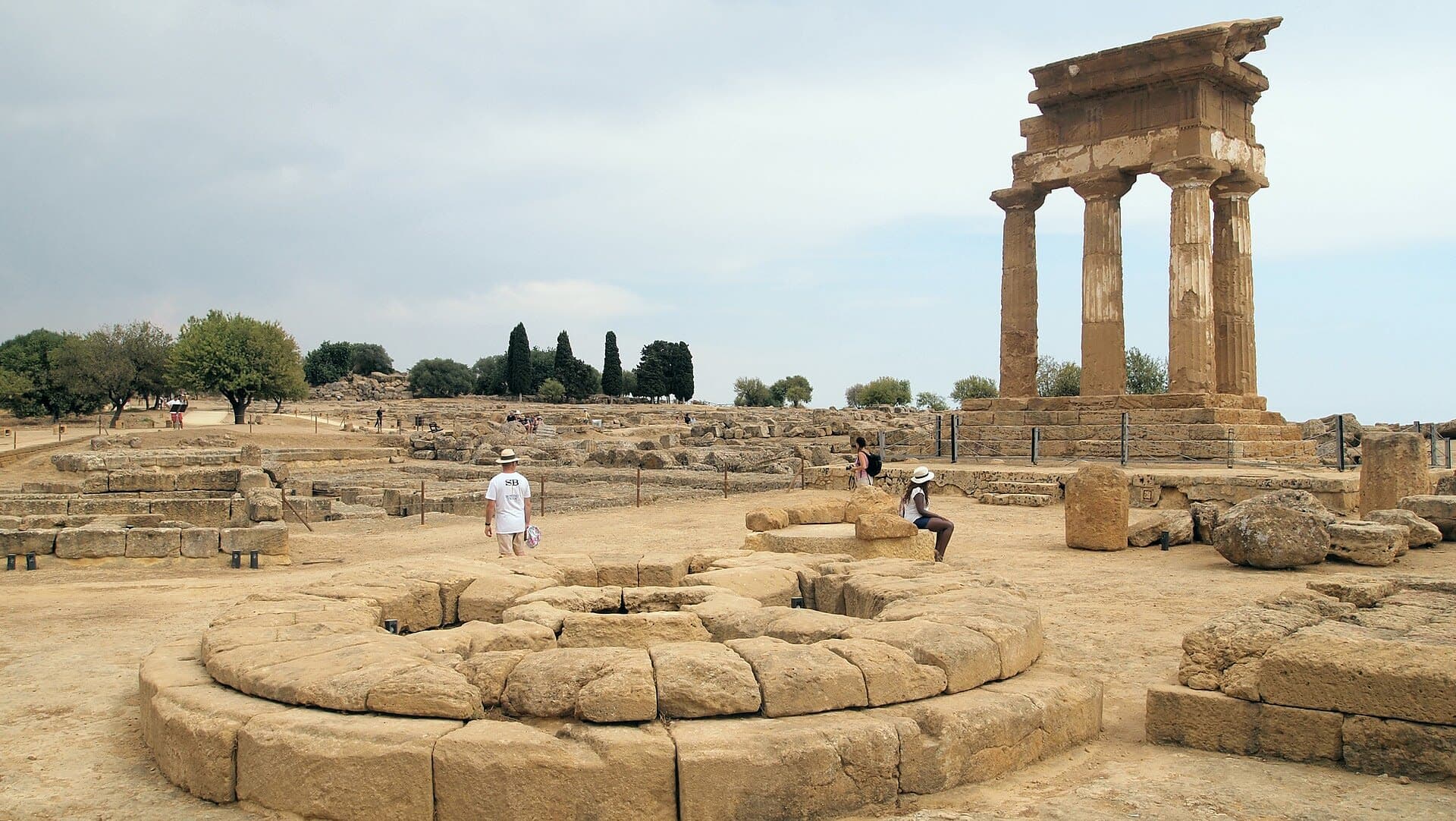
Greek worship at Akragas centered on outdoor altars before the temples, where animal sacrifice was performed. The Thesmophoria, secret festivals celebrating Demeter and Persephone, were restricted to women and involved rituals for fertility and the agricultural cycle. Processions, athletic competitions, and artistic performances honored the gods.
No active religious worship takes place at the temple. The site functions as an archaeological park and cultural heritage monument. Summer evening illuminations and cultural events bring visitors but not worshippers.
Approach the temple as the Greeks intended: as part of a sacred landscape. Walk the Via Sacra from one end to the other, experiencing the temples in sequence. Take time to circle Concordia slowly, letting the proportions work on you. If visiting in summer, return for evening illumination. Consider what it means that this structure has stood here for 2,400 years while civilizations rose and fell around it.
Ancient Greek Religion
HistoricalThe temple represents the apex of Greek sacred architecture in Sicily, embodying the mathematical proportions the Greeks believed reflected cosmic harmony. Though the specific deity is unknown, the temple demonstrates the Greek understanding of sacred space as participation in divine order.
Animal sacrifice on altars before the temple, processions during festivals, offerings of first fruits, the Thesmophoria and other festivals celebrating Demeter and Persephone, athletic and artistic competitions honoring the gods.
Early Christianity
HistoricalBishop Gregory II's conversion of the temple to a Christian church in 597 AD paradoxically ensured its survival through the medieval period. The arches cut into the cella walls created a Christian basilica within the Greek structure.
Christian liturgy adapted to the converted temple space, veneration of Saints Peter and Paul, burial of the faithful in the church floor (traces remain visible).
Experience And Perspectives
Walk the Via Sacra along the temple ridge, encountering Concordia as the Greeks intended: among a row of sanctuaries overlooking the sea. Circle the columns, enter if permitted, contemplate what near-perfect preservation reveals about Greek sacred architecture. Evening illumination transforms the experience.
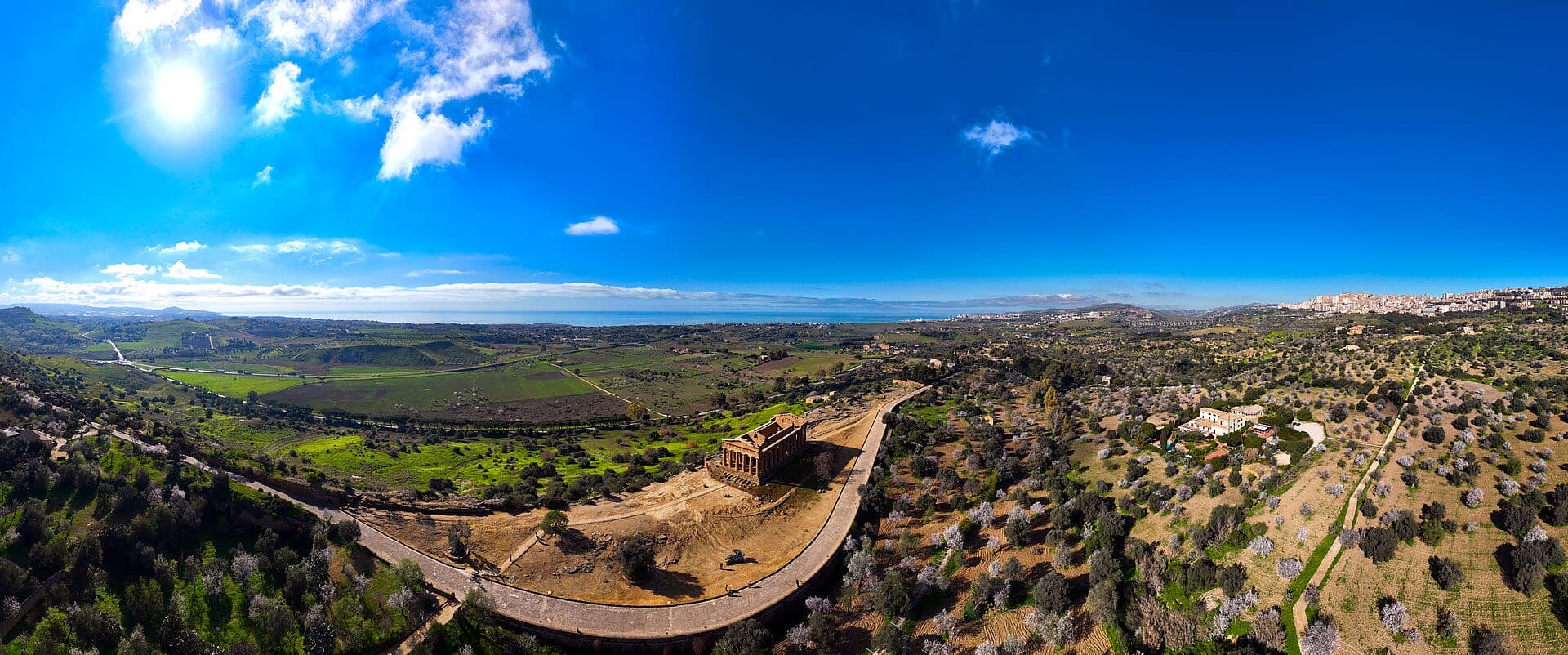
The Valley of the Temples is not a valley but a ridge, and the temples were arranged along it to create a sacred landscape visible from the sea. Approaching ancient Akragas by ship, visitors would have seen the row of sanctuaries crowning the ridge, proclaiming the city's wealth and piety before they ever landed. Approach today by foot along the Via Sacra and you recover something of that experience.
The Temple of Concordia stands centrally along the ridge, between the Temple of Juno to the east and the Temple of Heracles to the west. This placement was intentional. The temples were not isolated monuments but participants in a designed sacred landscape. Concordia's near-perfect preservation makes it the culmination of the experience, the temple that delivers what the others promise.
Begin your circuit by standing at a distance. Take in the full facade, the proportions that have influenced architects for millennia. Notice how the columns appear to have no base, rising directly from the stylobate in the Doric manner. Notice the subtle entasis, the barely perceptible swelling that prevents the columns from appearing to bend inward. Notice the pediments, intact after twenty-four centuries.
Move closer and begin to circle. The walk around the peristyle reveals how the temple changes with perspective. The columns frame different views, different relationships of solid and void. The sea appears and disappears. The other temples come into view and vanish. The circuit is itself a meditation.
If access is permitted, enter the cella area. This is where the cult statue stood, where priests performed the most sacred rituals, where the boundary between human and divine was thinnest. The twelve arches cut by Bishop Gregory in 597 AD remain visible, reminders that Christianity preserved what it transformed.
Return at sunset if possible, or for the evening illumination offered during summer months. The columns turn gold, then amber, then finally stand silhouetted against the Mediterranean night. The temple has watched over this view for 2,400 years. For a moment, you watch with it.
The Temple of Concordia is centrally located along the ridge of the Valley of the Temples, between the Temple of Juno (east) and the Temple of Heracles (west). Access from either the eastern entrance (near Temple of Juno) or western entrance (near Temple of Heracles). Allow time to walk the Via Sacra for the full experience.
The Temple of Concordia can be understood as a masterpiece of Greek architecture, as evidence of mathematical-philosophical ideals embodied in stone, as a monument to the wealth and piety of ancient Akragas, or as a meditation on what survives and why.
Architectural historians rank the Temple of Concordia among the finest surviving examples of Greek Doric architecture, second only to the Parthenon in preservation and artistry. The temple's survival has been attributed partly to Christian conversion and partly to a layer of soft clay beneath the rock foundation that may have absorbed earthquake tremors.
Though the original deity is unknown, the temple represents the Greek understanding of sacred architecture as participation in cosmic order. The mathematical proportions were believed to reflect divine harmony, making the temple a demonstration of truth as well as beauty.
The temple's survival through conversion, earthquake, and the rise and fall of civilizations invites meditation on impermanence and persistence. That this structure stands almost exactly as it stood 2,400 years ago, while the civilization that built it has vanished, speaks to something beyond historical accident.
The original dedication remains uncertain. The exact rituals performed here are unrecorded. The reasons for the temple's exceptional preservation are debated. The site invites more questions than it answers.
Visit Planning
The Valley of the Temples archaeological park in Agrigento is open daily, with extended summer hours including evening illumination. Plan 2-3 hours for a thorough visit. Accessible by car, bus, or organized tours from major Sicilian cities.
Hotels and B&Bs in Agrigento and surrounding area. Some accommodations offer views of the illuminated temples.
Respect the temple as both archaeological heritage and ancient sacred space. Follow park guidelines, stay on marked paths, do not climb on structures, and maintain appropriate reverence.
The Valley of the Temples is a UNESCO World Heritage Site and one of Italy's most important archaeological treasures. Visitors should treat the site with appropriate respect.
Practical clothing suitable for walking in Mediterranean conditions. Comfortable shoes essential for the paths.
Photography is permitted throughout the site. Evening illumination creates exceptional photographic opportunities.
Modern offerings are not traditional at archaeological sites. If leaving any token, ensure it will not degrade the site.
Do not climb on structures. Stay on marked paths. Do not remove any material from the site. Certain areas may be closed for restoration.
Sacred Cluster
Nearby sacred places create the location cluster described in the growth plan. This block is intentionally crawlable and links into the wider regional graph.