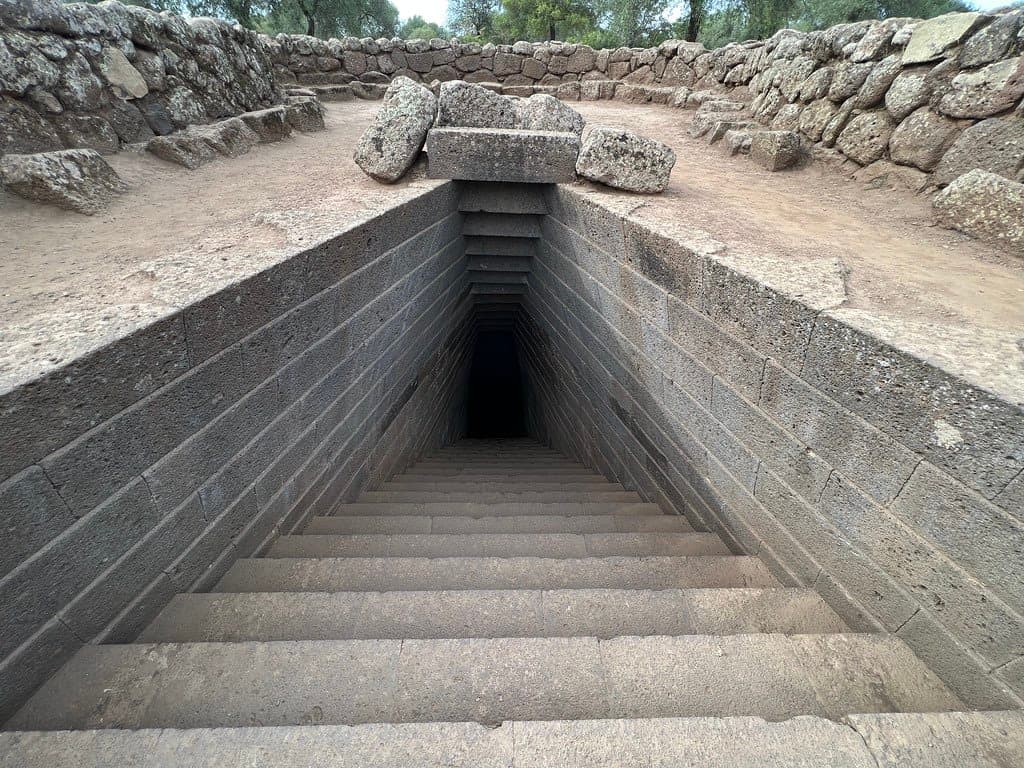
Sacred Well of Saint Christina
Where moonlight touches sacred water in a Bronze Age temple of perfect geometry
Paulle/Paulilatino, Sardinia, Italy
At A Glance
- Coordinates
- 40.0613, 8.7328
- Suggested Duration
- 1-2 hours to explore the entire archaeological complex including well, nuraghe, and meeting hut.
Pilgrim Tips
- No specific requirements. Comfortable walking shoes essential for the ancient staircase.
- Photography permitted.
- The staircase may be slippery. Steps are uneven. Limited accessibility for mobility-impaired visitors. Do not touch or disturb the sacred water.
Overview
Every 18.6 years, moonlight descends a perfectly carved staircase to touch the sacred spring at its base. The Sacred Well of Santa Cristina is the finest expression of Nuragic water cult architecture, built three thousand years ago with a precision that continues to astonish engineers. Twenty-five steps descend through an inverted keyhole to reach the underground spring where Bronze Age pilgrims came to worship. The spring still flows, the moon still visits, and the architecture still inspires reverence.
The Sacred Well of Santa Cristina represents the purest architectural expression of Nuragic spirituality. Built in the twelfth or eleventh century BC, this well temple demonstrates that the Nuragic people were not merely skilled builders but masters of sacred geometry, astronomical observation, and the creation of liminal space.
Descend the twenty-five steps carved from basalt, each placed with millimeter precision. The staircase narrows as it deepens, creating an inverted keyhole that funnels your gaze toward the underground tholos chamber below. At the base, the sacred spring maintains a constant water level throughout the year—a phenomenon the Nuragic people recognized as miraculous and incorporated into their religious practice.
The astronomical alignments discovered by researchers transform understanding of the site. During the major lunar standstill, which occurs every 18.6 years, moonlight descends the staircase to illuminate the water below. During the equinoxes, sunlight achieves similar penetration. The Nuragic builders created an instrument for tracking celestial cycles, a calendar written in stone and water and light.
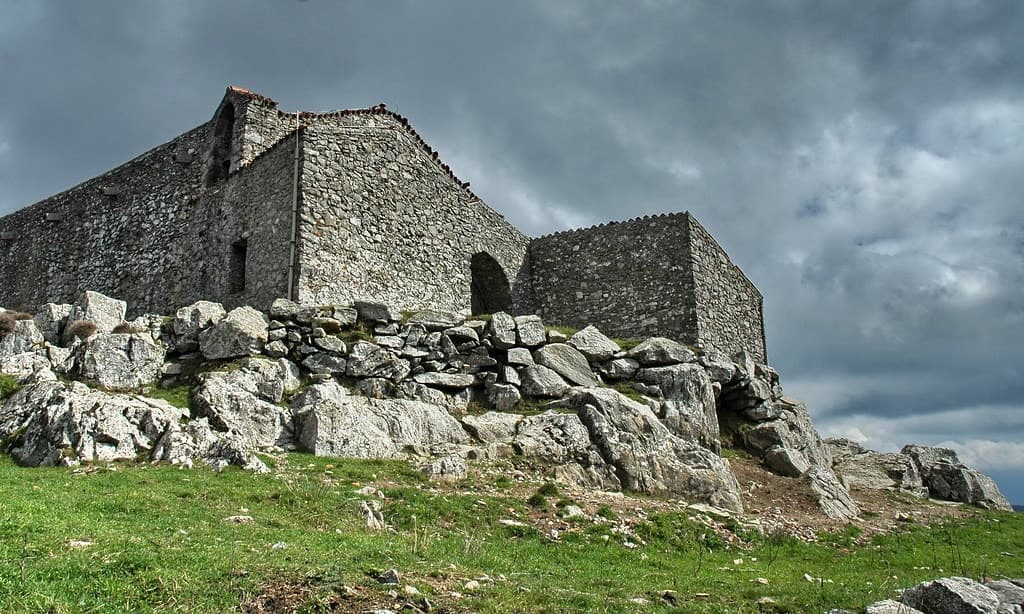
Pilgrims came from across Sardinia to worship at this well. The nearby meeting hut with its circular seating may have housed priests or accommodated visitors. The tradition continued even after the Nuragic religion faded: an eleventh-century Christian church dedicated to Santa Cristina was built adjacent to the well, and thirty-six muristenes (pilgrim houses) still host devotees during annual festivals.
To descend the staircase is to participate in a ritual three thousand years old. The water still flows. The geometry still astonishes. Something sacred remains.
Context And Lineage
The Sacred Well of Santa Cristina represents the pinnacle of Nuragic water cult architecture. Built around 1100 BC, it served as a major pilgrimage destination for worshippers of the water deity.
The Nuragic civilization of Bronze Age Sardinia developed a distinctive water cult, constructing well temples of remarkable sophistication across the island. Santa Cristina represents the finest achievement of this tradition.
Built around the twelfth or eleventh century BC, the well temple demonstrates architectural and astronomical knowledge of the highest order. The builders selected a location where a natural spring emerged from the earth, then created an inverted keyhole staircase precisely aligned to capture lunar and solar illumination at significant moments.
This was no local shrine. Evidence suggests pilgrims traveled from across Sardinia to worship at Santa Cristina. The meeting hut with its circular seating accommodated visitors or housed priests who mediated between worshippers and the sacred water.
The well's significance transcended the Nuragic period. When Christianity arrived in Sardinia, the site was not destroyed but repurposed. An eleventh-century church dedicated to Santa Cristina was built nearby, and thirty-six muristenes (pilgrim houses) were constructed to accommodate Christian devotees—continuing the tradition of pilgrimage to sacred water that had begun two thousand years earlier.
Modern research has revealed the astronomical sophistication of the design. Studies by Carlo Maxia and Lello Fadda in 1972, expanded by Professor Arnold Lebeuf between 2005-2011, established that the well functions as a lunar observatory. The major lunar standstill illumination occurs every 18.6 years, requiring astronomical tracking across generations to predict and observe.
Built by Nuragic civilization (12th-11th century BC). Christian church of Santa Cristina built adjacent in 11th century AD. Now managed as archaeological site with annual Christian pilgrimage festivals continuing.
The Nuragic Architects
Creators
Professor Arnold Lebeuf
Scholar
Why This Place Is Sacred
The thin quality at Santa Cristina emerges from the combination of sacred water, astronomical precision, liminal architecture, and millennia of accumulated pilgrimage—a place where earth, water, light, and human devotion intersect.
The thinness at the Sacred Well of Santa Cristina manifests in the moment of descent. The first step begins a transition—from sunlit surface to subterranean darkness, from ordinary time to sacred time. Each of the twenty-five steps takes you deeper into a space designed to transform perception.
The Nuragic water cult understood water as the element connecting visible and invisible worlds. Springs emerged from the earth's depths, bringing something from below into the realm of human experience. The spring at Santa Cristina maintains constant level regardless of season—a perpetual gift that would have seemed miraculous to Bronze Age observers.
The precision of the architecture creates its own category of numinous experience. The stones fit without mortar, each placed with exactitude that modern engineers admire. The inverted keyhole shape of the staircase focuses attention downward, drawing the eye toward the circular tholos chamber and the dark water within. This is architecture as spiritual technology.
The astronomical alignments add cosmic dimension. The major lunar standstill occurs only every 18.6 years, but when it does, moonlight descends the perfectly aligned staircase to touch the water below. The Nuragic priests who tracked this cycle possessed astronomical knowledge that allowed them to predict when the moon would return to illuminate their sacred spring.
For three thousand years, people have descended these steps to reach the water. The Christian church that now stands adjacent to the well represents not replacement but continuation—recognition that this spring possesses power that transcends any single religious framework. The muristenes that house pilgrims during annual festivals maintain the tradition of sacred journey to sacred water.
The well still holds water. The staircase still descends. Something in the geometry, the precision, the accumulated devotion, makes this a place where the ordinary world feels permeable.
Built in 12th-11th century BC as a temple for the Nuragic water cult. Pilgrims traveled from across Sardinia to worship at the sacred spring and participate in rituals aligned with lunar and solar cycles.
The Nuragic water cult eventually gave way to Christianity, but the sacred site was never abandoned. An 11th century AD church dedicated to Santa Cristina was built adjacent to the well. Thirty-six muristenes (pilgrim houses) continue to host devotees during annual festivals. Modern visitors can still descend to the sacred water.
Traditions And Practice
No active Nuragic religious practices continue, but annual Christian festivals at the adjacent church maintain the tradition of pilgrimage to this sacred site. Visitors can descend to the sacred water during regular visiting hours.
The Nuragic water cult centered on purification rituals and offerings at sacred wells. The astronomical alignments indicate ceremonies timed to lunar standstills and equinoxes. Pilgrims gathered from across Sardinia to participate in rituals whose specific content is now lost.
Annual Christian festivals at the church of Santa Cristina maintain the pilgrimage tradition. The thirty-six muristenes still accommodate devotees during these celebrations. Archaeological tours provide the primary mode of engagement for most visitors.
Descend the staircase slowly, appreciating the transition from surface to underground sacred space. Notice the precision of the stonework, the way the walls narrow to focus attention downward. Spend time in the tholos chamber contemplating the sacred spring. If visiting during equinox or (rarely) during major lunar standstill, observe the astronomical phenomena. Explore the surrounding complex—nuraghe, meeting hut, medieval church, and muristenes—to appreciate the full span of sacred activity at this site.
Nuragic Water Cult
HistoricalThe well temple represents the highest architectural expression of Nuragic sacred architecture. Water was considered a sacred element connecting visible and invisible worlds. Pilgrims traveled across Sardinia to worship at sites like Santa Cristina, which served as major ceremonial centers.
Rituals included purification ceremonies, offerings to water deities, and possibly oracular consultations. The lunar and solar alignments suggest ceremonies timed to astronomical events. The major lunar standstill, occurring every 18.6 years, would have been a particularly significant ritual occasion.
Christian Pilgrimage
ActiveThe adjacent church of Santa Cristina, built in the 11th century, represents the Christianization of this ancient sacred site. The thirty-six muristenes (pilgrim houses) continue to host devotees during annual festivals.
Annual festival with religious celebrations, communal gatherings, and traditional Sardinian festivities. The muristenes provide accommodation for pilgrims maintaining a tradition of sacred journey to sacred water.
Experience And Perspectives
Visitors descend the ancient staircase to reach the underground tholos chamber where sacred water still flows. The surrounding archaeological complex includes a nuraghe, meeting hut, and medieval pilgrim village.
Approach the Sacred Well of Santa Cristina along the path from the visitor center, and the well's presence is not immediately apparent. The Nuragic builders concealed their sacred architecture within the earth, creating a space of revelation rather than display.
The opening becomes visible as you near: a keyhole shape in the ground, surrounded by a low wall of precisely fitted stones. Pause before descending. What you are about to enter was designed to transform perception, to create the experience of moving from one world to another.
The twenty-five steps descend through increasingly narrow space. The walls close in as you go deeper, focusing attention on the tholos chamber below. Notice the precision of the stonework—each basalt block fitted without mortar, the craftsmanship of three thousand years ago still pristine.
At the base, the circular chamber opens around the sacred spring. The water maintains constant level throughout the year. Stand here and look upward: the inverted keyhole frames the sky above, creating a vertical axis connecting underworld water to celestial light.
During equinoxes, sunlight penetrates to touch the water. During the rare major lunar standstill (every 18.6 years), moonlight achieves the same journey. Even when no special alignment occurs, the geometry creates powerful experience of contained sacred space.
After ascending, explore the surrounding complex. The nearby nuraghe connects this water temple to the broader pattern of Nuragic construction. The meeting hut with circular seating may have served priests or accommodated pilgrims. The medieval church of Santa Cristina and the thirty-six muristenes demonstrate how this sacred site adapted to Christian practice while retaining its essential power.
Allow time for contemplation. The well rewards patient attention.
Located 4 km from Paulilatino on SS 131 road, well signposted. Open daily from 8:30 AM until sunset. Entry fee: €8 full, €4 reduced. Allow 1-2 hours to explore the entire complex including well, nuraghe, and meeting hut.
The Sacred Well of Santa Cristina can be understood as an archaeological masterpiece, as an astronomical instrument, as a pilgrimage destination spanning three millennia, or as evidence of Nuragic spiritual sophistication.
Archaeologists recognize Santa Cristina as the finest example of Nuragic sacred well architecture. The astronomical alignments, confirmed through multiple studies, demonstrate sophisticated understanding of lunar and solar cycles. The site's continuous sacred use from Bronze Age through medieval Christian pilgrimage illustrates how sacred places can transcend specific religious frameworks.
Modern Sardinians maintain cultural connection to their Nuragic heritage while also honoring the Christian traditions that have developed at this site. The annual festivals at the church of Santa Cristina continue pilgrimage practices that began three thousand years ago.
The well's astronomical alignments and its function as a possible healing or oracular center attract interest from those studying ancient spiritual knowledge. The combination of water, light, and precise geometry suggests practices that mainstream archaeology cannot fully reconstruct.
The precise nature of rituals performed at the well remains partially obscure. The specific deities worshipped in the Nuragic water cult cannot be definitively identified. Whether the well served oracular functions, as some researchers suggest, remains uncertain. The full significance of the major lunar standstill alignment to Nuragic religious practice awaits further research.
Visit Planning
Located 4 km from Paulilatino, the Sacred Well is open daily from 8:30 AM until sunset. Allow 1-2 hours for the complete archaeological complex. Equinox visits offer special astronomical phenomena.
Accommodation available in Paulilatino and surrounding towns. Agriturismi offer authentic Sardinian hospitality.
Respect the sacred site through careful movement on the ancient staircase, contemplative behavior in the underground chamber, and appreciation of ongoing Christian pilgrimage traditions.
The Sacred Well of Santa Cristina serves multiple communities: archaeologists studying Nuragic civilization, Christian pilgrims attending annual festivals, and visitors seeking connection with sacred antiquity. Respect all these perspectives.
No specific requirements. Comfortable walking shoes essential for the ancient staircase.
Photography permitted.
Do not leave objects in the well or remove water from the sacred spring. Offerings were a Nuragic practice; respect is shown now through reverent attention.
Stay on designated paths. Do not touch or disturb the ancient stonework. Do not remove water from the sacred spring.
Sacred Cluster
Nearby sacred places create the location cluster described in the growth plan. This block is intentionally crawlable and links into the wider regional graph.