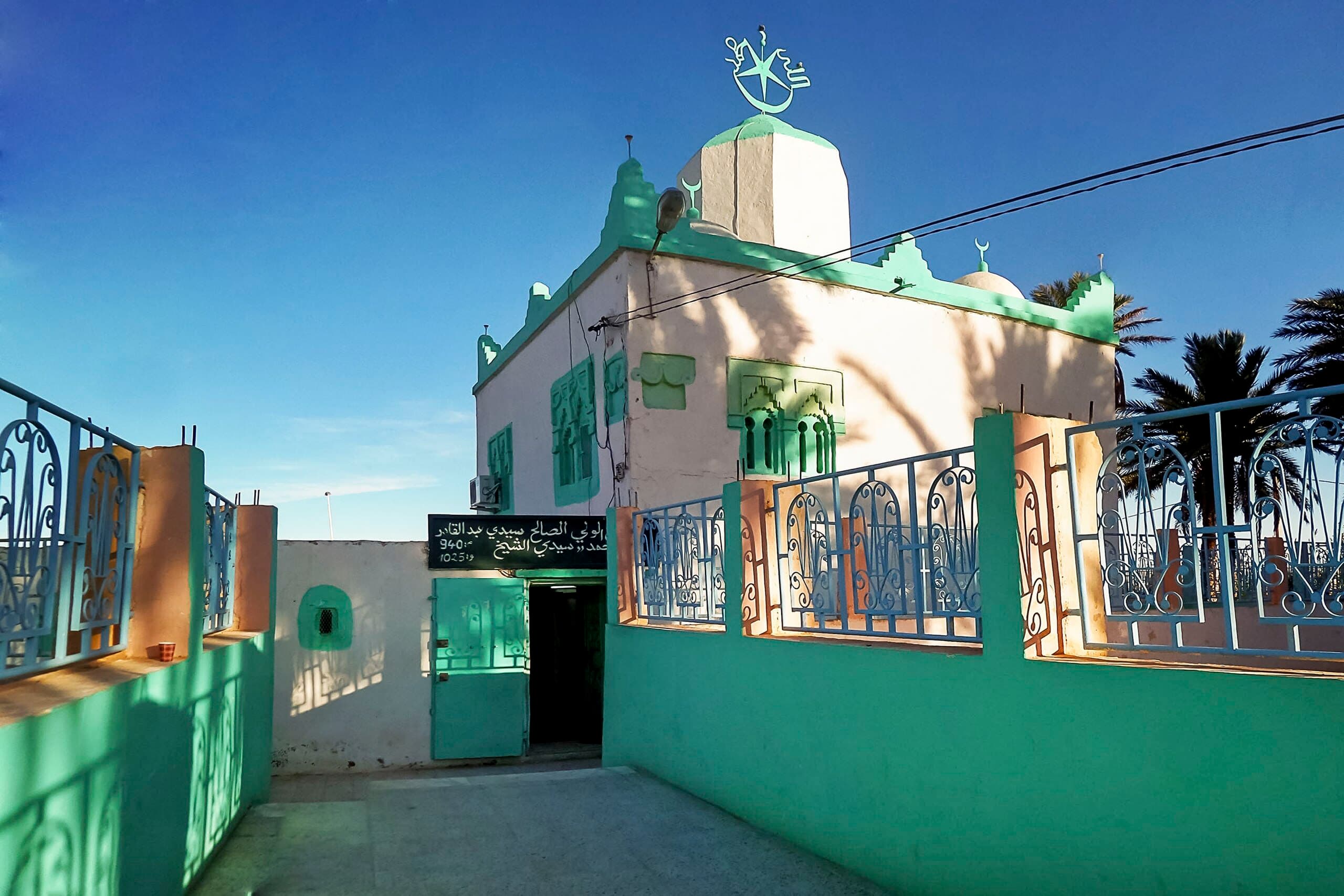
Mausoleum of Sidi Shaykh
Where a Sufi saint's blessing still flows through tomb cloth, descendants, and desert pilgrims
El Abiodh Sidi Cheikh, El Bayadh, Algeria
At A Glance
- Coordinates
- 32.8916, 0.5456
- Suggested Duration
- The full traditional pilgrimage experience spans five days of journey from Stiten plus three days at the mausoleum. For visitors arriving directly, plan for two to three days to participate meaningfully in the pilgrimage ceremonies. A brief visit outside the pilgrimage period can be completed in a few hours, though staying longer allows deeper contemplation.
Pilgrim Tips
- Dress modestly as appropriate for an Islamic sacred site. Both men and women should cover arms and legs. Women should cover their hair when entering the mausoleum. Loose, comfortable clothing is practical for the desert climate. Shoes should be easily removable.
- Exercise discretion. The mausoleum exterior can generally be photographed. Interior photography should be approached with respect, and permission sought if possible. Never photograph people, especially during religious ceremonies, without explicit permission. Put the camera away during the Selka and El Khetma. Your memory will preserve what matters more than your device.
- This is an active site of Sufi devotion, not a museum. Your presence during religious ceremonies should be unobtrusive. Do not photograph people without permission, especially during prayer or ritual. The ceremonies are for pilgrims, not tourists; attend as a guest, not a spectator. If you do not share the Islamic faith, approach with respect rather than attempting to participate in specifically religious elements. The hospitality is genuine, but it exists within a religious framework that may have boundaries. Be aware that the site's location in the Saharan Atlas requires awareness of desert conditions. During the pilgrimage period, thousands gather in a small town with limited infrastructure. Travel arrangements should account for distances and terrain.
Overview
Rising from the Saharan Atlas since the 16th century, the Mausoleum of Sidi Shaykh draws thousands of pilgrims each year to receive baraka from one of Algeria's most venerated Sufi saints. The annual pilgrimage, inscribed on UNESCO's Intangible Cultural Heritage list, transforms this desert oasis into a gathering of communities who have made this journey for nearly five centuries.
In the arid highlands of southwestern Algeria, where the Saharan Atlas meets the desert, a whitewashed dome marks the resting place of Sidi Abdul Qadir Ibn Muhammad Al-Samahi. The saint they call Sidi Shaykh died in 1616, but his baraka persists. Each year, pilgrims travel for days across the desert to receive it.
The mausoleum he lies within is more than architecture. It is the mother house of a Sufi brotherhood that once controlled zawaya across the greater Tuat region, the center of a tribal confederation that united farmers and nomads, and the heart of a pilgrimage tradition so vital that UNESCO inscribed it on the Representative List of Intangible Cultural Heritage in 2013.
What draws people here is not history alone. It is the belief, continuously enacted, that blessing flows from this saint to those who come with sincere hearts. During the annual waada, pilgrims recite the entire Quran through the night. At dawn, in the ceremony called El Khetma, they renew their connection to the brotherhood. In the ritual of al-Ibas, the cloth covering the tomb is changed, and pieces are distributed to pilgrims as tangible carriers of baraka.
Here, hospitality is spiritual practice. The four zawaya belonging to Sidi Shaykh's descendants feed and house all pilgrims freely, embodying the saint's teaching that cooperation is devotion made manifest.
Context And Lineage
Sidi Shaykh lived from 1532 to 1616, founding a Sufi community that united date farmers and nomadic traders in the Saharan Atlas. His descendants formed the Awlad Sidi Shaykh, a tribal confederation and religious authority that established zawaya across the Tuat region and later led resistance against French colonial rule.
The Awlad Sidi Shaykh trace their ancestry through the saint to Abu Bakr, the Prophet Muhammad's father-in-law and the first Caliph of Islam. This lineage, called sharif, established Sidi Shaykh's spiritual authority from birth.
In the 16th century, southwestern Algeria was transforming. Population growth in the oases demanded more intensive date farming, while caravan trade required cooperation between settled and nomadic peoples. Into this context came Sidi Shaykh, who founded a community that harmonized these groups. His zawiya became a center where farmers and nomads could gather, where disputes could be resolved, where collective devotion could bind people across economic and social divisions.
One teaching attributed to the saint speaks to his understanding of spiritual authority. Before his death, according to tradition, Sidi Shaykh transmitted the keys of his zawiya not to his biological heirs but to his servants and devotees, for they had shown greater faith than his own descendants. Devotion, this teaching suggests, matters more than lineage. Spiritual inheritance flows to those who earn it through sincerity.
When Sidi Shaykh died in 1616, his followers constructed the mausoleum over his tomb. The annual pilgrimage began, drawing communities from across the desert to renew their connection to the saint's baraka. The tradition has continued, largely unbroken, for nearly five hundred years.
After Sidi Shaykh's death, his descendants formed the Awlad Sidi Shaykh, a confederation that became both tribal and religious authority across the region. They established and maintained zawaya throughout the greater Tuat region, collecting alms and devotion from affiliated communities.
The brotherhood's influence brought them into conflict with French colonial expansion. The uprising that began on April 8, 1864, drew on the spiritual authority and social networks the zawaya had cultivated. For decades, the Ouled Sidi Cheikh resisted, their struggle intertwining religious devotion with political defiance.
Today, the four zawaya at El Abiodh Sidi Cheikh continue under the care of descendants. The annual pilgrimage renews the ties between the mother house and affiliated communities across Algeria and beyond. The 2013 UNESCO inscription acknowledged this living tradition, ensuring international recognition of what pilgrims have always understood: the transmission continues.
Sidi Shaykh
founder
The saint whose tomb draws pilgrims. A descendant of Abu Bakr, he founded the zawiya and the community of cooperation between farmers and nomads that became the basis for the tribal confederation. His baraka continues to flow through his tomb, his descendants, and the rituals performed in his honor.
Abu Bakr
ancestor
The Prophet Muhammad's father-in-law and the first Caliph. Sidi Shaykh's descent from Abu Bakr establishes his sharif lineage and spiritual authority.
Si Mohammed Ben Hamza
historical
Leader of the 1864 uprising against French colonial rule. He died from wounds in February 1865, a martyr in the resistance that the descendants of Sidi Shaykh led.
Cheikh Bouamama
historical
Resistance leader whose death in 1908 marked the end of organized Ouled Sidi Cheikh resistance to colonial rule. His struggle drew on the networks and loyalties the brotherhood had cultivated over centuries.
Why This Place Is Sacred
The Mausoleum of Sidi Shaykh is sacred as the resting place of a saint whose lineage traces to Abu Bakr and the Prophet Muhammad. Nearly five centuries of continuous pilgrimage, the transmission of baraka through physical objects and rituals, and the site's role as mother house to a network of Sufi lodges all contribute to its status as a thin place where the boundary between worlds becomes permeable.
The sacredness of this place rests on foundations both tangible and invisible. Sidi Shaykh, who lived from 1532 to 1616, traced his lineage to Abu Bakr, the Prophet Muhammad's father-in-law and the first Caliph. This noble ancestry established spiritual authority that continues to flow through his descendants and the brotherhood he founded.
In the 16th century, the growing population of southwestern Algeria created a need for cooperation between date farmers in the oases and nomads engaged in the caravan trade. Sidi Shaykh founded a community that harmonized these groups, modeling Sufi ideals of cooperation and mutual aid. The zawiya he established at El Abiodh Sidi Cheikh became the mother house for a network of religious lodges stretching across the Sahara.
Baraka, the spiritual blessing that flows from the saint, is understood as a living transmission. It moves through the cloth covering his tomb, distributed to pilgrims each year in the al-Ibas ceremony. It moves through his descendants, the Awlad Sidi Shaykh, who continue to maintain the four zawaya and offer hospitality to all who come. It moves through the rituals themselves, the night-long Quranic recitation that fills the air with sacred sound, the dawn ceremony that renews the covenant between communities and their saint.
The site sits at the meeting point of worlds. Nomadic and settled. Temporal and eternal. Individual and community. For nearly five hundred years, pilgrims have journeyed here across the desert, and something in that accumulated intention thickens the presence of the sacred.
Sidi Shaykh founded the zawiya during his lifetime as a center of Sufi teaching, a place where disciples could receive instruction in the spiritual path and where communities could gather for collective devotion. The mausoleum was constructed after his death in 1616 to protect and honor his tomb, creating a focal point for the baraka that his followers understood as continuing to flow from him.
The site's significance expanded after Sidi Shaykh's death. His descendants, the Awlad Sidi Shaykh, became both a tribal confederation and a religious authority, controlling zawaya throughout the Tuat region and drawing alms and devotion from affiliated communities across western and southern Algeria. The annual pilgrimage evolved into a gathering that renewed social bonds and alliances between nomadic and settled communities.
In 1864, the Ouled Sidi Cheikh launched a major uprising against French colonial rule that lasted decades. The brotherhood's spiritual authority had political dimensions, and the resistance drew on the networks of loyalty the zawiya had cultivated. This history adds another layer to the site's significance as a place where spiritual and material power intertwined.
The 2013 UNESCO inscription recognized the living tradition's ongoing vitality, ensuring international attention to its preservation while affirming what pilgrims have always known: that Sidi Shaykh's blessing continues to flow.
Traditions And Practice
The annual pilgrimage (waada) features the Selka, a night-long recitation of the entire Quran, followed by the dawn El Khetma ceremony renewing community affiliations. The al-Ibas ritual distributes pieces of the tomb cloth as baraka. Equestrian games, hymns, and dances complement the religious observances.
The pilgrimage, called waada or rakb, follows patterns established after Sidi Shaykh's death in 1616. Traditionally, pilgrims traveled by camel and horse, the journey itself a spiritual practice. The five-day route from Stiten to El Abiodh Sidi Cheikh passes through five sacred stations, each marking stages of approach to the saint's presence.
Upon arrival, pilgrims visit the mausoleum to pay respects. Then comes the Selka, the night-long recitation of the entire Quran by assembled pilgrims. The sound of continuous recitation fills the desert darkness, hundreds of voices joining in sacred sound that continues until dawn.
El Khetma, the closing ceremony, occurs at dawn. Representatives from different communities present themselves, their affiliation to the Shaykhiya brotherhood renewed for another year. This ceremony maintains the social bonds that the saint's community was founded to create.
The al-Ibas is perhaps the most tangible transmission of baraka. The cloth covering Sidi Shaykh's tomb is changed, and pieces of the old cloth are distributed to pilgrims. To receive a piece is to carry the saint's blessing home, a physical connection to his spiritual presence.
Date pastes are offered by nomadic tribes, continuing the exchange between settled and nomadic peoples that Sidi Shaykh established. Equestrian games, the fantasia, involve over three hundred riders from different communities demonstrating skill and celebrating the occasion.
The pilgrimage continues today, beginning on the last Thursday of June for three days. While some pilgrims still travel by traditional means, others arrive by vehicle. The ceremonies themselves, the Selka, El Khetma, and al-Ibas, continue as they have for centuries.
The four zawaya maintain their tradition of hospitality, providing free food and accommodation to all pilgrims. This practice embodies the cooperative ideal that Sidi Shaykh taught, hospitality as spiritual practice rather than commercial transaction.
Hymns and dances praising Sidi Shaykh occur during special ritual gatherings. The equestrian games draw over three hundred riders. The gathering renews ties and alliances among communities, ensuring peace and stability between them for another year.
UNESCO inscription in 2013 brought international attention and support for preservation. The Algerian government has recognized the pilgrimage as significant intangible cultural heritage.
If you come during the annual pilgrimage, let the rhythm of the gathering carry you. Arrive before the Selka begins, find a place among the assembled pilgrims, and let the night-long recitation work on you. You need not understand Arabic to feel the effect of continuous sacred sound sustained through darkness until dawn.
Attend the dawn El Khetma if possible. Witnessing communities renew their connection to the brotherhood offers insight into what holds these networks together across vast distances.
If you are offered a piece of the tomb cloth during al-Ibas, receive it with gratitude. Whether you understand baraka as spiritual reality or social bond, the gift carries the sincerity of those who offer it.
Accept the hospitality of the zawaya. The free food and lodging are not charity but practice. In receiving, you participate in the cooperative ideal the saint established.
If you visit outside the pilgrimage period, enter the mausoleum with stillness. The small dormer windows create mysterious light. Sit with whatever arises.
Shaykhiya Sufi Brotherhood
ActiveThe Shaykhiya is a Sufi brotherhood (tariqa) founded by Sidi Shaykh in the 16th century. The brotherhood grew from the original zawiya at El Abiodh Sidi Cheikh, establishing affiliated lodges across the Tuat region. The Awlad Sidi Shaykh, the saint's descendants, became both tribal confederation and religious authority, combining spiritual and social leadership. The brotherhood emphasizes cooperation, hospitality, and the spiritual inheritance (baraka) transmitted from Sidi Shaykh to his disciples and descendants.
The annual pilgrimage (waada/rakb) beginning the last Thursday of June is the central practice. The five-day journey from Stiten passes through five sacred stations. The Selka, night-long Quranic recitation, and the dawn El Khetma ceremony renew community affiliations. The al-Ibas distributes pieces of the tomb cloth as baraka. Equestrian games with over 300 riders, collective feasting, and hymns praising the saint complete the gathering. Throughout, the four zawaya provide free food and accommodation to all pilgrims.
Sunni Islam (Sufi tradition)
ActiveThe Mausoleum of Sidi Shaykh represents the broader tradition of Sufi saint veneration within Sunni Islam, particularly as practiced in the Maghreb. The veneration of awliya (saints) as spiritual intermediaries, the seeking of baraka at their tombs, and the organization of brotherhoods (turuq) around lineages of spiritual transmission are characteristic of Maghrebi religious life. Sidi Shaykh's lineage to Abu Bakr connects this local tradition to the earliest history of Islam.
Sufi practices at the site include dhikr (remembrance of God), the recitation of Quran, seeking baraka through proximity to the saint's tomb, and participation in the collective rituals of the brotherhood. The zawiya functions as both place of worship and center of community life, following patterns established across the Islamic world.
Experience And Perspectives
Visitors to the Mausoleum of Sidi Shaykh report a profound sense of community and belonging, particularly during the annual pilgrimage. The hospitality of the zawaya, the collective devotion of the night-long Quranic recitation, and the tangible connection to baraka through the tomb cloth create experiences that pilgrims describe as spiritually renewing.
The experience of this site varies dramatically between the annual pilgrimage and quieter times. For three days beginning the last Thursday of June, the desert oasis transforms. Thousands of pilgrims converge from across Algeria and beyond, traveling by foot, horseback, camel, and in modern times by vehicle. The traditional five-day journey from Stiten passes through five sacred stations, each with its own significance.
What pilgrims describe is not simply religious observance but immersion in a community of devotion. The four zawaya offer free food and lodging to all who come, embodying hospitality as spiritual practice. Strangers become kin through shared meals, shared prayer, shared purpose. For communities dispersed across vast desert distances, the pilgrimage renews bonds that sustain them through the year.
The Selka, the night-long recitation of the entire Quran, creates a container of sacred sound. Hundreds of voices join in continuous recitation through the dark hours, the words washing over the assembled pilgrims. Those who have experienced it describe a dissolution of ordinary boundaries, individual consciousness merging with the collective, time losing its grip.
At dawn comes El Khetma, the closing ceremony that renews each community's affiliation to the brotherhood. Representatives from different groups present themselves, their connection to Sidi Shaykh reaffirmed. Then the al-Ibas: the cloth covering the tomb is changed, and pieces of the old cloth are distributed to pilgrims as baraka. To receive a piece is to carry the saint's blessing home, a tangible connection to the source.
The equestrian games, the fantasia, bring a different energy. Over three hundred riders from different communities demonstrate their skill, the thunder of hooves and the crack of rifles fired skyward creating celebratory excitement. Hymns and dances praise Sidi Shaykh, blending the sacred and the festive in ways characteristic of Maghrebi Sufism.
Outside the pilgrimage period, the site offers quieter contemplation. The mausoleum's interior, with its small dormer windows creating mysterious light and its gilded-framed mirror, invites stillness. The terrace supported by four pillars with arcades provides views across the desert landscape that forms the backdrop to all that happens here.
Come to this site as a guest. The hospitality extended by the zawaya is not transaction but practice. If you arrive during the pilgrimage, you will be fed and sheltered freely, as pilgrims have been for centuries. This hospitality is itself a teaching.
For those unfamiliar with Sufi tradition, approach with curiosity rather than certainty. You need not share the pilgrims' faith to be moved by their devotion. The Selka, the night-long recitation, is open to all who come with respect. Let the sound work on you without demanding comprehension.
The baraka that pilgrims seek is understood as blessing that flows from the saint to those who come with sincere hearts. Whether you frame this as spiritual reality, psychological phenomenon, or social bond, the effect on those who receive it is evident in their faces.
Consider what you might bring, not in material terms but in intention. What has brought you here? What do you seek? The saint, tradition holds, responds to sincerity.
The Mausoleum of Sidi Shaykh holds significance across multiple frameworks, from academic analysis of Sufi orders and social organization to the lived faith of pilgrims who come seeking baraka. Understanding requires holding these perspectives together, each illuminating aspects the others might miss.
Academic scholarship recognizes the Mausoleum of Sidi Shaykh as a significant center of Sufi devotion in the Maghreb, representing the distinctive tradition of maraboutism in which local saints serve as spiritual intermediaries. The annual pilgrimage has been studied as an example of how religious festivals integrate sacred and secular elements, reinforcing social bonds across nomadic and settled communities.
Historians note the Awlad Sidi Shaykh as an example of how Sufi brotherhoods could become powerful social and political entities, controlling trade routes and agricultural settlements. The zawiya network served both religious and economic functions, collecting alms, resolving disputes, and providing infrastructure for the caravan trade.
The 1864 uprising against French colonial rule demonstrates how spiritual authority translated into political mobilization. The resistance drew on networks of loyalty the zawaya had cultivated over centuries, making the colonial period a crucial chapter in understanding the brotherhood's evolution.
The 2013 UNESCO inscription recognizes the pilgrimage's role in transmitting community values including hospitality, solidarity, and collective spiritual practice. Scholars of intangible cultural heritage view the waada as exemplary of living traditions that maintain social cohesion.
For the Shaykhiya brotherhood and affiliated communities, the mausoleum is a living source of baraka transmitted from Sidi Shaykh himself. The saint's lineage to Abu Bakr and the Prophet Muhammad establishes his spiritual authority, but it is his character and teaching that made him venerable.
The tradition that Sidi Shaykh transmitted spiritual inheritance to devoted servants rather than less faithful biological heirs speaks to the brotherhood's understanding: baraka flows through devotion, not merely lineage. Those who show sincere faith receive blessing regardless of birth.
The annual pilgrimage is not merely commemoration but active renewal of the covenant between communities and their saint. The Selka, reciting the entire Quran through the night, fills the space with sacred sound. The El Khetma renews each community's affiliation. The al-Ibas distributes tangible blessing through the tomb cloth.
The hospitality of the zawaya embodies the cooperative ideal that Sidi Shaykh established. Feeding and housing all pilgrims freely is spiritual practice, not charitable gesture. In this understanding, the community's generosity participates in the baraka it receives.
The site attracts interest from those studying Sufi orders of the Maghreb and their distinctive practices. The night-long recitation of the entire Quran, the transmission of baraka through physical objects, and the integration of ecstatic practices with orthodox Islamic observance exemplify Maghrebi Sufism.
The location in the Saharan Atlas, at the meeting point of nomadic and settled cultures, adds to the site's significance as a place where different worlds converge. Some interpret this geographic liminality as reflecting spiritual liminality, a thin place where the boundary between ordinary and sacred becomes permeable.
The integration of equestrian games and festive celebration with religious ceremony represents a distinctive Maghrebi synthesis, blending devotion with cultural identity and community celebration.
Genuine uncertainties remain. The precise date and circumstances of the mausoleum's original construction are not documented. Details of Sidi Shaykh's spiritual training and the influences that shaped his teaching are largely oral tradition rather than recorded history.
The full extent of the zawiya network he established across the Tuat region, and how it functioned in the centuries before colonial documentation, remains partially obscure. How the baraka tradition evolved and was transmitted across five centuries, adapting to changing circumstances while maintaining continuity, is known in broad outline but not in detail.
Some sources give the pilgrimage timing as the last Thursday of June, others as the last Thursday of May. This discrepancy may reflect calendar variations or changes over time, but visitors should confirm current scheduling.
Visit Planning
The annual pilgrimage begins the last Thursday of June for three days. El Abiodh Sidi Cheikh is located in El Bayadh Province, southwestern Algeria. The four zawaya provide free food and accommodation during the pilgrimage. No entry fee is charged.
During the annual pilgrimage, the four zawaya belonging to the descendants of Sidi Shaykh provide free food and accommodation to all pilgrims. This hospitality is part of the tradition itself. Outside the pilgrimage period, El Bayadh (50 km away) offers basic accommodations. For visits during the pilgrimage, accept the zawaya's hospitality as participation in the tradition.
Visitors should dress modestly, with women covering their hair in the mausoleum. This is an active place of worship where respectful behavior is expected. Photography should be approached with discretion, especially during religious ceremonies.
The Mausoleum of Sidi Shaykh is an active place of Sufi devotion. Visitors enter a space where real worship occurs, where pilgrims come seeking real blessing. This is not a heritage site preserved for tourism but a living tradition that welcomes guests.
Approach as a guest receiving hospitality. The zawaya offer food and lodging freely because this is their practice, rooted in the saint's teaching about cooperation. In accepting their hospitality, you participate in something the community values. Express gratitude, but do not treat the hospitality as transaction.
During religious ceremonies, the Selka and El Khetma, your presence should be unobtrusive. These are not performances for visitors but collective acts of devotion. Find a place at the edge, remain quiet, and let the ceremonies unfold without your camera or commentary.
Remove shoes before entering the mausoleum. This is universal Islamic practice. Inside, maintain silence or speak softly. The pilgrims who have traveled days to reach this place deserve an atmosphere of reverence.
Dress modestly as appropriate for an Islamic sacred site. Both men and women should cover arms and legs. Women should cover their hair when entering the mausoleum. Loose, comfortable clothing is practical for the desert climate. Shoes should be easily removable.
Exercise discretion. The mausoleum exterior can generally be photographed. Interior photography should be approached with respect, and permission sought if possible. Never photograph people, especially during religious ceremonies, without explicit permission. Put the camera away during the Selka and El Khetma. Your memory will preserve what matters more than your device.
Traditional offerings include date pastes. Donations to the zawaya help support the hospitality tradition that feeds and houses pilgrims. During the al-Ibas ceremony, pilgrims may receive pieces of the tomb cloth as baraka. If you are offered one, receive it with gratitude.
Respectful behavior at all times. This is an active place of worship, not a tourist attraction. Shoes should be removed before entering the mausoleum. Avoid tourist behavior during religious ceremonies. Non-Muslims may visit but should be aware this is a specifically Islamic space.
Sacred Cluster
Nearby sacred places create the location cluster described in the growth plan. This block is intentionally crawlable and links into the wider regional graph.
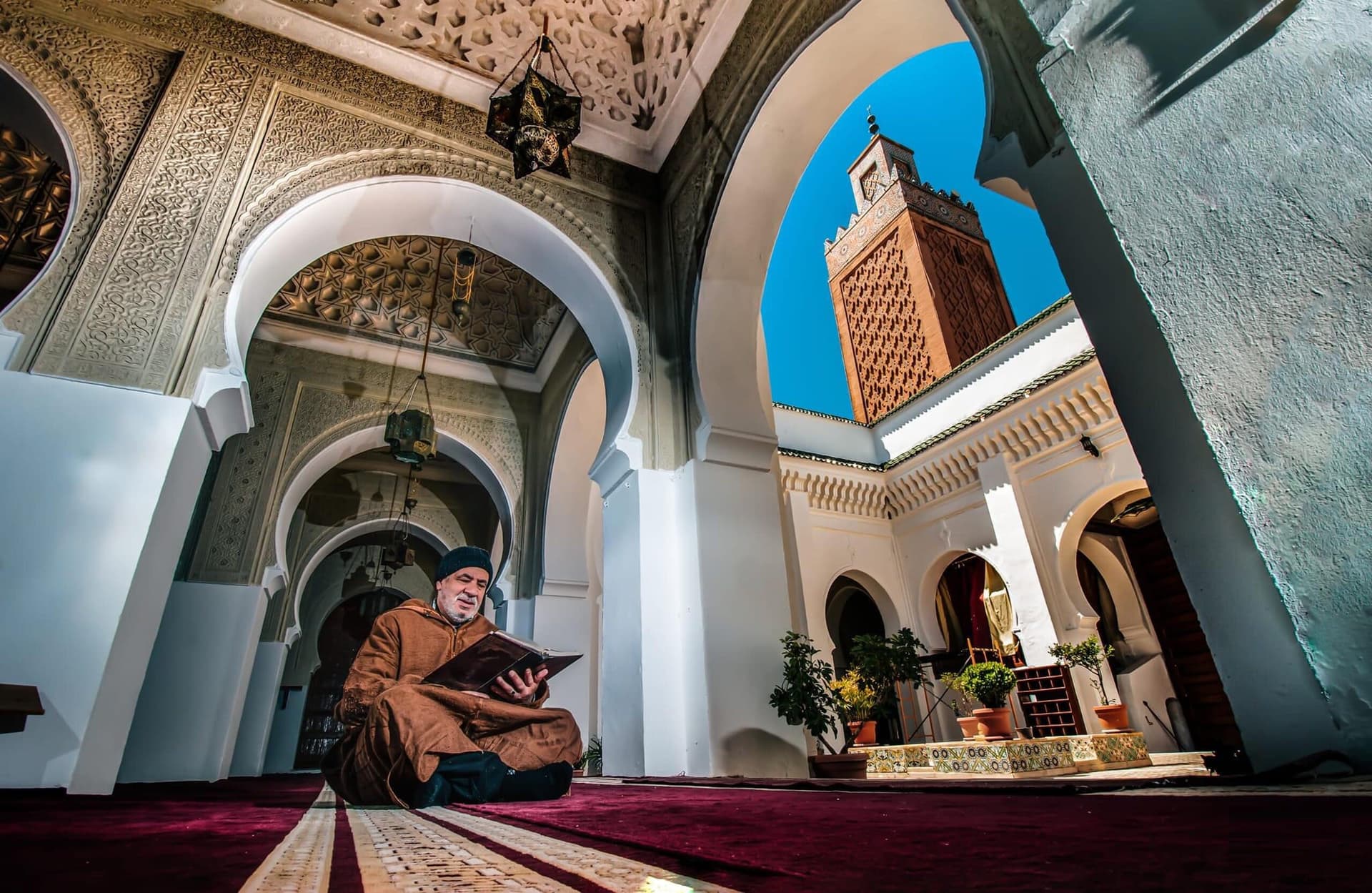
Shrines of Sidi Abed and Abu Madyan, Tlemcen
Tlemcen, Tlemcen, Algeria
280.0 km away
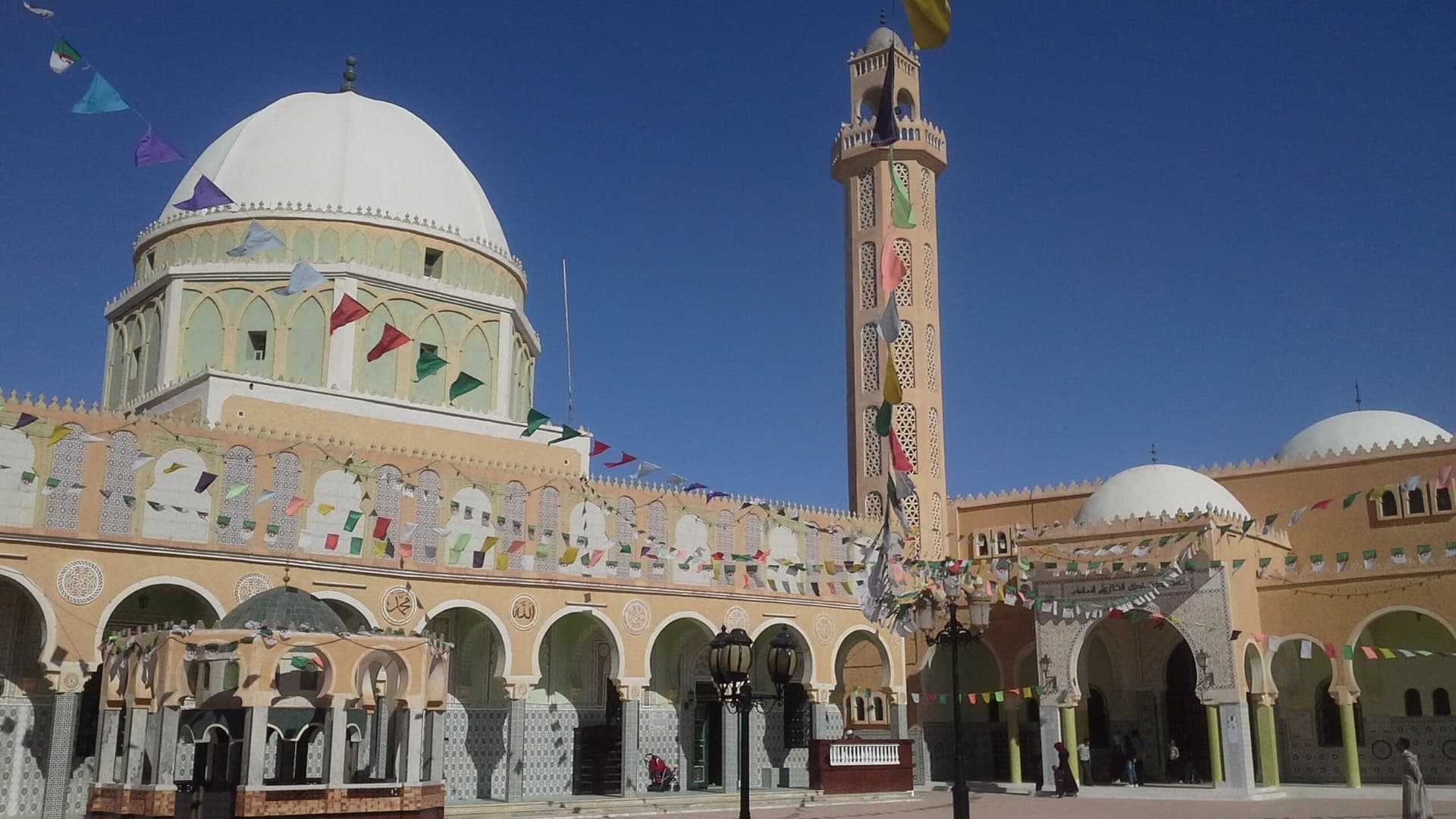
Zaouia Tidjania, Tamaxine, Algeria
Tamacine, Touggourt, Algeria
510.1 km away
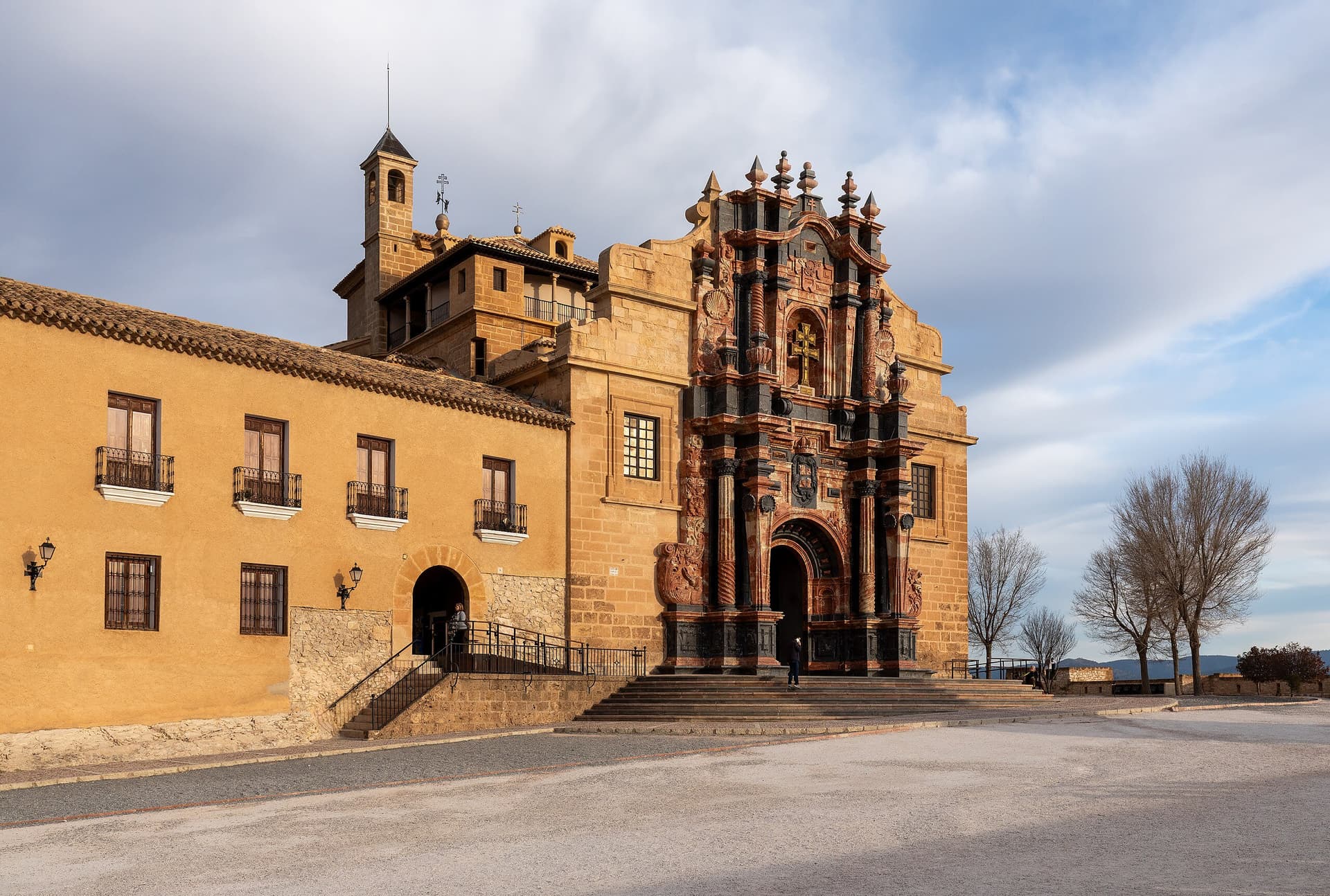
Basilica Shrine of Caravaca de la Cruz, Spain
Caravaca de la Cruz, Region of Murcia, Spain
619.4 km away
Santuario Virgen de la Esperanza
Calasparra, Region of Murcia, Spain
630.8 km away