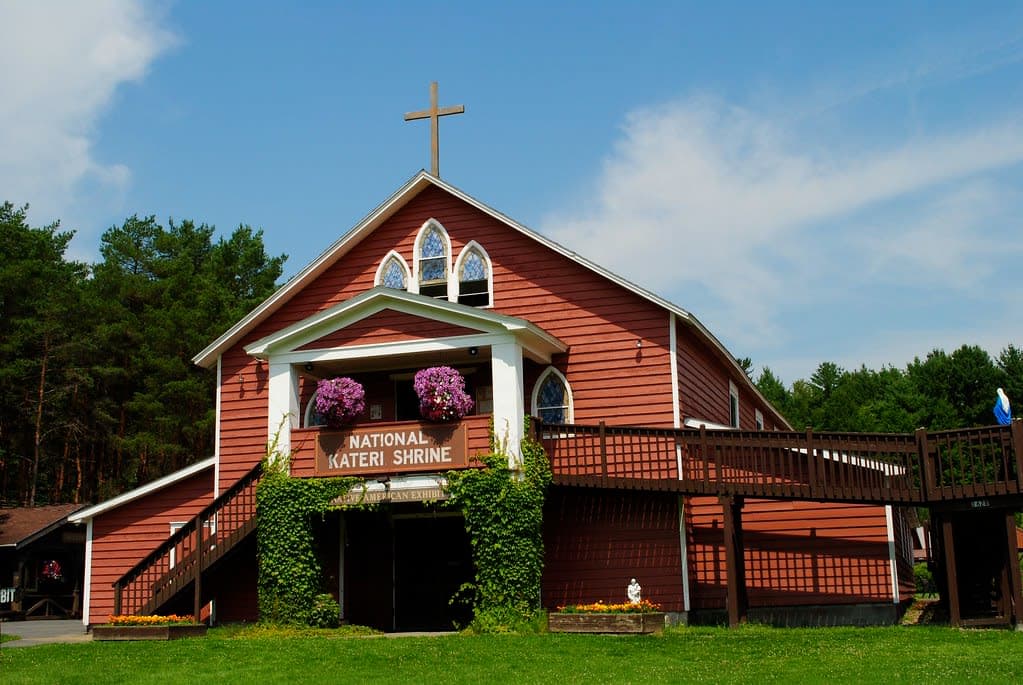
Kateri Tekakwitha Shrine
Where the first Indigenous North American saint lived, died, and draws pilgrims still
Kahnawake, Quebec, Canada
At A Glance
- Coordinates
- 45.4132, -73.6808
- Suggested Duration
- A minimum of forty-five minutes allows a visit to the church, the tomb, and a brief look at the museum. An hour and a half to two hours is recommended for a thorough experience including the church, tomb, museum and interpretive centre, and the mission grounds with the Fort Saint-Louis remnants. A half day combines the shrine with the Kahnawake Tourism Welcome Centre, a meal at a local restaurant, and browsing artisanal shops in the community.
- Access
- The shrine is located at 1 River Road, Kahnawake, QC J0L 1B0, on Kahnawake Mohawk Territory on the south shore of the Saint Lawrence River. From Montreal, cross the Honore-Mercier Bridge (Route 138) into Kahnawake, or take the Champlain Bridge south and follow Route 132 west. The drive from downtown Montreal takes approximately twenty to thirty minutes depending on traffic. Public transit options from Montreal are limited; a car or ride-sharing service is recommended. Parking is available near the shrine and the Kahnawake Tourism Welcome Centre. Mobile phone signal is generally available in Kahnawake. Wheelchair accessibility in the historic church building should be confirmed in advance by calling (450) 632-6030.
Pilgrim Tips
- The shrine is located at 1 River Road, Kahnawake, QC J0L 1B0, on Kahnawake Mohawk Territory on the south shore of the Saint Lawrence River. From Montreal, cross the Honore-Mercier Bridge (Route 138) into Kahnawake, or take the Champlain Bridge south and follow Route 132 west. The drive from downtown Montreal takes approximately twenty to thirty minutes depending on traffic. Public transit options from Montreal are limited; a car or ride-sharing service is recommended. Parking is available near the shrine and the Kahnawake Tourism Welcome Centre. Mobile phone signal is generally available in Kahnawake. Wheelchair accessibility in the historic church building should be confirmed in advance by calling (450) 632-6030.
- Modest dress appropriate for a Catholic church: shoulders and knees covered. The standard applies equally in summer heat. This is a place where Mohawk families worship weekly; dressing respectfully aligns you with the community rather than setting you apart from it.
- Likely permitted in the museum and exterior areas. Current policies for photography inside the church should be confirmed on arrival, particularly near the tomb and during services. Never photograph community members without explicit permission. If Indigenous ceremonies are taking place, do not photograph unless clearly invited to do so.
- Confirm visiting hours before arriving, as the shrine maintains specific hours (Monday to Thursday, 9am to 3pm, with Friday group tours by arrangement). Do not assume the church is open for casual visits at all times — it is a living parish, not a tourist attraction. If Indigenous ceremonies such as smudging are incorporated into services, participate respectfully or observe in silence. Do not treat ceremonial elements as curiosities for photography. Be aware that your understanding of Kateri's story may be incomplete; the shrine exists within a community where perspectives on her legacy are varied and deeply held.
Overview
On Mohawk Territory beside the Saint Lawrence River, a small stone church holds the tomb of Kateri Tekakwitha, the Mohawk-Algonquin woman canonized in 2012 as the first Indigenous North American Catholic saint. Over three centuries of pilgrimage have consecrated this place where Catholic faith and Indigenous identity converge in a community that is neither relic nor monument but home.
The Saint Francis Xavier Church in Kahnawake does not announce itself with grandeur. It is a stone parish church, built in 1720, the oldest standing church on the south shore of the Saint Lawrence River. Inside, in the right transept, a marble tomb holds the remains of a young woman who died here in 1680 at the age of twenty-three or twenty-four. Her name was Kateri Tekakwitha.
She was born Mohawk-Algonquin in 1656, orphaned by smallpox at four, left scarred and partially blind. She was baptized at nineteen, fled two hundred miles to this mission to practice her faith, and lived her final years in devotion so intense that the Jesuits who recorded her life struggled to find precedent. When she died on Holy Wednesday, witnesses reported that the scars vanished from her face within minutes.
Pilgrimage to her resting place began within four years. It has not stopped. In 2012, Pope Benedict XVI canonized her, and the stream of visitors became a river. But the shrine's power does not rest on papal declarations alone. It rests on the convergence of forces that few sacred sites can claim: the physical presence of a saint's relics, the continuous worship of a living Mohawk Catholic parish, over three centuries of accumulated prayer, and the fact that all of this exists on sovereign Kanien'keha:ka Territory, where Indigenous life is not a historical footnote but the daily reality that surrounds and shapes everything.
This is not a museum to the past. The church where Kateri's tomb rests is the same church where Mohawk families gather for Sunday Mass. The territory that holds the shrine is a community of over eight thousand people with its own governance, businesses, schools, and cultural life. To visit the shrine is to enter this living context, and that encounter — with a community as much as with a saint — is what sets Kahnawake apart.
Context And Lineage
Kateri Tekakwitha was born in 1656 to a Mohawk chief and a Catholic Algonquin mother, orphaned by smallpox at four, baptized at nineteen, and died at the Saint Francis Xavier Mission in 1680 at age twenty-three. Her canonization in 2012 — the culmination of a process begun in 1939 — made her the first Indigenous North American Catholic saint, a designation celebrated by many and contested by some within her own community.
The story begins in 1656, in the Mohawk village of Ossernenon in present-day New York. A girl is born to Kenneronkwa, a Mohawk chief, and Kahenta, an Algonquin woman who had been baptized Catholic. Around 1660, smallpox tears through the village. Both parents die. Her brother dies. The girl survives, but the disease leaves her face scarred and her eyesight damaged. She is raised by relatives who follow Mohawk traditions.
For the next sixteen years she lives in a world being reshaped by colonial encounter. Jesuit missionaries move among the Mohawk villages. In 1676, at the age of nineteen or twenty, she is baptized by Father Jacques de Lamberville on Easter Sunday, taking the name Catherine — Kateri in the Mohawk rendering, after Saint Catherine of Siena. Her conversion brings hostility from relatives and community members. In 1677, she flees approximately two hundred miles north to the Saint Francis Xavier Mission, a settlement of Mohawk converts on the south shore of the Saint Lawrence River.
At the mission, Kateri lives with an intensity of devotion that her Jesuit spiritual directors, Claude Chauchetiere and Pierre Cholenec, describe in terms usually reserved for European mystics. She cares for the sick and elderly. She practices severe asceticism — fasting, sleep deprivation, self-mortification — that some modern scholars interpret as the expression of profound trauma channeled through the only spiritual framework available to her. She takes a vow of perpetual virginity, a choice without precedent in Mohawk society.
On April 17, 1680 — Holy Wednesday — Kateri Tekakwitha dies at the mission. She is twenty-three or twenty-four years old. Multiple witnesses, including Chauchetiere and Cholenec, record that within fifteen minutes of her death, the smallpox scars disappeared from her face, leaving it clear. This reported event became the foundation of her veneration.
The path to sainthood would take centuries. Her cause was opened in 1939. She was declared Venerable in 1943, Beatified in 1980, and canonized on October 21, 2012, by Pope Benedict XVI. Two certified miracles were attributed to her intercession: a healing in the twentieth century and the 2006 recovery of a boy in Washington state from a severe flesh-eating bacterial infection.
The devotion to Kateri Tekakwitha has been carried forward by the Mohawk Catholic community of Kahnawake for over three centuries. The Jesuits who served the mission documented her life and promoted her cause. The Tekakwitha Conference, founded in 1939, became the primary vehicle for Indigenous Catholic devotion across North America, holding annual gatherings that bring together Indigenous Catholics for worship, cultural sharing, and community building. Over one hundred Kateri Circles — local Indigenous Catholic prayer groups — maintain her devotion at the parish level. The Canadian Conference of Catholic Bishops has formally embraced her legacy, and her canonization has given international reach to a tradition that was once largely regional. Yet the most fundamental lineage is the simplest: the Mohawk Catholic families of Kahnawake who have worshipped in this church, prayed at this tomb, and told this story to their children for generation upon generation.
Kateri Tekakwitha
saint
Mohawk-Algonquin woman (1656-1680) whose life of Catholic devotion at the Saint Francis Xavier Mission led to her canonization as the first Indigenous North American saint. Called the Lily of the Mohawks. Patron saint of ecology, the environment, Native Americans, and people in exile.
Claude Chauchetiere
historical
Jesuit missionary and spiritual director of Kateri at the mission (1645-1709). Wrote one of the first accounts of her life and became an early promoter of her cause for sainthood after witnessing events surrounding her death.
Pierre Cholenec
historical
Jesuit missionary (1641-1723) present at Kateri's death who documented her life and the reported clearing of her scars. His writings contributed to the historical record supporting her canonization cause.
Jacques de Lamberville
historical
Jesuit missionary (1641-1710) who baptized Kateri on Easter Sunday 1676 in the Mohawk village of Caughnawaga, giving her the name Catherine after Saint Catherine of Siena.
Pope Benedict XVI
historical
Canonized Kateri Tekakwitha on October 21, 2012, at St. Peter's Square, completing a process that had begun in 1939 and making her the first Indigenous North American Catholic saint.
Why This Place Is Sacred
The sacredness of this site emerges from the layered convergence of a saint's relics, three and a half centuries of pilgrimage, a living Mohawk Catholic parish, and the sovereign Indigenous territory that contains it all. The land itself carried meaning before any church stood here — Kahnawake sits along the Saint Lawrence River, a waterway woven into Haudenosaunee cosmology. Kateri's life and death concentrated something here that continues to draw those seeking encounter with questions that have no tidy resolution.
What makes a place sacred? At Kahnawake, the answers layer upon each other until they become inseparable.
The first layer is the land. The south shore of the Saint Lawrence River was Haudenosaunee territory long before Europeans arrived. The waterway itself holds significance in Indigenous cosmology, and the landscape shaped the communities that lived beside it. When Mohawk converts established their settlement here in the late seventeenth century, they brought with them a relationship to this land that predated and exceeded any mission.
The second layer is a life. Kateri Tekakwitha arrived at the Saint Francis Xavier Mission in 1677, fleeing persecution for her Catholic conversion. She was roughly twenty-one, scarred by the same epidemic that had taken her parents and brother, navigating between a Mohawk world that largely rejected her new faith and a Catholic world that could never fully understand her Indigenous identity. For three years, she lived at the mission with an intensity of devotion that impressed even the Jesuits, who were accustomed to zealous converts. When she died on April 17, 1680, something happened that entered the historical record through multiple witnesses: her facial scars disappeared.
The third layer is devotion across time. Pilgrimages began by 1684. A chapel was built near her grave. When the community moved to its permanent location and the current church was built in 1720, her remains were enshrined within it. The marble tomb installed in 1972 marks the most recent physical expression of a veneration that has continued without interruption for over three hundred and forty years. Each generation of pilgrims has added its prayers to the accumulation, and that accumulation has a weight that visitors consistently report feeling.
The fourth layer is the living community. Kahnawake is not a heritage site with a shrine attached. It is a Mohawk community with its own political life, cultural institutions, and ongoing relationship to both Catholic and Longhouse spiritual traditions. The shrine exists within this context, not apart from it. The presence of over eight thousand Kanien'keha:ka people going about their daily lives around the church prevents the site from becoming merely historical. The sacredness here is not preserved in amber; it is continually renegotiated.
The Saint Francis Xavier Mission was established in 1667 as a Jesuit mission for Mohawk converts. Its purpose was the spiritual care of Indigenous Catholics who had left their home communities, often under pressure, to practice their new faith. The shrine that grew around Kateri's tomb developed organically from the community's devotion — she was one of them, and their veneration of her was an act of communal memory as much as religious practice.
The mission relocated four times before settling at the present Kahnawake site in 1716. The stone church built in 1720 has remained the centre of worship since. Kateri's remains were moved from a wooden reliquary to a marble tomb in the right transept in 1972. The beatification by Pope John Paul II in 1980 brought international attention, and the 2012 canonization by Pope Benedict XVI transformed the site from a regional devotion to a global pilgrimage destination. The Saint Kateri Interpretive Centre, a museum adjacent to the church, now provides context for visitors. Fort Saint-Louis, erected by the French in 1725, left stone wall remnants that still stand near the church, a physical record of the colonial era that shaped this community. The site received National Historic Site of Canada designation as the Caughnawaga Mission.
Traditions And Practice
The shrine supports regular Catholic worship, pilgrimage visits to Kateri's tomb, and feast day celebrations that blend Indigenous and Catholic elements. Liturgies may incorporate smudging, Mohawk-language prayers, and blessing in the four directions alongside standard Catholic ritual.
Catholic worship at the Saint Francis Xavier Mission stretches back to 1667, and pilgrimage to Kateri's resting place to 1684. The mission served as a spiritual home for Mohawk converts who had left their communities, and its liturgical life was shaped from the beginning by the intersection of Jesuit Catholicism and Mohawk culture. Kateri herself practiced forms of devotion — extended prayer, fasting, care for the sick, self-mortification, and a vow of perpetual virginity — that combined Catholic ascetic traditions with her own response to the traumas and constraints of her life. After her death, the veneration of her remains became the central devotional practice at the site, drawing pilgrims who sought her intercession.
Regular Catholic Mass is celebrated at Saint Francis Xavier Church; the schedule should be confirmed directly with the shrine. The feast day of Saint Kateri is observed on April 17 in Canada, the anniversary of her death, and on July 14 in the United States. These celebrations may draw Indigenous Catholic communities from across North America. Liturgies at the shrine can incorporate Indigenous elements including smudging with sacred plants — tobacco, cedar, sweetgrass, sage — blessing in the four directions, Mohawk-language prayers, and music performed by Indigenous choirs. The Tekakwitha Conference, founded in 1939, holds annual gatherings at various locations featuring workshops, daily Mass, regional meetings, powwows, and communal prayer. Local Kateri Circles maintain devotional practices throughout the year.
Visit the marble tomb of Saint Kateri in the right transept. Take time to sit with her story before approaching — the museum and interpretive panels provide context that deepens the encounter. If you bring a particular intention or burden, this is a place where pilgrims have brought theirs for over three centuries.
If Mass is being celebrated, attend if your schedule and disposition allow. The liturgy at this church carries the particular character of a Mohawk Catholic community that has worshipped in this space for over three hundred years. Even if the ritual is unfamiliar, the experience of shared worship in this specific place has its own resonance.
Walk the grounds afterward. Notice the stone remnants of Fort Saint-Louis. Stand where you can see the Saint Lawrence River. Consider the community around you — the people going about their daily lives on territory they have inhabited for centuries. The shrine is not separate from this context; it is embedded within it.
Roman Catholicism (Mohawk Catholic tradition)
ActiveThe Saint Francis Xavier Mission has served as the spiritual home of Catholic Kanien'keha:ka people since 1667. The tradition here is distinctively Mohawk Catholic — Roman Catholic in structure and sacrament, shaped by Indigenous identity in language, cultural expression, and communal life. Kateri Tekakwitha's canonization in 2012 gave international recognition to this tradition, affirming that Indigenous Catholicism is not a diminished form of the faith but a legitimate expression of it.
Regular Mass, feast day celebrations on April 17 (in Canada), pilgrimage to the tomb, veneration of relics, prayer for intercession, sacraments. Liturgies may incorporate Indigenous elements: smudging with tobacco, cedar, sweetgrass, or sage; blessing in the four directions; Mohawk-language prayers and hymns. The Tekakwitha Conference holds annual gatherings with workshops, Mass, powwows, and cultural sharing. Over one hundred Kateri Circles maintain devotional life at the parish level across North America.
Haudenosaunee Longhouse tradition
ActiveThe Kanien'keha:ka people of Kahnawake maintained their own spiritual traditions as part of the Haudenosaunee Confederacy before and alongside the Catholic mission. The Longhouse tradition, centred on the Kaianere'ko:wa (Great Law of Peace), seasonal ceremonies, and a cosmology rooted in the natural world, remains practised in Kahnawake today. This tradition exists in the same community as the Catholic shrine but is separate from it, and some Longhouse adherents view Kateri's canonization critically.
The Longhouse tradition in Kahnawake includes seasonal ceremonies — Midwinter, Maple, Strawberry, Green Corn, Harvest — along with thanksgiving prayers (Ohenton Karihwatehkwen, the Words Before All Else) and clan-based governance. These practices are part of the living cultural fabric of the community surrounding the shrine.
Pilgrimage tradition
ActivePilgrimage to Kateri's resting place is one of the oldest continuous devotional practices in North American Catholicism, dating to 1684. Over three hundred and forty years, pilgrims have come to pray at her grave, seek her intercession, and reflect on her life. The 2012 canonization expanded the pilgrimage from a largely regional practice to a global one, drawing visitors from across the Americas and beyond.
Pilgrims visit the marble tomb in the right transept of Saint Francis Xavier Church, pray for intercession, attend Mass, visit the Saint Kateri Interpretive Centre, and reflect on Kateri's life. Group pilgrimages are organized by Indigenous Catholic communities, including a notable 2024 pilgrimage of approximately sixty Indigenous Catholics from eastern Canada. Pilgrims often bring personal intentions and prayer requests to the tomb.
Experience And Perspectives
Visitors describe a sense of intimacy and quiet presence at the shrine that contrasts with the grandeur of larger pilgrimage destinations. Standing before Kateri's marble tomb, many report an emotional response to the specificity of her story — a young woman's suffering, conviction, and early death in a place that remains home to her community's descendants. The awareness of being on Mohawk Territory adds a dimension that other Catholic shrines do not carry.
The approach to the shrine offers no dramatic vista or processional route. You drive across the Honore-Mercier Bridge from Montreal, and within minutes you are on Mohawk Territory — a transition marked not by gates or fences but by a shift in atmosphere, an awareness that you have entered a community with its own history and governance. The shrine sits in the historic heart of Kahnawake along River Road, a modest stone church that could be mistaken for any rural Quebec parish if you did not know what it held.
Inside, the eye adjusts to a space rich with the accumulated artifacts of three centuries: paintings, ivory crucifixes, statues, manuscripts, carvings, and old vestments from the Jesuit mission period. These are not curated exhibits but the furnishings of a church that has never stopped being used. The marble tomb in the right transept draws pilgrims with a quiet pull. There is no moving walkway here, no crowd management system. You simply stand before it, aware that the remains of a woman who died in 1680 lie beneath the stone.
What visitors describe most consistently is intimacy. The shrine is small enough that your presence matters. You are not lost in a crowd of thousands; you are standing in a parish church where the community gathers each week. Pilgrims who have traveled from distant parts of North America sit beside elderly Mohawk parishioners. The prayers spoken here carry the weight of personal intention rather than institutional ceremony.
The museum adjacent to the church — the Saint Kateri Interpretive Centre — deepens the encounter. Here, Indigenous artefacts sit alongside Catholic religious items: arrowheads and flints beside rosaries and vestments, beadwork beside manuscripts. The juxtaposition is not curated for effect. It simply reflects the reality of this place, where two traditions have coexisted, clashed, and sometimes merged for over three centuries.
Outside, the remnants of Fort Saint-Louis are visible, stone walls from 1725 that once protected the Christian Mohawk community from attack. They stand as a reminder that the history of this place includes military danger, colonial politics, and the choices of Indigenous people navigating between worlds. Walking the grounds, with the Saint Lawrence River nearby and the sounds of a living community around you, the shrine reveals itself as something more than a tomb or a church. It is a place where the past and present remain in active conversation.
Before visiting, contact the shrine at (450) 632-6030 or saintkaterishrine@yahoo.ca to confirm current hours. Consider stopping at the Kahnawake Tourism Welcome Centre for orientation. You are entering a sovereign Indigenous community as a guest, and beginning with that awareness will shape your entire experience.
At the tomb, allow yourself to sit with whatever arises. Kateri's story carries themes of loss, displacement, conviction, and the search for a place to belong — themes that may resonate in unexpected ways. You need not be Catholic to recognize the weight of a young woman's life concentrated in this space.
If Mass is being celebrated, you are welcome to attend. Observe the worship of the Mohawk Catholic community with respect, noting how Indigenous and Catholic elements may interweave. If you are not Catholic, sit quietly at the back. The experience of witnessing a tradition that has continued in this specific place for over three hundred years carries its own significance.
Spend time in the museum. Read the interpretive panels about Kateri's life, but also look at the Indigenous artefacts and consider the community that produced them. The story of the shrine is inseparable from the story of the Kanien'keha:ka people, and both deserve your attention.
The Kateri Tekakwitha Shrine holds meaning that differs profoundly depending on who is standing before the tomb. Catholic pilgrims encounter a saint whose intercession they seek. Indigenous Catholics find a figure who validates their identity within the Church. Longhouse adherents see a young woman whose story has been shaped to serve colonial interests. Scholars examine the reliability of hagiographic sources written by Jesuit missionaries. No single perspective contains the whole truth, and the shrine's significance lies partly in the fact that it holds all of these readings simultaneously without resolving them.
Historians recognize Kateri Tekakwitha as a genuinely significant historical figure whose life illuminates the complex dynamics of Indigenous-European encounter in seventeenth-century North America. The primary sources — accounts by Jesuits Claude Chauchetiere and Pierre Cholenec — provide substantial biographical detail while carrying the inherent bias of hagiographic writing. Scholars note that these men were simultaneously documenting a life they observed and constructing a narrative to support a canonization cause.
Jean-Francois Roussel of the Universite de Montreal has examined how hagiographic narratives around Kateri serve as instruments of colonial discourse, reinforcing Catholic institutional authority over Indigenous spiritual life. The Canadian Encyclopedia and Encyclopaedia Britannica treat her biography as historically grounded while acknowledging the limitations of the source material. The Saint Francis Xavier Mission is designated a National Historic Site of Canada, recognizing its significance as one of the most important Jesuit mission sites in New France.
The canonization process followed standard Catholic procedures over seventy-three years, requiring the verification of two miracles. The scholarly consensus holds that while the supernatural claims remain matters of faith rather than evidence, the core biographical facts — Kateri's birth, orphaning, baptism, flight to the mission, devotional life, and death — are well-supported by contemporary documentation.
For Catholic devotees, Kateri Tekakwitha is an intercessor whose life of suffering, faith, and holiness provides a model for navigating adversity with spiritual depth. The reported clearing of her scars at death is understood as a sign of divine favour. The two certified miracles — including the 2006 healing of a boy with a severe flesh-eating bacterial infection — confirm, in Catholic teaching, her closeness to God.
For Indigenous Catholics specifically, Kateri carries additional significance. She is proof that Indigenous identity and Catholic faith are not contradictory, that one can be wholly Mohawk and wholly Catholic. The Tekakwitha Conference and the network of Kateri Circles provide communal spaces where this dual identity is celebrated and sustained. Within these communities, Kateri is invoked as patron of ecology and the environment, connecting Catholic faith with the Indigenous tradition of reverence for the natural world. Liturgies in her honour incorporate smudging, the four directions, and Indigenous languages — practices that would have been suppressed a generation ago but now receive institutional support.
The Longhouse perspective, held by many Mohawk people who follow Haudenosaunee spiritual traditions, offers a fundamentally different reading of Kateri's life and legacy. Mohawk writer Doug George-Kanentiio and others have expressed concern that her sainthood may be used to draw Haudenosaunee people away from their ancestral spiritual values. From this perspective, Kateri was shaped by the trauma of epidemic and the intense pressure of Jesuit proselytization. Her extreme ascetic practices — self-mortification, fasting, self-denial — may reflect the wounds of colonial displacement rather than holiness.
Scholar Jean-Francois Roussel has observed that hagiographies work in the service of spiritual conquest, which itself serves imperial conquest. The Catholic Church's painful history with Indigenous peoples — including the residential school system — lends weight to this critique. Some community members argue that Kateri's canonization serves the institutional interests of the Church, offering a sympathetic Indigenous face that deflects attention from the harm done to Indigenous communities in the name of conversion.
These perspectives are not marginal or hostile. They are held by members of the same community where the shrine stands, and they reflect a legitimate reckoning with colonial history that visitors should understand.
Significant questions remain genuinely unresolved. The Jesuit accounts are the only substantial primary sources for Kateri's interior life, raising the question of how much of her recorded spiritual experience reflects her own understanding and how much was shaped by her directors' expectations and hagiographic conventions. We do not know what Kateri herself would have said about her faith in her own words, unmediated by Jesuit interpretation.
The reported clearing of her smallpox scars at death was attested by multiple witnesses but cannot be verified by modern means. The nature and documentation of the second miracle — the 2006 healing in Washington state — have received limited public scrutiny. How Kateri understood the relationship between her Mohawk identity and her Catholic faith, whether she experienced conflict or synthesis, is lost to us. Whether her extreme ascetic practices were expressions of holiness, responses to trauma, or some inseparable combination of both remains a question that each visitor must sit with rather than answer.
Visit Planning
The shrine is located on Kahnawake Mohawk Territory, approximately fifteen kilometres south of downtown Montreal across the Saint Lawrence River. Visiting hours are Monday to Thursday, 9am to 3pm. A car is recommended, as public transit options from Montreal are limited. The annual feast day on April 17 is the most significant date in the shrine's calendar.
The shrine is located at 1 River Road, Kahnawake, QC J0L 1B0, on Kahnawake Mohawk Territory on the south shore of the Saint Lawrence River. From Montreal, cross the Honore-Mercier Bridge (Route 138) into Kahnawake, or take the Champlain Bridge south and follow Route 132 west. The drive from downtown Montreal takes approximately twenty to thirty minutes depending on traffic. Public transit options from Montreal are limited; a car or ride-sharing service is recommended. Parking is available near the shrine and the Kahnawake Tourism Welcome Centre. Mobile phone signal is generally available in Kahnawake. Wheelchair accessibility in the historic church building should be confirmed in advance by calling (450) 632-6030.
Hotels and bed-and-breakfasts are available in Kahnawake. The greater Montreal area, thirteen to fifteen kilometres north, provides extensive accommodation options at all price points. The shrine is easily visited as a day trip from Montreal. For those wishing to experience Kahnawake more fully, the community offers over 250 businesses including restaurants, artisanal shops, and lodging options. Contact Kahnawake Tourism at kahnawaketourism.com for current listings.
Visitors are guests on sovereign Mohawk Territory and in an active Catholic parish. Modest dress, quiet respect during services, and awareness of the community context are essential. Photography policies should be confirmed on arrival.
The most important etiquette principle at the Kateri Tekakwitha Shrine is one of orientation rather than specific rules: you are a guest in two senses simultaneously. You are a guest in a Catholic church, where the norms of quiet respect and reverence for worship apply. And you are a guest on Kanien'keha:ka Mohawk Territory, where the community's governance, customs, and daily life deserve the same consideration you would give in any host's home.
Enter the church as you would enter any active place of worship. If Mass or prayer is in progress, remain at the back or wait until the service concludes. Move through the space with awareness of those in prayer. The tomb area in the right transept is a place of devotion, not simply a historical exhibit, and should be approached accordingly.
Beyond the shrine itself, remain within the areas designated for visitors — the church, the museum, and the immediate mission grounds. Kahnawake is a community of over eight thousand people, not an open-air exhibit. Do not wander into residential areas or community spaces without invitation. The Kahnawake Tourism Welcome Centre can advise you on what is available to visitors.
If you encounter Indigenous spiritual practices integrated into the liturgy — smudging, prayers in the four directions, Mohawk-language hymns — receive them with the same respect you would give to any sacred act. Do not photograph these moments without clear permission.
Modest dress appropriate for a Catholic church: shoulders and knees covered. The standard applies equally in summer heat. This is a place where Mohawk families worship weekly; dressing respectfully aligns you with the community rather than setting you apart from it.
Likely permitted in the museum and exterior areas. Current policies for photography inside the church should be confirmed on arrival, particularly near the tomb and during services. Never photograph community members without explicit permission. If Indigenous ceremonies are taking place, do not photograph unless clearly invited to do so.
Candles may be lit. Donations to the shrine are welcome and support its maintenance. Prayer intentions may be brought to the tomb. Follow any posted guidance regarding offerings or devotional items.
Visiting hours are Monday to Thursday, 9am to 3pm. Group tours may be arranged for Fridays by contacting the shrine in advance. Do not attend Mass solely as a tourist — if present during a service, participate respectfully or wait outside. Do not wander beyond the shrine and tourism-designated areas without invitation. Approach with humility and genuine interest rather than entitlement.
Sacred Cluster
Nearby sacred places create the location cluster described in the growth plan. This block is intentionally crawlable and links into the wider regional graph.
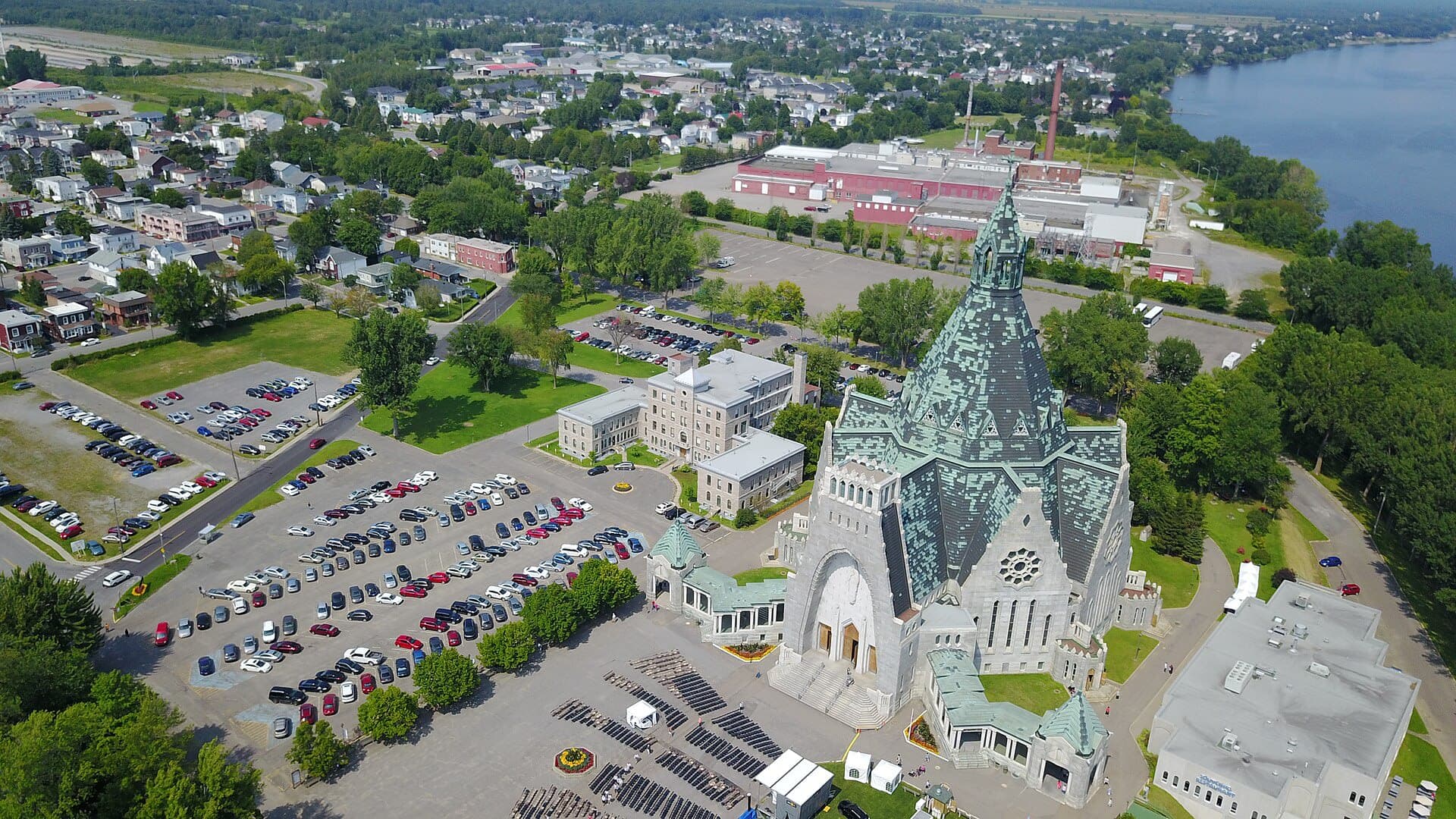
Basilica of Notre-Dame-du-Cap, Trois-Rivières, Quebec, Canada
Trois-Rivières, Quebec, Canada
140.2 km away
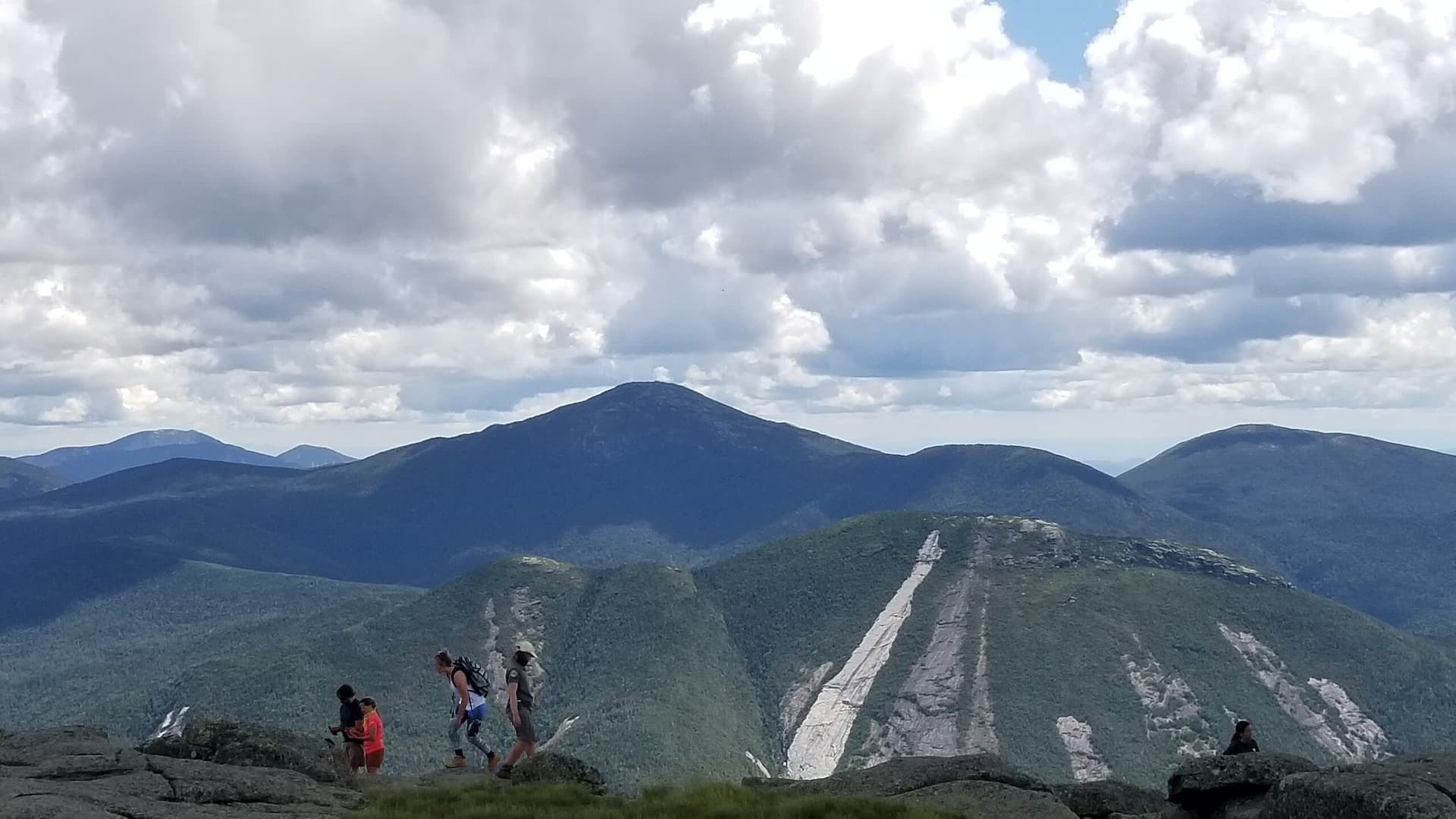
Mt. Marcy, New York
Town of Keene, New York, United States
145.9 km away
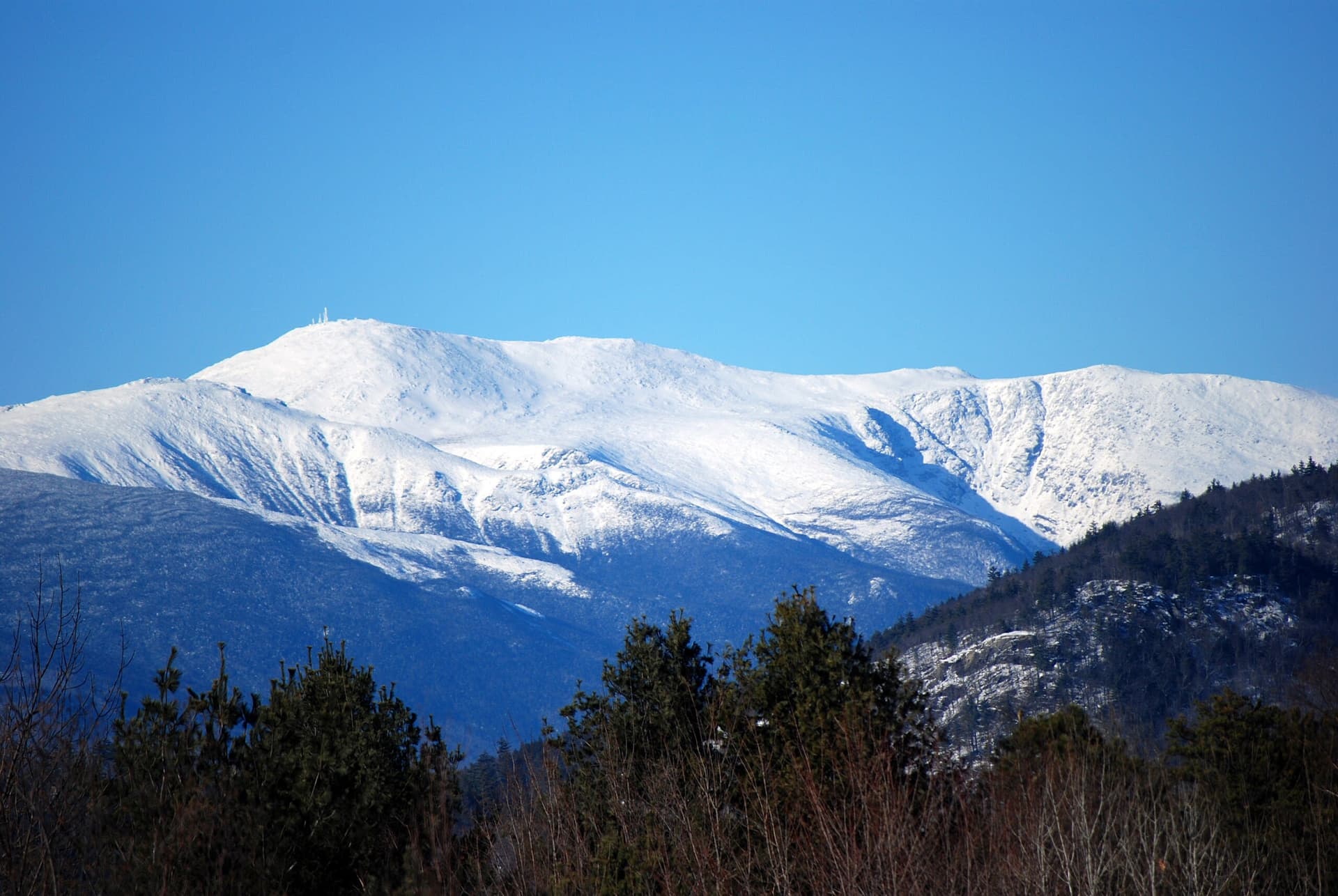
Mt. Washington, New Hampshire
Gorham, New Hampshire, United States
226.4 km away
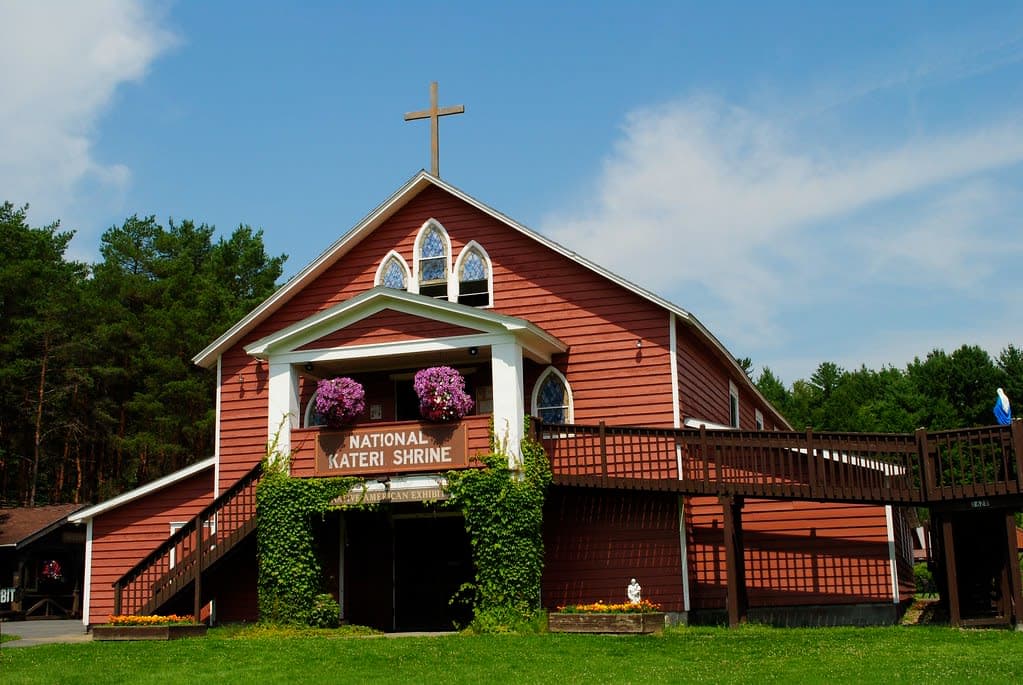
Shrine of Saint Kateri Tekakwitha, Fonda, New York
Village of Fonda, New York, United States
279.7 km away