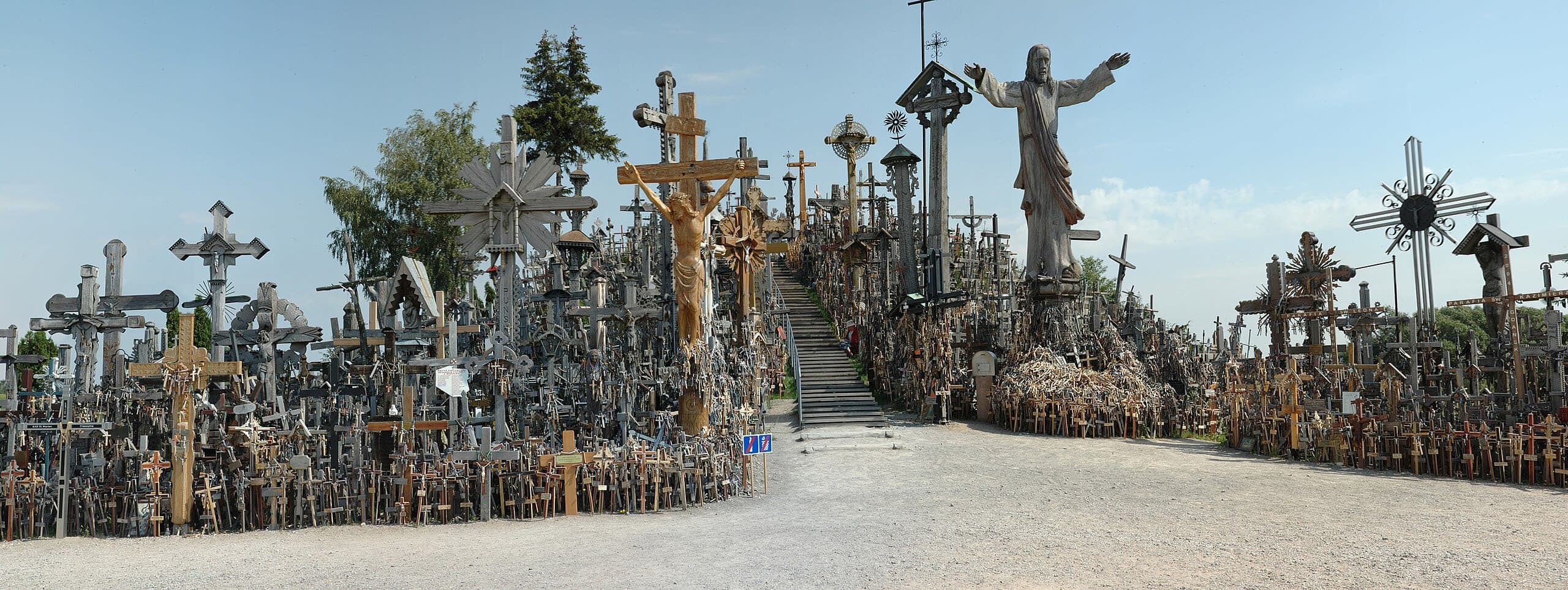
Hill of Crosses, Siauliai
Two hundred thousand crosses on a hill that refused to stay empty
Domantai, Šiauliai County, Lithuania
At A Glance
- Coordinates
- 56.0153, 23.4160
- Suggested Duration
- 1-2 hours to explore the hill and Franciscan hermitage. The visitor centre, souvenir shops, and washrooms are open 9:00-18:00 daily.
Pilgrim Tips
- No specific dress code as this is an open-air site. Sturdy shoes are recommended due to uneven terrain. Modest and respectful attire is appropriate.
- Photography is permitted and encouraged. Be mindful of other visitors who may be praying or in emotional states.
- The terrain on the hill is uneven with narrow paths between densely packed crosses. Sturdy shoes are recommended. Do not remove or damage any crosses. Do not climb on crosses or structures. In wet weather, paths can be slippery. The visitor centre and souvenir shops are open 9:00-18:00 daily.
Overview
Three times the Soviet regime bulldozed the Hill of Crosses. Three times the Lithuanian people rebuilt it, cross by cross, in darkness. Today more than two hundred thousand crosses, crucifixes, rosaries, and carvings crowd a small hillock north of Siauliai, each one a prayer made visible. There are no gatekeepers here, no hierarchy, no admission. The site belongs to everyone who brings something to leave.
The Hill of Crosses does not behave like other sacred sites. There is no founding saint, no architectural masterpiece, no institutional authority governing what happens here. There is only a low hillock in the flat Lithuanian countryside, and on it, a forest of crosses so dense that the ground beneath has disappeared.
The tradition began, most historians agree, after the failed 1831 Uprising against Russian rule. Families who could not find the bodies of fallen rebels placed crosses on this hill as memorials. After the 1863 Uprising, more crosses appeared. By the twentieth century, the hill had become something the Soviet authorities could neither understand nor tolerate.
In 1961, Soviet bulldozers destroyed over five thousand crosses, burning them or turning them to scrap metal. The site was covered with waste and sewage. Within days, new crosses appeared. In 1973 and 1975, the authorities demolished the site again. Each time, Lithuanians returned under cover of night, carrying crosses through fields, past guards, rebuilding what had been destroyed. Each act of placement was an act of resistance.
Pope John Paul II visited on September 7, 1993, declaring the hill 'a place for hope, peace, love, and sacrifice.' A Franciscan hermitage was established nearby in 2000, reportedly at his suggestion. Lithuanian cross-crafting, the tradition embodied by this place, was inscribed on the UNESCO Representative List of the Intangible Cultural Heritage of Humanity in 2008.
But the hill does not need papal recognition or UNESCO status to explain itself. It explains itself with each cross. Every one of the two hundred thousand objects on this hill represents a specific human act: someone carried something here and left it. A prayer for the dead. A petition for healing. A declaration that faith survives. The accumulation is the meaning.
Context And Lineage
The Hill of Crosses emerged from Lithuania's resistance to foreign rule. After the 1831 Uprising, families placed memorial crosses for rebels whose bodies could not be found. The tradition deepened through the 1863 Uprising, survived Soviet demolitions, and was elevated by Pope John Paul II's 1993 visit.
The hill itself predates the crosses by centuries. A medieval fortification stood here, with a wooden castle called 'Kula' destroyed by the Livonian army in 1348. The mound that remained became the canvas for what followed.
After the unsuccessful 1831 Uprising against Russian imperial rule, Lithuanian and Polish families faced a particular grief: the bodies of many fallen rebels could not be located for burial. Families began placing crosses on the hill as symbolic graves, marking the absence with devotion. The tradition deepened after the 1863 Uprising brought more losses.
By the twentieth century, the hill had accumulated thousands of crosses and become a pilgrimage destination. The Soviet regime, which recognized no authority above the state, found the hill intolerable. In 1961, bulldozers destroyed over five thousand crosses, burning them or turning them to scrap metal. The site was covered with waste and sewage. Guards were posted.
New crosses appeared almost immediately. Lithuanians carried them through fields at night, evading surveillance to place their offerings on the ravaged hill. The authorities demolished the site again in 1973 and 1975, with the same result. Each destruction and reconstruction added to the hill's meaning, transforming it from a memorial into a testament to the indestructibility of faith.
The Hill of Crosses connects pre-Christian Baltic traditions of carved wooden pillars with Catholic devotion, Lithuanian national resistance, and contemporary pilgrimage practice. Lithuania was the last pagan state in Europe, converting to Catholicism in the late fourteenth century. The transition from pagan carved totems to Catholic crosses was gradual and syncretic, and the Hill of Crosses embodies this distinctive Lithuanian fusion.
Pope John Paul II
Pilgrim and advocate
Anonymous Lithuanian cross-planters
Builders and resistors
Lithuanian cross-crafters (kryzdirbyste tradition)
Artisans and tradition-bearers
Why This Place Is Sacred
The Hill of Crosses thins the boundary between the visible and invisible through sheer accumulation. Each cross is an individual prayer made material. Multiplied by two hundred thousand, the effect transcends any single devotion and becomes something collective, elemental, and difficult to name.
The thinness here does not come from architecture or age. There is no ancient temple, no sacred geometry, no vaulted ceiling directing the gaze upward. The Hill of Crosses is thinned by human action, repeated hundreds of thousands of times.
Each cross represents a moment when someone decided that faith required a physical act. A wooden cross carved in a workshop. A metal crucifix purchased at a market. A rosary wound around a post. A photograph pinned to a beam. Each object was carried here, placed here, and left here with intention. The accumulation of these individual acts creates something larger than any one of them.
The wind moving through the crosses produces a sound that visitors struggle to describe. It is not silence and not music. It is the sound of two hundred thousand objects responding to the same force. Some hear prayer in it. Others hear grief. Most simply listen.
The knowledge of what happened here deepens the thinness. Three times, all of this was destroyed. Three times, it returned. The crosses that stand on the hill today are not the originals. They are the proof that the impulse to place them cannot be extinguished. The Soviet regime had tanks, bulldozers, sewage, and the power of the state. The Lithuanian people had crosses and the willingness to carry them in the dark. The hill shows which force proved more durable.
The absence of institutional control is itself a form of thinness. There are no guides, no explanations, no hierarchical ordering of the space. Visitors encounter the hill directly, without mediation. The response it provokes is personal, unscripted, and frequently overwhelming.
The hill itself is a former medieval fortification, with a wooden castle destroyed by the Livonian army in 1348. The tradition of placing crosses began, according to the prevailing historical view, after the 1831 Uprising against Russia, when families unable to find the bodies of fallen rebels placed symbolic crosses as memorials.
From memorial crosses for fallen rebels, the tradition expanded to encompass prayers for the dead, petitions for healing, expressions of gratitude, and acts of national and spiritual resistance. The Soviet-era demolitions transformed the hill from a devotional site into a symbol of indestructible faith. Pope John Paul II's 1993 visit elevated its international significance. The Franciscan hermitage (2000) added a permanent monastic presence. The site now draws visitors from around the world who continue to add crosses.
Traditions And Practice
The primary practice is placing crosses, from simple wooden markers to elaborate carvings by master craftsmen. An annual pilgrimage on the last Sunday of July brings thousands of pilgrims. The Franciscan hermitage provides a permanent place of prayer and daily services.
The placement of crosses is the site's foundational practice. Each cross represents a specific intention: memorial for the dead, petition for healing, expression of gratitude, or act of resistance. In earlier centuries, the crosses were primarily wooden, carved by hand or by commissioned kryzdirbyste craftsmen. The tradition connects to pre-Christian Baltic practices of marking important sites with carved wooden pillars.
Visitors and pilgrims add crosses year-round. An annual pilgrimage on the last Sunday of July, revived in 1997, is attended by all Lithuanian bishops and the Apostolic Nuncio, with Mass and prayers on the hill. Daily prayers and services are held at the Franciscan hermitage chapel, established in 2000. The site is part of the John Paul II Pilgrim Way. Crosses can be purchased at the visitor centre or brought from home. Lithuanian cross-crafting workshops are sometimes organized as part of heritage preservation efforts.
Bring a cross, rosary, or other devotional object to place on the hill. If you do not have one, crosses are available at the souvenir shops near the visitor centre. Choose a location with care, though the hill will accept whatever you bring wherever you place it. After exploring the hill, sit in the Franciscan hermitage chapel and look through the glass wall toward the hill. Allow time for the experience to settle. The contrast between the hill's density and the chapel's silence is itself instructive.
Lithuanian Cross-Crafting (Kryzdirbyste)
ActiveLithuanian cross-crafting was inscribed on the UNESCO Representative List of the Intangible Cultural Heritage of Humanity in 2001/2008. The tradition dates to the fifteenth century, when Lithuanians transferred their pre-Christian practice of carving wooden totems and pillars into the art of crafting elaborate wooden crosses. The Hill of Crosses is the largest concentration of this art form in Lithuania.
Carving and placing crosses at the Hill as acts of devotion, memorial, or petition. Commissioning master craftsmen (kryzdirbyai) to create elaborate crosses. Linking cross-crafting to Catholic ceremonies and harvest celebrations. Heritage preservation workshops.
Pilgrimage and Catholic Devotion
ActiveThe Hill of Crosses has been a Catholic pilgrimage site since at least the mid-nineteenth century. Pope John Paul II's 1993 visit elevated its international significance. The annual pilgrimage on the last Sunday of July, revived in 1997, draws thousands of pilgrims with all Lithuanian bishops and the Apostolic Nuncio. The Franciscan hermitage provides a permanent monastic presence.
Annual pilgrimage on the last Sunday of July. Year-round placement of crosses, crucifixes, rosaries, and statues. Prayer at the Franciscan hermitage chapel. Mass celebrated at the site during pilgrimages.
National Resistance and Identity
ActiveThe Hill of Crosses became a symbol of Lithuanian resistance during foreign occupations. Memorial crosses after the 1831 and 1863 Uprisings, and defiant rebuilding after each Soviet demolition, transformed the site into a monument to national and spiritual survival. The hill's endurance under systematic state destruction has become inseparable from Lithuanian identity.
Memorial crosses for uprising victims. Clandestine cross-planting during Soviet era. National commemorations linking faith and national identity. The site's inclusion in Lithuanian cultural education and civic memory.
Experience And Perspectives
A two-hundred-meter pathway from the car park leads to the hill. From a distance, it appears as an irregular mound bristling with vertical forms. As you approach, individual crosses resolve from the mass. The density increases until the ground vanishes beneath layers of devotion. The wind through the crosses creates a distinctive sound.
The landscape prepares you. The Lithuanian countryside north of Siauliai is flat and agricultural, stretching to the horizon in every direction. The hill appears on this plain as an anomaly, a low mound that looks, from the road, like nothing that should command attention.
A two-hundred-meter paved pathway leads from the car park to the base of the hill. A visitor centre, souvenir shops, and washrooms cluster near the entrance. Crosses of every size and material are available for purchase. Many visitors bring their own.
As you approach, the scale begins to register. What appeared from the road as a rough silhouette resolves into individual forms. Crosses. Thousands of them. Then tens of thousands. They crowd the pathways, lean against each other, rise from every surface. Crucifixes of carved wood, metal crosses of industrial manufacture, tiny rosaries wound around larger structures, photographs, ribbons, inscriptions in Lithuanian, Polish, English, and a dozen other languages.
The narrow paths between the crosses require careful movement. You walk single file where the density is greatest. The crosses press in from both sides, some at eye level, some towering above, some underfoot. The experience is not of empty space but of occupied space, a site so full of human intention that the earth beneath has been entirely claimed.
Listen. The wind through two hundred thousand crosses and rosaries produces a sound that has no exact parallel. Metal on metal. Wood on wood. Beads clicking against beads. The sound is not random but patterned, responding to the wind's direction and force. Close your eyes and the hill speaks in a language of its own.
Descend from the hill and walk to the Franciscan hermitage, three hundred meters away. The chapel features a glass wall facing the hill. Inside, the silence is intentional, contrasting with the hill's sonic density. This is the space for reflection on what you have just encountered.
Leave something, if you are moved to. A cross, a rosary, a written prayer tucked into the forest of devotion. The tradition invites participation. What you leave joins two hundred thousand other acts of faith, grief, hope, and resistance.
The site is accessed via a 200-meter pathway from the car park. The hill is a low mound with paths threading through the crosses. The Franciscan hermitage chapel is 300 meters from the hill. No specific route is required; the site is open and unstructured.
The Hill of Crosses resists easy categorization. It is simultaneously a folk art installation, a pilgrimage site, a war memorial, a national resistance monument, and a living cultural practice. Each interpretive lens captures part of its meaning; none contains all of it.
Scholars view the Hill of Crosses as a uniquely Lithuanian phenomenon. A recent academic article in FOLKLORICA provides comprehensive analysis of its 'layered histories, meanings, and tensions.' Ethnographers study it as a key example of how pre-Christian Baltic traditions of wooden pillar-carving were transformed by Christianization into the distinctive Lithuanian cross-crafting tradition. Art historians note the remarkable stylistic range of the crosses, from folk art to sophisticated woodcarving. Political historians study it as a case study in cultural resistance to totalitarian regimes, where a decentralized, anonymous practice proved impossible for state power to suppress.
Lithuanian Catholic tradition understands the hill as a physical manifestation of faith's triumph over persecution. The three Soviet demolitions and three reconstructions echo, in popular understanding, the pattern of death and resurrection at the heart of Christianity. Each cross placed in darkness during the Soviet era is understood as an act of confession, a declaration of faith made at personal risk. The tradition of cross-crafting has deep roots in Lithuanian identity, connecting the last pagan people of Europe to their Catholic present through a distinctive artistic vocabulary.
Some visitors describe the Hill of Crosses as a site of extraordinary energy, perhaps connected to the medieval hill fort beneath it. These perspectives, while not supported by scholarly research, reflect the site's power to generate meaning beyond its Catholic and national identity contexts. The sheer density of human intention concentrated in this small space creates an atmosphere that transcends any single interpretive framework.
The precise origin of the first crosses on the hill remains debated. Whether they date to the fourteenth century or the 1831 Uprising is unresolved. The hill fort beneath the crosses has never been fully excavated. The exact number of crosses is genuinely unknown and may never be accurately counted. How the tradition survived each Soviet demolition, including who organized the clandestine cross-planting, how crosses were transported and placed without detection, has been documented in general terms, but many individual stories went unrecorded and are now lost.
Visit Planning
Located 12 km north of Siauliai, freely accessible at all times with no admission fee. Well-signposted from the main road. The annual pilgrimage on the last Sunday of July draws thousands. The visitor centre operates 9:00-18:00 daily.
Siauliai offers a range of hotels and guesthouses. The site can also be visited as a day trip from Vilnius (2.5-3 hours by train to Siauliai) or Kaunas (approximately 2 hours). Rural tourism accommodation may be available near the site.
Treat the hill with the reverence due to a sacred site. Do not remove or damage crosses. Placing a cross or rosary is encouraged. Photography is welcome but should not disturb others who are praying.
The Hill of Crosses has no formal gatekeeper, but it is governed by an ethic of respect that visitors are expected to share. Every cross on this hill was placed by someone with intention. Many represent the dead. Some represent suffering. All deserve to be treated with care.
Do not remove or damage any crosses, regardless of their condition or apparent abandonment. What may look weathered and forgotten to you may hold meaning for someone who placed it decades ago.
Do not climb on crosses or structures. The density of the site means that individual crosses support each other; disturbing one can topple many.
Placing a cross, rosary, or other devotional object is actively encouraged. This is how the site grows and renews itself. There is no wrong way to participate, and visitors of all faiths and none are welcome to leave something.
Photography is permitted and encouraged, but be aware that other visitors may be engaged in prayer or emotional responses. Give space where it is needed.
Keep pathways clear for other pilgrims, particularly during the annual July pilgrimage when thousands attend.
No specific dress code as this is an open-air site. Sturdy shoes are recommended due to uneven terrain. Modest and respectful attire is appropriate.
Photography is permitted and encouraged. Be mindful of other visitors who may be praying or in emotional states.
Placing a cross, crucifix, rosary, or other devotional object is the traditional offering and is actively encouraged. Crosses can be purchased at shops near the visitor centre.
Do not remove or damage any crosses. Do not climb on crosses or structures. Respectful behavior required. Keep pathways clear for other pilgrims.
Sacred Cluster
Nearby sacred places create the location cluster described in the growth plan. This block is intentionally crawlable and links into the wider regional graph.
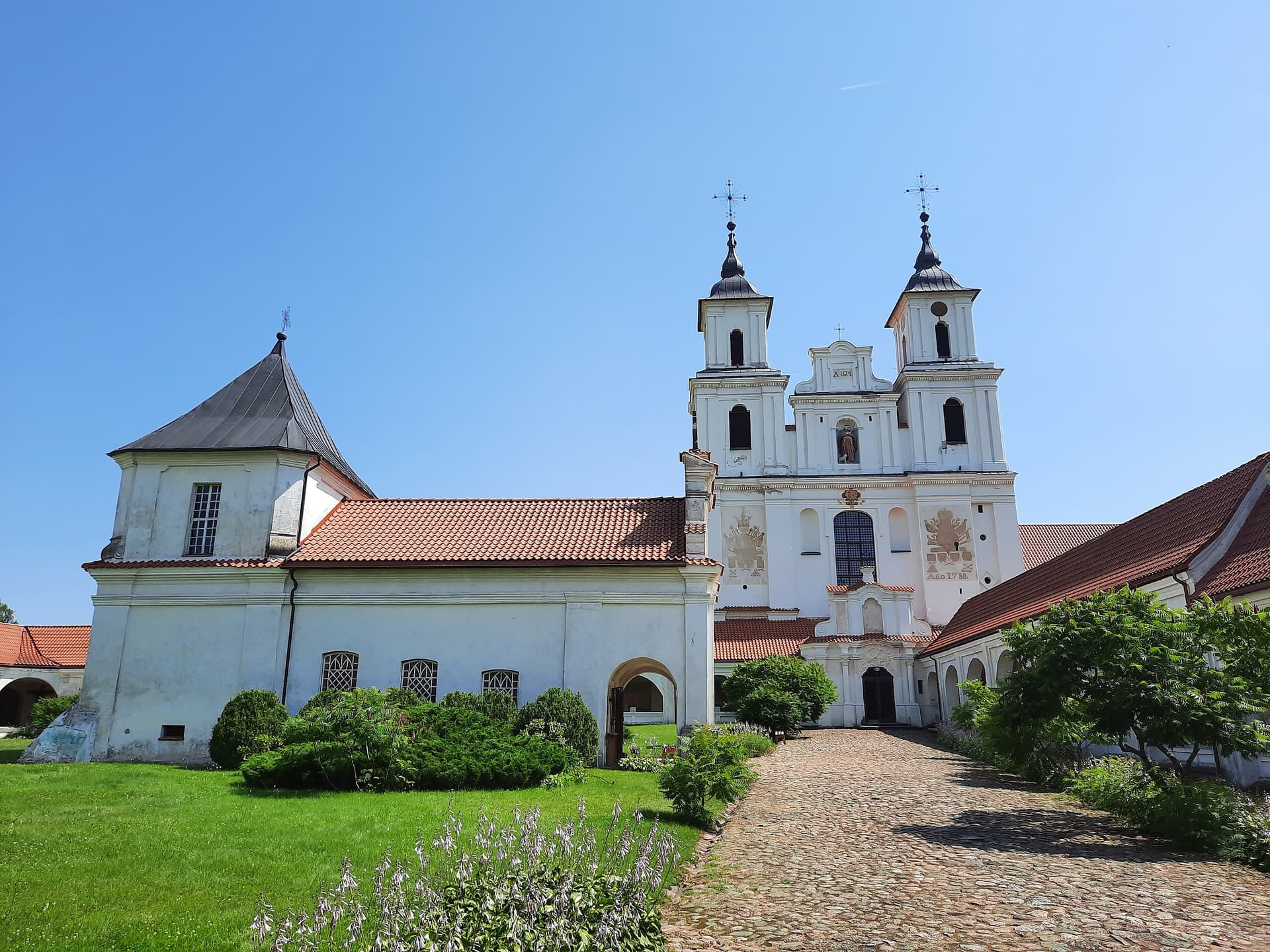
St. Mary Queen of Angels Church, Tytuvenai
Tytuvėnai, Šiauliai County, Lithuania
48.4 km away
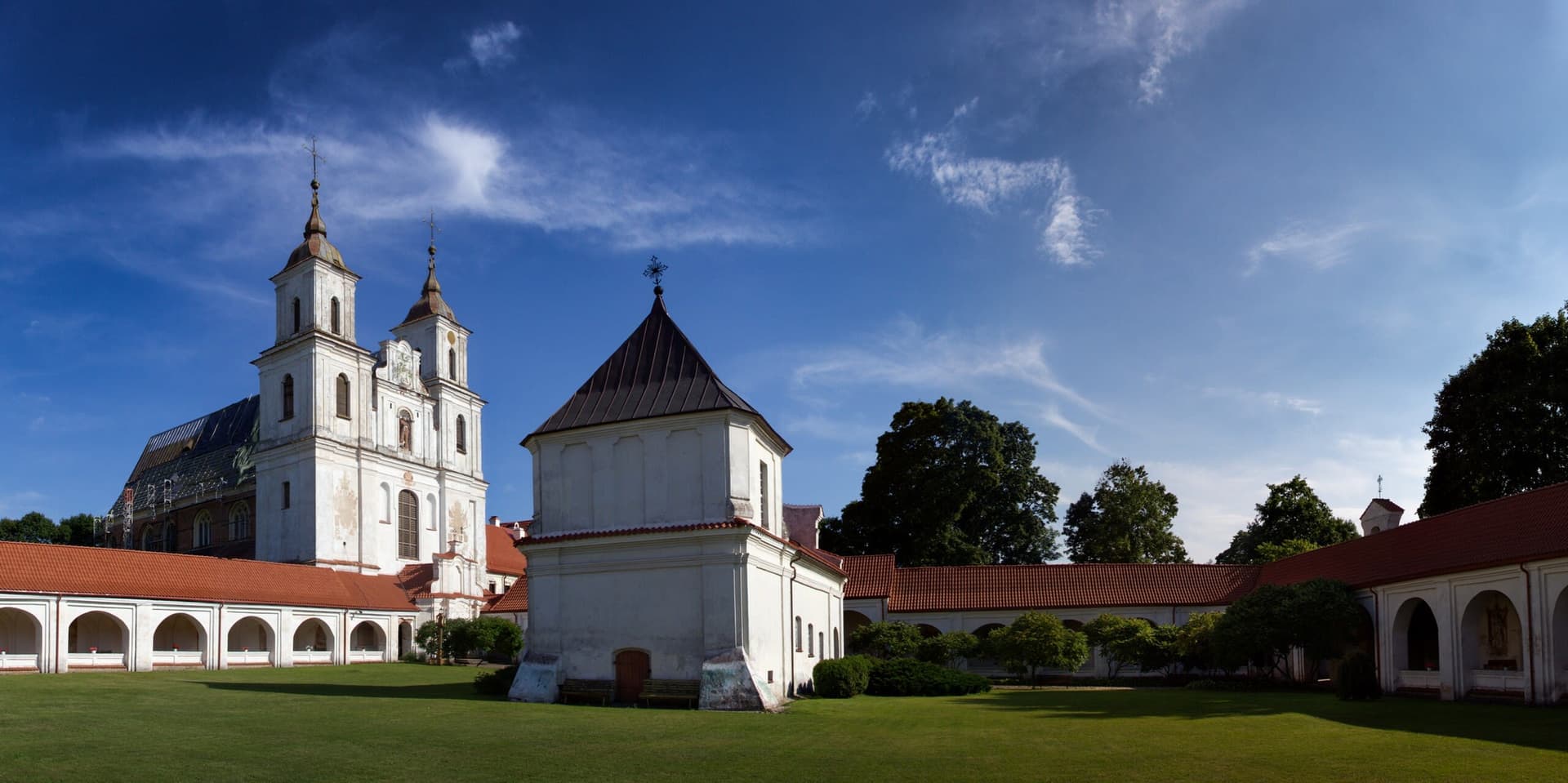
Tytuveṅai Church and Monastery, Lithuania
Tytuvėnai, Šiauliai County, Lithuania
48.4 km away
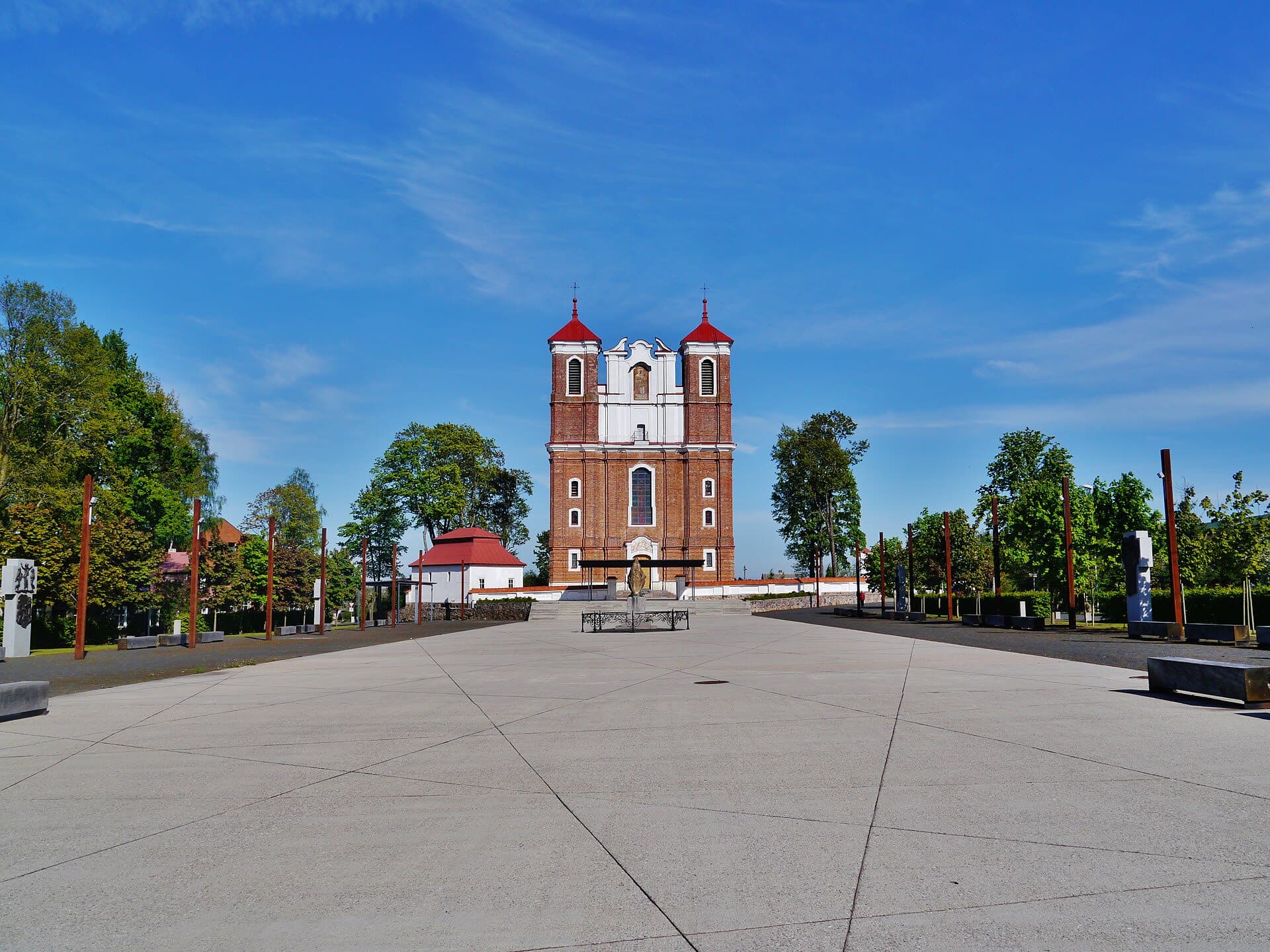
Basilica of the Nativity of the Blessed Virgin Mary, Siluva
Šiluva, Kaunas County, Lithuania
55.2 km away
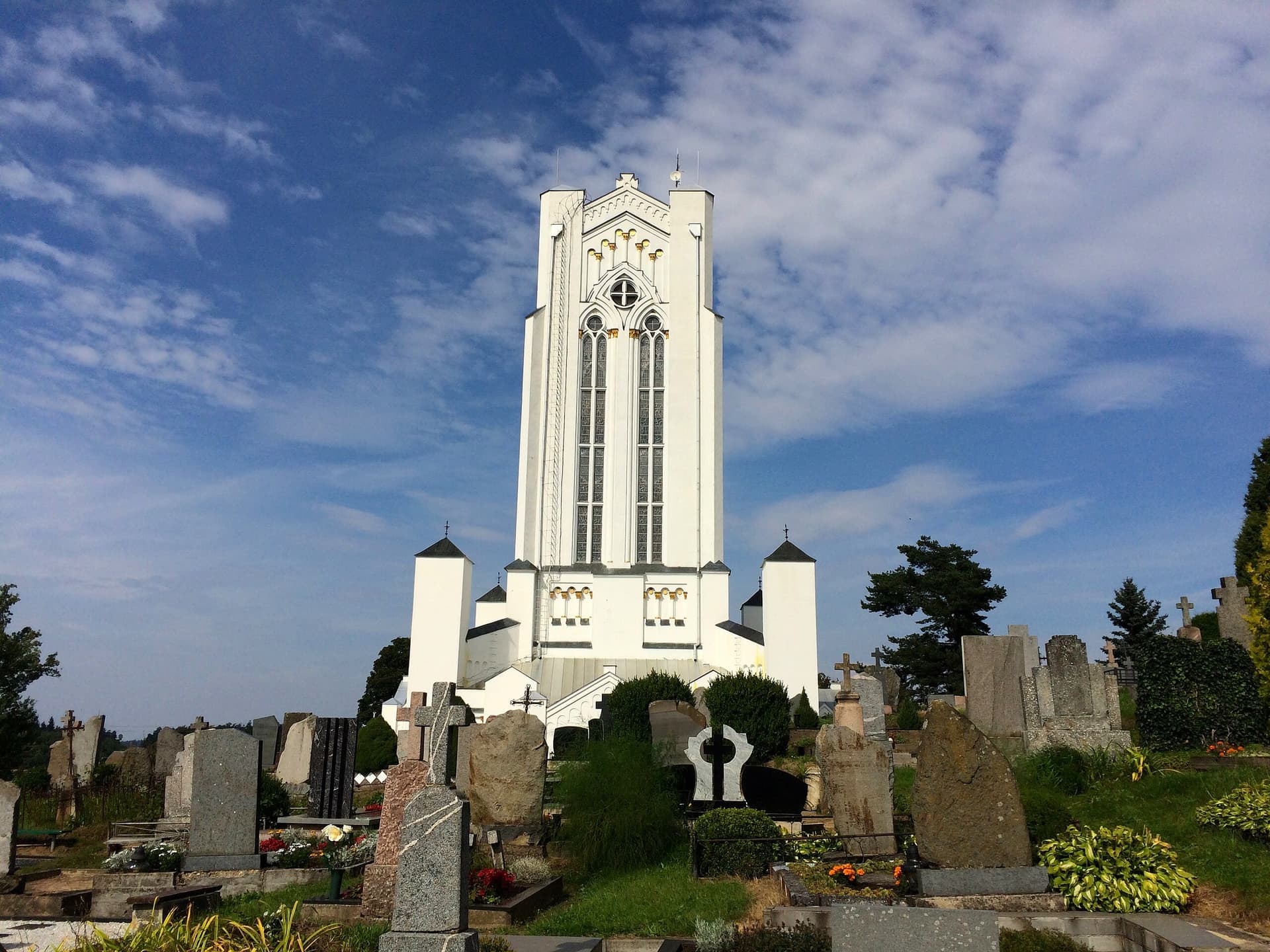
Our Lady of Šiluva (Our Lady of the Pine Woods), Šiluva, Lithuania
Šiluva, Kaunas County, Lithuania
55.3 km away