City on the Magdalensberg
Where Celts, Romans, and Slavs each recognized the same mountain as sacred ground
Magdalensberg, Kärnten, Austria
At A Glance
- Coordinates
- 46.7247, 14.4294
- Suggested Duration
- Two to four hours allows thorough exploration of the archaeological park and summit. Additional time should be allotted for the Celtic Tavern, which serves local Carinthian cuisine near the park entrance.
- Access
- The Magdalensberg is located in the municipality of Magdalensberg, Carinthia, Austria, on the edge of the Zollfeld plain. It lies approximately fifteen to twenty kilometers from Klagenfurt, the Carinthian capital, and is accessible by car. The archaeological park operates as a branch of the State Museum of Carinthia (Landesmuseum fur Karnten). An entrance fee is required, and family tickets are available. The mountain summit and church can also be visited independently of the archaeological park.
Pilgrim Tips
- The Magdalensberg is located in the municipality of Magdalensberg, Carinthia, Austria, on the edge of the Zollfeld plain. It lies approximately fifteen to twenty kilometers from Klagenfurt, the Carinthian capital, and is accessible by car. The archaeological park operates as a branch of the State Museum of Carinthia (Landesmuseum fur Karnten). An entrance fee is required, and family tickets are available. The mountain summit and church can also be visited independently of the archaeological park.
- No specific dress code for the archaeological park. Comfortable walking shoes recommended for mountain terrain. Layers and rain gear advisable for changeable mountain weather. Modest dress appropriate if visiting the summit church during services.
- Photography is generally permitted throughout the archaeological park and summit area.
- The Magdalensberg is primarily an archaeological and heritage site. No active religious community maintains the ancient practices described here. Approach the summit church with appropriate respect if services are being conducted.
Overview
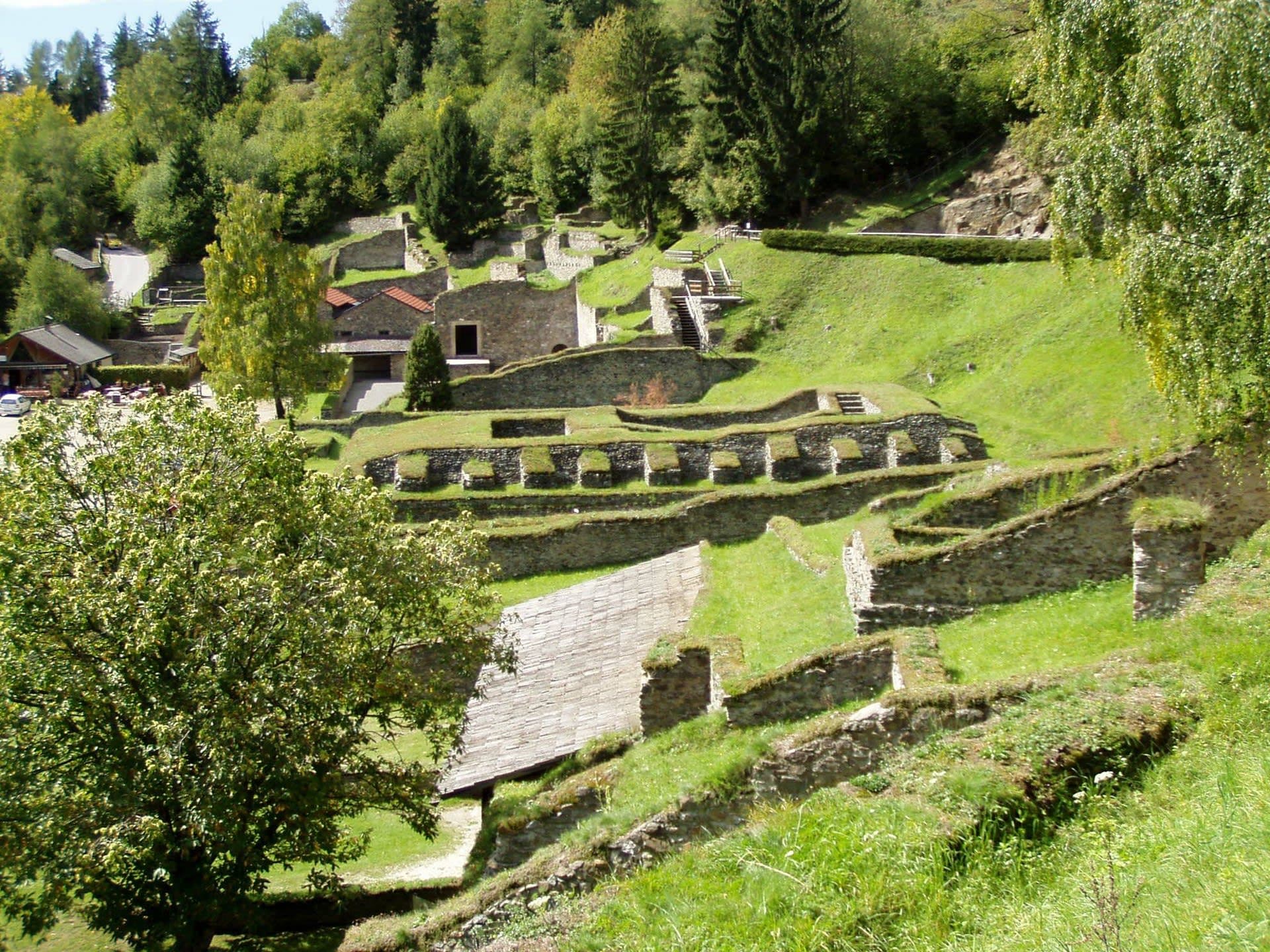
Rising above the Zollfeld plain in southern Carinthia, the Magdalensberg holds the remains of what was likely the royal capital of the Celtic Kingdom of Noricum and, later, the earliest Roman administrative settlement on Austrian soil. Abandoned in the mid-first century CE when its population moved to Virunum in the valley below, the mountain carried its sacred status through Slavic and Christian eras. Today an open-air archaeological park reveals forum temples, merchant quarters, frescoed walls, and the layered traces of a place that served as sanctuary, trading hub, and seat of political power for more than three centuries.
Four cultures, spanning more than two thousand years, looked at the same mountain and reached the same conclusion: this place is set apart. The Celts of Noricum established a hilltop sanctuary here sometime in the third century BCE, one whose spiritual authority was so recognized that it guaranteed safety to everyone who entered its radius. Roman merchants arrived and built their trading colony not despite the sacred precinct but because of it. Slavic peoples, centuries after the settlement's abandonment, carved a three-headed stone representing Triglav and continued the mountain's role as a place of worship. A Late Gothic church now stands on the summit, its walls incorporating Roman marble blocks, a material thread connecting the present to the deep past.
What draws visitors today is not any single layer but the accumulation of all of them. The archaeological park spreads across four hectares of the mountain's southern slope, exposing the bones of a settlement that once rivaled cities far to the south. Forum buildings, residential quarters, bath complexes, and workshop areas emerge from the hillside with a clarity that owes much to decades of systematic excavation. Scholars have called this work the most important archaeological undertaking in Austria since the Second World War.
Yet the Magdalensberg resists reduction to its ruins. The mountain itself asserts a presence that the ruins alone do not explain. From the summit, the Carinthian landscape opens in every direction, a panorama of valley and ridge that makes the builders' choice of location immediately comprehensible. To stand here is to understand, without argument, why successive cultures looked upward to this peak and saw something worth consecrating.
Context And Lineage
The Magdalensberg settlement served as the likely royal capital of the Celtic Kingdom of Noricum from the third century BCE, became the first Roman administrative center in present-day Austria, and was abandoned around 45-50 CE when the capital moved to Virunum. Subsequent Slavic and Christian use preserved the mountain's sacred status.
The Celtic Norici established their hilltop settlement on the Magdalensberg by the third century BCE, though the mountain may have held sacred significance even earlier. The Norici were part of the Kingdom of Noricum, a confederation of thirteen Celtic tribes that unified around 200 BCE, forming what historians describe as the first state structure on Austrian soil. The mountain served simultaneously as royal seat, sanctuary, and center of the iron trade that made Noricum famous throughout the ancient world.
The settlement's relationship with Rome began not through conquest but through commerce. Around 170 BCE, the Kingdom of Noricum established a formal relationship of hospitium publicum with Rome, a diplomatic agreement of mutual hospitality. Roman merchants from Aquileia, drawn by the legendary quality of Noric iron and steel, established a trading colony on the Magdalensberg. They built within the sanctuary's protective radius because the Celtic sacred precinct guaranteed their safety. Stone buildings appeared by approximately 30 BCE, and the settlement took on an increasingly Roman character while retaining its Celtic foundations.
In 1502, a life-size bronze statue of a youth was discovered at approximately one thousand meters altitude. The Youth of Magdalensberg, as it came to be known, caused a European sensation. A Roman copy of a fifth-century BCE Greek athlete statue, it may have been adapted to represent the Celtic war god Mars Latobius through the addition of new attributes. The original is now in Vienna's Kunsthistorisches Museum, with a replica at the site. The statue's discovery signaled the archaeological wealth that systematic excavation would later confirm.
The settlement's end came not through destruction but through administrative reorganization. Around 45-50 CE, the provincial capital was transferred to the newly founded Virunum in the Zollfeld below. The mountain settlement was abandoned, its population relocating to the valley. But abandonment by one culture did not mean abandonment by all. Slavic peoples adopted the summit for worship of Triglav in the eighth and ninth centuries, and the construction of the summit church eventually Christianized the site.
The Magdalensberg's spiritual lineage passes through four distinct traditions. The Celtic Norici established the original sanctuary and maintained worship of Belenus and Mars Latobius. Roman religious practice layered emperor cult worship, Mercury veneration, and syncretic forms such as Isis Noreia onto the existing sacred landscape. After centuries of abandonment, Slavic Carantanian peoples adopted the summit for Triglav worship and initiated the four-hills pilgrimage tradition. Christianity absorbed and transformed these earlier practices, with the summit church and the Christianized pilgrimage representing the most recent expression of the mountain's sacred character.
The Norici
Celtic people who established the hilltop settlement as royal capital and sacred sanctuary
Belenus (Belinus)
Patron deity of the Norici, associated with light and fire, worshipped at the hilltop sanctuary
Pavle Zablatnik
Ethnologist who identified the four-hills pilgrimage from the Magdalensberg as pre-Christian in origin
Why This Place Is Sacred
Over two millennia of continuous sacred recognition across Celtic, Roman, Slavic, and Christian traditions, combined with the mountain's commanding presence and the Celtic concept of an inviolable sanctuary radius, create conditions of layered thinness at the Magdalensberg.
The thinness of the Magdalensberg is cumulative. No single tradition accounts for it. Rather, the place draws its power from the fact that culture after culture, arriving with entirely different cosmologies, independently recognized the mountain as sacred ground.
For the Celtic Norici, the hilltop sanctuary operated under a principle that has no precise modern equivalent. The sacred precinct guaranteed inviolability to all who entered. This was not metaphor. Roman merchants from Aquileia, hundreds of kilometers to the south, established their trading colony here specifically because the sanctuary's spiritual authority ensured their safety among foreign people. Commerce and the sacred were not separate domains on the Magdalensberg; they were interdependent. The patron deity of the Norici was Belenus, associated with light and fire, a figure sometimes paralleled with Apollo in Greco-Roman understanding.
When Noricum was peacefully incorporated into the Roman Empire, the sacred landscape absorbed new layers rather than being erased. Temples to Divus Augustus and Dea Roma rose in the forum, establishing what scholars identify as the earliest known emperor cult in present-day Austria. In the commercial quarters, merchants carved niches for Mercury, the god of trade, in the very rooms where they conducted business. Over three hundred graffiti referencing transactions were found scratched into the walls of these shrine rooms, evidence of a world where devotion and daily commerce occupied the same space without contradiction.
After the settlement's abandonment around 45-50 CE, the mountain fell silent for centuries, but not permanently. Slavic peoples of the Carantanian period adopted the summit as a site for worship of Triglav, the three-headed deity. A carved stone head from this period was discovered here. Ethnologist Pavle Zablatnik identified a four-hills pilgrimage tradition departing from the Magdalensberg peak as pre-Christian in origin, first absorbed into Slavic culture and later Christianized. The tradition persists in altered form today.
The Late Gothic summit church dedicated to Saints Helena and Magdalena represents the most recent layer. Roman marble blocks embedded in its walls create a physical continuity with the ancient settlement below, a tangible reminder that the Christian presence here is built upon foundations both literal and spiritual.
What makes the Magdalensberg compelling as a thin place is precisely this succession. Each culture arrived independently, yet each responded to the same mountain with the same impulse: to set this place apart, to mark it as different from the surrounding landscape, to locate here the intersection of human and more-than-human concerns.
The Celtic Norici established the hilltop as a sanctuary whose sacred radius guaranteed protection and inviolability. This spiritual authority became the foundation for both political power and international commerce.
From Celtic sanctuary to Roman administrative and commercial center, through centuries of abandonment, to Slavic sacred summit, and finally to Christian pilgrimage church. Each transition preserved the mountain's sacred status while transforming its expression. The archaeological park, operating since the mid-twentieth century, has added a contemplative dimension by making the layered history visible and walkable.
Traditions And Practice
The Magdalensberg functioned as a site of Celtic sanctuary worship, Roman emperor cult and commercial devotion, and Slavic sacred mountain practice. Today it operates as an archaeological park with occasional services at the summit church.
The Celtic rituals practiced on the Magdalensberg remain only partially understood. The hilltop sanctuary functioned under principles of sacred inviolability, where the precinct's spiritual authority guaranteed protection to all who entered. Worship centered on Belenus, the patron deity associated with light and fire, and Mars Latobius, a Celtic war god. Evidence of ritual activity includes three mountain pits discovered in the temple district, one of which contained a deliberately cut human skull, suggesting practices of ritual deposition whose precise meaning scholars continue to debate.
Roman religious practice at the settlement was both formal and quotidian. The forum temple, begun after the death of Augustus in 14 CE, was dedicated to Divus Augustus and Dea Roma, establishing what evidence suggests was the earliest emperor cult in present-day Austria. In the commercial quarters, Mercury held sway. Merchants carved devotional niches in the walls of their trading rooms and offices, creating intimate shrines where business and devotion coexisted. The more than three hundred graffiti found on these walls record a world in which recording a debt and invoking divine favor occupied the same gesture.
Syncretic worship also flourished. Inscriptions to Isis Noreia, a deity blending the Egyptian goddess Isis with the local Norican goddess Noreia, demonstrate the creative theological synthesis that occurred when cultures met on sacred ground.
The Slavic religious use of the summit is attested by the three-headed stone of Magdalensberg, dated to the eighth or ninth century, representing the chief deity Triglav. Zablatnik's identification of the four-hills pilgrimage as pre-Christian in origin suggests structured ritual movement across the landscape, with the Magdalensberg peak as the point of departure.
The site functions primarily as an archaeological park and open-air museum, managed as a branch of the State Museum of Carinthia. Visitors explore the ruins at their own pace or join guided tours that provide historical context. The summit church of Saints Helena and Magdalena hosts occasional services, though regular worship is not a primary feature of the site. The Christianized four-hills pilgrimage may still be practiced locally in some form, though details of its current observance are not well documented.
Walk the archaeological park slowly, giving each area time to register. Begin with the forum and temple district to understand the civic and sacred center of the settlement. Move through the commercial quarters, where the Mercury niches and trading graffiti reveal the intimate relationship between commerce and devotion. Allow the ascent to the summit to create a natural shift in attention from intellectual engagement to something more contemplative. At the summit church, notice the Roman marble blocks in the walls. Spend time with the panoramic view, letting the relationship between mountain and valley become visible.
For those drawn to the site's layered sacred history, sitting quietly at the summit and reflecting on the succession of traditions that recognized this same place as sacred can be a powerful exercise in contemplation.
Celtic Religion (Noricum)
HistoricalThe Magdalensberg served as the likely royal capital and primary sanctuary of the Celtic Kingdom of Noricum from the third century BCE. The hilltop sanctuary guaranteed inviolability to all who entered its sacred radius, a spiritual authority so recognized that it underpinned both political power and international commerce. The patron deity Belenus, associated with light and fire, and the war god Mars Latobius were central to worship here.
Hilltop sanctuary worship of Belenus and Mars Latobius, maintenance of the sacred inviolable precinct, ritual shaft deposits including a deliberately placed human skull in the temple district, and veneration at the mountain summit.
Roman Religion
HistoricalFollowing Noricum's peaceful incorporation into the Roman Empire, Roman religious practices were layered onto the existing Celtic sacred landscape. The forum temple, dedicated to Divus Augustus and Dea Roma, established what evidence suggests was the earliest emperor cult in present-day Austria. Mercury worship in the commercial quarters reflected the settlement's importance as a trading hub. Syncretic forms such as Isis Noreia demonstrate creative theological blending between Roman, Egyptian, and Celtic traditions.
Emperor cult worship at the forum temple, Mercury veneration in commercial quarter niches, inscription and dedication offerings by merchants, syncretic worship blending Roman and Celtic deities.
Slavic Paganism (Carantanian)
HistoricalAfter centuries of abandonment, the mountain was adopted by Slavic Carantanian peoples as a religious center. The three-headed stone of Magdalensberg, dated to the eighth or ninth century, represents the Slavic chief deity Triglav. The four-hills pilgrimage tradition departing from the Magdalensberg peak has been identified as pre-Christian in origin, demonstrating the mountain's continued role as a sacred summit across cultural transitions.
Worship of Triglav at the mountain summit, four-hills pilgrimage tradition originating from the peak.
Christianity (Catholic)
ActiveThe Late Gothic summit church dedicated to Saints Helena and Magdalena represents the Christianization of a mountain that had been sacred to Celts, Romans, and Slavs. Roman marble blocks incorporated into the church walls create a material connection to the ancient settlement. The four-hills pilgrimage tradition continues in Christianized form.
Occasional services at the summit church, Christianized four-hills pilgrimage.
Experience And Perspectives
Visitors encounter a hillside archaeological park with remarkably preserved Roman ruins, frescoed walls, and forum buildings, culminating in a summit church with panoramic views across the Carinthian landscape. The experience is one of walking through time across four hectares of layered history.
The approach to the Magdalensberg sets the tone. The mountain rises prominently from the Zollfeld plain, its summit visible from a considerable distance, and even before reaching the archaeological park, visitors begin to understand why this particular hill drew the attention of the ancients. The landscape has a legibility to it: the mountain commands, the valley yields, and the relationship between the two shaped millennia of human settlement.
The archaeological park occupies the southern slope, and entering it means stepping into an excavated world of surprising completeness. The forum area reveals the civic heart of a settlement that was, for a period, the most important in the eastern Alps. Temple foundations mark where offerings were made to Divus Augustus and Dea Roma. Nearby, the outlines of commercial and residential buildings trace the daily life of a population that included Celtic ironworkers, Roman merchants, and administrators of a hybrid society.
The frescoes are an unexpected reward. Preserved Roman wall paintings, sheltered in display structures, rival in quality those from sites far more famous. Visitors who arrive expecting modest provincial remains often find themselves standing before detailed decorative programs that speak of wealth, sophistication, and cultural ambition. The colors persist across two thousand years with a vividness that can feel startling.
In the commercial quarters, where merchants once traded the prized Noric iron, the niches carved for Mercury are still visible. The graffiti scratched into walls by traders and workers have been documented by archaeologists, more than three hundred individual inscriptions that record transactions, debts, and prayers in the same breath. Standing in these rooms, the boundary between the commercial and the devotional dissolves. This was not a contradiction for the people who lived here.
The ascent to the summit adds a physical dimension to the experience. The gradient is moderate but steady, and the effort creates a natural transition from archaeological inquiry to something more reflective. At the top, the Late Gothic church of Saints Helena and Magdalena occupies the highest point. Its walls incorporate Roman-era marble, and the building itself stands where Celtic, Roman, and Slavic sacred activity once took place. Inside, the simplicity of the space contrasts with the complexity of what lies beneath.
The panoramic view from the summit is the site's quiet culmination. The Zollfeld stretches below, where Virunum once stood as the Roman provincial capital that inherited the Magdalensberg's population and purpose. The mountains of Carinthia ring the horizon. On a clear day, the view extends for many kilometers in every direction, and the sense of elevation, both physical and contemplative, is difficult to separate from the knowledge of everything this summit has witnessed.
Visitors frequently describe the Magdalensberg as a discovery. It lacks the crowds of major archaeological destinations, and the absence of other visitors can amplify the sense of connection. Walking through the ruins without competition for space or silence allows a contemplative pace that larger sites rarely afford.
The archaeological park covers the southern slope of the Magdalensberg, with the forum and main excavation areas in the lower sections and the summit church at the peak. A network of paths connects the excavated areas, ascending gradually toward the summit. The on-site Celtic Tavern provides refreshments near the park entrance.
The Magdalensberg exists at the intersection of Celtic, Roman, Slavic, and Christian history, each tradition adding its own layer of meaning to a mountain that seems to invite consecration. Scholarly, traditional, and alternative perspectives each illuminate different dimensions of the site's significance.
Archaeological consensus recognizes the Magdalensberg excavations as the most important archaeological undertaking in Austria since the Second World War. Scholars confirm the settlement as the likely royal capital of the Celtic Kingdom of Noricum and a major center for the Ferrum Noricum iron trade, which was renowned throughout the ancient world for its quality. The settlement represents a remarkable case of Celtic-Roman cultural integration rather than military conquest. Noricum's incorporation into the Roman Empire was largely peaceful, and the archaeological record shows Roman and Celtic elements coexisting and blending rather than one displacing the other.
The discovery of the oldest known use of steel in concrete, dated to approximately 15 CE, highlights the settlement's technological sophistication and its importance to the study of ancient engineering. The more than three hundred commercial graffiti found in the trading quarters provide an unusually detailed picture of daily economic life in a Roman provincial settlement.
One scholarly debate concerns the site's possible identification with the legendary Noreia, where Roman forces suffered a significant defeat at the hands of Germanic tribes in 113 BCE. However, the absence of second-century BCE archaeological finds at the Magdalensberg has weakened this theory considerably. The relationship between the Celtic settlement's name and the later Roman city of Virunum also remains uncertain, with some archaeologists suggesting Virunum may have adopted the Celtic name.
No living Celtic or Roman religious community maintains continuity with the ancient practices conducted on the Magdalensberg. However, the site's spiritual legacy persists through indirect channels. The Christianized four-hills pilgrimage tradition, identified by ethnologist Pavle Zablatnik as pre-Christian in origin, represents a practice that has passed through Slavic and Christian transformations while maintaining its spatial relationship to the Magdalensberg summit. The three-headed Triglav stone connects the site to Slavic religious heritage. Local Carinthian identity draws on the deep history represented by the Magdalensberg as the cradle of the region's political and cultural development, and the mountain occupies a prominent place in regional consciousness even among those who never visit the archaeological park.
Some interpret the mountain's multi-millennial sacred status as evidence of an inherent quality of the place itself, a mountain that seems to call to every culture that encounters it. The Celtic concept of the inviolable sanctuary radius resonates with contemporary ideas about sacred geography, suggesting that certain places possess qualities that human beings across time and culture reliably recognize. The layering of traditions might be understood not as coincidence but as successive human recognitions of the same fundamental reality, each culture bringing its own vocabulary to name what the mountain itself provides.
The original Celtic name of the settlement remains unknown, a significant gap given the site's importance. Whether the Magdalensberg was the legendary Noreia remains unresolved, and the absence of second-century BCE archaeological evidence makes confirmation unlikely with current data. The exact nature of the Celtic hilltop sanctuary rituals, including the meaning of the deliberately placed human skull found in one of the mountain pits, is not fully understood. The transition from Slavic to Christian use of the summit, and the precise mechanism of what Zablatnik described as inculturation, deserves further scholarly investigation. Pre-Celtic use of the mountain as a sacred site is speculated but not archaeologically confirmed.
Visit Planning
The archaeological park operates seasonally from approximately May through October. Located near Klagenfurt in Carinthia, Austria, it requires two to four hours for a thorough visit.
The Magdalensberg is located in the municipality of Magdalensberg, Carinthia, Austria, on the edge of the Zollfeld plain. It lies approximately fifteen to twenty kilometers from Klagenfurt, the Carinthian capital, and is accessible by car. The archaeological park operates as a branch of the State Museum of Carinthia (Landesmuseum fur Karnten). An entrance fee is required, and family tickets are available. The mountain summit and church can also be visited independently of the archaeological park.
Klagenfurt, approximately fifteen to twenty kilometers away, offers the full range of accommodations. Smaller guesthouses and inns can be found in the villages surrounding the Magdalensberg. The site is best visited as a day trip from Klagenfurt or as part of a broader exploration of the Zollfeld area.
Standard archaeological site protocols apply. Do not touch or remove remains. Stay on designated paths. Respect the summit church during any services.
The Magdalensberg welcomes visitors with the openness characteristic of well-maintained European archaeological parks. No particular religious protocol applies, as the site does not host regular active worship. The etiquette here is primarily one of preservation and respect for the physical remains of cultures separated from us by centuries and millennia.
The archaeological remains are irreplaceable. Walls, frescoes, mosaics, and structural elements should not be touched, leaned against, or used as seating. The temptation to make physical contact with ancient surfaces is understandable, but the cumulative effect of many hands accelerates deterioration. Designated viewing areas and paths exist for a reason.
The summit church represents the one space on the mountain where active religious observance may occasionally occur. If services are being conducted, maintain appropriate quiet and defer to worshippers. At other times, the church is accessible to all visitors.
The mountain terrain requires practical attention. Comfortable walking shoes are essential, as paths can be uneven and the ascent to the summit involves moderate elevation gain. Weather in the Carinthian mountains can change quickly, so carrying layers and rain protection is advisable even on clear days.
Photography is generally permitted throughout the park and summit area, offering excellent opportunities to document the site's archaeological features and panoramic landscapes.
No specific dress code for the archaeological park. Comfortable walking shoes recommended for mountain terrain. Layers and rain gear advisable for changeable mountain weather. Modest dress appropriate if visiting the summit church during services.
Photography is generally permitted throughout the archaeological park and summit area.
{"Do not touch or remove archaeological remains","Stay on designated paths within the archaeological park","Respect the summit church if services are being conducted","Follow seasonal opening hours and entrance requirements"}
Sacred Cluster
Nearby sacred places create the location cluster described in the growth plan. This block is intentionally crawlable and links into the wider regional graph.
Black Madonna of Maria Loretto Peninsula
Klagenfurt, Carinthia, Austria
14.6 km away
Basilica Maria Loreto, St. Andra
St. Andrä im Lavanttal, Carinthia, Austria
30.9 km away
Black Madonna of Lavanttal
Sankt Andrä, Carinthia, Austria
31.7 km away
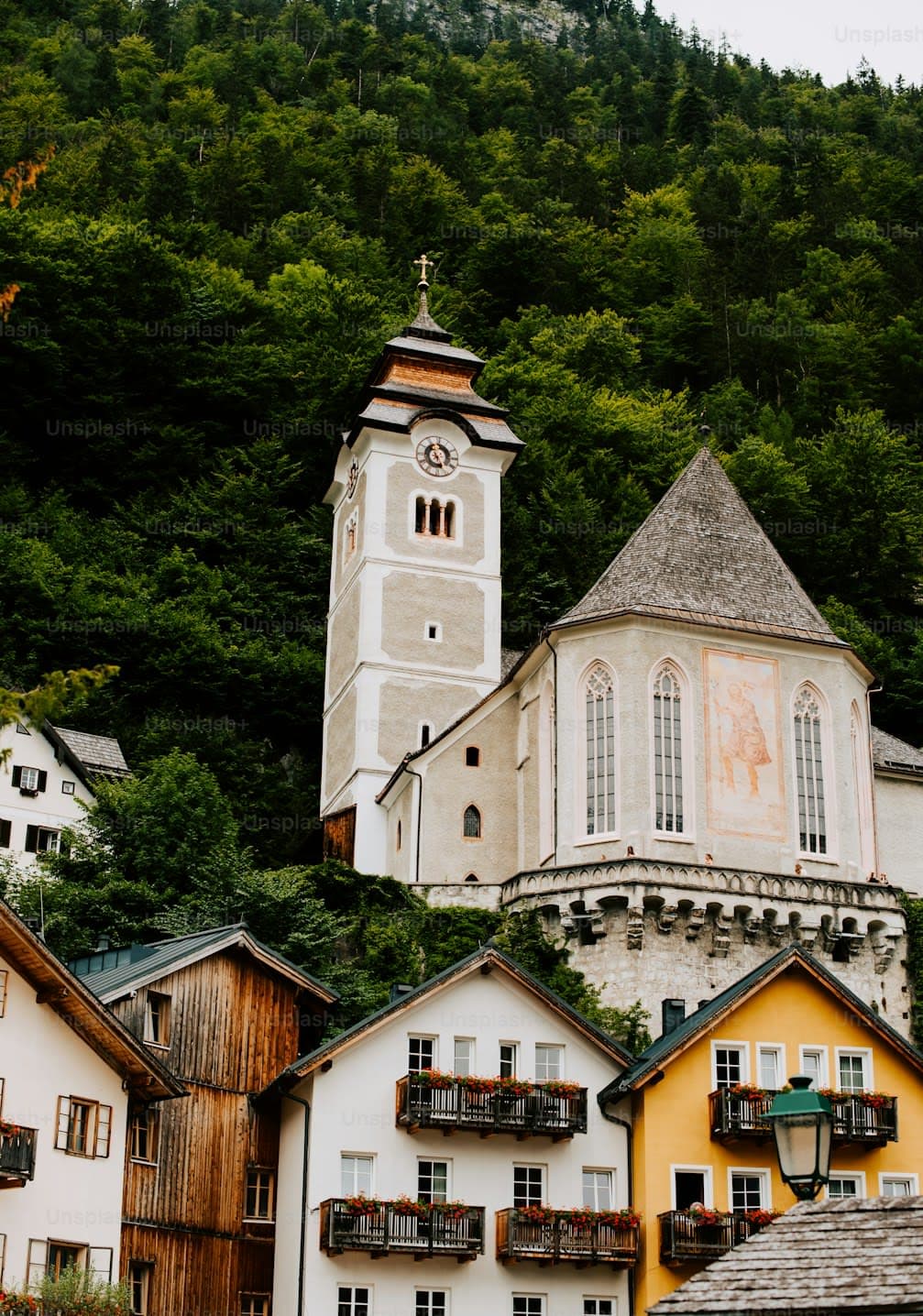
The Parish Church of the Assumption (Maria am Berg), Hallstatt
Hallstatt, Oberösterreich, Austria
110.4 km away