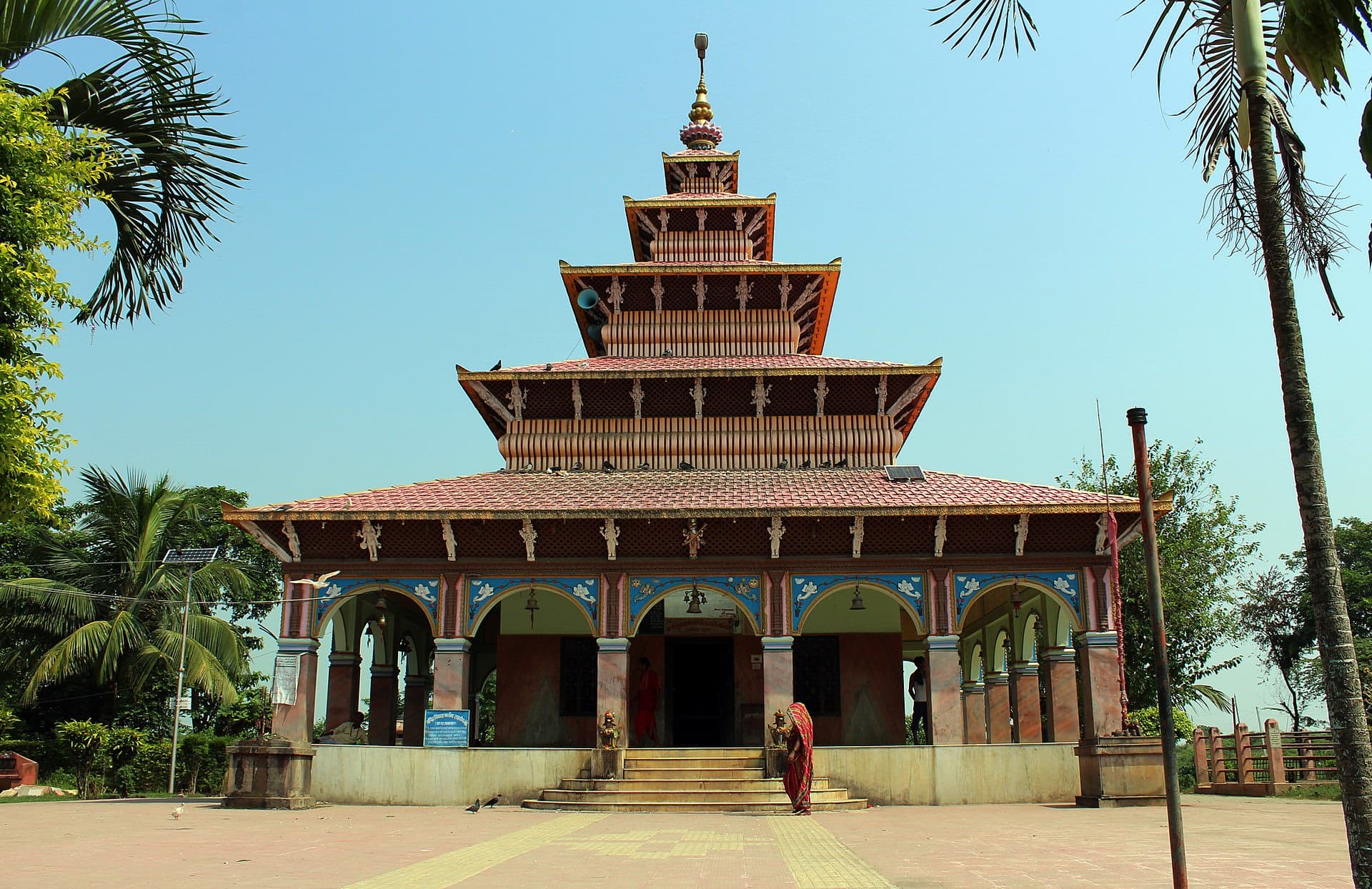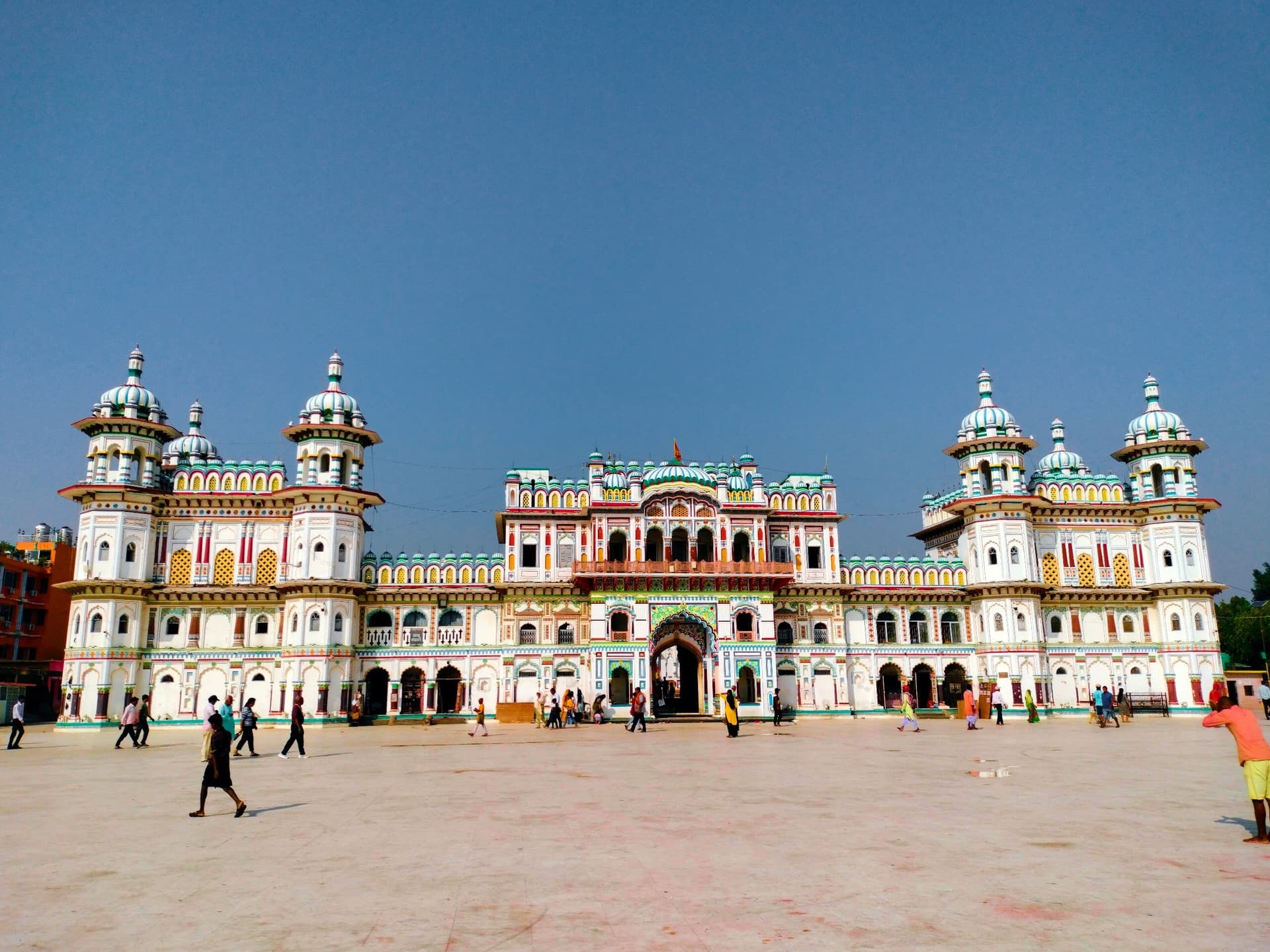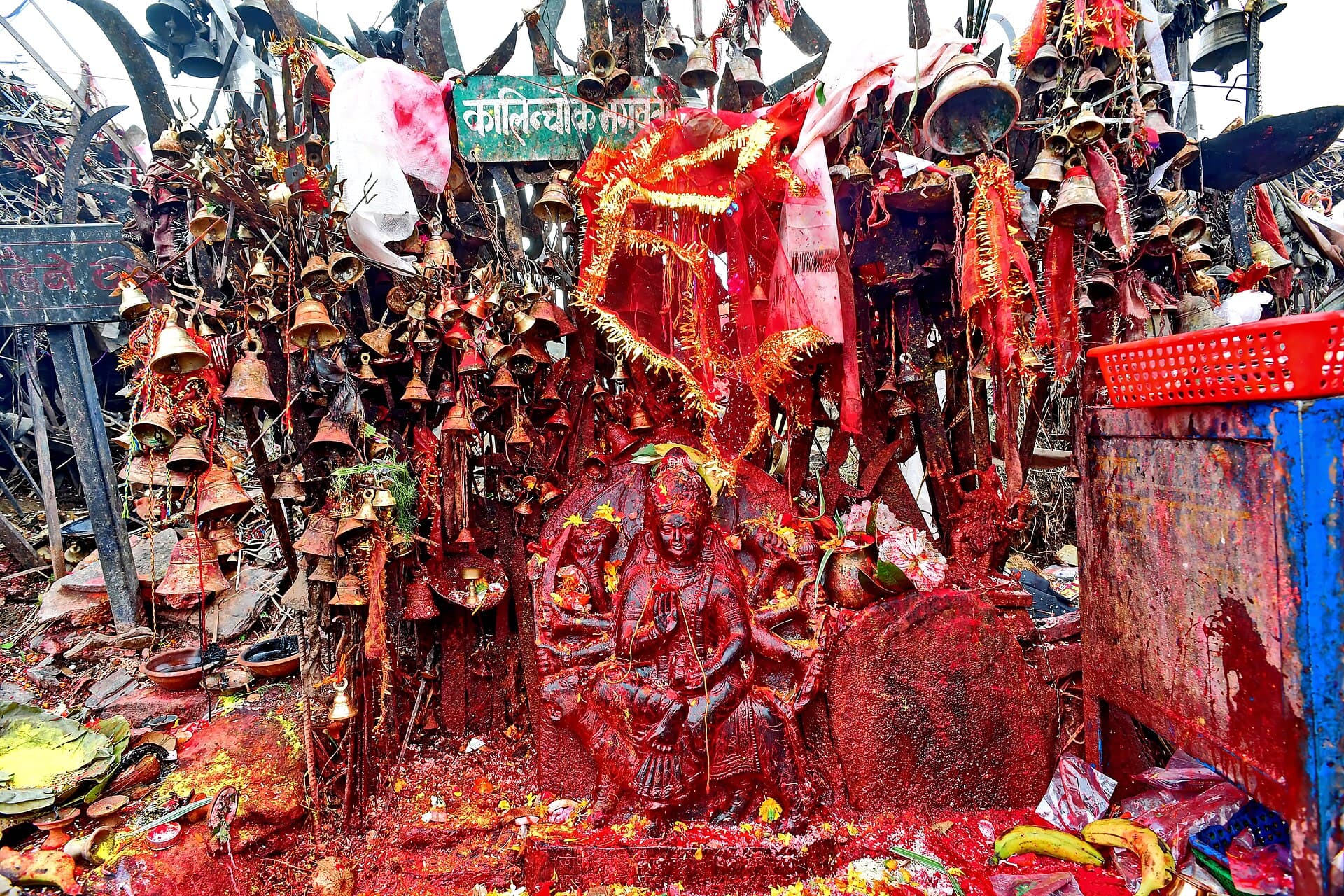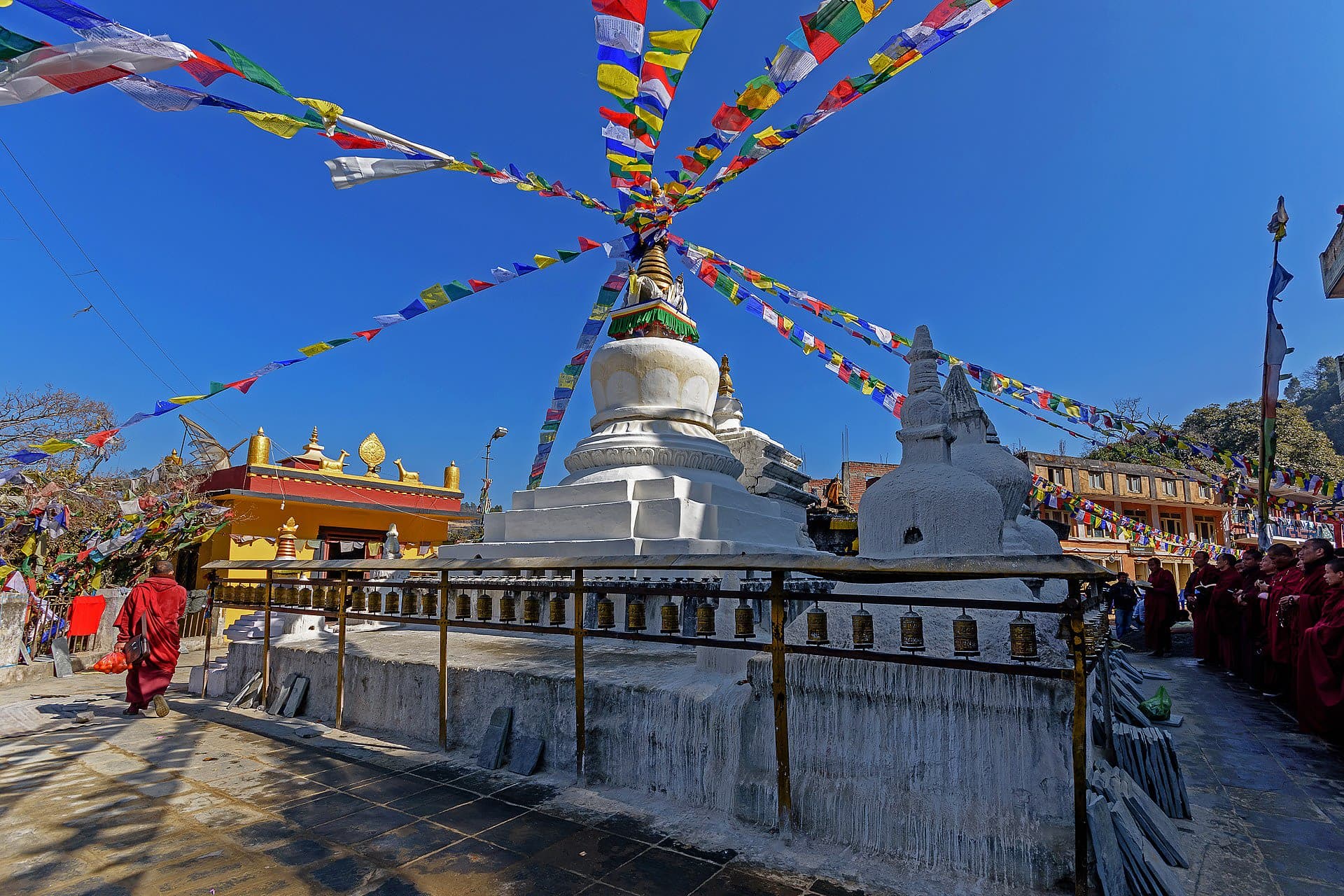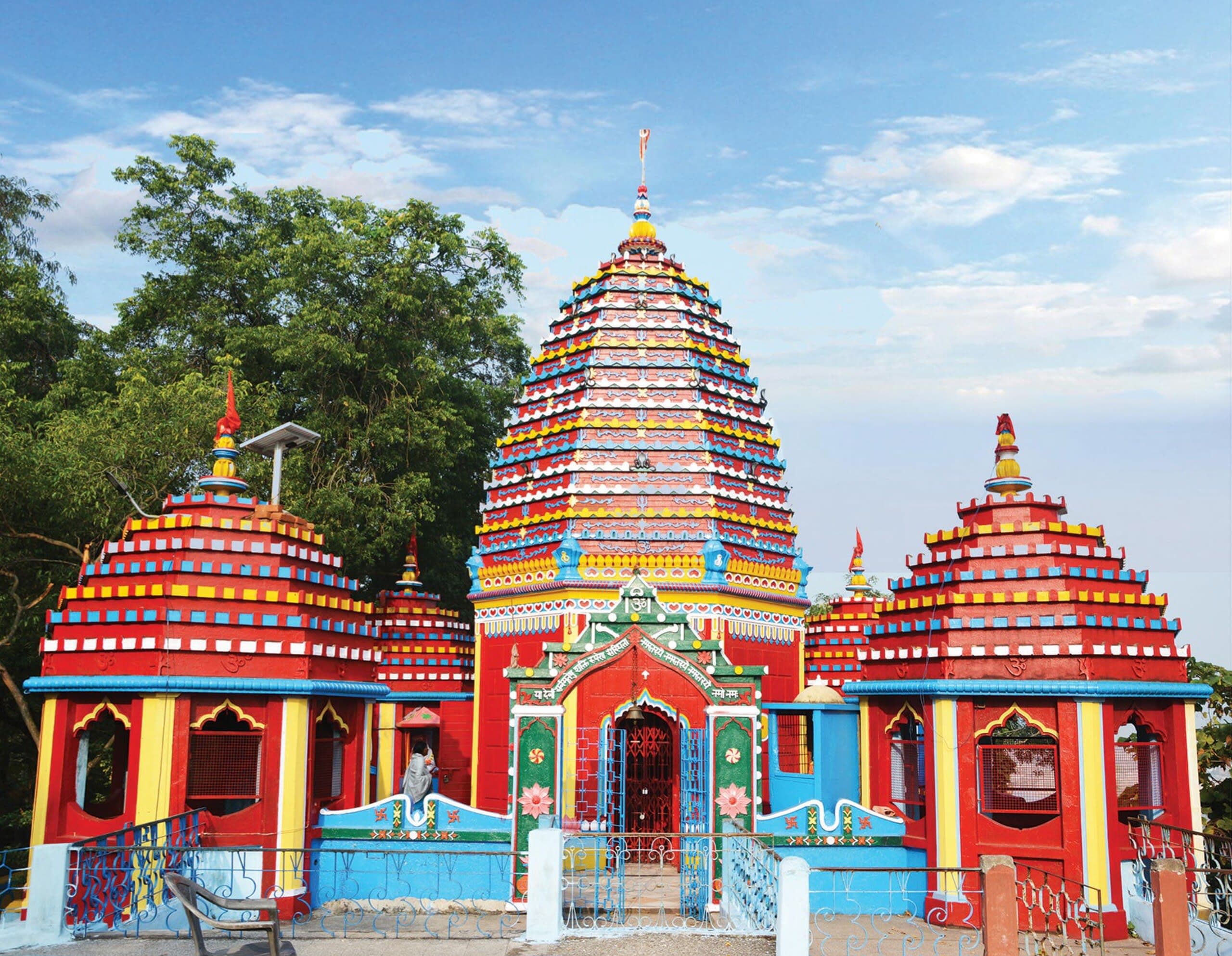
Chinnamasta
Where the self-decapitated goddess drinks her own blood and feeds her devotees
Chhinnamasta, Madhesh Province, Nepal
At A Glance
- Coordinates
- 26.4513, 86.7311
- Suggested Duration
- Two to three hours allows for darshan and time at the river confluence. A full day permits exploration of the temple complex, boat rides on the river, and unhurried absorption of the site. Those attending for new moon practices may wish to arrange overnight accommodation.
Pilgrim Tips
- Modest, conservative clothing is required. Traditional Indian dress is recommended: for women, sari, churidar, kurti, or lehenga covering shoulders and knees; for men, dhoti and kurta, or at minimum long pants and shirts with sleeves. Western clothing is permitted if sufficiently modest. Avoid clothing with images that might be considered disrespectful.
- General photography is permitted in the temple grounds. Restrictions may apply in the inner sanctum and during rituals. Ask before photographing the deity or worshippers. Do not use flash. Some practitioners, particularly those engaged in tantric work, should not be photographed without consent.
- Do not attempt tantric practices without proper initiation and guidance. The fierce forms of the goddess require trained relationship. Casual experimentation invites difficulty. Animal sacrifice continues at this temple. If this practice disturbs you, consider whether you should visit on Tuesdays, Saturdays, or during Kali Puja when sacrifices occur. The temple does not soften traditional practice for visitor comfort. Women should not touch priests. During menstruation, traditional restrictions may apply. Ask locally if uncertain. Do not photograph the deity without permission or during rituals. Some practices are not for outside documentation.
Overview
At the confluence of sacred rivers in Jharkhand, Chhinnamasta Temple honors the most radical form of the Divine Mother: a goddess who severs her own head to nourish her attendants. As the third most important tantric center in India after Kamakhya and Tarapith, this Shakti Peetha draws practitioners seeking encounters with the fierce face of divinity and the mysteries of ego death.
There are goddesses who comfort. There are goddesses who protect. And then there is Chhinnamasta, who teaches through terror.
She stands upon a copulating couple, her own severed head held in her left hand. Three jets of blood arc from her neck: one feeding each of her two attendants, and one feeding her own decapitated head. The iconography shocks, as it is meant to. This is not comfortable spirituality but confrontation with the nature of existence itself.
At Rajrappa, where the feminine Bhairavi River descends twenty feet to meet the masculine Damodar, the goddess has been worshipped for over a millennium. Some say Sati's head fell here when Vishnu dismembered her corpse. The coincidence with Chhinnamasta's iconography seems too precise to be accidental. The natural landscape embodies what the deity depicts: the active descending into the receptive, life flowing into life.
This is one of India's most powerful tantric sites. On new moon nights, when the temple opens until midnight, practitioners gather for sadhana seeking kundalini awakening. By day, pilgrims come for darshan, marriages, and vow fulfillment. The Santal tribes still bring ancestral ashes for immersion. Animal sacrifice continues on sacred days. Nothing here has been sanitized for spiritual tourism.
Chhinnamasta does not offer easy answers. She asks whether you can face the truth that life consumes itself, that creation and destruction are inseparable, that the ego must die for liberation to dawn. Those who come seeking transformation find it—though rarely in the form they expected.
Context And Lineage
Chhinnamasta Temple at Rajrappa is dedicated to the sixth Mahavidya, the most radical of the ten great wisdom goddesses of tantric Hinduism. As a Shakti Peetha where Sati's head is said to have fallen, the site holds special significance within Shakta pilgrimage. The temple has served tantric practitioners for over a millennium, though the current structure replaced an earlier temple destroyed at an unknown date.
Two origin narratives converge at this site. The first is the story of Sati, the devoted wife of Shiva. When her father Daksha insulted Shiva, Sati immolated herself in grief and rage. Shiva, mad with sorrow, began the tandava, the cosmic dance of destruction, carrying her corpse across the universe. To end the devastation, Vishnu hurled his Sudarshana Chakra, cutting Sati's body into fifty-one pieces that fell across the subcontinent. Where each piece landed, a Shakti Peetha emerged. At Rajrappa, according to tradition, her head fell.
The second narrative explains Chhinnamasta herself. According to the Pranatosini-tantra, Goddess Parvati once went bathing with her two attendants, Dakini and Varnini. The attendants grew hungry and repeatedly asked for food. When Parvati could not satisfy them, she severed her own head with her fingernail. Three streams of blood spurted forth: one to each attendant, one to her own severed head held in her left hand. She became both sacrifice and sacrificer, food and feeder, death and life.
That the head of Sati would fall at a site later dedicated to the self-decapitated goddess seems too meaningful to be coincidental. Some mysteries remain mysteries.
The site's sacred history extends before recorded time. Santal tribal communities venerated this confluence long before Brahmanical Hinduism arrived. In their folk songs, Rajrappa appears as Thel Kopi Ghat, the water ghat where ancestral ashes return to the cosmic waters. This represents perhaps the oldest continuous tradition at the site, maintained to this day.
The Hindu temple emerged by approximately the 10th century CE, though the exact date remains uncertain. The tantric traditions of Chhinnamasta worship developed alongside broader Shakta movements, placing Rajrappa within a network of power sites including Kamakhya and Tarapith. The original temple was destroyed at some unknown point, but the worship continued, and a new structure rose.
Today, the temple is administered by local authorities and serves multiple communities: initiated tantric practitioners, Shakta pilgrims, families seeking blessings, and Santal groups maintaining ancestral traditions. The lineage is not a single stream but a braided river, multiple traditions flowing together at this confluence.
Chhinnamasta
deity
The sixth of the ten Mahavidyas, the self-decapitated goddess who feeds her attendants and herself with her own blood. She represents the most esoteric aspects of tantric teaching: ego death, the transcendence of desire, the unity of creation and destruction, and the awakening of kundalini energy.
Dakini and Varnini
deity
The two attendants of the goddess who flank her in iconography, drinking the blood that flows from her severed neck. They represent the ida and pingala nadis, the lunar and solar channels of the subtle body, while the goddess's own stream represents the central sushumna.
Kamadeva and Rati
deity
The god and goddess of desire and pleasure, depicted copulating beneath Chhinnamasta's feet. Their presence in the iconography represents both the foundation of desire upon which the goddess stands and its transcendence through her act of self-sacrifice.
Sati
deity
The devoted wife of Shiva whose self-immolation and subsequent dismemberment by Vishnu created the Shakti Peethas. According to tradition, her head fell at Rajrappa, making this site especially appropriate for worship of the self-decapitated goddess.
Why This Place Is Sacred
Chhinnamasta Temple draws its power from the convergence of multiple sacred factors: its recognition as a Shakti Peetha where Sati's head fell, its position at the confluence of masculine and feminine rivers, its status as a premier tantric practice site, and over a millennium of continuous worship. The natural landscape physically embodies the goddess's iconography, as though the earth itself were teaching the same lesson as the deity.
The Shakti Peethas mark places where the body of Goddess Sati fell to earth after Vishnu's chakra dismembered her corpse. At Rajrappa, according to tradition, her head fell. That this site would become dedicated to Chhinnamasta, the self-decapitated goddess, suggests either profound coincidence or a deeper pattern in how sacred geography reveals itself.
The confluence of rivers carries its own teaching. The Bhairavi, named for the fierce goddess form, descends from above in an active, almost aggressive flow. The Damodar receives it below, calm and receptive. In tantric understanding, this mirrors the vipareeta rati depicted in Chhinnamasta's iconography: Shakti as active force above Shiva as passive consciousness. The landscape itself performs the union of opposites.
Practitioners describe Rajrappa as lying on a powerful energetic line, with kundalini energy unusually accessible here. Whether this reflects geology, accumulated centuries of tantric practice, or something beyond conventional measurement, the reports are consistent. On new moon nights especially, the atmosphere intensifies. The veil thins.
Before the temple existed, Santal tribal communities held this place sacred for ancestor veneration. Something in the land itself called forth recognition of its power, long before Hindu cosmology named it. The temple represents a layer upon older layers, each tradition responding to a presence that preceded human interpretation.
After Kamakhya in Assam and Tarapith in Bengal, this is considered the third most important tantric center in India. The ranking speaks to what practitioners have found here across centuries: a site where the most esoteric practices bear fruit, where the fierce feminine can be approached in her most uncompromising form.
The temple appears to have been established around the 10th century CE, though the site's sacredness predates Hindu worship. For tantric practitioners, this was and remains a place for sadhana, the disciplined practice aimed at spiritual liberation. The goddess's form here, a natural rock covered with ashtadhatu (eight-metal alloy), suggests the site chose itself. Humans did not construct the deity; they recognized what was already present and created the temple to honor it.
The original temple was destroyed at some point in history, the date and cause unknown. A new temple was built with the original idol reinstalled. By the 18th century, the site was well-documented as a major Chhinnamasta worship center. Today it serves multiple overlapping communities: tantric practitioners pursuing advanced sadhana, Shakta devotees on pilgrimage, families seeking blessings for marriages and new vehicles, and Santal tribes continuing ancestral ash immersion ceremonies. The temple's vitality has not diminished with modernity but adapted, holding traditional practices within contemporary pilgrimage culture.
Traditions And Practice
Chhinnamasta Temple maintains intensive daily worship with multiple aartis, offerings, and—on sacred days—animal sacrifice. Tantric practitioners perform advanced sadhana on new moon nights when the temple opens until midnight. Pilgrims participate through darshan, offerings, and vow fulfillment, while Santal tribes continue ancestral ash immersion ceremonies at the river confluence.
Traditional worship includes offerings of rice, jaggery, ghee, and camphor, presented during aarti ceremonies throughout the day. Kheer, sweet rice pudding, is offered at noon when the temple briefly closes. Animal sacrifice of goats continues on Tuesdays, Saturdays, and during Kali Puja, maintaining a practice that connects this site to its most ancient layers.
Tantric practitioners perform sadhana aimed at kundalini awakening, approaching the fierce goddess as the force that can shatter egoic limitation. The specific rituals are not publicly disclosed, passed through initiation rather than publication. New moon nights, when the temple opens until midnight, are considered especially potent for this work.
The Santal tribes bring groups called yatri, primarily in December, to immerse ancestral ashes in the Damodar River. For them, the confluence serves as a threshold between worlds, where the departed complete their journey.
Daily worship continues the traditional patterns, with multiple aartis drawing pilgrims throughout the day. Special pujas mark Tuesdays and Saturdays as auspicious days. Major festivals include Makar Sankranti in January, when a large fair brings lakhs of devotees; Navratri in spring and autumn; Gupt Navratri for tantric practitioners; Chhinnamasta Jayanti; Vijayadashami; Durga Puja; Akshaya Tritiya; Vasant Panchami; and Shivaratri.
Beyond religious practice, the temple serves practical functions for local communities. Vehicle consecration is popular, with new owners bringing cars and motorcycles for blessing, believed to multiply vehicle life and bring safe travels. Marriages are solemnized here. Mundan ceremonies, the ritual first head-shaving of children, take place. The goddess's fierce form does not prevent devotees from approaching her with ordinary life concerns.
For those seeking meaningful engagement at Chhinnamasta Temple, consider these approaches. Arrive early, before the main pilgrimage crowds, and spend time at the river confluence before entering the temple. Let the natural landscape prepare you for what the deity embodies.
During darshan, allow the iconography to work on you rather than immediately interpreting it. The fierce form carries teachings that unfold over time. Notice your reactions without judgment. What disturbs you may point toward what you need to face.
If you can arrange to be present during new moon evening, do so, even if you are not undertaking tantric practice. The atmosphere shifts. The temple becomes something different after dark.
Consider purchasing offerings near the temple and participating in the worship rather than merely observing. The act of offering creates relationship, moving you from spectator to participant.
Return to the river confluence before leaving. Sit where the waters meet. Let the day's encounter settle.
Shaktism / Mahavidya Worship
ActiveChhinnamasta is the sixth of the ten Mahavidyas, the great wisdom goddesses of tantric Hinduism. She represents the most esoteric and fierce expression of the Divine Mother, embodying truths about the nature of existence that gentler forms do not convey. Her self-decapitation symbolizes the transcendence of ego, the unity of life and death, and the control of kundalini energy. This temple is one of the premier centers for Chhinnamasta worship in India, drawing tantric practitioners from across the country and beyond.
Daily worship includes aarti ceremonies with offerings of rice, jaggery, ghee, and camphor. Kheer is offered at noon. Animal sacrifice of goats occurs on Tuesdays, Saturdays, and during Kali Puja. Tantric practitioners perform advanced sadhana, especially during new moon nights when the temple opens until midnight. Major festivals include Navratri, Gupt Navratri, and Chhinnamasta Jayanti.
Shakti Peetha Tradition
ActiveRajrappa is recognized as one of the Shakti Peethas, the sacred sites where parts of Goddess Sati's body fell when Vishnu dismembered her corpse. The site is traditionally associated with Sati's head, giving special significance to worship of the self-decapitated goddess here. This connection places the temple within the broader network of Shakta pilgrimage sites across the subcontinent.
Pilgrims come for darshan, circumambulation, and offerings. Many arrive to fulfill vows made during times of difficulty. Marriages are solemnized under the goddess's blessing. New vehicle consecration is popular, believed to bring safety and longevity. The pilgrimage draws devotees from across eastern India, particularly during major festivals.
Tantric Tradition
ActiveAfter Kamakhya Temple and Tarapith, Chhinnamasta Temple is considered the third most important site for tantric practice in India. The temple's location at the confluence of rivers holds deep tantric symbolism, representing the union of feminine and masculine principles depicted in Chhinnamasta's iconography. Practitioners describe the site as lying on a powerful energetic axis with intensified kundalini accessibility.
Advanced tantric sadhana is performed by initiated practitioners, particularly on new moon nights when the temple extends hours until midnight. The specific practices remain within initiatory lineages and are not publicly detailed. Offerings aimed at kundalini awakening, mantra recitation, and prolonged meditation are core elements. The confluence serves as a natural yoni-lingam, a site of primal creative energy.
Santal Tribal Tradition
ActiveBefore the Hindu temple was established, Santal and other tribal communities held this confluence sacred. They continue to visit, particularly in December, for immersion of ancestral ashes. In Santal folk songs, Rajrappa appears as Thel Kopi Ghat, the water ghat that serves as threshold for the departed. This represents one of the oldest continuous sacred traditions at the site.
Groups called yatri travel to Rajrappa primarily in December to immerse ancestral ashes in the Damodar River. The confluence serves as a gateway where the departed complete their journey. These ceremonies continue alongside Hindu worship, the two traditions sharing space without conflict.
Experience And Perspectives
Visitors to Chhinnamasta Temple report an unusually charged atmosphere, particularly at the river confluence and during darshan. The fierce iconography provokes strong reactions, from awe to discomfort, while the natural setting of waterfall and forested hillock offers unexpected peace. Those who come during new moon nights describe heightened spiritual intensity.
The approach prepares you. The road from Ramgarh winds through hills, and then suddenly the rivers appear: the Bhairavi falling from above, the Damodar flowing below, their meeting point visible from the hillock where the temple stands. The sound of water accompanies everything here.
Darshan of the deity produces varied responses. Some visitors feel immediate reverence; others find the iconography difficult to receive. The goddess does not soften herself for comfort. She presents what she is: headless, bleeding, feeding. To stand before her is to stand before a truth most traditions prefer to wrap in gentler symbolism. Those who can receive this teaching often describe a strange clarity following the initial shock.
The natural setting offers its own encounter. The waterfall, the confluence, the forested hillock create a landscape that would be sacred even without the temple. Boat rides along the river reveal rock formations and quieter waters. The hard edge of tantric worship softens into the beauty of the Jharkhand hills.
New moon nights draw serious practitioners. When the temple extends its hours until midnight, the atmosphere changes. The usual pilgrimage crowds thin. Those remaining have come for something specific. Whether or not you participate in tantric practice, being present during these hours offers a different quality of the site, stripped of its daytime accessibility.
Visitors frequently describe the river confluence as the most powerful spot, where the waters meet and something seems to gather. Standing there, watching feminine flow meet masculine stillness, the goddess's teaching becomes landscape. Many report returning to this spot repeatedly during their visit, drawn back by something they cannot quite name.
Approach Chhinnamasta Temple as you would approach a fierce teacher: with respect, without expectation of comfort, and with willingness to receive what is offered rather than what you hoped for. The goddess does not coddle. She reveals.
If the iconography disturbs you, sit with the disturbance. Ask what truth you might be avoiding that her form makes unavoidable. The self-decapitation, the blood feeding, the standing upon desire: each element carries teaching for those willing to receive it. You need not accept any tradition's interpretation, only your own honest response.
The river confluence deserves time. Whatever happens at darshan, return to the water. Sit where Bhairavi meets Damodar and observe what arises. The land teaches the same lesson as the goddess, but in gentler form.
Chhinnamasta Temple invites multiple interpretations, each carrying genuine insight. Scholarly analysis illuminates the iconography and history; traditional practitioners hold the living relationship with the goddess; esoteric interpreters speak of energy and kundalini. The site is vast enough to contain these perspectives without requiring their resolution.
Scholars recognize Chhinnamasta as one of the most philosophically significant forms of the Divine Feminine in Hindu tantra. Her iconography has been analyzed extensively: the self-decapitation as ego death, the blood-streams as the three primary nadis, the standing on the copulating couple as transcendence of desire through mastery rather than mere renunciation. David Kinsley, in his work on the Mahavidyas, emphasizes Chhinnamasta as embodying the unity of sex and death, creation and destruction.
Art historians note the temple's architectural similarity to Kamakhya Temple in Assam, suggesting shared tantric heritage. The site's position within the network of Shakti Peethas places it within a broader sacred geography studied by religious scholars. The question of whether Rajrappa is formally one of the canonical 51 peethas or an additional site remains debated, though practitioners treat this distinction as secondary to their experience of the goddess's presence.
For Shakta devotees, Chhinnamasta is not symbol but reality. The goddess is present in her murti, the ashtadhatu-covered rock formation that embodies her. Darshan is not viewing an image but encounter with the divine. Her fierce form, rather than being disturbing, is reassuring: she has the power to destroy all obstacles, including the obstacle of the ego itself.
Tantric practitioners understand the temple as one of the most powerful sites for sadhana in India. The confluence of rivers, the accumulated power of centuries of practice, the natural rock formation that revealed itself as the goddess: all contribute to what they describe as unusually accessible kundalini energy. The specific techniques of practice remain initiatory knowledge, but the effect is spoken of openly. Those who do serious sadhana here report results.
For local communities, the goddess is both cosmic power and neighborhood deity. They bring their marriages, their new vehicles, their children for first haircuts. The fierce one does not only destroy; she also protects those who approach her with sincere hearts.
Some interpret the confluence of rivers as an energy vortex, a place where earth energies concentrate with unusual intensity. The three blood-streams in the goddess's iconography are correlated with the three main nadis, suggesting the site activates corresponding subtle body channels. New moon nights are described as times when the dimensional veil thins, allowing access to states of consciousness normally inaccessible.
These interpretations are not traditional in the scholarly sense but emerge from practitioners' reported experiences. The language of energy and vortex attempts to describe something genuine that resists conventional vocabulary. Whether such accounts reflect psychological response, cultural conditioning, or actual subtle phenomena remains a matter each visitor must assess through their own experience.
Genuine mysteries persist at Chhinnamasta Temple. The exact founding date and original builders remain uncertain. What forms of worship occurred at the confluence before the Hindu temple was established, and how they related to what came after, is largely lost. The specific practices of advanced tantric sadhana are not publicly documented, deliberately kept within initiatory lineages.
Perhaps most mysterious: the convergence of Sati's head falling at a site that would become dedicated to the self-decapitated goddess. Is this coincidence, or does sacred geography follow laws we do not understand? The question remains open, and perhaps the openness is itself part of the teaching.
Visit Planning
Chhinnamasta Temple is located at Rajrappa in Jharkhand's Ramgarh District, accessible by road from Ranchi (70 km) or Ramgarh Cantonment (28 km). The temple is open daily from early morning until evening, with extended hours on new moon and full moon nights. The dry season from October to March offers the most comfortable visiting conditions, while major festivals bring the largest crowds.
Dharamshala, rest houses, and guest houses are available near the temple for pilgrims. Ramgarh Cantonment offers more comfortable hotel options. For those seeking extended stays for practice, inquiry with local temple authorities may reveal additional options. The area around the temple includes facilities for pilgrims but is not a tourist infrastructure. Come prepared for simplicity rather than luxury.
As an active pilgrimage site with tantric traditions, Chhinnamasta Temple requires conservative dress, respectful behavior, and awareness that genuine worship occurs throughout the day. Visitors should remove shoes, maintain silence in sacred areas, and avoid interrupting practitioners engaged in prayer or sadhana.
This is a living temple where powerful practices occur daily. Your presence is permitted but not required. The worship would continue whether you came or not. This understanding should inform how you behave.
Remove shoes before entering the temple. Maintain quiet in the inner areas. Do not touch the deity, the ashtadhatu covering, or ritual items. Do not step over offerings or ritual objects. Keep appropriate distance from worshippers engaged in prayer or from tantric practitioners during sadhana.
Women should not touch male priests. This is traditional protocol, not personal. During your visit, you may witness animal sacrifice if you come on auspicious days. If this will disturb you significantly, plan your visit for other times. The practice continues as it has for centuries.
The river confluence is a cremation and ash immersion site for Santal tribes. If you encounter such ceremonies, give them space. This is not performance for visitors but genuine ritual for the departed.
In all things, remember that you are a guest in someone else's sacred space. The appropriate posture is receptivity, not entitlement.
Modest, conservative clothing is required. Traditional Indian dress is recommended: for women, sari, churidar, kurti, or lehenga covering shoulders and knees; for men, dhoti and kurta, or at minimum long pants and shirts with sleeves. Western clothing is permitted if sufficiently modest. Avoid clothing with images that might be considered disrespectful.
General photography is permitted in the temple grounds. Restrictions may apply in the inner sanctum and during rituals. Ask before photographing the deity or worshippers. Do not use flash. Some practitioners, particularly those engaged in tantric work, should not be photographed without consent.
Offerings can be purchased near the temple and include flowers, rice, jaggery, ghee, camphor, and other puja items. Goats may be offered for sacrifice by those fulfilling vows, though this requires arrangement with temple authorities. Monetary donations are accepted. Participation in offering creates relationship with the goddess beyond mere observation.
The temple briefly closes during noon aarti and kheer offering. On regular days, the temple closes by evening. Only on Amavasya and Purnima does it extend hours until midnight, specifically for tantric practice. Certain inner areas may be restricted to initiated practitioners. Large bags may need to be left outside. Food is not permitted in the temple proper.
Sacred Cluster
Nearby sacred places create the location cluster described in the growth plan. This block is intentionally crawlable and links into the wider regional graph.