Black Madonna of Pontoise
A thirteenth-century Virgin who gave stillborn babies breath for baptism
Pontoise, Metropolitan France, France
At A Glance
- Coordinates
- 49.0497, 2.0927
- Suggested Duration
- Part of church visit; allow thirty minutes to one hour for the full church.
Pilgrim Tips
- Modest dress appropriate for a church.
- Generally permitted; be respectful.
- This is a sacred image within an active church. Maintain appropriate reverence.
Overview
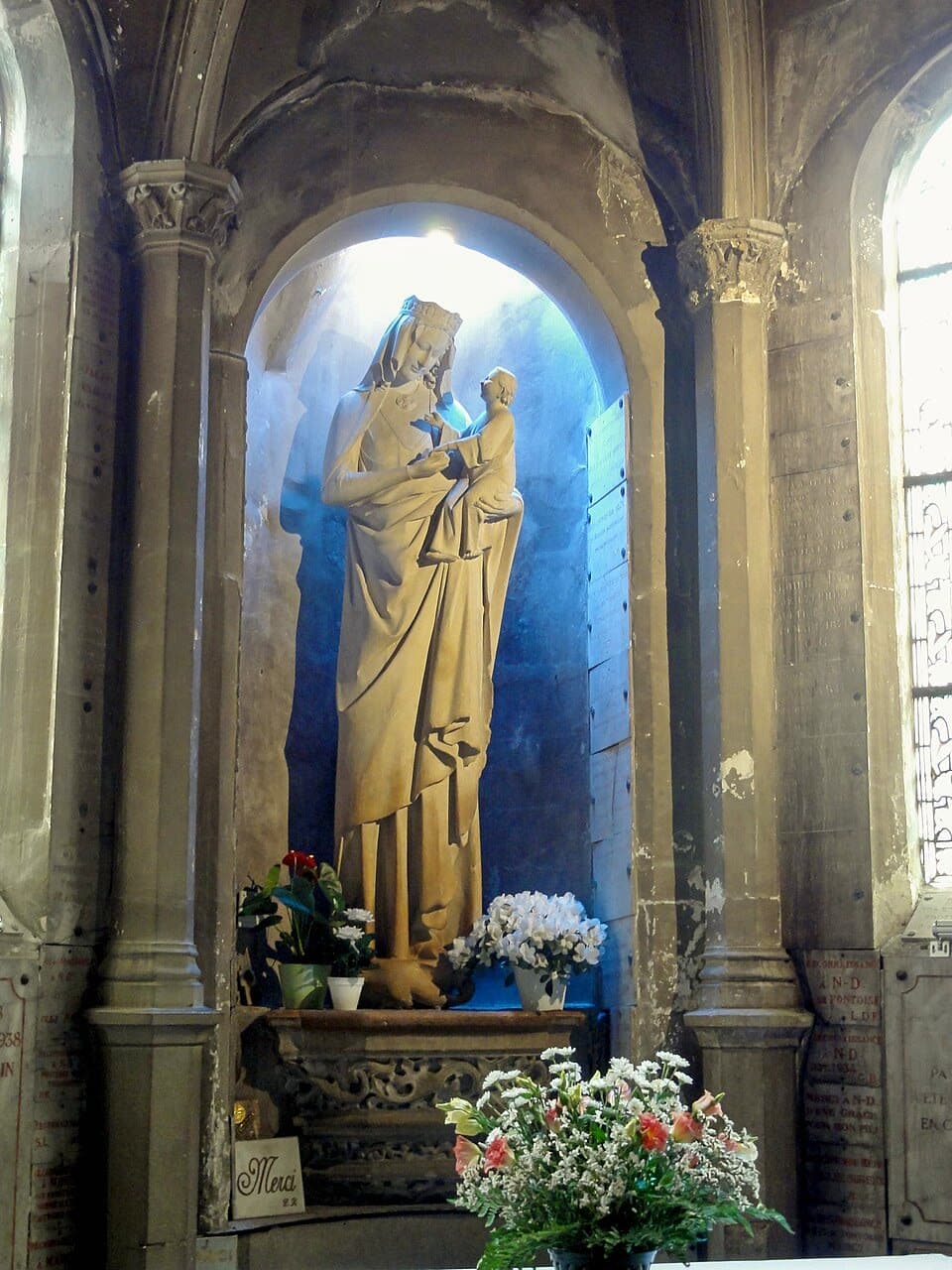
The Miraculous Virgin of Pontoise stands over two meters tall, fine and slender, carved in the thirteenth century. For hundreds of years, parents carried stillborn babies to her shrine, hoping for a 'répit'—a breath of life that would allow baptism. Three French kings sought her protection. The faith of those desperate parents still inhabits the stone.
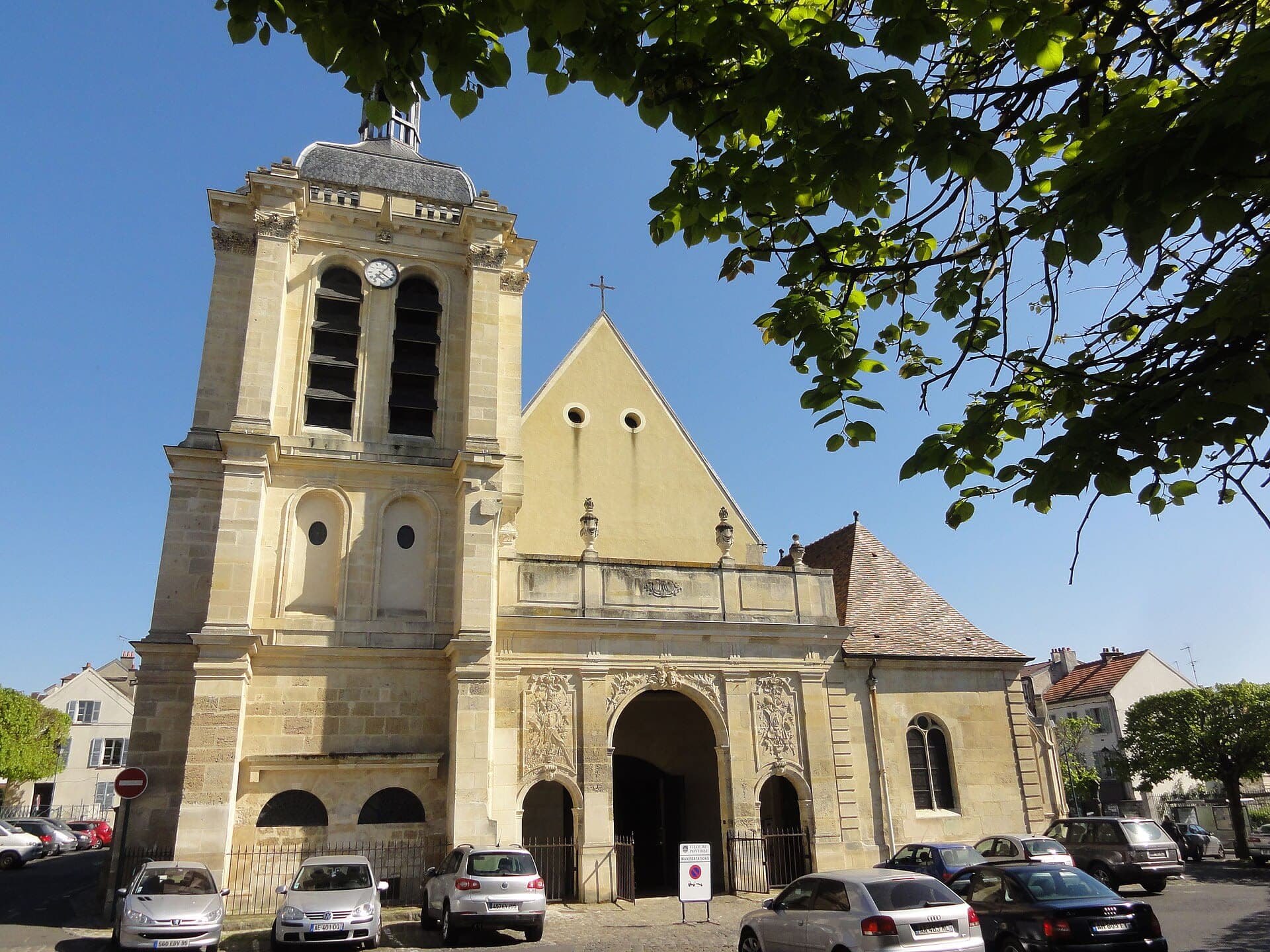
She stands in the chapel to the right of the entrance at Église Notre-Dame de Pontoise, over two meters of thirteenth-century limestone. Her posture is dignified; her face holds the particular stillness of medieval sculpture. She survived the destruction of the basilica that once housed her, the Revolution that could have destroyed her, the centuries that might have erased her memory.
The Miraculous Virgin of Pontoise was famous across France as a 'vierge à répit'—a Virgin who granted respite. Medieval theology taught that unbaptized infants could not enter heaven. Parents who lost children before birth faced not only grief but terror. The belief grew that certain statues, certain Virgins, could grant a moment of life to dead infants: a breath, a movement, a sign that would allow baptism before the soul departed.
Parents carried cold bundles to Pontoise, hoping. On July 18, 1630, a documented miracle occurred: a stillborn child reportedly came to life before a great crowd, was baptized, and then died peacefully. The pilgrimage increased. Kings came. Cities swore vows to her.
The theological underpinning has shifted—the Church no longer teaches the hopeless fate of unbaptized infants—but the statue remains. What remains too is the accumulation of human faith: parents' desperate love, their willingness to travel with grief, their hope that even death might bend before prayer.
Context And Lineage
Carved in the thirteenth century, the Miraculous Virgin became one of France's most famous 'vierges à répit'—Virgins believed to grant stillborn babies breath for baptism. Royal patronage and documented miracles increased her fame. She survived the destruction of her church and continues to receive veneration.
A charter from 1231 mentions a Virgin statue at Pontoise, but the current figure dates from the second half of the thirteenth century. She is limestone, over two meters tall, described as 'fine and slender.' She once stood on the trumeau—the central pillar—of the medieval basilica's portal.
The reputation for granting 'répit' grew as parents reported signs of life in stillborn infants brought to her shrine. On July 18, 1630, the most famous miracle occurred: a stillborn child reportedly came to life before a large crowd, was baptized, and then died peacefully. The miracle was documented and widely reported, increasing pilgrimage significantly.
The medieval basilica was destroyed in 1589 during the Wars of Religion. The statue survived. The current church was built 1598-1600. The Virgin was installed in her present chapel, where she has remained.
The statue has been the focus of continuous devotion since the thirteenth century, surviving the destruction of its original church and the French Revolution.
Saint Louis (Louis IX)
Royal patron
Why This Place Is Sacred
Centuries of parental grief and hope have settled into this statue. The prayers of those who carried dead children here, believing that this Virgin could grant them breath, have left something in the stone. Approach with awareness of what faith has asked of her.
What makes a statue miraculous is not the stone but the belief. The Miraculous Virgin of Pontoise became a focus for one of medieval Christianity's most desperate prayers: that a dead child might live long enough for baptism, that theology's terrible logic might be answered with mercy.
The 'vierge à répit' phenomenon occurred across Catholic Europe, but Pontoise was among the most famous examples. The statue's reputation drew pilgrims from far. The documented miracle of 1630 was not the first claim; it was the claim that happened before a crowd large enough to document.
The statue herself is fine work—over two meters tall, slender, dignified. She once stood on the trumeau of the medieval basilica's portal, welcoming pilgrims. The basilica fell in 1589; she survived. The Revolution threatened; she survived. She stands now in a side chapel, available to anyone who seeks her.
What seekers find is not the medieval theology—we do not now believe unbaptized infants are damned—but the medieval faith. The parents who came here loved their children beyond reason. They carried dead weight hoping for living breath. That love accumulated around this figure. It is still here.
The statue was carved in the second half of the thirteenth century, possibly replacing an earlier image mentioned in a 1231 charter. It became the focus of the 'vierge à répit' devotion that made Pontoise a major pilgrimage destination.
The statue survived the destruction of the medieval basilica in 1589, the Revolution, and subsequent centuries. The devotion has evolved from the specific hope of 'répit' to a broader tradition of prayers for mothers and children.
Traditions And Practice
Veneration and prayer before the statue continue the centuries-old tradition. The annual September pilgrimage brings collective devotion. Individual visitors come seeking intercession for children and mothers.
Medieval parents brought stillborn infants hoping for 'répit'—temporary revival allowing baptism. Kings and commoners processed to seek the Virgin's protection. The Vow of Pontoise was renewed across centuries.
The 'répit' practice has ended, but prayers for mothers and children continue. The September pilgrimage maintains tradition. Individual pilgrims visit throughout the year.
Approach the statue aware of its history. Consider the faith of parents who carried dead children here. Light a candle if the gesture feels meaningful. If you carry grief for a child, this is a place where such grief has been honored for centuries.
Roman Catholicism
ActiveThe Miraculous Virgin of Pontoise is one of France's most historically significant 'vierges à répit,' with documented miracles and royal patronage spanning centuries.
Veneration and prayer, annual pilgrimage, prayers for mothers and children, candle lighting.
Experience And Perspectives
Find her in the chapel to the right of the entrance, over two meters tall, slender and dignified. The space is intimate. What you encounter is not spectacle but presence: the accumulated faith of centuries, the hope of desperate parents, the persistence of devotion across theological shifts.
Enter Église Notre-Dame de Pontoise and turn right. The Miraculous Virgin waits in her chapel. She is larger than expected—over two meters—and finer. Medieval sculptors knew how to make stone live.
Sit before her if you can. Consider what this space has witnessed. Parents entering with bundles that did not move. The hope against hope. The prayers. Perhaps, sometimes, a catch of breath, a flutter, enough to baptize, enough to release the theological fear. Or perhaps only faith, which is itself enough.
The statue does not offer easy comfort. She does not smile. She simply is: stone carved seven hundred years ago, prayed before by parents who have no names, protected by kings who are now history. The devotion continues, though its form has changed. Parents still pray for children here. The September pilgrimage still comes.
What you take from this encounter depends on what you bring. Grief for a child, your own or someone else's. Questions about what faith can carry. Wonder at the persistence of hope across centuries. The Virgin receives all approaches. She has been doing so for seven hundred years.
The statue is in the chapel to the right of the main entrance at Église Notre-Dame de Pontoise.
The statue can be understood as medieval art, as example of the 'vierge à répit' phenomenon, as focus of parental grief across centuries, or as living devotional image. Each perspective reveals something true.
The 'vierge à répit' phenomenon is documented across medieval Catholic Europe. The Pontoise statue represents one of France's most significant examples, with documented miracles and royal patronage.
Within Catholic tradition, the statue is venerated as a miraculous image through which Mary's maternal intercession has been experienced. The continuation of devotion testifies to its ongoing spiritual significance.
Some researchers associate miracle-working Virgin statues with pre-Christian goddess traditions, particularly mother-figures associated with fertility and the boundary between life and death. Whether the Pontoise statue was ever dark-colored is unclear.
Whether the statue was ever known as a 'Black Madonna' or had dark coloring is uncertain from available sources. The full record of attributed miracles is not publicly documented. The original artist and exact provenance remain unknown.
Visit Planning
The statue is located in the chapel to the right of the entrance at Église Notre-Dame de Pontoise. The church is typically open during daylight hours.
Pontoise has limited accommodations; Paris offers more options with easy train access.
Approach with reverence for the generations who have prayed before this image. Maintain quiet. Do not touch the statue.
The statue has received prayers for over seven hundred years. Approach with awareness of that accumulation. The chapel may be quiet or may contain other pilgrims; in either case, maintain the atmosphere of prayer.
Modest dress appropriate for a church.
Generally permitted; be respectful.
Candles may be lit.
Do not touch the statue.
Sacred Cluster
Nearby sacred places create the location cluster described in the growth plan. This block is intentionally crawlable and links into the wider regional graph.
Eglise Notre-Dame de Pontoise
Pontoise, Île-de-France, France
0.0 km away
Our Lady of Good Deliverance, Paris
Neuilly-sur-Seine, Île-de-France, France
22.1 km away
Chapelle Notre-Dame de Bonne Délivrance
Neuilly-sur-Seine, Île-de-France, France
22.1 km away
La Madeleine (Church of Saint Mary Magdalene)
Paris, Île-de-France, France
26.1 km away