Black Madonna of Breznice
Where medieval Bohemia inscribed Mary's mystical darkness in gold and pigment
Capital City of Prague, Prague, Czechia
At A Glance
- Coordinates
- 50.0875, 14.4213
- Suggested Duration
- Allow 15 to 30 minutes specifically for the Madonna of Breznice and the surrounding medieval collection items. The full medieval art collection at the Convent of St. Agnes deserves 2 to 3 hours. Those seeking contemplative engagement may wish to visit twice: once to survey the collection, once to sit with specific works that call to them.
Pilgrim Tips
- No specific dress requirements. Comfortable clothes suitable for museum walking are appropriate. The convent buildings can be cool, so layers may be useful.
- Check current National Gallery Prague photography policies upon arrival. Generally, personal photography without flash is permitted. However, consider whether photographing serves your engagement or distracts from it. The icon rewards direct attention more than documentation.
- Do not touch the icon or its display case. Do not leave physical offerings. The museum context requires that engagement remain internal rather than external. Be aware that your contemplative practice may be observed by other visitors and museum staff. This is not a private chapel. If extended meditation is important to you, choose a time when the gallery is less crowded. The painting is genuine and ancient, but the St. Luke attribution is legend rather than history. Engaging with the icon does not require believing in literal apostolic origin. The theological program stands whether or not St. Luke literally painted the Roudnice original.
Overview
Created in 1396 for King Wenceslas IV, the Madonna of Breznice is among Europe's most explicitly intentional Black Madonnas. The Latin inscription around Mary's halo proclaims what time usually obscures: I am black but beautiful. Now housed in Prague's Convent of St. Agnes, this small panel invites contemplation of a theological mystery that has drawn seekers across centuries.
Most Black Madonnas are accidents of time. Candle smoke darkened the paint. Pigments aged unevenly. The original intention was lost beneath accumulated centuries of devotion.
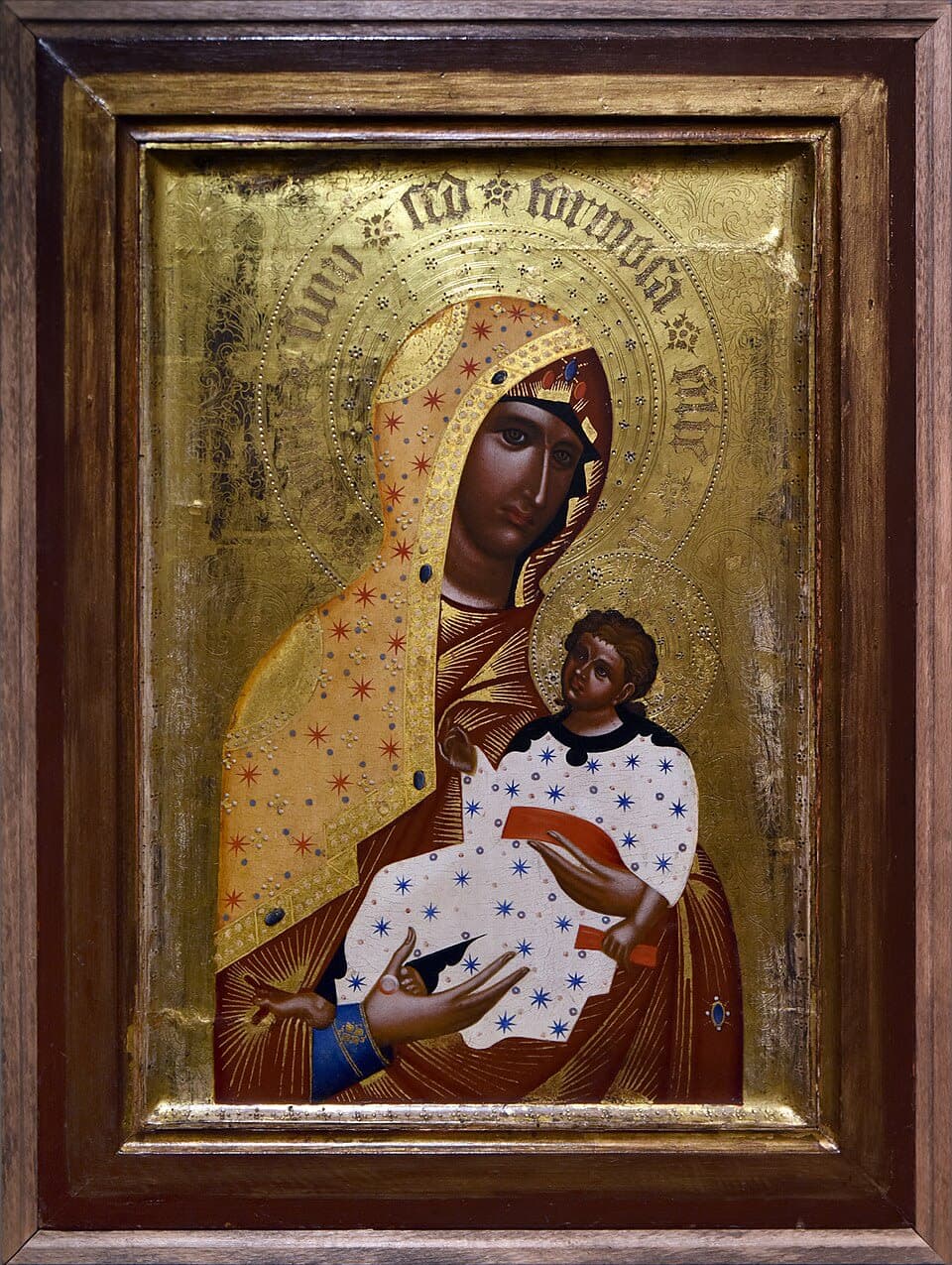
The Madonna of Breznice is different. Created in 1396 for the King of Bohemia, this icon proclaims its identity in golden letters around Mary's halo: Nigra sum sed formosa filie ierusalem. I am black but beautiful, O daughters of Jerusalem. The words come from the Song of Songs, the ancient Hebrew love poetry where the beloved bride speaks of her mysterious darkness.
Smaller than you might expect, barely larger than a modern tablet, the painting rewards close attention. Mary holds the Christ Child in the tender Byzantine pose called Eleousa, their faces touching. On her thumb, a red and white ring marks her as the bride of Christ. The gold background speaks of eternity, the dark veil of the mystery she embodies.
The icon no longer resides in a church. Since its transfer from Breznice castle to Prague's National Gallery, it has become a museum artifact rather than an object of active veneration. Yet something persists in the presence of this small panel. Visitors pause longer than the size would suggest. The inscription, once read, cannot be unread. What did it mean to intentionally paint Mary as black and beautiful? The question opens rather than closes.
Context And Lineage
Created in 1396 for King Wenceslas IV of Bohemia, the Madonna of Breznice emerged during Prague's flowering as a center of European sacred art. The painting copies a now-lost icon from Roudnice attributed to St. Luke, placing it within the most venerated tradition of Marian images. After centuries at Breznice castle, it now resides in the National Gallery Prague, a witness to medieval Bohemian spirituality.
The inscription on the reverse tells the origin story: this image was painted for the King of Bohemia in 1396, to resemble the image of Mary at Roudnice that was painted by Saint Luke with his own hand.
The St. Luke legend was widespread in the medieval church. The evangelist, understood as both physician and artist, was believed to have painted the Virgin from life. Icons claiming descent from his originals carried special authority. The Roudnice Madonna, housed at an Augustinian canonry, was one of these claimed St. Luke images, itself modeled on the Byzantine Kykkotissa type from Cyprus.
To commission a copy of a St. Luke icon was to participate in a chain of sacred images stretching back to the apostolic age. The anonymous Bohemian painter who created the Breznice Madonna was not merely illustrating scripture but replicating a holy original. Each copy carried something of the original's grace.
Why King Wenceslas IV commissioned this particular icon in 1396 remains unclear. He was in a difficult period. Two years earlier, nobles had briefly imprisoned him. His rule as Holy Roman Emperor was increasingly contested. Perhaps the Black Madonna commission was devotional, seeking Mary's intercession. Perhaps it was cultural, continuing his father's project of sacred patronage. Perhaps both. The painting does not explain itself.
The Madonna of Breznice carries a lineage of sacred images crossing from Constantinople to Cyprus to Bohemia. The iconographic type, called Eleousa or Kykkotissa, originated in the Byzantine tradition of tender Madonnas showing mother and child in intimate embrace. The Kykkos Monastery icon in Cyprus, kept permanently veiled due to its holiness, was the most sacred exemplar.
From Cyprus, the type traveled to Bohemia through copies and legends. The Roudnice Madonna, which the Breznice icon explicitly copies, brought the tradition to central Europe. When that Roudnice original was lost, the Breznice copy became a witness to what had existed.
The painting's movement from court to castle chapel to museum traces the changing status of sacred images in European history. Once an object of devotion, then a heritage artifact, now a work of art in a national collection. Yet its theological program remains intact. The inscription still proclaims what it always proclaimed. The darkness has not lightened.
Mary as Black Madonna
deity
In the Black Madonna tradition, Mary embodies the bride of the Song of Songs who declares her darkness as beauty. The theological meaning has been interpreted variously: as humility, as the church, as the soul in mystical union with God, as connection to the earth and its darkness.
Wenceslas IV of Bohemia
historical
King of Bohemia from 1378 to 1419 and Holy Roman Emperor until his deposition in 1400. Despite political difficulties, he continued his father Charles IV's patronage of sacred art, commissioning the Breznice Madonna in 1396.
St. Luke
legendary
The evangelist credited with writing the Gospel of Luke and the Acts of the Apostles. Medieval tradition held that he was also a painter who depicted the Virgin from life. Icons claiming descent from his originals were among the most venerated in Christendom.
Why This Place Is Sacred
The Madonna of Breznice's sacredness emerges from its deliberate theological program: an icon created to embody the mystical tradition of the dark-skinned Virgin, linked by inscription and intention to the Song of Songs bride and by claimed lineage to an image painted by St. Luke himself. The convergence of royal commission, Byzantine iconographic tradition, and explicit Black Madonna theology creates something rare: a painting that declares its own participation in mystery.
The Song of Songs inscription is the key. Where other Black Madonnas acquired their darkness through accident, the Breznice Madonna was born dark, proclaiming that darkness as theologically significant.
The words come from the biblical book of the beloved bride: I am black but beautiful, O daughters of Jerusalem, like the tents of Kedar, like the curtains of Solomon. Medieval Christian readers understood this as Mary speaking, the supreme bride of the divine. To paint her dark was to visualize what the text declared. To inscribe the text around her halo was to ensure no viewer could mistake the intention.
The icon's claimed lineage deepens its sacred weight. The Latin inscription on the reverse states it was painted to resemble the image at Roudnice which Saint Luke painted with his own hand. St. Luke icons were the most venerated in Christendom, believed to carry special grace because the evangelist had painted the Virgin from life. Whether or not this claim was literally believed, it placed the Breznice Madonna within the most authoritative stream of sacred images.
That Roudnice model was itself a copy of the Kykkotissa, a Byzantine icon type originating from the Kykkos Monastery in Cyprus. The original Kykkos icon, attributed to St. Luke, is kept permanently veiled because its holiness is considered too great for human eyes. The Breznice Madonna thus carries a lineage of veiling and unveiling, of images that mediate between the visible and what exceeds visibility.
The royal commission adds a third layer. King Wenceslas IV, despite his political troubles, continued his father Charles IV's project of making Prague a center of sacred culture. To commission a Black Madonna was a statement: Bohemia participated in the most profound currents of Marian devotion. The king's patronage gave the icon authority. It was not folk art but court art, theological statement expressed in gold and tempera.
The inscription on the reverse identifies the icon's purpose: painted for the King of Bohemia to resemble the St. Luke image at Roudnice. The painting appears to have functioned as a devotional image for the royal court, a personal icon that allowed its owner to pray before a replica of one of the most venerated Marian images in Bohemia. In its original context, whether at court or later at Breznice castle chapel, it would have served as a focus for Marian devotion, inviting the viewer into contemplation of Mary as the black and beautiful bride of the Song of Songs.
The icon's journey from court commission to castle chapel to museum artifact traces the transformation of sacred images in European history. After its creation in 1396, it moved at some point to the castle chapel at Breznice, near Pribram, where it remained for centuries as an object of veneration.
The Hussite Wars of the 15th century destroyed much Czech religious art. How the Breznice Madonna survived remains unknown. Its small size may have allowed concealment. Or perhaps it was simply overlooked. The gap in its documented history speaks to the violence through which medieval religious culture passed.
Now on loan from the Bishopric of Ceske Budejovice to the National Gallery Prague, the icon occupies a space that was itself once a convent church. The Convent of St. Agnes, though no longer active, surrounds the painting with medieval sacred architecture. The context has changed from devotion to appreciation, but something of the original intention persists in the gold and pigment.
Traditions And Practice
As a museum artifact, the Madonna of Breznice no longer serves as an object of formal liturgical devotion. However, visitors may approach it contemplatively, engaging with the icon as generations of medieval Christians did. The museum context allows close examination while the painting itself continues to invite the kind of attention it was created to receive.
In its original context, the Breznice Madonna would have functioned within the practice of Marian devotion that structured medieval Catholic life. The icon would have been prayed before, venerated with candles and flowers, perhaps processed on Marian feast days. The Song of Songs inscription invited mystical contemplation, meditation on Mary as the divine bride and the soul's relationship to God.
The tender Eleousa pose carried its own devotional program. Byzantine icons of this type were believed to evoke compassion, to soften the heart of the viewer through contemplation of Mary's own sorrow and love. To gaze at the Breznice Madonna was to participate in a tradition of affective piety, allowing the icon to work on the emotions as well as the intellect.
The St. Luke legend added another dimension. Praying before an image descended from the evangelist's original was understood as a form of contact with sacred origins. The icon was a window, not a wall. Through it, the devotee reached toward Mary herself.
No formal devotional practices currently surround the Madonna of Breznice. It is displayed as art rather than venerated as icon. However, the distinction between viewing and venerating is not absolute, and visitors may engage with the painting in ways that approach devotion.
Silent contemplation before the icon is appropriate and not uncommon. Some visitors offer interior prayers, continuing in museum context the kind of personal devotion the icon was created to support. The museum staff do not prohibit such engagement so long as it remains quiet and does not obstruct other visitors.
For those interested in Black Madonna spirituality, the Breznice Madonna offers a starting point for broader exploration. Prague contains other Black Madonna sites, and the Czech Republic has its own traditions of Marian pilgrimage. The museum visit can become part of a larger pilgrimage through sacred imagery.
If you approach the icon seeking contemplative engagement rather than art appreciation alone, consider these invitations.
Before the visit, read the Song of Songs, particularly the first chapter where the bride declares her darkness as beauty. Let the ancient love poetry enter your mind. When you stand before the icon, the inscription will resonate with what you have read.
In the gallery, give the painting more time than its size would suggest. Allow the intimacy of the scale to work on you. Notice how close you must stand to see the details: the ring, the gold letters, the tender pose. This closeness was intentional. The icon was made to be encountered face to face.
If you are moved to pray, pray. The museum context does not prohibit interior devotion. You might offer gratitude for the icon's survival through centuries of conflict. You might ask what Mary's declared darkness means for your own darkness, your own beauty.
Consider returning to the icon after viewing the rest of the medieval collection. The context of other Bohemian sacred art may deepen your understanding of what the Breznice Madonna represents within its tradition.
Roman Catholicism (Marian devotion / Black Madonna tradition)
HistoricalThe Madonna of Breznice is a rare and intentionally created Black Madonna, one of the few medieval icons where the dark complexion is not accidental but theologically deliberate. The halo inscription from the Song of Songs explicitly identifies Mary as the mystical bride, black but beautiful. The red and white ring on her thumb further marks her as the bride of Christ. This theological program, combined with the royal commission by King Wenceslas IV in 1396, makes the Breznice Madonna an important document of late medieval Czech Marian spirituality.
In its original church context at Breznice castle chapel, the icon would have been an object of veneration and pilgrimage. Medieval devotees would have prayed before it, seeking Mary's intercession. The Song of Songs inscription invited mystical contemplation of Mary as the divine bride. Today, in the museum context, visitors may still approach it contemplatively, though formal liturgical practices no longer occur.
Byzantine iconographic tradition (Eleousa/Kykkotissa type)
HistoricalThe Madonna of Breznice follows the Byzantine iconographic type known as the Eleousa or Tenderness, showing the Virgin embracing the Christ Child in an intimate, emotional pose. This type originated in the Byzantine world, with the Kykkotissa icon at Cyprus's Kykkos Monastery being its most sacred exemplar. The Breznice Madonna, through its model the Roudnice icon, carries this Byzantine lineage into Bohemian Gothic art, demonstrating the transmission of sacred image types across cultural boundaries.
Byzantine icons of the Eleousa type were used for private devotion, liturgical processions, and healing prayers. The tender pose emphasizes Mary's compassion and her sorrow at foreseeing Christ's Passion. The iconographic tradition carries its own devotional logic: to gaze at such an image is to be moved to compassion, to participate in Mary's sorrow and love.
Experience And Perspectives
Visitors to the Madonna of Breznice encounter something unexpected: intimacy. The small scale draws viewers close, the inscription rewards attention, and the deliberate darkness invites contemplation of what made medieval Christians paint Mary as black and beautiful. Many report pausing longer than the painting's size would suggest, caught by something in the icon's gaze.
The first surprise is the scale. After hearing about Black Madonnas in imposing churches, visitors find themselves standing before a panel barely larger than a laptop screen. The intimacy is immediate. This was a painting meant to be held, or placed close, not viewed across a crowded nave.
The second surprise is the inscription. Reading the Latin words around Mary's halo, visitors encounter the icon's self-identification. The painting is not merely dark; it declares its darkness as theological truth. The Song of Songs bride speaks through Mary: I am black but beautiful. The question why opens and does not easily close.
The Byzantine pose adds to the effect. Mary and Christ are cheek to cheek, the tender embrace called Eleousa or Tenderness. There is sorrow in the pose, traditionally understood as Mary's foreknowledge of the Passion to come. But there is also closeness, a Madonna who holds rather than displays her child.
Visitors accustomed to rushing through museum galleries often find themselves pausing. The combination of small scale and large significance creates a kind of density. The gold background, intended to represent the light of eternity, still catches the eye. The ring on Mary's thumb, red and white, marking her as bride, rewards the close attention the painting invites.
Those familiar with Black Madonna traditions report a sense of encountering something explicit that usually remains implicit. The Breznice Madonna does not hide its darkness or leave its meaning to speculation. It speaks. Whether visitors understand the theological language or not, the directness of the painting's self-declaration registers.
The Madonna of Breznice is not a destination in itself but a highlight within the National Gallery Prague's medieval collection at the Convent of St. Agnes. To encounter it meaningfully, approach with unhurried attention.
Before visiting, consider what draws you to Black Madonnas. The intellectual question? The aesthetic? Something about darkness as sacred? The icon will meet whatever orientation you bring, but bringing a question sharpens the encounter.
In the gallery, allow yourself to approach closely. Read the inscription if you can find a translation. Notice the ring on Mary's thumb, the tenderness of the pose, the gold that surrounds the dark figure. This is an icon that rewards attention to detail.
If you feel moved to contemplative silence, the museum context permits it. No one will disturb quiet viewing. The space around the painting can become, briefly, a space of prayer if that is what you need, though the setting remains secular.
Consider returning to the icon at the end of your visit to the medieval collection. After seeing the other Madonnas and altarpieces, the Breznice Madonna's deliberate darkness takes on additional resonance. What were the Bohemian painters doing with these sacred images? The Breznice Madonna offers one answer.
The Madonna of Breznice invites multiple interpretations: art historical, theological, and esoteric. Each perspective illuminates something genuine about the icon, and honest engagement requires holding them together without forcing premature resolution. A painting that declares itself black and beautiful opens questions it does not answer.
Art historians recognize the Madonna of Breznice as an important example of late 14th-century Bohemian painting, created during the so-called Beautiful Style period under Wenceslas IV. The painting exemplifies the transmission of Byzantine iconographic types to Central Europe, specifically the Eleousa or Kykkotissa tradition.
The deliberate inclusion of the Nigra sum inscription makes it one of the most theologically explicit Black Madonnas in European art. Unlike many Black Madonnas whose coloring resulted from accidental darkening over time, the Breznice icon was created to be dark, with its darkness given theological justification through scripture.
Scholars debate the broader meaning of Black Madonna traditions. Some emphasize the Song of Songs interpretation. Others suggest connections to earlier religious imagery, to pre-Christian goddess figures absorbed into Marian devotion, or to the universal symbolism of darkness as mystery and interiority. The Breznice Madonna's explicit program makes it a key document in these discussions.
For those within the Catholic tradition, the Madonna of Breznice embodies centuries of Marian devotion. The claimed descent from a St. Luke original connects it to the apostolic age, placing the viewer in relationship with sacred origins. The Black Madonna tradition, with its Song of Songs mysticism, represents a particular stream of Marian piety emphasizing Mary as divine bride and dark-skinned beauty.
Though now in a museum, the icon retains its sacred character for believers. An icon does not cease being an icon because it changes location. The theological program remains: Mary speaks through the inscription, declaring her blackness as beauty, her darkness as part of her sacred identity. Believers may approach the painting with prayer even in the museum context, continuing the devotion it was created to support.
Some Black Madonna researchers connect these dark-skinned Virgins to pre-Christian goddess worship, earth mother archetypes, and mystery traditions. The Song of Songs itself has been interpreted as preserving ancient sacred marriage rites. The color black has been associated with primordial wisdom, the womb of creation, and the hidden divine feminine.
From this perspective, the Breznice Madonna carries symbolic weight beyond its explicit Christian context. The dark Madonna speaks to something older than the medieval painting, older than Christianity itself: the persistent human recognition of darkness as sacred, of the black earth as mother, of mystery as feminine.
These interpretations are speculative but not dismissive. They arise from genuine patterns in religious imagery across cultures. Whether the medieval painter intended such resonances, the painting has accumulated them through centuries of encounter.
Genuine mysteries remain surrounding the Madonna of Breznice. What circumstances led to its commission in 1396? How did it survive the Hussite Wars that destroyed so much Czech religious art? What devotional practices surrounded the icon during its centuries at Breznice castle? What happened to the Roudnice original it claims to copy?
The inscription states it was painted to resemble the St. Luke icon at Roudnice, but that icon is lost. We cannot compare copy to original. We cannot know what was transmitted and what was added. The Breznice Madonna points to an absence, a gap in the chain of sacred images.
Perhaps most mysterious is the question the painting poses to every viewer: why paint Mary as black and beautiful? The Song of Songs provides the scriptural justification, but what drew the patron and painter to this particular tradition? What did the darkness mean to them? The icon declares but does not explain.
Visit Planning
The Madonna of Breznice is displayed at the Convent of St. Agnes of Bohemia in Prague's Old Town, part of the National Gallery Prague's medieval art collection. The museum is open Tuesday through Sunday with extended Thursday hours. Weekday mornings offer the quietest viewing conditions for contemplative engagement.
Prague offers accommodation at all price points throughout the Old Town and surrounding districts. The Convent of St. Agnes is easily accessible from anywhere in the city center. For those making a longer sacred site pilgrimage through Prague, staying near the Old Town allows walking access to multiple sites including the museum, Our Lady Under the Chain, and the House of the Black Madonna.
The Madonna of Breznice resides in a museum context that requires standard museum behavior: no touching, appropriate noise levels, and respect for other visitors. While no religious protocols apply, the painting's sacred origins invite a more contemplative approach than typical gallery viewing.
The Convent of St. Agnes, where the icon is displayed, is a deconsecrated church building now used as a museum. No active worship takes place, and no religious dress codes or behavior requirements apply. Standard museum etiquette is the primary expectation.
This means refraining from touching the paintings or display cases. The Breznice Madonna is over six centuries old and survives through careful conservation. Physical contact threatens preservation.
Noise levels should be appropriate for a museum: quiet conversation, no raised voices, no disruptive behavior. The medieval galleries have a hushed quality that most visitors maintain naturally. If you are in a group, be conscious that your discussion may affect others seeking contemplative encounter.
While no religious protocol is required, many visitors find that the sacred origins of these paintings invite a more measured approach than contemporary art might. Rushing through the galleries misses what the icon has to offer. The paintings were made for contemplation, not glancing.
No specific dress requirements. Comfortable clothes suitable for museum walking are appropriate. The convent buildings can be cool, so layers may be useful.
Check current National Gallery Prague photography policies upon arrival. Generally, personal photography without flash is permitted. However, consider whether photographing serves your engagement or distracts from it. The icon rewards direct attention more than documentation.
Not applicable in the museum context. Do not leave objects, candles, or any items before the painting.
Standard museum restrictions apply: no food or drink in galleries, no large bags, no touching artworks. The medieval collection is not wheelchair accessible in all areas; check with museum staff.
Sacred Cluster
Nearby sacred places create the location cluster described in the growth plan. This block is intentionally crawlable and links into the wider regional graph.
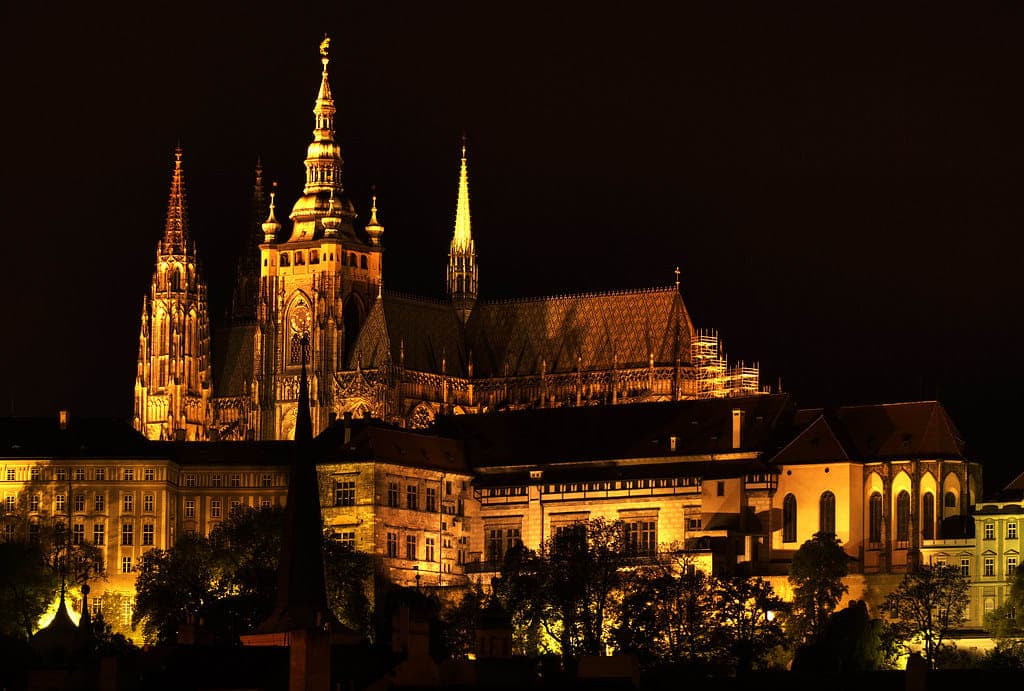
St. Vitus Cathedral
Prague, Prague, Czech Republic
1.5 km away
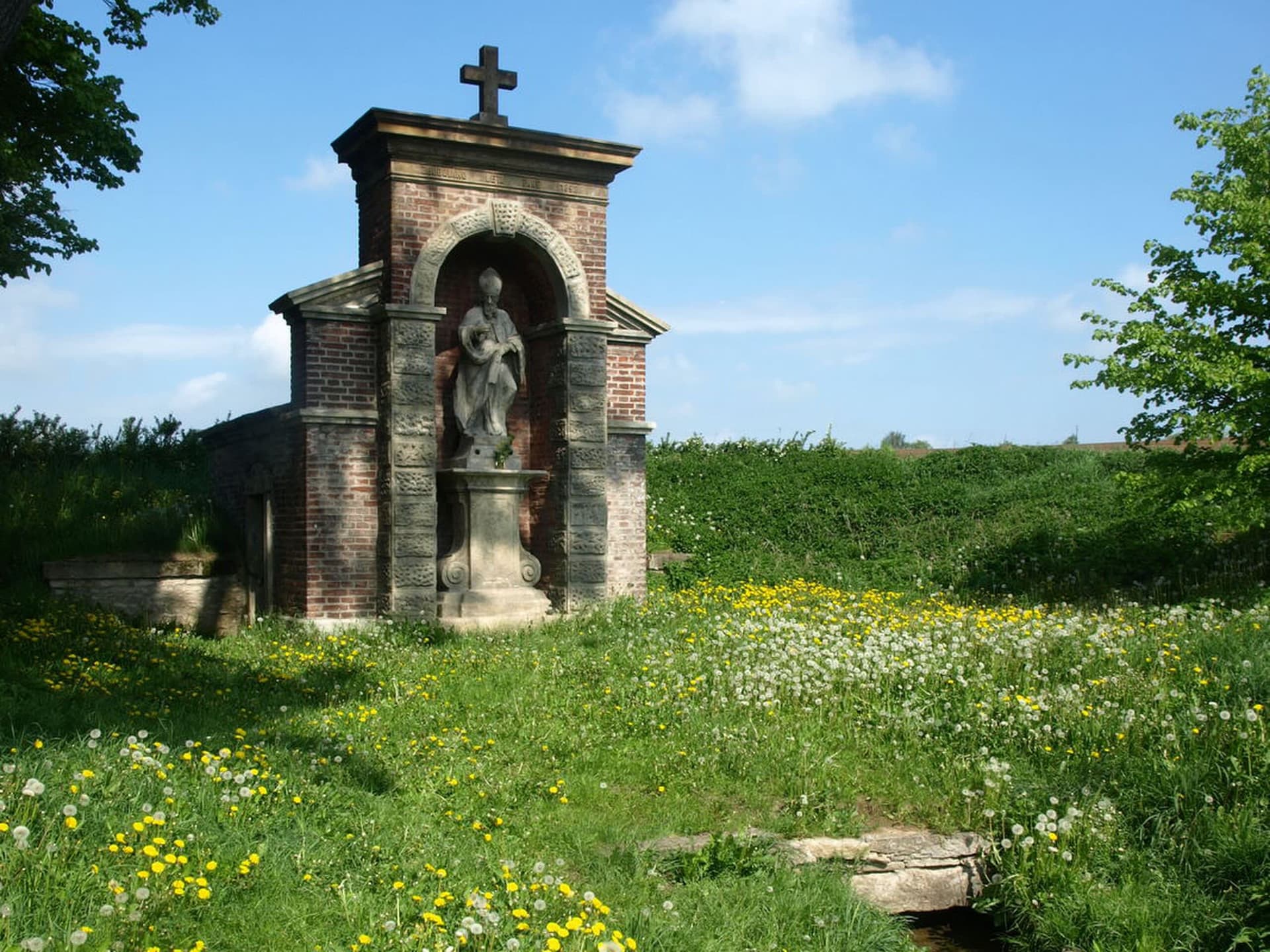
Chapel and wellspring of St. Adalbert
Bylany, Central Bohemian Region, Czech Republic
60.1 km away
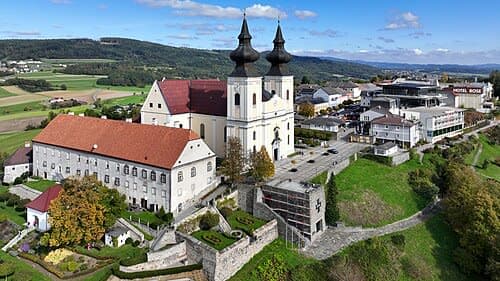
Pilgrimage church of Mary, Maria Taferl
Maria Taferl, Niederösterreich, Austria
213.9 km away
St. Katharina, Langenzersdorf
Langenzersdorf, Lower Austria, Austria
238.4 km away