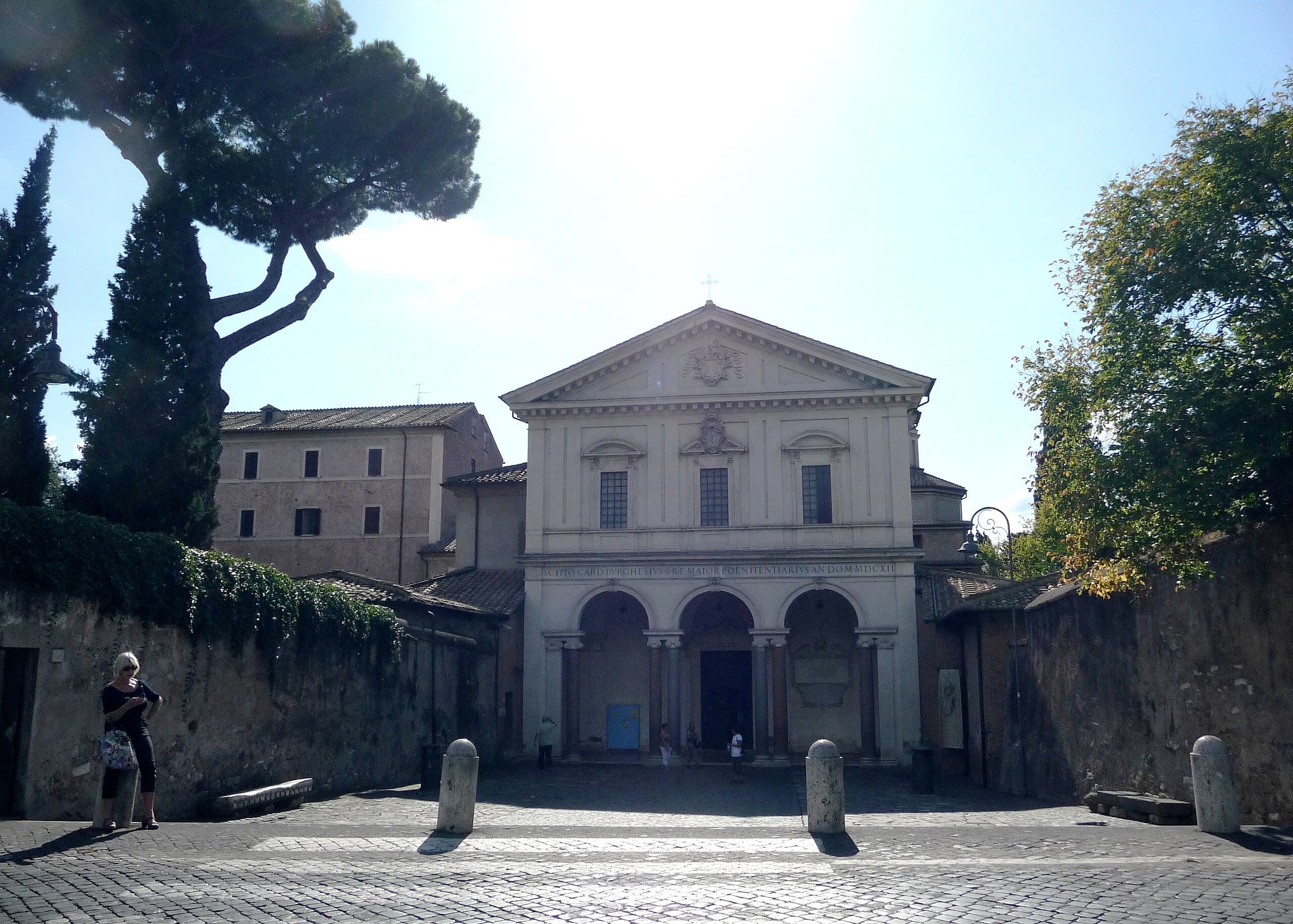
Basilica of St. Sebastian Outside the Walls, Rome, Italy
The original catacomb where Rome hid its apostles and buried its arrow-pierced soldier
Rome, Lazio, Italy
At A Glance
- Coordinates
- 41.8558, 12.5142
- Suggested Duration
- 1-1.5 hours including catacomb tour (about 40 minutes). Add time for exploring the Appian Way area.
- Access
- Bus 118 or 660 to Basilica S. Sebastiano stop. Bus 218 from San Giovanni metro station. About 30-minute walk from Circo Massimo along Via Appia Antica.
Pilgrim Tips
- Bus 118 or 660 to Basilica S. Sebastiano stop. Bus 218 from San Giovanni metro station. About 30-minute walk from Circo Massimo along Via Appia Antica.
- Shoulders and knees must be covered, as in all Roman churches.
- Photography without flash permitted in the basilica. Photography typically prohibited in the catacombs.
- The site is outside central Rome; allow travel time. Catacombs require guided tours and cannot be explored independently. The Appian Way can be busy with traffic; pedestrian access varies.
Overview
San Sebastiano fuori le Mura stands on the ancient Appian Way, above the catacombs that gave all Christian underground cemeteries their name. During the Valerian persecution, the relics of Peter and Paul were hidden here. Saint Sebastian, the soldier whose arrow-pierced image has become iconic, was buried in these tunnels. A stone preserves what tradition calls Christ's footprints from his appearance to Peter on this road—the Quo Vadis moment that turned the apostle back toward martyrdom.
The Appian Way leads out from Rome as it has for over two thousand years, passing monuments to the dead lining the ancient road. At the third mile, a church rises above tunnels that changed the language of Christian burial. Before any other underground cemetery was called a catacomb, this one was—kata kymbe, near the hollow. When early Christians dug into the volcanic rock to bury their dead, this site gave its name to all that would follow.
During the Valerian persecution of 258, the relics of Peter and Paul were brought here for safekeeping. For a time, Christianity's two greatest martyrs rested in these tunnels while persecution raged above. The walls of the triclia, where funeral banquets were held, preserve over six hundred graffiti invoking the apostles. Eventually the relics returned to their permanent basilicas, but this place remembers what it once held.
Saint Sebastian, whose image of naked youth pierced by arrows has become one of Christian art's most enduring icons, was buried here after his martyrdom under Diocletian. The story says he survived the arrows, was nursed to health, and returned to confront the emperor—only to be beaten to death. His body, thrown into a sewer, was recovered by a woman directed by a dream. He rests beneath the church that bears his name.
Context And Lineage
Constantine built the original basilica over catacombs that had hidden Peter and Paul's relics. Sebastian's burial shifted the dedication. The current Baroque church dates from 1609-1613.
In 258, during the Valerian persecution, Christians hid the relics of Saints Peter and Paul in these catacombs. The site, already used for Christian burial, became temporarily the most sacred in Christendom. Constantine later built the Basilica Apostolorum here. Around 350 CE, the relics of Saint Sebastian, martyred under Diocletian, were placed in the catacombs, and the basilica gradually took his name. According to tradition, Sebastian was a Roman soldier who secretly practiced Christianity. When discovered, he was ordered shot with arrows. Surviving, he was nursed to health, only to confront the emperor again. This time he was beaten to death, and his body, thrown into a sewer, was recovered by a woman directed by a vision to bury him near these catacombs.
San Sebastiano fuori le Mura was one of the traditional Seven Pilgrim Churches of Rome until 2000, when it was replaced by the Santuario della Madonna del Divino Amore. Many pilgrims still follow the historical route. The basilica was entrusted to Cistercians in 1714 and to Franciscan Friars Minor in 1826, who still administer it. Sebastian is honored as the third patron of Rome, after Peter and Paul.
Saints Peter and Paul
Saint Sebastian
Emperor Constantine
Cardinal Scipione Borghese
Gian Lorenzo Bernini
Why This Place Is Sacred
San Sebastiano's thinness derives from its role as repository and witness: the original catacomb, temporary haven for the apostles' relics, burial place of Sebastian, and site of the Quo Vadis legend. Layer upon layer of persecution and persistence accumulate.
This site embodies early Christianity's relationship with death and danger. The catacombs themselves represent a theology of burial—bodies carefully interred in expectation of resurrection, marked with names and prayers, near the martyrs whose courage bought their faith. The loculi cut into rock walls, the frescoes of Good Shepherds and fish, the inscriptions bidding peace—all speak of communities that buried their dead with hope.
The temporary presence of Peter and Paul's relics raises the significance further. In 258, with persecution threatening the apostles' tombs at the Vatican and Ostian Way, Christians moved the most precious remains in their keeping to this site outside the walls. The graffiti that remain—'Paul and Peter, pray for Victor,' 'Peter and Paul, remember Sozomen'—preserve the voices of those who came to invoke the hidden apostles. That the relics were eventually returned to their permanent basilicas does not diminish what this place once held.
Sebastian's story has become iconic precisely because of its excess. Surviving arrows should have been enough. But the soldier who would not stay down, who returned to confront the emperor who had ordered his death, who endured a second martyrdom when the first had failed—this is faithfulness pushed beyond rational calculation. His cult, flourishing from the 4th century onward, made this burial site a major pilgrimage destination.
The Quo Vadis legend, preserved in the apocryphal Acts of Peter, placed Christ himself on this road. The footprint stone may be devotional imagination rather than historical artifact, but the question it represents is real. 'Where are you going?' When Peter turned back toward Rome and death, he answered. The stone marks a choice.
Constantine built the Basilica Apostolorum over the catacombs in the 4th century, originally honoring the apostles whose relics had been hidden here. The dedication shifted to Sebastian after his relics were placed in the catacombs around 350 CE.
The relics of Peter and Paul were hidden here in 258; the catacombs later held Sebastian, Quirinus, and Eutychius. The dedication shifted from Basilica Apostolorum to San Sebastiano. In 826, fear of Saracen raids led to Sebastian's relics being moved to St. Peter's; they returned in 1218. Cardinal Scipione Borghese commissioned the current Baroque church in 1609. In 2000, the basilica was replaced in the Seven Pilgrim Churches by the Santuario della Madonna del Divino Amore, though many pilgrims still follow the traditional route.
Traditions And Practice
Daily Mass continues in this Franciscan-administered basilica. Pilgrims venerate Sebastian's relics and the Quo Vadis stone. Catacomb tours explore where Peter and Paul's relics were hidden. Many still follow the traditional Seven Churches pilgrimage route.
Veneration of Peter and Paul at this site dates to 258 CE. Sebastian's cult flourished from the 4th century. The Seven Churches Pilgrimage, formalized by Saint Philip Neri in the 16th century, historically included San Sebastiano. Funeral banquets (refrigeria) were held in the triclia.
Daily Mass is celebrated. Catacomb tours operate throughout opening hours (about 40 minutes). The Feast of Saint Sebastian (January 20) draws particular devotion. Many pilgrims continue to include San Sebastiano in the traditional Seven Churches route despite its 2000 replacement. The Chapel of Relics remains open for veneration.
Approach along the Via Appia Antica if possible, to experience the ancient road. Enter the basilica and visit the Chapel of Relics with Sebastian's arrow and the Quo Vadis stone. View Bernini's Salvator Mundi bust. Take a catacomb tour to see the graffiti invoking Peter and Paul and understand early Christian burial practices.
Roman Catholicism
ActiveTraditional member of the Seven Pilgrim Churches of Rome (until 2000). The original 'catacomb' that gave its name to all Christian underground cemeteries. Temporary repository of Peter and Paul's relics during Valerian persecution. Burial place of Saint Sebastian, third patron of Rome. Houses the Quo Vadis footprint stone. Bernini's final sculpture, Salvator Mundi, displayed here.
Daily Mass, catacomb tours, veneration of Sebastian's relics, pilgrimage (traditional Seven Churches route), Feast of Saint Sebastian (January 20).
Experience And Perspectives
Visitors approach along the ancient Appian Way, past tombs lining the road. The 17th-century church holds the Chapel of Relics with Sebastian's arrow and the Quo Vadis footprint. Guided tours descend into the catacombs where Peter and Paul's relics were hidden.
The approach to San Sebastiano creates its own preparation. Walking the Appian Way, past ancient tombs and monuments, visitors tread the same stones that carried Roman legions, apostles fleeing persecution, and pilgrims seeking the martyrs. The road itself is sacred geography, the way the dead have traveled for millennia.
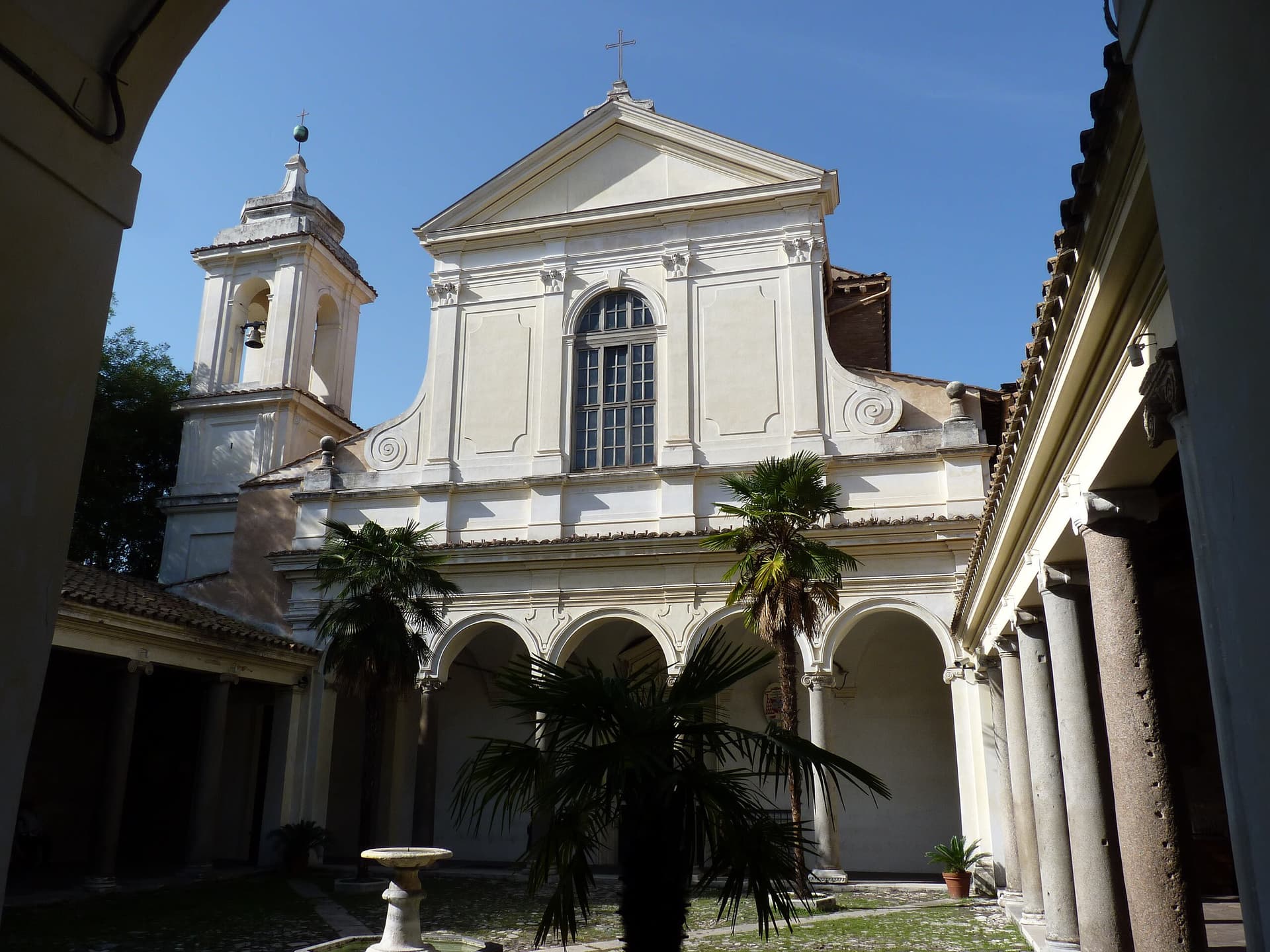
The church facade presents 17th-century Baroque simplicity—a columned entrance, a single nave within. Cardinal Scipione Borghese, patron of Bernini and builder of the Villa Borghese, commissioned this structure to replace the ancient basilica. The interior maintains that simplicity: marble floors, lateral chapels, the high altar where Sebastian's relics rest.
The Chapel of Relics concentrates objects of intense veneration. One of the arrows that tradition says pierced Sebastian lies displayed. A fragment of the column where he was bound accompanies it. And most striking, the marble slab bearing impressions identified as Christ's footprints from the Quo Vadis encounter. Whether historical or devotional, the objects focus the imagination on what was endured and what was asked.
Bernini's final sculpture, the Salvator Mundi (Savior of the World), was rediscovered in the adjacent convent in 2001 after centuries of obscurity. The bust, created in the artist's last years, shows Christ with the intensity Bernini brought to all his work. That his final piece should rest here, at a site of martyrdom, seems appropriate.
The catacombs below require guided tours—visitors cannot wander freely. The guide leads groups through narrow passages lined with loculi, the slots cut into rock for burials. Early Christian frescoes and inscriptions appear at intervals. The triclia, the covered hall for funeral banquets, preserves the graffiti invoking Peter and Paul. The platonia, where the apostles' relics were kept, retains traces of marble and stucco decoration. Here, in the cool underground dark, the reality of early Christian life—lived in expectation of both persecution and resurrection—becomes tangible.
San Sebastiano fuori le Mura stands on the Via Appia Antica, the ancient Appian Way, about 3 km from Porta San Sebastiano in the Aurelian Walls. The Catacombs of San Callisto lie just to the north. The area preserves Roman burial practices along this road of the dead.
San Sebastiano fuori le Mura gathers layers of early Christian significance: the original catacomb, repository of Peter and Paul's relics, burial site of Sebastian, and setting of the Quo Vadis legend. Each layer deepens connection to persecution and persistence.
Archaeological evidence confirms 3rd-century use of the catacombs and the graffiti invoking Peter and Paul, though the precise circumstances of the relics' presence remain debated. Sebastian's hagiographic tradition derives primarily from 5th-century sources; the arrow martyrdom narrative is legendary. The Quo Vadis footprint stone is a devotional object without historical verification. The site's significance in giving the term 'catacomb' to all Christian underground cemeteries is linguistically confirmed.
Catholic tradition honors this as one of the Seven Pilgrim Churches (historically), the place where the apostles' relics were hidden during persecution, and the burial site of Sebastian, whose courage in facing death twice exemplifies Christian perseverance. The Quo Vadis legend teaches that faith sometimes requires turning back toward danger rather than fleeing it.
The Appian Way's role as Rome's ancient road of the dead invests the entire area with numinous significance predating Christianity. Some observers note Sebastian's image—beautiful youth pierced by arrows yet surviving—as carrying symbolic weight beyond hagiography. The site's function in preserving Christianity's holiest relics during persecution speaks to the protective power of hidden sacred space.
The precise dates and circumstances of Sebastian's martyrdom remain uncertain. The full extent of the catacombs has not been completely mapped. The circumstances of Peter and Paul's relics being hidden and recovered are not fully documented. The relationship between the Quo Vadis legend and any historical event is unknown.
Visit Planning
Located on the Via Appia Antica outside the city walls. Basilica free; catacomb tours €10. Accessible by bus from central Rome. Allow time for travel and catacomb tour.
Bus 118 or 660 to Basilica S. Sebastiano stop. Bus 218 from San Giovanni metro station. About 30-minute walk from Circo Massimo along Via Appia Antica.
The Appian Way area has limited lodging. Most visitors stay in central Rome and travel here by bus or car. The EUR neighborhood to the west offers some options.
Standard Catholic church etiquette applies. Catacombs require guided tours with restrictions on photography. Appropriate dress required.
San Sebastiano fuori le Mura is an active parish administered by Franciscan friars. The basilica maintains devotional atmosphere despite tourist traffic to the catacombs. The catacomb tours require following guide instructions; the burial site should be respected.
Shoulders and knees must be covered, as in all Roman churches.
Photography without flash permitted in the basilica. Photography typically prohibited in the catacombs.
Standard church offerings.
Catacombs require paid guided tour | No photography in catacombs | Quiet especially during services | Appropriate dress required
Sacred Cluster
Nearby sacred places create the location cluster described in the growth plan. This block is intentionally crawlable and links into the wider regional graph.