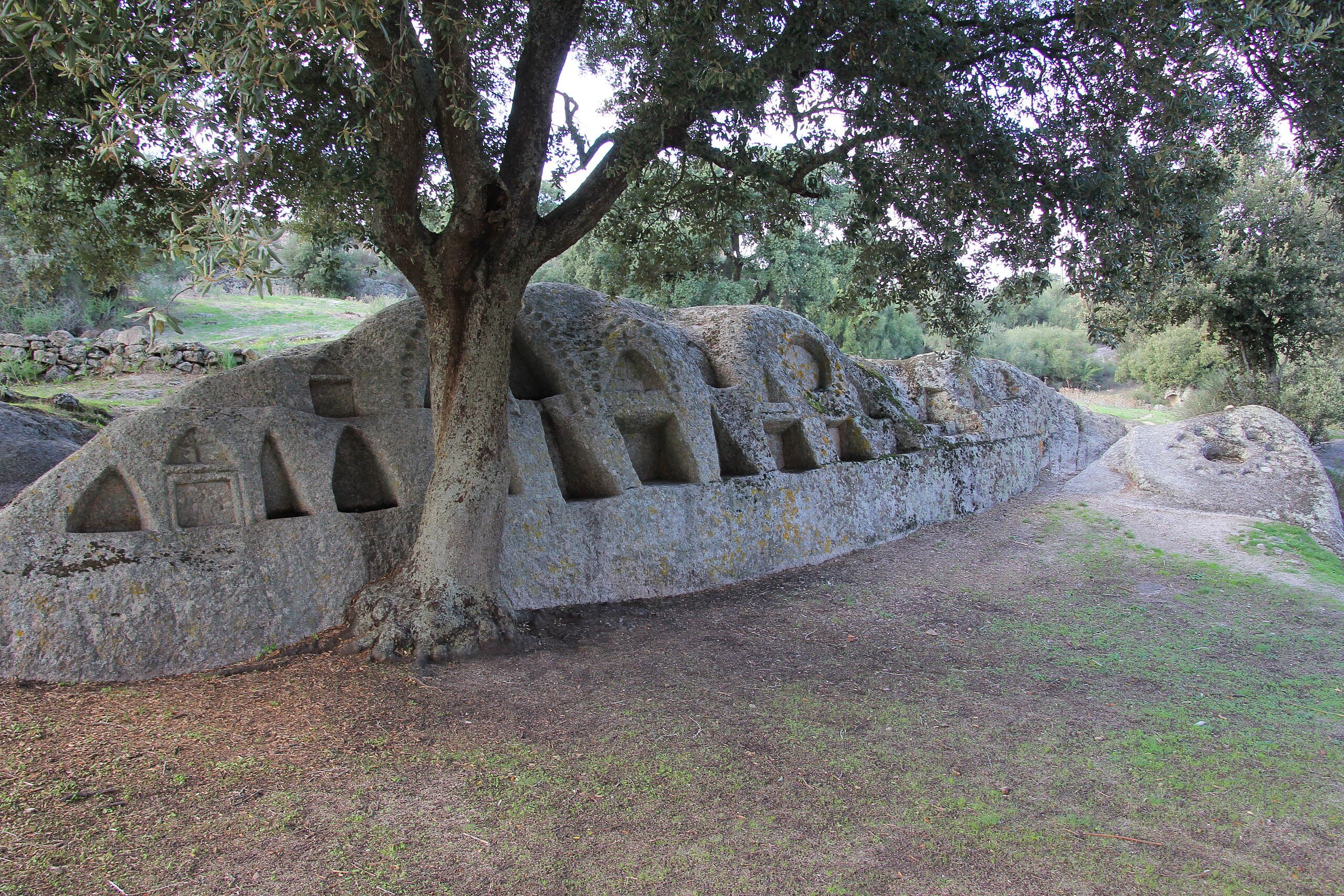
Altare Rupestre di Santo Stefano
A Mediterranean unicum—prehistoric symbols that defy interpretation
Oscheri/Oschiri, Sardinia, Italy
At A Glance
- Coordinates
- 40.6850, 9.0097
- Suggested Duration
- 30 minutes to 1 hour
- Access
- By car from Olbia-Sassari road, turn off for Oschiri. Follow signs from town center. By train to Oschiri station (Sassari-Chilivani-Olbia line), then 30-minute walk or 10-minute bike ride.
Pilgrim Tips
- By car from Olbia-Sassari road, turn off for Oschiri. Follow signs from town center. By train to Oschiri station (Sassari-Chilivani-Olbia line), then 30-minute walk or 10-minute bike ride.
- No dress code for the archaeological site. Modest dress if entering the church.
- Photography permitted throughout the site.
- Gate sometimes locked but can be bypassed. Short walk required. Summer can be very hot. No facilities at site.
Overview
In the Sardinian countryside between Sassari and Olbia, a ten-meter granite slab bears geometric carvings found nowhere else in the Mediterranean. The Altare Rupestre di Santo Stefano stands within a landscape of rock-cut tombs, opposite a medieval church that tried to Christianize what it could not erase. The symbols remain undeciphered, their purpose unknown.
Nothing quite like it exists anywhere else. The rock altar of Santo Stefano—a natural granite slab approximately ten meters long—bears a precise sequence of geometric engravings: triangular, rectangular, circular forms arranged in careful rows. Scholars have called it 'a unicum in the Mediterranean.' Despite generations of study, no one knows what the symbols mean or what rituals they once served.
The altar lies within a broader sacred landscape. Eight domus de janas—rock-cut tombs of the Ozieri culture—dot the surrounding area, evidence of Neolithic occupation between 3500 and 2700 BCE. Whether the altar dates from this period remains uncertain; no excavations have been conducted to confirm its age. Some scholars have suggested it may be much later, even Byzantine. The mystery deepens rather than resolves.
One carving commands particular attention: a 'sundial' with a deep central niche surrounded by twelve cup marks, arranged at nearly equal intervals. A thirteenth cup lies slightly offset to the north. Archeoastronomy scholars have analyzed this feature, suggesting calendrical or astronomical functions. But certainty remains elusive.
Context And Lineage
Created by an unknown culture, possibly the Ozieri (3500-2700 BCE). Unique in the Mediterranean—no parallels exist. Later Christianized with Byzantine crosses. Medieval church built opposite in 1492. Dating remains uncertain without excavation.
The origins of the Altare Rupestre di Santo Stefano cannot be established with certainty. The altar lies within a sacred landscape shaped by the Ozieri culture, whose rock-cut tombs date to 3500-2700 BCE. Whether the altar itself belongs to this period is unknown—no archaeological excavations have been conducted. Some scholars suggest it may date to much later, even the Byzantine period. What is certain is that the symbols carved into this granite slab are unique in the Mediterranean. Nothing comparable exists elsewhere. The altar stands at the heart of an area containing seventy domus de janas, multiple dolmen and menhirs, and sixty Nuragic settlements—a landscape of exceptional prehistoric significance.
The altar was created by an unknown prehistoric culture, possibly the Ozieri. The site was later Christianized—Byzantine crosses were carved over the prehistoric symbols. The church of Santo Stefano was built opposite in 1492, incorporating Nuragic and Phoenician sacred objects. Today the site is protected as archaeological heritage.
Mauro Zedda
Michael Hoskin
Why This Place Is Sacred
The Altare Rupestre's thinness derives from its complete uniqueness—symbols that cannot be interpreted, purposes that cannot be confirmed, a monument without parallels in the Mediterranean—and the millennia of sacred use that followed, unable to erase what was first inscribed here.
The altar resists understanding. This is not a monument whose purpose can be reconstructed from parallels elsewhere; no parallels exist. The geometric symbols—precise, deliberate, carefully arranged—belong to a symbolic language that has been entirely lost. Scholars have proposed various functions: a place where shamanic women gave birth, a location for mortuary rites, an astronomical observatory. Each hypothesis explains some features while leaving others mysterious.
The 'sundial' carving offers the most tantalizing clue. Twelve cup marks surround a central niche, arranged at nearly equal intervals—a number that resonates with lunar months, zodiacal signs, or other calendrical divisions. The thirteenth cup, offset to the north, might mark a correction or exception. Archeoastronomy scholars including Mauro Zedda and Michael Hoskin have analyzed this feature, suggesting the site served to track celestial cycles. But the analysis cannot confirm what ceremonies or observations took place here.
The surrounding landscape amplifies the mystery. Eight domus de janas—the 'fairy houses' of Sardinian tradition, actually rock-cut tombs—indicate that death and the dead were central concerns of those who shaped this place. The Ozieri culture, which created these tombs between 3500 and 2700 BCE, left no written records. Their symbols speak, but we cannot understand.
The medieval response proves the altar's continuing power. The church of Santo Stefano was built in 1492, positioned directly opposite the altar as if to confront it. This was not random placement; this was the Church facing what it could not deny. Byzantine crosses were carved over the prehistoric symbols—an attempt to claim, to transform, to redirect a power that could not be ignored. Inside the church, older sacred objects were repurposed: a Nuragic betylus became a holy water font, heads of the goddess Astarte were set into the facade. The new faith absorbed what it could and marked what it could not absorb.
The entire Oschiri area bears witness to prehistoric sacred significance. Seventy domus de janas, multiple dolmen and menhirs, some sixty Nuragic settlements—this was not marginal land but a center of human habitation and ritual activity for millennia. The altar stands at the heart of this landscape, the focus that drew everything else into its orbit.
Unknown. Hypotheses include shamanic birthing ceremonies, mortuary preparation rites (defleshing of corpses before burial in domus de janas), and astronomical/calendrical observations. The geometric symbols suggest ritual or cosmological significance, but their specific meaning is lost.
Ozieri culture occupation c. 3500-2700 BCE (surrounding necropolis). Altar creation date uncertain—possibly Neolithic, possibly much later. Byzantine period: crosses carved over prehistoric symbols. 1492: Church of Santo Stefano built opposite altar. Modern era: archaeological recognition and protection.
Traditions And Practice
No active worship at the altar. The adjacent church of Santo Stefano may hold occasional services. Visitors come to observe the unique prehistoric monument and contemplate its mysteries.
Unknown. Hypotheses include shamanic birth ceremonies, mortuary preparation rites, and astronomical observations. The geometric symbols suggest ritual activity of profound significance.
Archaeological site visitation. The church of Santo Stefano adjacent may hold services. Educational and contemplative visits.
Walk the approach from the gate to deepen the sense of pilgrimage. Study the altar's geometric carvings, noting the 'sundial' with its twelve cup marks. Observe the Byzantine crosses carved over prehistoric symbols. Visit the church to see the Nuragic betylus and Astarte heads. Explore the surrounding domus de janas if time permits.
Pre-Nuragic Sardinian Religion
HistoricalThe Altare Rupestre di Santo Stefano is unique in the Mediterranean—a 10-meter granite slab bearing geometric symbols found nowhere else. Located within an Ozieri culture sacred landscape (3500-2700 BCE), the altar's symbols suggest profound ritual significance, though their meaning is lost.
No longer practiced. Original functions may have included birth ceremonies, mortuary rites, or astronomical observations.
Experience And Perspectives
Visitors walk through the Oschiri countryside to reach a granite slab bearing undeciphered symbols. The medieval church of Santo Stefano stands directly opposite. The surrounding area contains rock-cut tombs and other prehistoric remains.
The approach prepares you. From Oschiri, the road leads through agricultural countryside toward Via Monte Acuto. The gate—often closed but passable—marks the transition from ordinary landscape to sacred precinct. The walk of approximately 300 meters between dry-stone walls deepens the sense of pilgrimage. At the end, an open area with information signs, then steps leading toward the church.
The altar lies before you, facing the church. Ten meters of granite, weathered by millennia, bearing symbols that resist interpretation. Triangles, rectangles, circles—precise and deliberate, arranged in rows. The 'sundial' with its central niche and twelve surrounding cups. Byzantine crosses carved later, attempting to claim what was already ancient.
The church of Santo Stefano stands opposite, built in 1492 to confront this older power. Inside, if open, you may see the Nuragic betylus repurposed as a holy water font—stone sacred to one tradition serving another. Above the doors, the stone heads of Astarte, Phoenician goddess of fertility and war, incorporated into Christian architecture. Nothing here was forgotten.
The surrounding landscape extends the experience. The eight domus de janas—rock-cut tombs of the Ozieri culture—lie within walking distance. The silence of the Sardinian countryside, punctuated only by wind and birdsong, allows contemplation. This is not a busy tourist site; you may find yourself alone with the altar and its unanswered questions.
The atmosphere is one of mystery rather than resolution. The symbols remain undeciphered. The purpose remains unknown. The altar simply exists, as it has for millennia, asking questions that cannot be answered.
The Altare Rupestre di Santo Stefano is located near Oschiri, in the Province of Sassari, northern Sardinia. The site is approximately 40 minutes by car from both Olbia and Sassari. The altar lies in agricultural countryside, accessible via a short walk from a gate along Via Monte Acuto.
The Altare Rupestre offers encounter with genuine archaeological mystery—symbols that cannot be interpreted, a monument unique in the Mediterranean, and layers of sacred use spanning millennia.
Scholars recognize the altar as a unicum—unique in the Mediterranean with no known parallels. The site lies within an Ozieri culture landscape (3500-2700 BCE), but without excavation the altar's date cannot be confirmed. The geometric symbols remain undeciphered. The 'sundial' feature has attracted archeoastronomy analysis suggesting calendrical function.
No living tradition preserves the altar's original meaning. The symbols and their significance are lost. The medieval church's response—building opposite the altar, carving crosses over symbols—indicates recognition of continuing power.
Astronomical and calendrical interpretations have attracted interest. Some suggest the site served shamanic or fertility functions. The incorporation of Astarte heads and Nuragic betylus into the church suggests continuous sacred recognition across traditions.
The exact date of the altar. The meaning of the geometric symbols. The original function and ceremonies. The relationship between the altar and the surrounding necropolis.
Visit Planning
Located near Oschiri, about 40 minutes from Olbia or Sassari. Free admission, open access (gate sometimes locked). Allow 30 minutes to 1 hour. No facilities on site.
By car from Olbia-Sassari road, turn off for Oschiri. Follow signs from town center. By train to Oschiri station (Sassari-Chilivani-Olbia line), then 30-minute walk or 10-minute bike ride.
Accommodations in Oschiri or nearby Olbia and Sassari. Agriturismos in the surrounding countryside.
Archaeological site; standard heritage etiquette applies. Do not touch or climb on the altar. Modest dress if entering the church.
The Altare Rupestre is an archaeological monument that should be observed without touching or climbing. The carved symbols are fragile after millennia of exposure. Photography is permitted and encouraged—the symbols deserve documentation. If visiting the church of Santo Stefano, observe appropriate modest dress and quiet behavior.
No dress code for the archaeological site. Modest dress if entering the church.
Photography permitted throughout the site.
None; archaeological site.
Free admission | Gate sometimes locked | 300-meter walk from parking | Do not touch or climb on altar
Sacred Cluster
Nearby sacred places create the location cluster described in the growth plan. This block is intentionally crawlable and links into the wider regional graph.
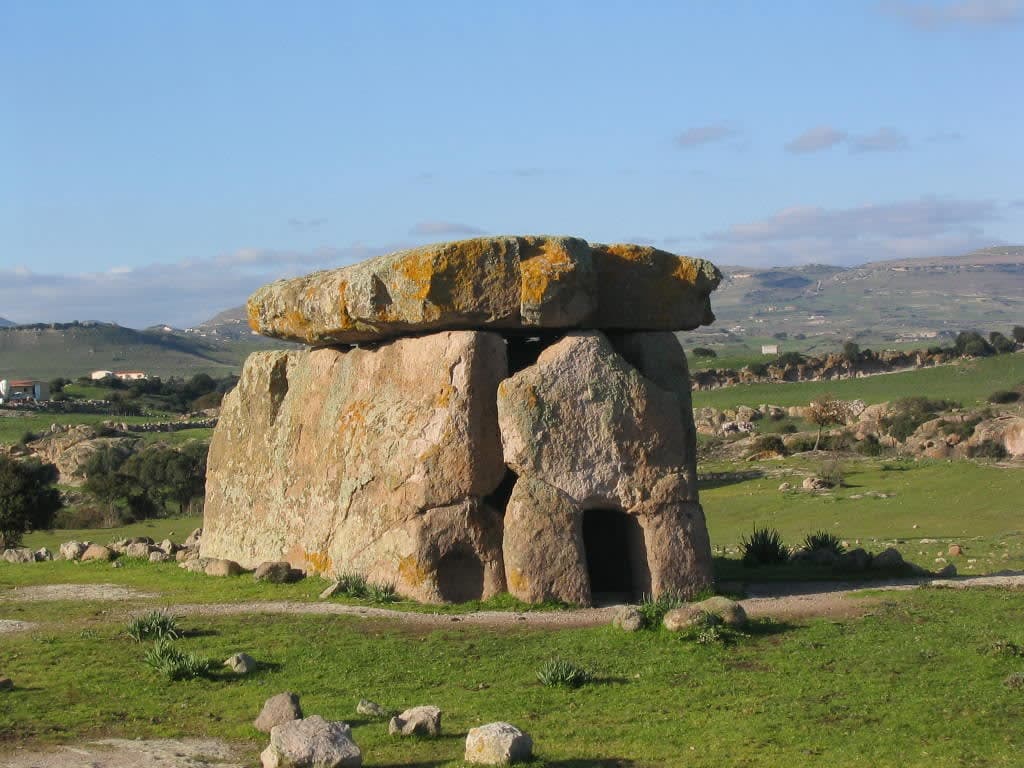
Dolmen Sa Coveccada
Mores, Sardinia, Italy
23.2 km away
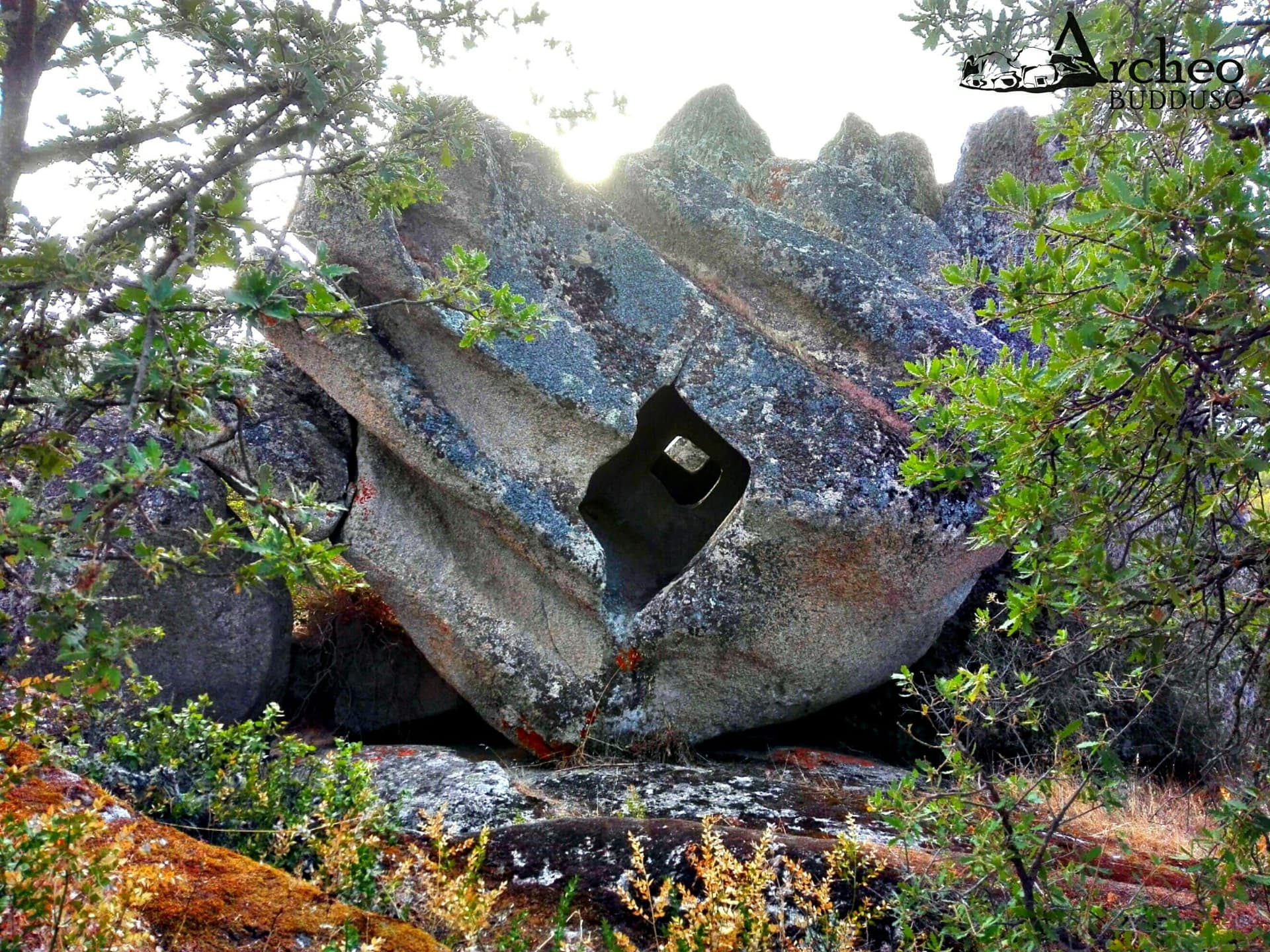
Domus de Janas di Borucca
Budduso, Sardegna, Italia
23.8 km away
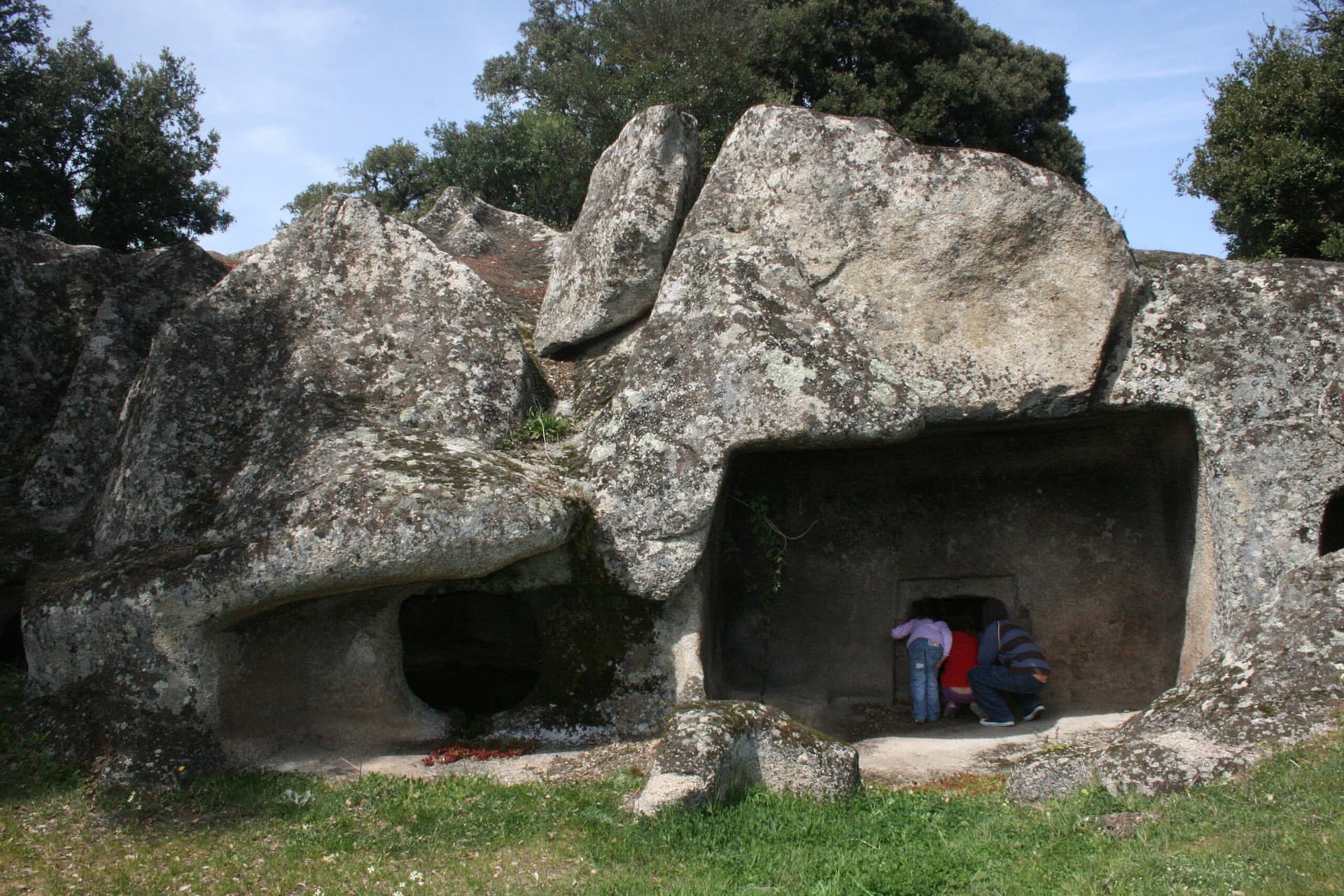
Necropoli a Domus de Jana's di Ludurru
Budduso, Sardegna, Italia
24.3 km away
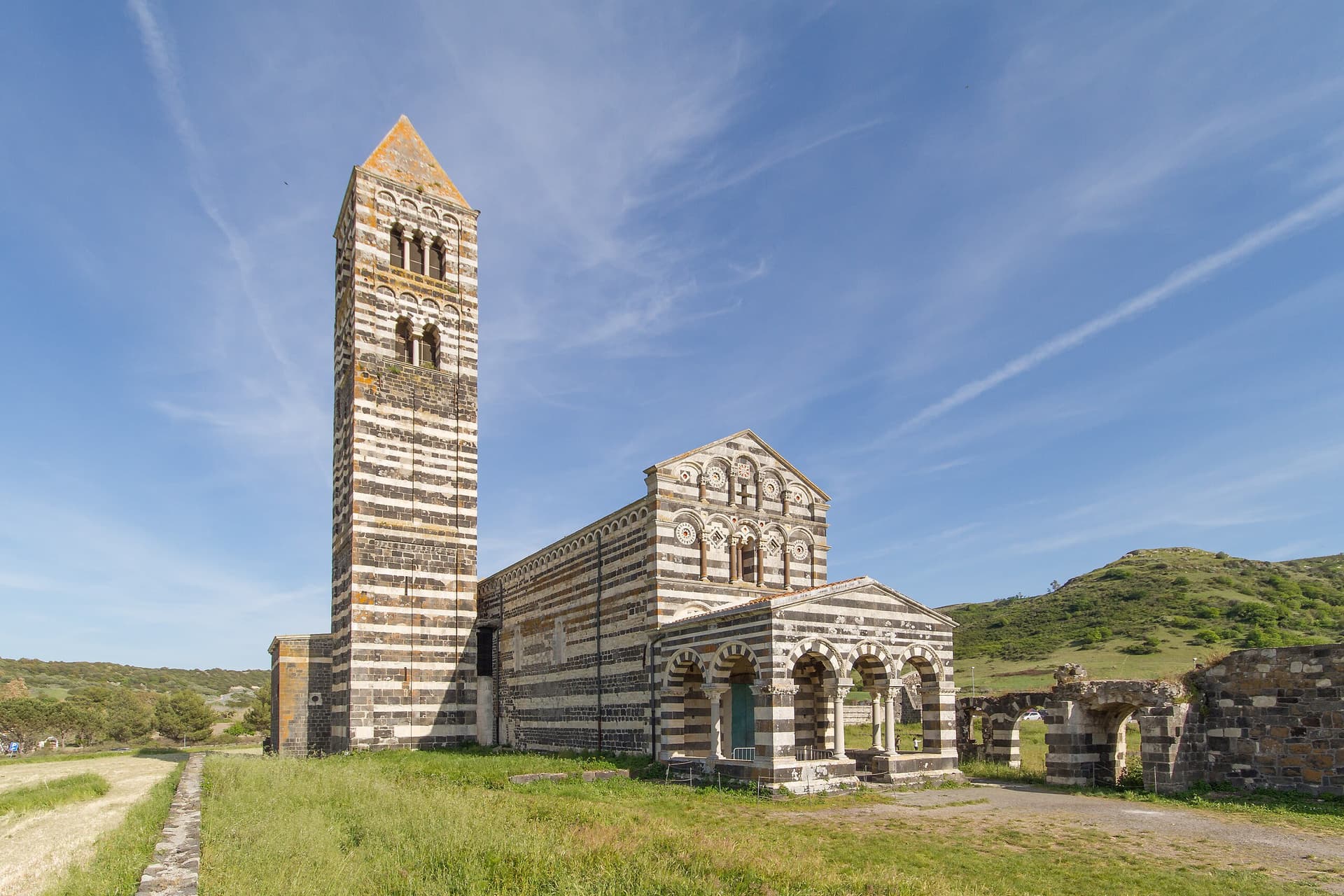
Church of the Holy Trinity Saccargia (Basilica della Santissima Trinita de Saccargia)
Codronzanu/Codrongianos, Sardinia, Italy
24.5 km away