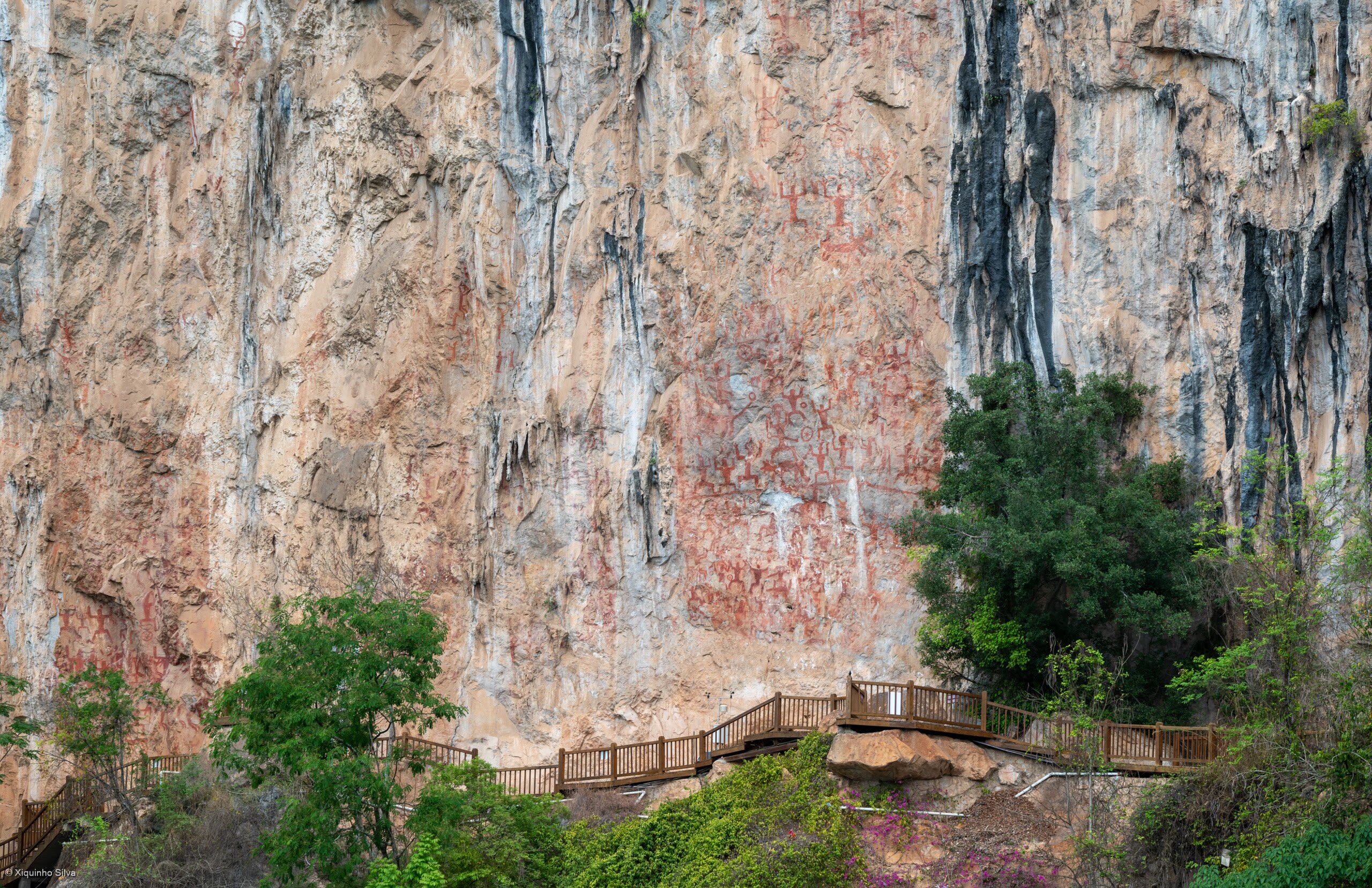
"Seven hundred years of ceremony painted in red on river cliffs, still vivid after two millennia"
Zuojiang Huashan Rock Art
Guangxi, Guangxi, China
Along 105 kilometers of the Zuojiang River and its tributaries in Guangxi, 1,951 painted figures spread across 38 cliff sites, the largest concentration of rock art in southern China. Created by the Luoyue people, ancestors of today's Zhuang minority, between the 5th century BCE and the 2nd century CE, the paintings depict ceremonial scenes that defy both time and gravity. The figures were applied at heights of up to 130 meters on sheer cliff faces above the river, their red pigment still vivid against grey limestone.
Weather & Best Time
Plan Your Visit
Save this site and start planning your journey.
Quick Facts
Location
Guangxi, Guangxi, China
Tradition
Site Type
Coordinates
22.2617, 107.0103
Last Updated
Mar 29, 2026
The Zuojiang Huashan rock art was created by the Luoyue people over approximately seven hundred years, ending around the 2nd century CE. The Luoyue were the ancestors of today's Zhuang, China's largest ethnic minority.
Origin Story
Local Zhuang legends describe the rock art as created by ancestor spirits or culture heroes. One tradition holds that a great leader organized the ceremonies depicted to ensure the prosperity and protection of the Luoyue people. Another connects the paintings to celebrations of military victory, with the raised-arm figures dancing in triumph. The red color is associated with life force, blood, and the power to repel evil spirits. Archaeological interpretation suggests the paintings depict communal ceremonies involving bronze drum music, group dance, and rituals connected to water, agriculture, or the ancestral spirit world.
Key Figures
The Luoyue people
Tai-speaking ancestors of today's Zhuang who created the rock art over approximately 700 years
Zhuang communities
Living descendants of the Luoyue, maintaining cultural connections through bronze drum traditions, frog dance, and seasonal festivals
Modern archaeological teams
Researchers who began systematic documentation in the 1950s and continue to study the sites
Spiritual Lineage
The Luoyue rock art tradition belongs to the broader bronze drum culture of mainland Southeast Asia, which extended across southern China and northern Vietnam. The Zhuang people, at approximately 18 million the largest ethnic minority in China, maintain cultural continuity with the Luoyue through festivals, music, and folk traditions.
Know a Sacred Site We Should Include?
Help us expand our collection of sacred sites. Share your knowledge and contribute to preserving the world's spiritual heritage.