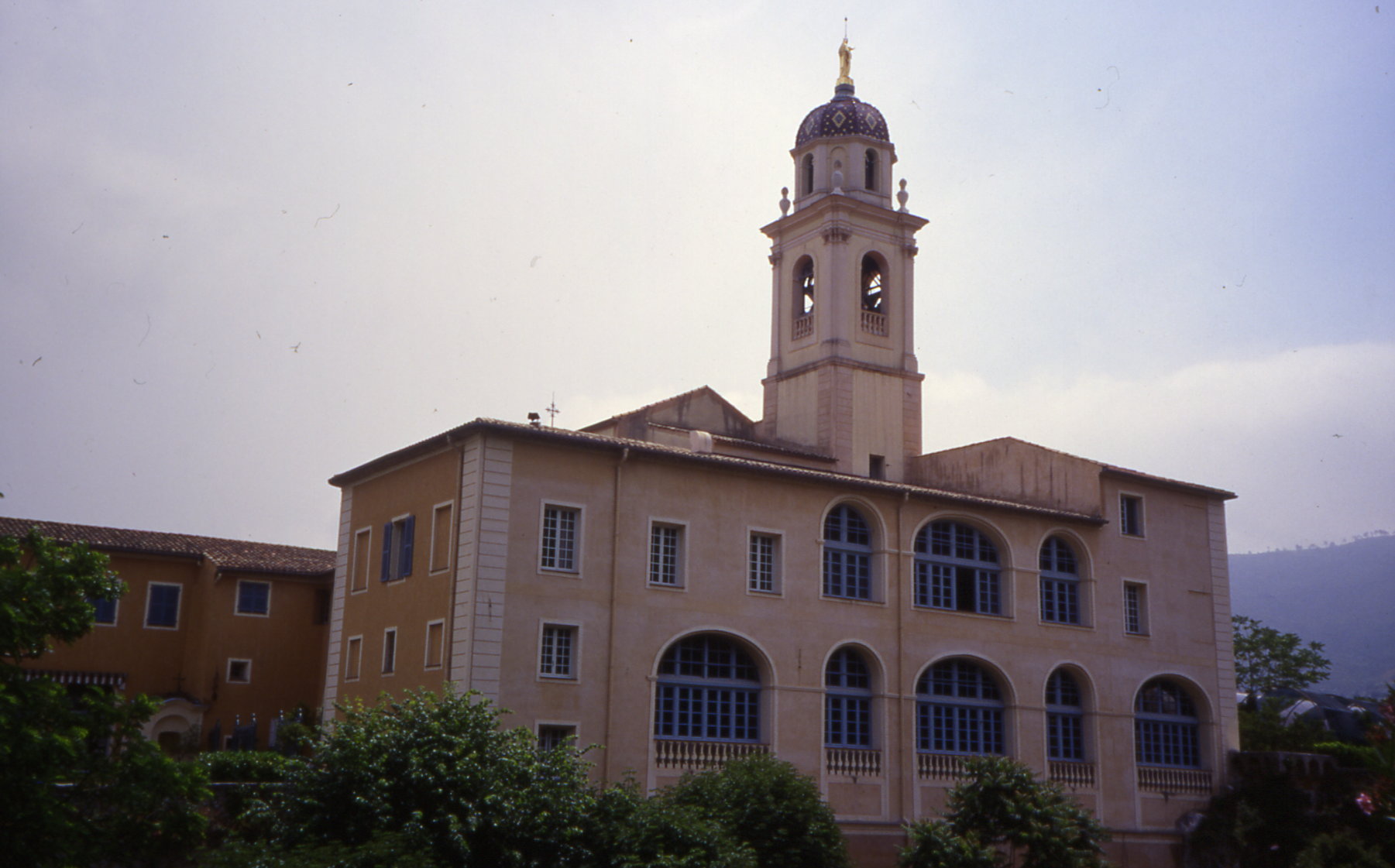
"Where four centuries of ex-votos testify to answered prayers in the hills above Monaco"
The Sanctuary of Our Lady of Laghet
La Trinité, Provence-Alpes-Côte d'Azur, France
High in the hills between Nice and Monaco, the Sanctuary of Notre-Dame de Laghet has drawn pilgrims since 1652, when spontaneous healings began occurring at a humble restored chapel. No apparition happened here—only answered prayers, documented in over 4,000 painted ex-votos that line the walls. The sick and suffering still come, and the tradition of gratitude continues.
Weather & Best Time
Plan Your Visit
Save this site and start planning your journey.
Quick Facts
Location
La Trinité, Provence-Alpes-Côte d'Azur, France
Tradition
Site Type
Coordinates
43.7533, 7.3817
Last Updated
Jan 22, 2026
Notre-Dame de Laghet's story begins with a priest's quiet devotion and explodes into miracle in 1652. Father Fighiera's restoration of a neglected chapel set conditions that somehow allowed healing to occur. The theological investigation that followed was rigorous by Counter-Reformation standards—not credulity but careful examination. The site's subsequent history includes revolutionary destruction, hidden statues, and the transition from Carmelite to Benedictine care.
Origin Story
Father Jacques Fighiera was a priest of Èze who felt called to restore the ruined chapel at Laghet. In 1628, at his own expense, he rebuilt the roof, whitewashed the walls, leveled the floor, and installed a proper door. He announced that services would resume and served the chapel for twenty-five years without compensation.
In 1645, Bishop Palletis blessed a statue of the Virgin carved by the Parisian artist Pierre Moïse. It was placed in a church in Èze. Seven years later, on June 24, 1652, the White Penitents—a confraternity of laypeople devoted to works of mercy—carried the statue in procession to Laghet.
From that day, healings began. A leper found his flesh restored. A man imprisoned by Barbary pirates credited his escape to the Virgin's intercession. A girl possessed by demons was delivered. Pilgrims streamed in from Nice, Monaco, Ventimiglia, San Remo. Within eighteen months, thirty-six miracles were claimed.
Bishop Palletis was not credulous. He convened a commission of theologians, assisted by a lawyer and a doctor, to investigate according to the protocols established by the Council of Trent. Twenty-two cases were authenticated as genuinely miraculous. On December 26, 1653, he authorized public worship. The following April, he led the first official pilgrimage, joined by the Consuls of Nice, who funded a fountain for the pilgrims—still flowing today.
Key Figures
Father Jacques Fighiera
Don Jacques Fighiera
restorer
Priest of Èze who restored the neglected Laghet chapel in 1628 and served it without compensation for 25 years. His devotion prepared the conditions for the 1652 miracles. The ex-voto museum bears his name.
Pierre Moïse
artist
Parisian sculptor who carved the rowan-wood statue of the Virgin that was processed to Laghet in 1652. The statue was blessed by Bishop Palletis in 1645.
Bishop Palletis
Monseigneur Palletis
authorizing bishop
Bishop of Nice who ordered the rigorous theological investigation of the Laghet miracles and authorized official worship in December 1653. His careful process gave the site canonical legitimacy.
Denis Lanteri
protector
Steward of the sanctuary who hid the statue in La Turbie during the revolutionary period, preserving it from destruction.
Spiritual Lineage
The Carmelites of Turin assumed care of the sanctuary in 1674, maintaining it for over two centuries. Their coat of arms still appears on the main altar and stained glass. France's 1905 separation of church and state forced their expulsion; Bishop Chapon purchased the property to prevent secular sale. In 1978, the Benedictine Sisters of the Sacred Heart of Montmartre took over, establishing the retreat center that now welcomes pilgrims. Through these transitions, the June 24th pilgrimage has continued unbroken. Each year, parishioners from Èze walk the mountain paths carrying the statue, reenacting the procession that inaugurated the miracles. The tradition belongs to the place itself, persisting through changes of religious order and political regime.
Know a Sacred Site We Should Include?
Help us expand our collection of sacred sites. Share your knowledge and contribute to preserving the world's spiritual heritage.