"Where Bulgarian Christians first prayed in their own language and claimed their identity before God"
Sveta Bogoroditsa Church
Plovdiv, Plovdiv, Bulgaria
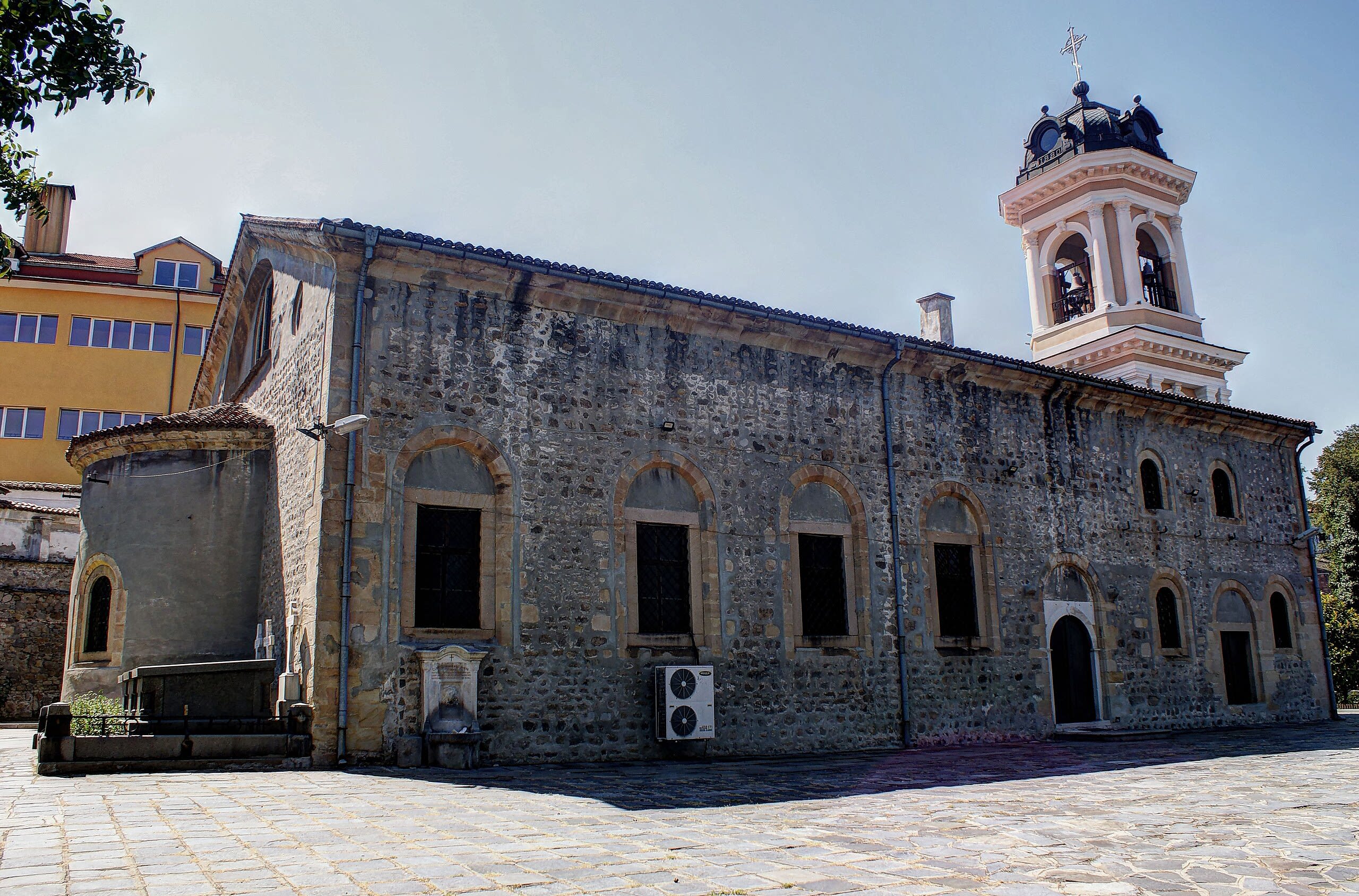
Sveta Bogoroditsa stands in central Plovdiv as the city's principal Orthodox cathedral, an active place of worship on a site where Christians have gathered since the ninth century. Inside, a Debar School iconostasis of extraordinary intricacy and icons by the master Nikola of Odrin represent the finest Bulgarian Revival sacred art. In 1859, the first Bulgarian-language liturgical service was held within these walls, a moment when liturgy became liberation and a people claimed their spiritual voice.
Weather & Best Time
Plan Your Visit
Save this site and start planning your journey.
Quick Facts
Location
Plovdiv, Plovdiv, Bulgaria
Tradition
Site Type
Coordinates
42.1478, 24.7506
Last Updated
Mar 29, 2026
An Orthodox cathedral built on an eleventh-century foundation, whose 1859 Bulgarian-language service became a founding moment of Bulgarian national consciousness.
Origin Story
The ninth-century establishment of a church at this location coincides with the Christianization of Bulgaria under Boris I in 864. The conversion was a state act with profound cultural consequences, aligning Bulgaria with the Orthodox Christian world and establishing a network of churches and monasteries across Bulgarian territory. A church on Nebet Tepe in Plovdiv, one of the most important cities in the region, would have been among the earliest and most significant.
The current building, completed in 1844, was constructed during a period of intense cultural ferment known as the Bulgarian National Revival. Under Ottoman rule, Bulgarians had limited political autonomy, and cultural expression became a surrogate for political self-assertion. The commissioning of master craftsmen from the Debar woodcarving school and the painter Nikola of Odrin for the new church's interior was a deliberate investment in artistic excellence that served both religious and national purposes.
The 1859 Bulgarian-language service was the culmination of a growing movement among Bulgarian clergy and intellectuals to assert ecclesiastical independence from the Greek-dominated Ecumenical Patriarchate. The Patriarchate required that liturgical services in its jurisdiction be conducted in Greek, regardless of the congregation's native language. The decision to conduct services in Bulgarian was an act of religious and cultural self-determination that galvanized the movement leading to the establishment of the Bulgarian Exarchate in 1870.
Key Figures
Boris I of Bulgaria
Christianizer of Bulgaria
The Khan who converted Bulgaria to Orthodox Christianity in 864, initiating the establishment of churches across Bulgarian territories. The ninth-century predecessor to Sveta Bogoroditsa was built during or shortly after this transformative period.
Masters of the Debar School
iconostasis carvers
Woodcarving masters from the Debar region of the western Balkans, renowned across Orthodox lands for their intricate church interiors. Their iconostasis at Sveta Bogoroditsa represents one of the finest achievements of Balkan Orthodox sacred art.
Nikola of Odrin
icon painter
A master of Bulgarian Revival religious painting who created the icons for Sveta Bogoroditsa. His work at the church demonstrates the mature achievement of a distinctly Bulgarian school of sacred art, created during a period when cultural expression was inseparable from national aspiration.
Josef Schnitter
architect of the bell tower
Austrian architect who designed the bell tower added to Sveta Bogoroditsa in 1881, shortly after Bulgaria's liberation from Ottoman rule. The tower's addition marked the church's transition from a building constrained by Ottoman-era restrictions to a fully visible landmark of the newly independent city.
Spiritual Lineage
Sveta Bogoroditsa belongs to the tradition of Bulgarian Orthodox Christianity that began with the state conversion under Boris I in 864. The church's architecture and art place it within the Bulgarian National Revival, a cultural movement that produced distinctive forms of church architecture, woodcarving, and icon painting across Bulgarian lands. The 1859 service connects it to the movement for Bulgarian ecclesiastical independence that culminated in the Bulgarian Exarchate and, eventually, political independence in 1878.
Know a Sacred Site We Should Include?
Help us expand our collection of sacred sites. Share your knowledge and contribute to preserving the world's spiritual heritage.