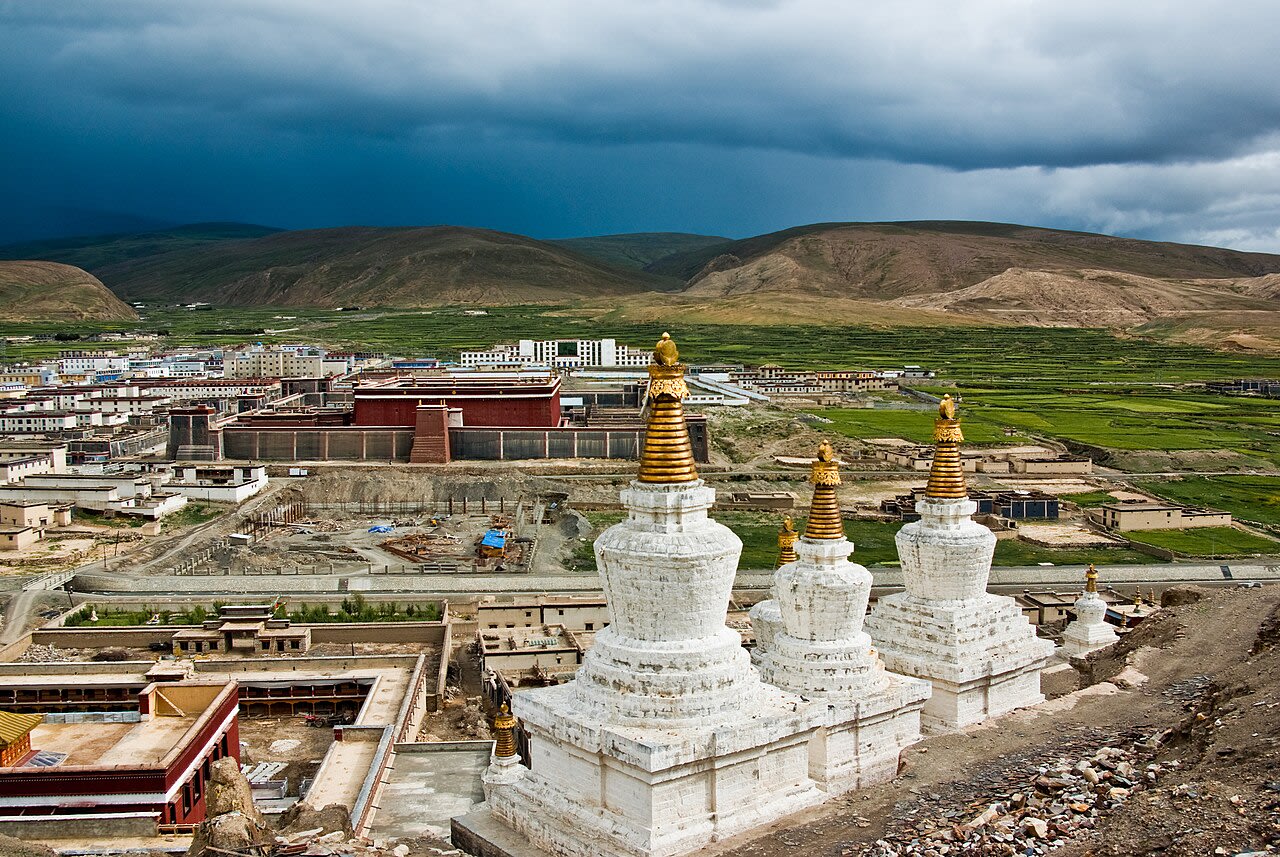
"A millennium of unbroken lineage in pale earth, where 84,000 scrolls line the walls"
Sakya
Tashigang, Tibet, China
Sakya Monastery is the seat of the Sakya school of Tibetan Buddhism, one of the four major schools, founded in 1073 by the Khon family, who trace their ancestry to celestial beings. The Great Temple houses a library wall sixty meters long and ten meters high containing an estimated 84,000 handwritten Buddhist scrolls, one of the world's largest surviving manuscript collections. The monastery's distinctive red, white, and grey-blue striped walls encode the three bodhisattva protectors: wisdom, compassion, and power.
Weather & Best Time
Plan Your Visit
Save this site and start planning your journey.
Quick Facts
Location
Tashigang, Tibet, China
Coordinates
28.9051, 88.0182
Last Updated
Mar 29, 2026
Learn More
Sakya Monastery is the seat of the Sakya school, founded in 1073 by the Khon family. The school's Lamdre teachings, transmitted from the mahasiddha Virupa, integrate sutra and tantra into a complete path. During the Yuan Dynasty, Sakya hierarchs ruled Tibet under Mongol patronage.
Origin Story
The Khon clan traces its ancestry to celestial beings who descended from the Clear Light heaven to the snowfields of Tibet. After many generations, Khon Konchok Gyalpo received teachings from the great Indian master Drogmi Lotsawa and in 1073 selected a site of pale grey earth to build the monastery.
The Lamdre teachings trace from the Indian mahasiddha Virupa, who was expelled from Nalanda monastery for seemingly transgressive behavior, then revealed his extraordinary realization. The teachings passed through a lineage of Indian and Tibetan masters until they reached the Sakya school, where they became the central practice: the complete path to Buddhahood in a single teaching cycle.
Key Figures
Khon Konchok Gyalpo
འཁོན་དཀོན་མཆོག་རྒྱལ་པོ
founder
Founder of Sakya Monastery in 1073 and progenitor of the Khon hereditary lineage of spiritual leadership.
Sakya Pandita
ས་སྐྱ་པཎྜི་ཏ
scholar_statesman
One of the greatest scholars in Tibetan Buddhist history (1182-1251). Negotiated Tibetan submission to the Mongol Empire, establishing the priest-patron relationship that shaped Tibetan-Mongol relations.
Chogyal Phagpa
ཆོས་རྒྱལ་འཕགས་པ
imperial_preceptor
Nephew of Sakya Pandita who became imperial preceptor to Kublai Khan and invented the Phags-pa script. Under his leadership, Sakya hierarchs ruled Tibet.
Virupa
lineage_master
Indian mahasiddha who transmitted the Lamdre (Path and Its Fruit) teachings that became the central practice of the Sakya school.
Spiritual Lineage
The Sakya lineage is unique among Tibetan Buddhist schools in being hereditary through the Khon family. The unbroken transmission from Khon Konchok Gyalpo in 1073 to the present Sakya Trizin spans nearly a millennium. The Lamdre teachings trace from Virupa through Indian and Tibetan masters in an unbroken chain.
Know a Sacred Site We Should Include?
Help us expand our collection of sacred sites. Share your knowledge and contribute to preserving the world's spiritual heritage.