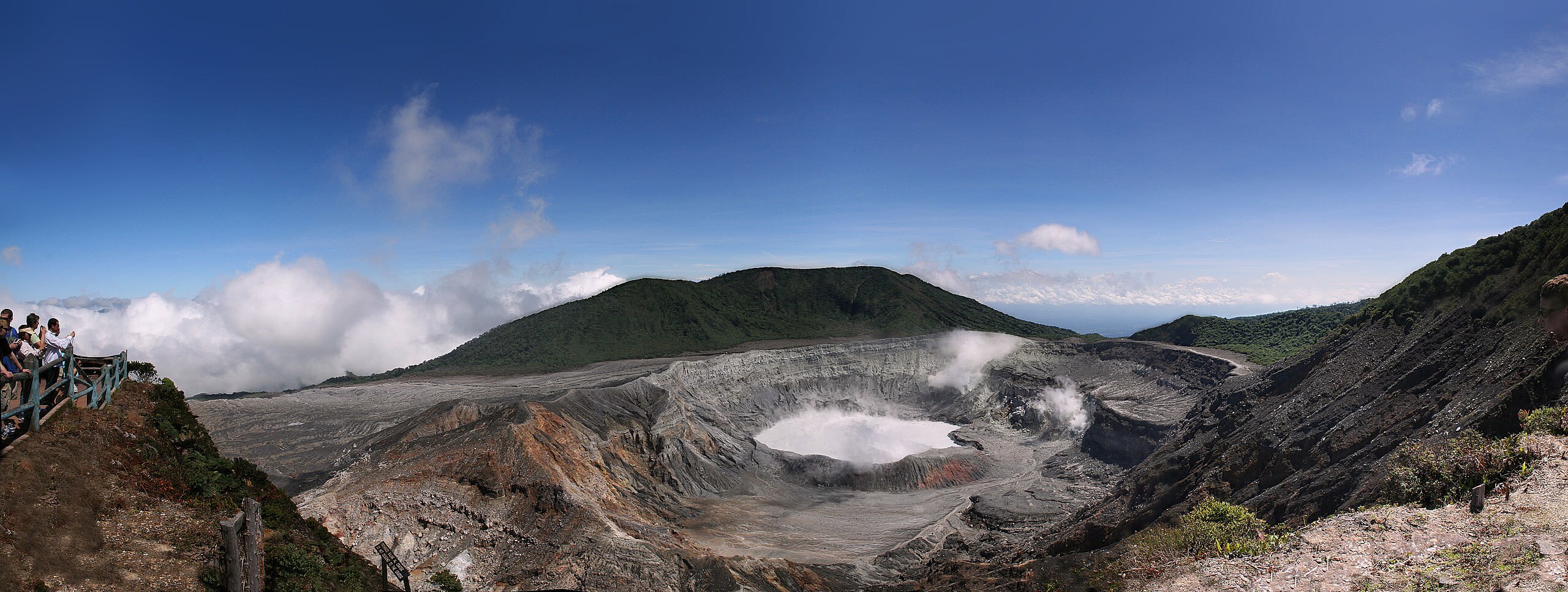
"Where a bird's tears filled what fire had emptied, and the Earth still breathes through acid water"
Poas Volcano
Toro Amarillo, Alajuela Province, Costa Rica
Poas Volcano holds one of the world's largest active craters, a turquoise lake of sulfuric acid that steams and shifts color while fumarolic vents release the Earth's breath into the mountain air. The indigenous Botos people, now vanished as a distinct culture, left behind a legend: a bird called the rualdo wept so deeply over volcanic destruction that its tears created the serene lake on the mountain's southern side. Both lakes persist, destruction and renewal separated by a ridge of volcanic rock.
Weather & Best Time
Plan Your Visit
Save this site and start planning your journey.
Quick Facts
Location
Toro Amarillo, Alajuela Province, Costa Rica
Coordinates
10.2011, -84.2329
Last Updated
Mar 29, 2026
Learn More
Poas Volcano has been active for approximately 65,000 years in its current form. The Botos indigenous people, now vanished as a distinct cultural group, considered the volcano sacred and left behind the legend of the rualdo bird. The national park, established in 1971, was Costa Rica's most visited before the 2017 eruption forced a closure and the subsequent adoption of a reservation system.
Origin Story
The Botos legend of the rualdo bird is the oldest known narrative about Poas Volcano. According to the story, a bird of great beauty lived in the forests on the volcano's slopes. When a volcanic eruption destroyed the forests, the rualdo wept with such grief that its tears filled the dormant southern crater, creating the lake that bears the Botos name. Whether the rualdo refers to a real bird species, now possibly extinct, or a mythological creature is unknown. What the legend preserves is an understanding that the volcanic landscape is defined by the cycle of destruction and renewal, and that grief can be a creative force.
The name Poas itself may derive from an indigenous word, though its exact etymology is uncertain. Some sources suggest a Huetar origin. The name's indigenous roots, like the Botos legend, point to a relationship with this mountain that predates written history by centuries.
Key Figures
The Botos People
Indigenous inhabitants of the area surrounding Poas Volcano who gave their name to the southern crater lake. Their legend of the rualdo bird preserves a spiritual understanding of the volcano's destructive and creative powers. They largely disappeared as a distinct cultural group following European colonization.
Miguel Alfaro
First recorded person to ascend Poas Volcano, in 1828, marking the beginning of the mountain's documented modern history.
OVSICORI
Costa Rica's volcanological and seismological observatory, responsible for monitoring Poas and all active volcanoes in the country. Their work provides the scientific basis for the park's safety protocols.
Spiritual Lineage
Poas carries the memory of the Botos in the name of its dormant lake, though the people themselves are gone. The broader indigenous tradition of volcanic reverence in Central America provides context but cannot reconstruct what was lost. The modern relationship to the mountain is shaped by science, conservation, and tourism, frameworks that illuminate the volcano's physical reality while remaining silent on the spiritual dimensions the Botos recognized.
Know a Sacred Site We Should Include?
Help us expand our collection of sacred sites. Share your knowledge and contribute to preserving the world's spiritual heritage.