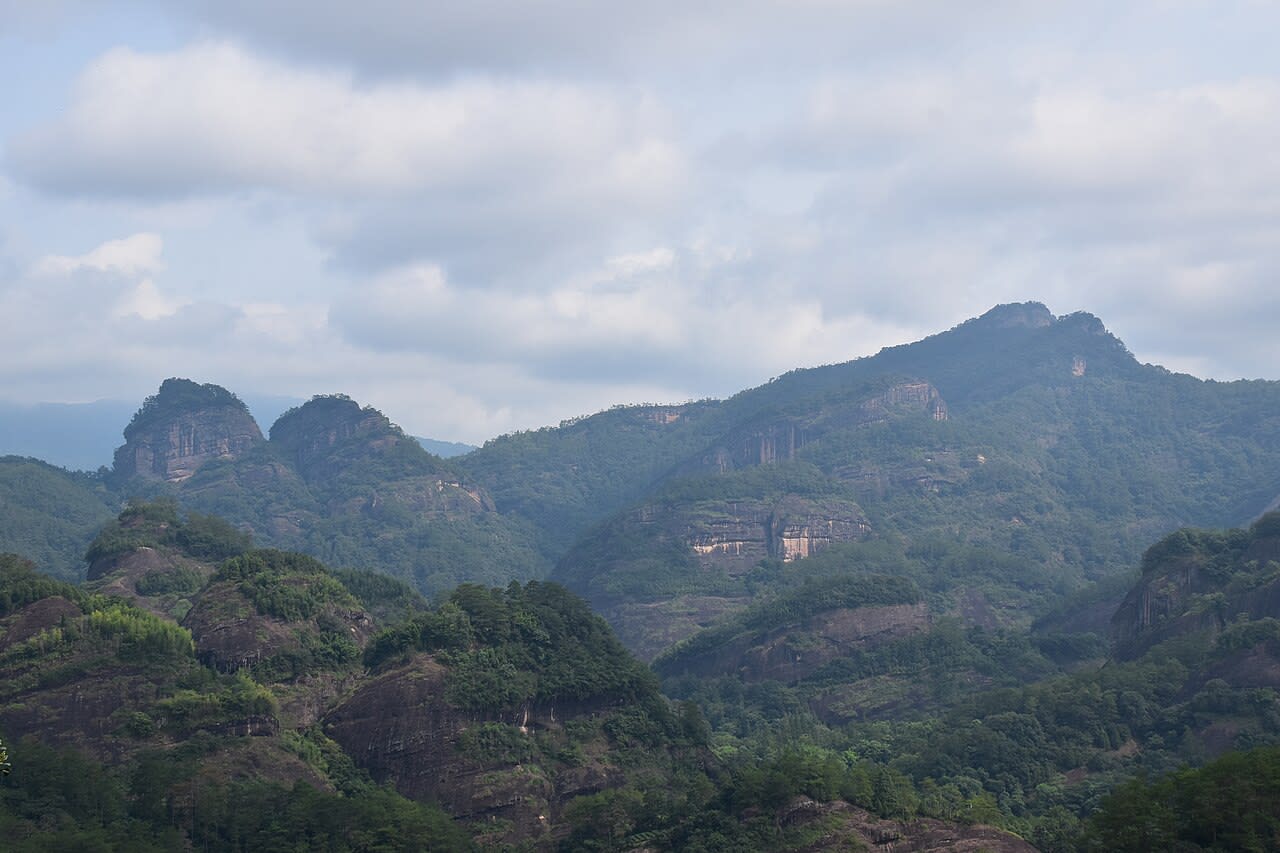
"A Grotto Heaven where immortals feasted, a philosopher thought, and the earth itself produces sacred tea"
Mt. Wu Yi Shan
Wuyishan, Fujian, China
Wuyishan holds a rare convergence: Taoist Grotto Heaven where immortals dwelt, birthplace of Neo-Confucianism where Zhu Xi rewrote East Asian philosophy, and the mountain whose soil and mist produce the world's most revered oolong tea. Ancient boat coffins on inaccessible cliff faces testify to a sacred geography older than any surviving tradition. The Nine Bend River winds through red sandstone gorges that have inspired poets and painters for two millennia.
Weather & Best Time
Plan Your Visit
Save this site and start planning your journey.
Quick Facts
Location
Wuyishan, Fujian, China
Coordinates
27.7171, 117.6830
Last Updated
Mar 29, 2026
Learn More
Wuyishan hosts a convergence of Taoist, Buddhist, and Confucian traditions alongside ancient boat coffin burials over 3,750 years old. Zhu Xi's establishment of his Neo-Confucian academy here in 1183 made the mountain the birthplace of a philosophical revolution. UNESCO inscribed the site in 1999 as a mixed natural and cultural World Heritage Site.
Origin Story
In Taoist mythology, the Wuyi Mountains were the dwelling place of Wuyi Jun, Lord of Wuyi, a celestial being who hosted the Eight Immortals for a great feast. The Nine Bend River was created as a waterway for the immortals' pleasure craft. The thirty-six peaks are said to be the petrified forms of immortals who chose to remain on the mountain rather than return to heaven, so beautiful was the landscape.
The Dahongpao tea legend tells of a Ming Dynasty scholar who fell ill while traveling to the capital for imperial examinations. Monks from the Tian Xin Temple cured him with tea from the mountain. After passing the exams and becoming an official, he returned and draped his red official robe over the tea bushes in gratitude, hence Big Red Robe.
Key Figures
Zhu Xi
朱熹
philosopher
The most influential philosopher in Chinese history after Confucius. Established the Wuyi Academy in 1183, where he created the Neo-Confucian synthesis that shaped East Asian thought for centuries.
Wuyi Jun (Lord of Wuyi)
武夷君
deity
Celestial being and guardian of the Wuyi Mountains in Taoist mythology, who hosted the Eight Immortals for a feast.
Spiritual Lineage
The Taoist lineage at Wuyishan extends from the Han Dynasty through continuous practice at the Wuyi Palace and associated shrines. The Buddhist lineage at Tian Xin Temple traces from the Tang Dynasty. The Confucian lineage runs from Zhu Xi's academy through the Neo-Confucian intellectual tradition. The tea lineage connects Buddhist monks who first cultivated Wuyi tea with the contemporary tea masters who maintain the tradition.
Know a Sacred Site We Should Include?
Help us expand our collection of sacred sites. Share your knowledge and contribute to preserving the world's spiritual heritage.