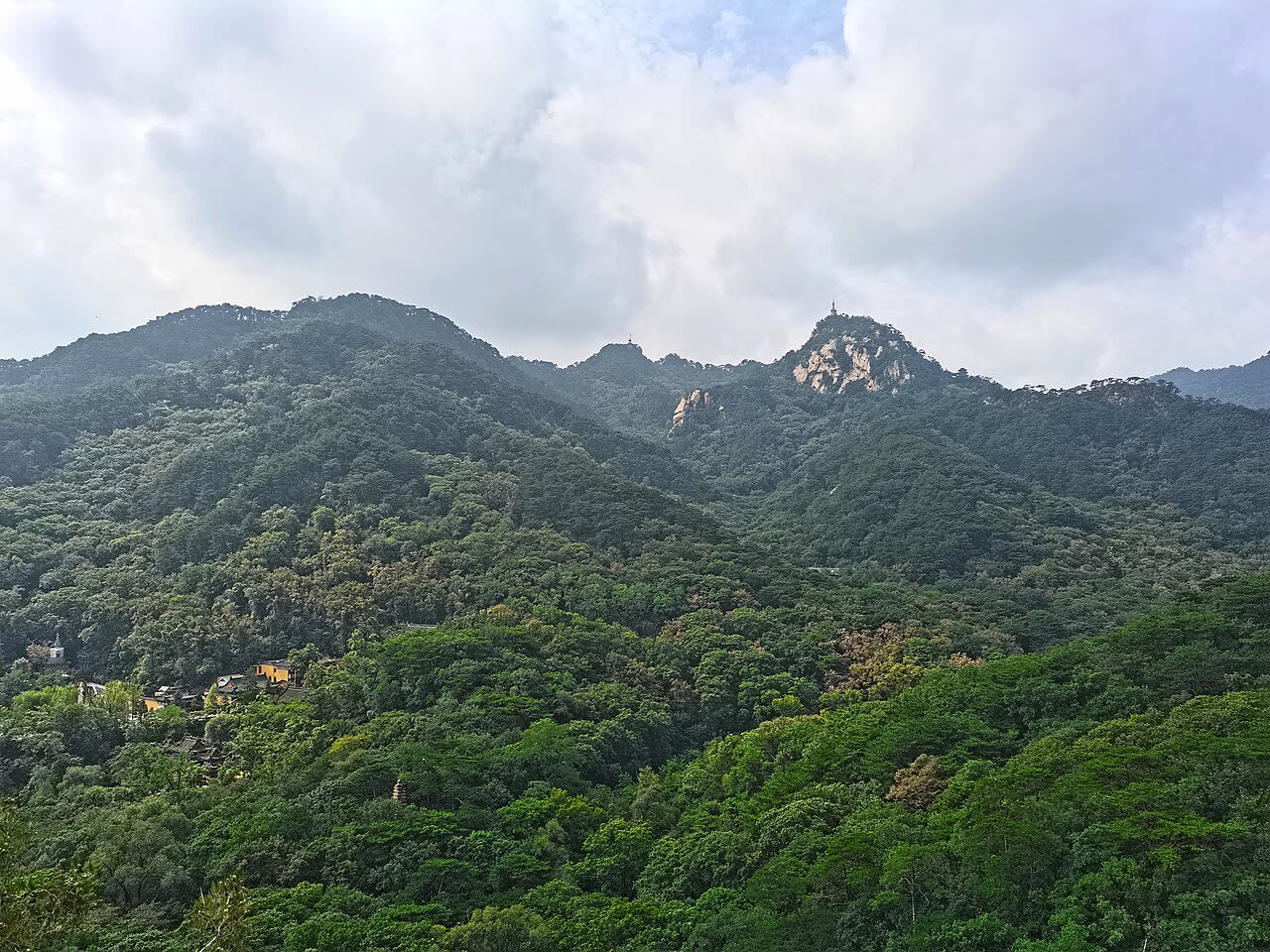
"A thousand lotus peaks where Buddhism and Taoism share a mountain in quiet coexistence"
Mt. Qian Shan
Wenquan Subdistrict, Liaoning, China
Qian Shan — Thousand Mountain — rises from the Liaoning plain in northeastern China with 999 peaks, each said to resemble a lotus petal. For over fifteen hundred years, Buddhist and Taoist communities have shared this mountain in a rare harmony, occupying different peaks and valleys of the same sacred landscape. In 1993, the discovery of a natural rock formation strikingly resembling Maitreya, the Future Buddha, added a dimension of geological revelation.
Weather & Best Time
Plan Your Visit
Save this site and start planning your journey.
Quick Facts
Location
Wenquan Subdistrict, Liaoning, China
Coordinates
41.0264, 123.1361
Last Updated
Mar 29, 2026
Learn More
Buddhist presence at Qian Shan dates from the fifth or sixth century, Taoist presence from the Tang Dynasty. The 1993 discovery of a natural rock formation resembling Maitreya elevated the mountain's pilgrimage significance.
Origin Story
The mountain's nine hundred and ninety-nine peaks are likened in Buddhist tradition to the petals of a thousand-petal lotus — the sacred flower of Buddhism. The mountain is a natural mandala. When the Giant Jade Buddha was recognized in 1993, it was interpreted as Maitreya revealing his presence — the Future Buddha manifesting in stone before his coming.
In the Taoist reading, the mountain's mist-shrouded peaks, ancient pines, and hidden caves mark it as a landscape shaped by the Tao — a natural dwelling for immortals. The peaks and valleys form a visible balance of yin and yang.
Key Figures
Maitreya (弥勒佛)
The Future Buddha, whose natural likeness in rock was discovered on the mountain in 1993. The seventy-meter formation is recognized as the world's largest natural Maitreya image.
Spiritual Lineage
The dual Buddhist-Taoist lineage at Qian Shan represents the broader Chinese pattern of religious synthesis — what scholars call the Three Teachings (Buddhism, Taoism, Confucianism) existing in complementary rather than competitive relationship. The mountain embodies this principle in its spatial organization.
Know a Sacred Site We Should Include?
Help us expand our collection of sacred sites. Share your knowledge and contribute to preserving the world's spiritual heritage.