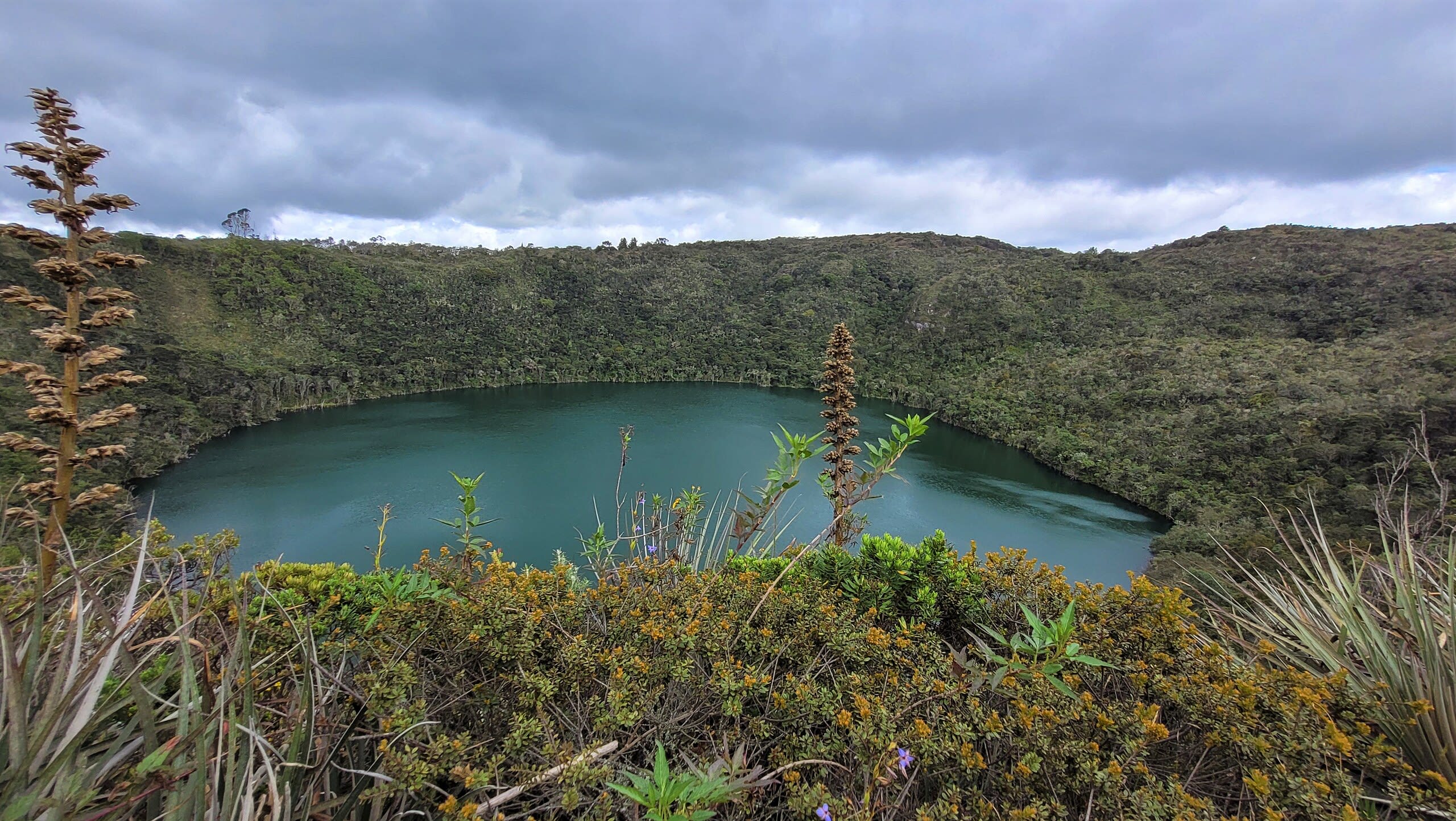
"The sacred Muisca lake where gold was prayer and El Dorado was born"
Lake Guatavita
Sesquilé, Cundinamarca, Colombia
At 3,000 meters in the Colombian Andes, a nearly perfect circle of water sits in a crater ringed by green walls. This is Lake Guatavita, the most sacred body of water in Muisca cosmology and the site of the ceremony that gave birth to the El Dorado legend. For centuries, the Muisca cast gold objects and emeralds into these waters as offerings to the gods, and a new paramount chief was covered in gold dust and floated to the center of the lake to wash the gold from his body as a communion between the human and the divine.
Weather & Best Time
Plan Your Visit
Save this site and start planning your journey.
Quick Facts
Location
Sesquilé, Cundinamarca, Colombia
Tradition
Site Type
Year Built
1531, 1537
Coordinates
4.9772, -73.7756
Last Updated
Mar 29, 2026
Learn More
Lake Guatavita was the most sacred body of water in Muisca cosmology, the site of the gold-offering ceremony that gave birth to the El Dorado legend, and the object of four centuries of treasure hunting that the Colombian government ended in 1965.
Origin Story
According to Muisca legend, a cacique's wife, wrongly accused of infidelity, threw herself into the lake with her daughter. The grief-stricken cacique consulted a shaman who told him his family was alive at the bottom, living with a great serpent. The cacique made offerings to the lake to honor them, beginning the tradition. In another telling, the goddess Bachué emerged from these waters carrying a child, populated the world, and returned to the lake. The ceremony witnessed by Spanish chroniclers — the Zipa covered in gold dust, floating on a raft, washing gold into the water — became El Dorado.
Key Figures
The Muisca Zipa
Paramount chief whose gold-dust coronation at the lake became the basis of the El Dorado legend
Bachué
Muisca goddess of creation associated with the waters of sacred lakes
Gonzalo Jiménez de Quesada
Spanish conquistador who encountered the Muisca and heard the El Dorado legend in 1537
Antonio de Sepúlveda
Cut a notch in the crater rim in 1580 to drain the lake; the collapse killed many workers and left a scar still visible today
Spiritual Lineage
Lake Guatavita was the most important site in a network of sacred lakes throughout the Muisca highland territory. The Muisca Raft, discovered near Pasca in 1969 and now in Bogotá's Gold Museum, provides material confirmation of the El Dorado ceremony. The lake is connected to El Infiernito and other Muisca ceremonial sites across the Boyacá and Cundinamarca highlands.
Know a Sacred Site We Should Include?
Help us expand our collection of sacred sites. Share your knowledge and contribute to preserving the world's spiritual heritage.