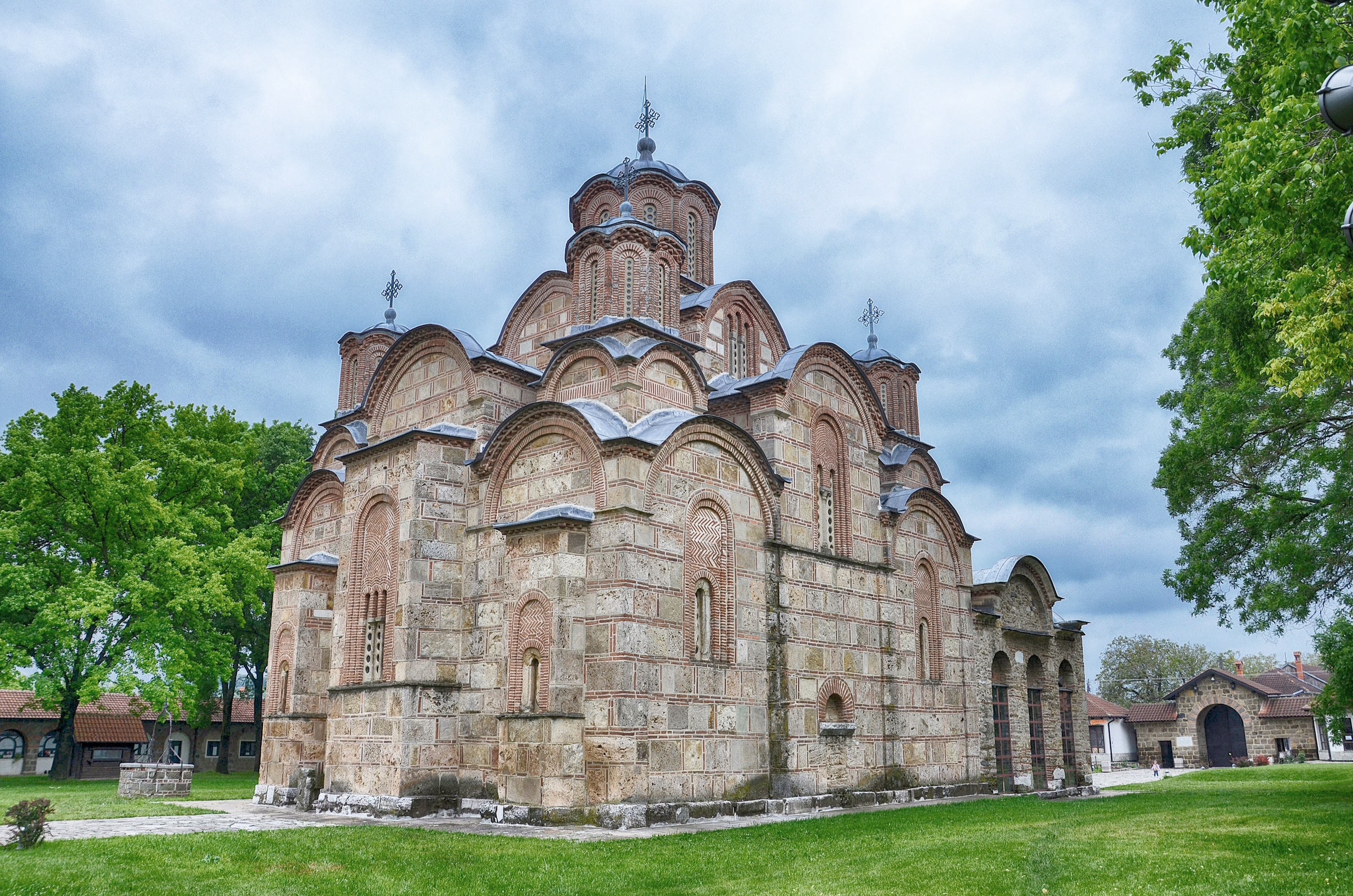
"Where Byzantine artistry and Serbian Orthodox devotion have endured for seven centuries"
Gračanica Monastery
Gračanica, Kosovo
Consecrated in 1321, Gracanica Monastery rises in the heart of Kosovo as the finest achievement of Serbian medieval art. Within its compact walls, over four thousand painted faces watch from frescoes that represent the peak of late Byzantine mastery. Twenty-four nuns maintain the daily cycle of prayer that has continued, unbroken, since King Milutin laid these stones.
Weather & Best Time
Plan Your Visit
Save this site and start planning your journey.
Quick Facts
Location
Gračanica, Kosovo
Tradition
Site Type
Year Built
1321
Coordinates
42.5985, 21.1935
Last Updated
Jan 11, 2026
Learn More
Gracanica Monastery was built between 1310-1321 by King Stefan Milutin, the most prolific church builder in Serbian history, as the seat of the ancient Eparchy of Lipljan. It represents the culmination of Serbian medieval art and the fusion of Byzantine and local traditions. The frescoes, painted by a workshop led by Michael Astrapas of Thessaloniki, are considered among the finest achievements of late Byzantine painting.
Origin Story
King Stefan Uros II Milutin ruled Serbia during its golden age, extending his realm and filling it with churches. He built or restored over forty foundations—so many that later traditions claimed he could not remember them all. Gracanica was his last and finest endowment.
Milutin's marriage to Simonida, daughter of Byzantine Emperor Andronikos II Palaiologos, brought a wave of Byzantine culture to Serbia. Court ceremonies, dress, titles, and artistic styles all reflected the sophisticated traditions of Constantinople. When Milutin decided to rebuild the ruined churches at the site of the Eparchy of Lipljan—a bishopric tracing its origins to the earliest centuries of Christianity in the Balkans—he summoned the finest talent his Byzantine connections could provide.
The architect, Vitus from Kotor, designed a church that synthesized the cross-in-square plan of Thessalonian Byzantine architecture with the pronounced verticality inherited from the earlier Serbian Raska school. The result was something new—later scholars would call it the 'Gracanica type'—a style of church building that would influence Serbian religious architecture for generations.
For the frescoes, Milutin engaged a workshop believed to have been led by Michael Astrapas, a painter who had worked on other royal commissions and who represented the artistic movement scholars call the Paleologan Renaissance. Between 1321 and 1322, this workshop covered the interior with images that rival contemporary work in Constantinople itself. When Milutin issued the monastery's charter in 1321, he declared that he had seen the ruins of earlier churches and built anew from the ground—decorating it, as his inscription proclaims, both within and without.
Key Figures
Stefan Milutin
Стефан Милутин
founder
King of Serbia 1282-1321, known as the Holy King after his canonization. Builder of over forty churches, he created Gracanica as his final and most magnificent endowment. His portrait appears on the monastery walls, presenting the church to Christ.
Queen Simonida
Симонида
founder
Daughter of Byzantine Emperor Andronikos II, she married Milutin as a child and became the conduit for Byzantine artistic and cultural influence in medieval Serbia. Her portrait in Gracanica, noted for its beauty, appears alongside her husband's.
Michael Astrapas
artist
Leading painter from Thessaloniki whose workshop is believed to have created the Gracanica frescoes. His work represents the Paleologan Renaissance—the final flowering of Byzantine art. He had previously worked on other Milutin commissions.
Theotokos (Virgin Mary)
Богородица
patron
The monastery is dedicated to the Dormition of the Most Holy Theotokos. Images of the Virgin appear throughout the church, and her feast day on August 15/28 is the monastery's patronal celebration.
Spiritual Lineage
Gracanica was designed as the seat of the Eparchy of Lipljan, an ancient bishopric serving the region since the early centuries of Christianity. The site itself held earlier churches—an early Byzantine basilica and a thirteenth-century church—whose ruins Milutin incorporated into his foundation. When the Serbian Archbishopric was elevated to Patriarchate in 1346, twenty-five years after Gracanica's consecration, the Bishop of Lipljan received the title of Metropolitan. The monastery thus served as a metropolitan cathedral until Ottoman conquest disrupted ecclesiastical organization. Through centuries of Ottoman rule, monastic life continued. The community adapted, survived, and maintained the liturgical tradition that gave the place meaning. After World War II, the monastery became a convent, its male monastic community replaced by the sisterhood that continues today. The Kosovo War of 1998-99 brought the monastery unexpected prominence when the Serbian Orthodox bishop transferred his seat from Prizren to Gracanica, returning the monastery to its original function as episcopal headquarters. Today, under the protection of Kosovo Police after the handover from KFOR, Gracanica serves simultaneously as convent, episcopal seat, and living symbol of Serbian Orthodox presence in Kosovo.
Know a Sacred Site We Should Include?
Help us expand our collection of sacred sites. Share your knowledge and contribute to preserving the world's spiritual heritage.