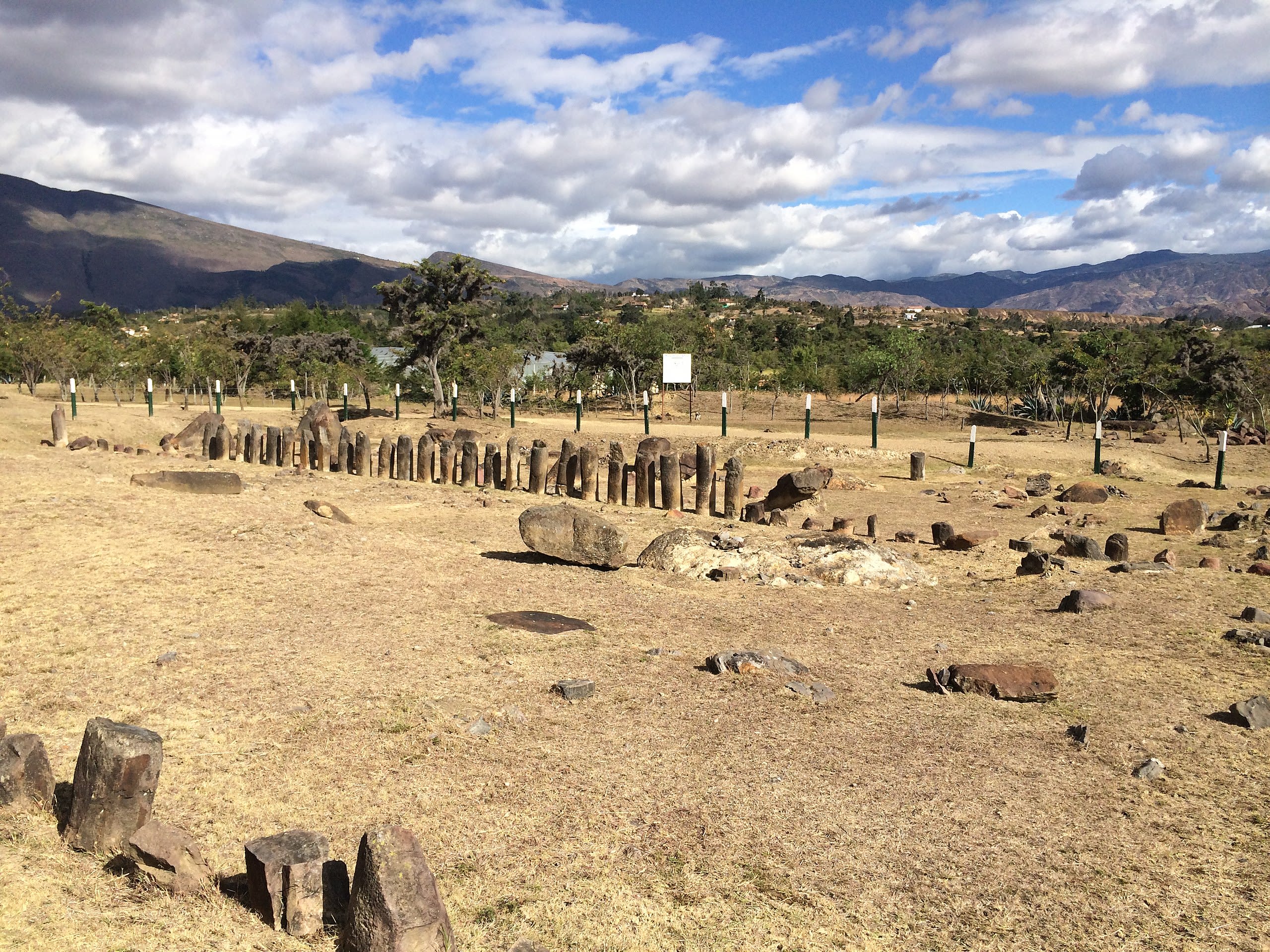
"A Muisca astronomical observatory where stone columns track the sun across three millennia"
El Infiernito
Villa de Leyva, Boyacá, Colombia
Eight kilometers from the colonial town of Villa de Leyva, 109 stone monoliths stand in the Boyacá highlands at 2,200 meters elevation. Radiocarbon dated to approximately 900 BCE, El Infiernito is one of the oldest known astronomical observatories in the Americas. The Muisca people used these stones to track solstices and equinoxes, marking the agricultural calendar through the precise alignment of phallic columns with the sun's seasonal path.
Weather & Best Time
Plan Your Visit
Save this site and start planning your journey.
Quick Facts
Location
Villa de Leyva, Boyacá, Colombia
Site Type
Coordinates
5.6479, -73.5585
Last Updated
Mar 29, 2026
Learn More
El Infiernito was built around 900 BCE by the Muisca, one of the most advanced pre-Columbian civilizations in South America, as an astronomical observatory and ceremonial center integrated into their cosmological understanding.
Origin Story
According to Muisca mythology, the goddess Bachué emerged from the waters of Lake Iguaque carrying a young child. Together they populated the world, and when her work was done, Bachué returned to the lake as a serpent. El Infiernito's fertility stones honor this creative power. The site was established as a place where the caciques could read the will of the gods through the sun's movements across the stone alignments. When Spanish missionaries encountered the phallic columns in the 16th century, they named the place 'The Little Hell' and attempted to suppress the ceremonies conducted there.
Key Figures
Bachué
Muisca goddess of fertility and creation who emerged from Lake Iguaque and populated the world
Muisca caciques
Chiefs who used the stone alignments to determine planting and harvest times and to lead ceremonies
Bochica
Muisca culture hero and solar deity connected to the astronomical observations at the site
Modern archaeologists
Researchers who established the site's nearly 3,000-year age through radiocarbon dating and documented its astronomical alignments
Spiritual Lineage
El Infiernito belongs to the broader Muisca ceremonial network that included Lake Guatavita, the Sun Temple at Sogamoso (now destroyed), and numerous other sites across the Colombian highlands. The Muisca were one of the four most advanced pre-Columbian civilizations in the Americas, alongside the Aztec, Maya, and Inca.
Know a Sacred Site We Should Include?
Help us expand our collection of sacred sites. Share your knowledge and contribute to preserving the world's spiritual heritage.