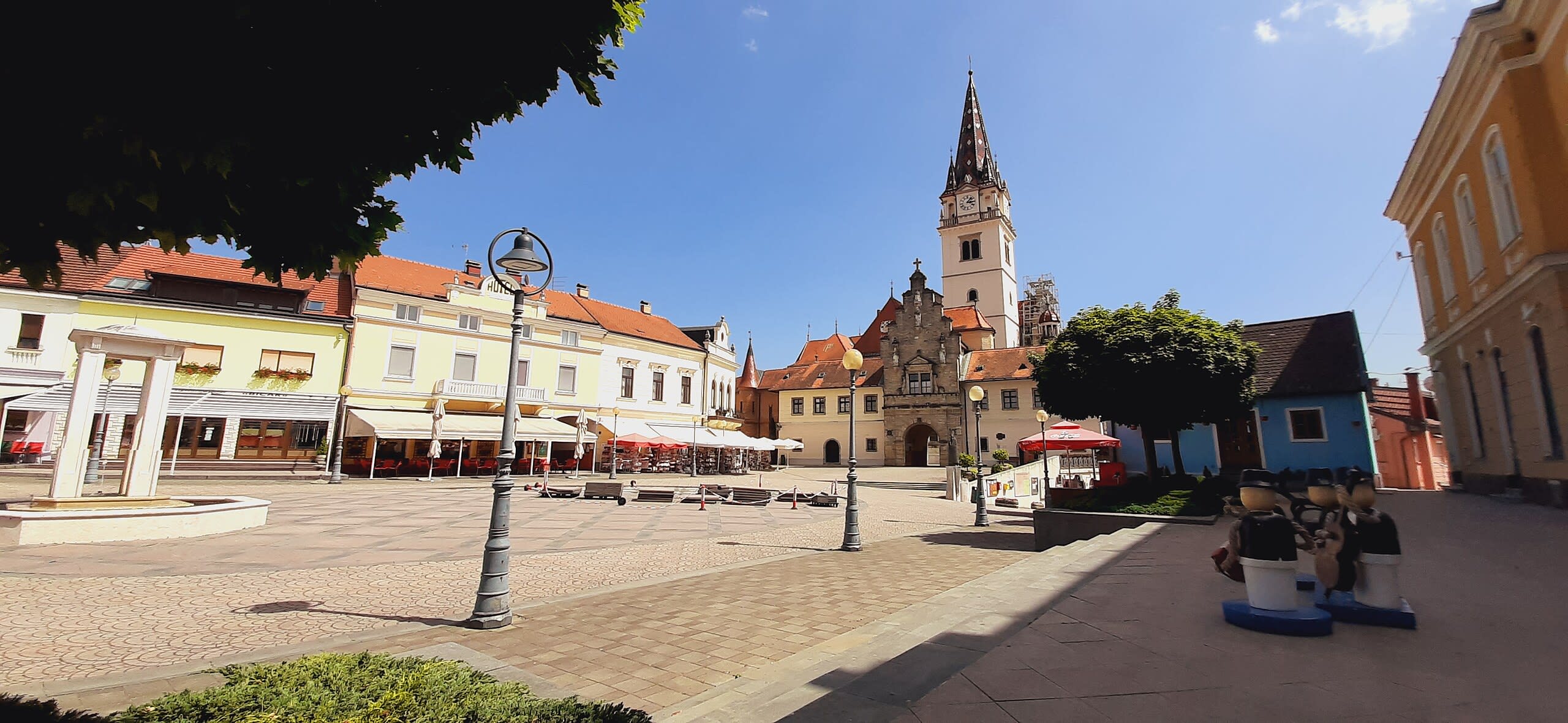
"Croatia's spiritual heart, where a Black Madonna was twice hidden from invaders and twice revealed by light"
Church of the Assumption of the Blessed Virgin Mary
Marija Bistrica, Croatia
Marija Bistrica houses Croatia's most revered sacred image: a wooden Black Madonna that was twice concealed in the church walls to protect it from Ottoman raiders and twice rediscovered, reportedly accompanied by supernatural light. The shrine receives approximately 800,000 visitors annually. In 1998, Pope John Paul II visited and beatified Cardinal Alojzije Stepinac before an estimated 500,000 people, an event that fused Marian devotion with Croatian national identity.
Weather & Best Time
Plan Your Visit
Save this site and start planning your journey.
Quick Facts
Location
Marija Bistrica, Croatia
Tradition
Site Type
Coordinates
46.0010, 16.1100
Last Updated
Mar 29, 2026
The Black Madonna of Marija Bistrica, believed to date to the 15th century or earlier, is Croatia's most revered sacred image. The shrine's significance was forged through two cycles of concealment from Ottoman invaders and miraculous rediscovery, the construction of a neo-Renaissance basilica by Hermann Bolle, elevation to minor basilica status in 1923, and the 1998 papal visit.
Origin Story
The first origin event occurred in 1545, when Ottoman forces threatened the Croatian lands and the parish priest of Bistrica concealed the Black Madonna statue within the church walls. The statue remained hidden for 43 years. In 1588, a miraculous light shone from the wall, revealing the hiding place. The rediscovered Madonna was restored to public veneration.
The second origin event occurred a century later. In 1650, the Ottoman threat renewed, and the statue was hidden again in a wall niche. In 1684, the Croatian Parliament sent a formal committee to search for the statue. They found it in the wall, reportedly again accompanied by supernatural light. This second recovery, authorized by the national parliament and validated by the bishop of Zagreb, transformed Marija Bistrica from a local devotion into a shrine of national importance. The fact that the same pattern repeated, concealment followed by light, gave the narrative a quality of divine confirmation.
Key Figures
The Unknown Sculptor
Creator of the Black Madonna statue, believed to date to the 15th century or earlier. The sculptor's identity and the circumstances of the statue's creation are unknown, adding to the image's sense of timeless, sourceless sanctity.
Hermann Bolle
German-born architect (1845-1926) who designed the current neo-Renaissance basilica between 1879 and 1882. Bolle became one of the most prominent architects in Zagreb and shaped the appearance of multiple Croatian churches and public buildings.
Pope John Paul II
Visited Marija Bistrica on October 3, 1998, and beatified Cardinal Alojzije Stepinac before an estimated 500,000 pilgrims, one of the largest gatherings in Croatian history.
Cardinal Alojzije Stepinac
Archbishop of Zagreb during World War II and the early communist period. Imprisoned in 1946, died under house arrest in 1960. Beatified at Marija Bistrica in 1998, becoming a symbol of Catholic perseverance through political persecution.
Spiritual Lineage
Marija Bistrica belongs to the Roman Catholic Marian tradition and specifically to the European tradition of Black Madonna veneration. The Black Madonna statues and icons found across Europe, from Czestochowa to Montserrat, form a network of deeply venerated dark-skinned Marian images whose origins and darkening are variously attributed to age, candle smoke, or original artistic intention. The Marija Bistrica Black Madonna's significance within this network is amplified by its narrative of concealment and miraculous rediscovery, a pattern that appears unique in its double occurrence.
Know a Sacred Site We Should Include?
Help us expand our collection of sacred sites. Share your knowledge and contribute to preserving the world's spiritual heritage.