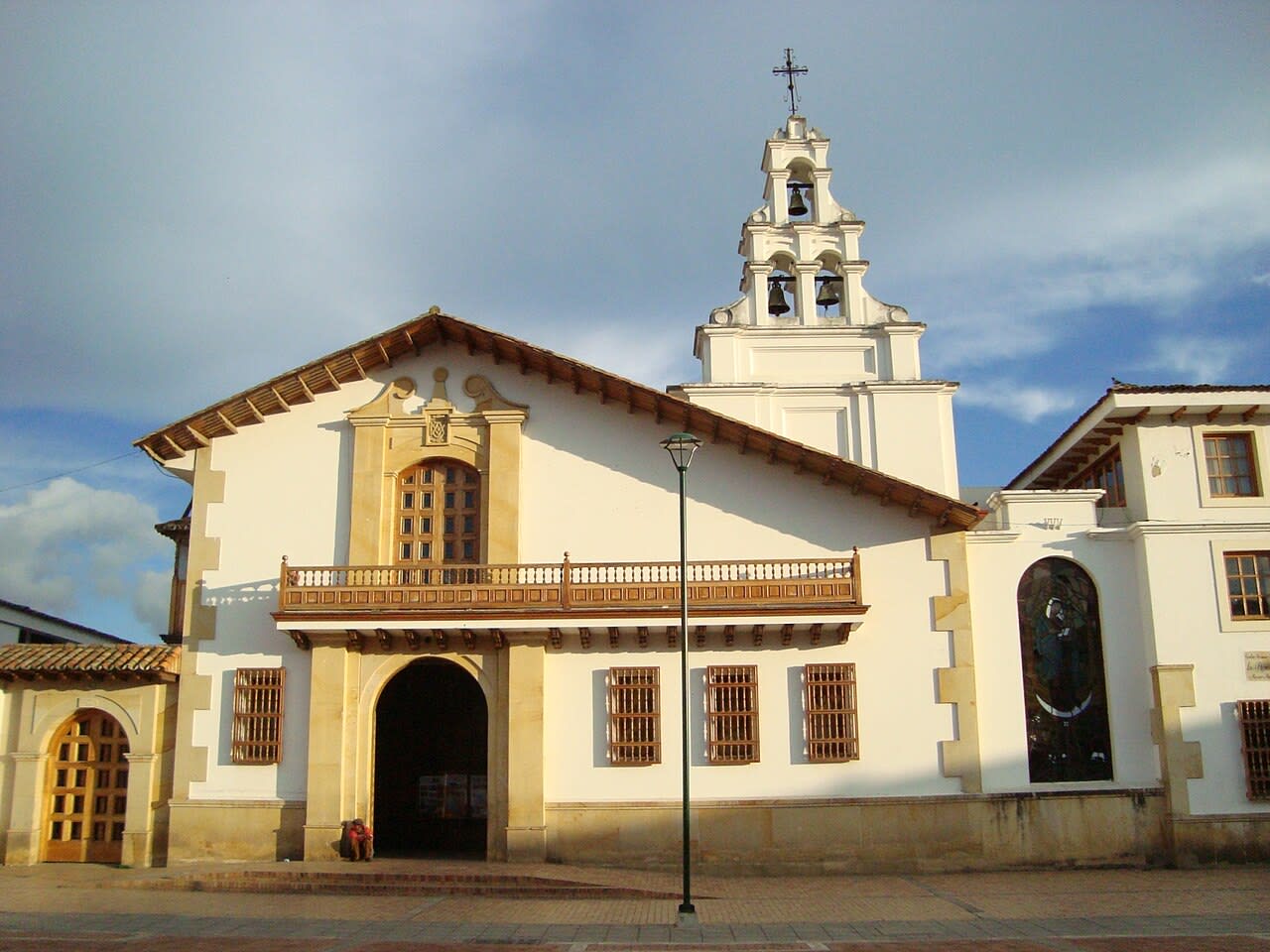
"The ground where a ruined painting was restored, and where centuries of pilgrims dug a well with their hands"
Church of Our Lady of the Rosary of the Renewal
Boyacá, Boyacá, Colombia
In the center of Chiquinquira, a modest parish church stands on the exact spot where the most significant miracle in Colombian Catholic history occurred. While the miraculous painting now resides in the nearby basilica, this church preserves something the basilica cannot: the ground itself, and beneath it, a well created over centuries by pilgrims who dug the earth with their hands, believing it held healing grace.
Weather & Best Time
Plan Your Visit
Save this site and start planning your journey.
Quick Facts
Location
Boyacá, Boyacá, Colombia
Tradition
Site Type
Coordinates
5.6164, -73.8175
Last Updated
Mar 29, 2026
The Church of the Renovation preserves the site of the 1586 miracle that established the devotion to Our Lady of the Rosary of Chiquinquira, Colombia's national patroness. The current structure dates from a 1967 reconstruction of the 1760 church built on the original chapel site.
Origin Story
On December 26, 1586, Maria Ramos was praying before a deteriorated painting of the Virgin of the Rosary in a small chapel on this site. She had spent months cleaning the abandoned space and praying daily before the ruined canvas. That morning, an indigenous woman named Isabel and her young son were present. The painting suddenly radiated brilliant light and was completely restored to its original beauty.
The miracle established Chiquinquira as the most important pilgrimage destination in Colombia. The painting was eventually declared the patroness of Colombia, and the devotion spread throughout the country and beyond. As pilgrimages grew, the painting was moved to a larger basilica built to accommodate the faithful. The original miracle site received its own formal church in 1760, preserving the ground where the event occurred.
Over the centuries that followed, pilgrims visiting the site began a practice that would create the church's most distinctive feature: they dug at the spot where the miracle occurred, believing the earth itself held healing properties. This gradual removal of earth eventually created the Pozo de la Virgen, the Well of the Virgin, which filled with water of exceptional purity. The well remains beneath the church today.
Key Figures
Maria Ramos
Maria Ramos
witness to the miracle
The devoted woman whose months of prayer before the deteriorated painting preceded and, in the Catholic understanding, occasioned the miraculous restoration. Her persistence in cleaning an abandoned chapel and praying before a ruined image embodies the humility at the heart of the Chiquinquira devotion.
Isabel
witness to the miracle
An indigenous woman present with her young son at the moment of the miraculous restoration. Her presence connects the devotion to Colombia's indigenous communities and to the encounter between European Catholicism and indigenous spiritual experience.
Pope Pius VII
ecclesiastical authority
Declared the Virgin of Chiquinquira patroness of Colombia in 1829, elevating the devotion from a regional miracle to a national identity.
Spiritual Lineage
The lineage of the Renovation church is one of continuity through transformation. The original chapel, humble and abandoned, was the setting for the 1586 miracle. As the devotion grew, a formal church was built on the site in 1760. The 1967 reconstruction modernized the structure while preserving the sacred ground. Through each iteration, the essential function remained: to mark and honor the place where the miracle occurred. The Dominican order played an early role in the devotion, and the Mariano Museum preserves artifacts from the colonial period of the pilgrimage. The relationship between the Renovation church and the basilica evolved as well: originally the primary site, the Renovation church became a complement to the basilica after the painting was moved, finding its identity not in housing the miraculous object but in preserving the miraculous ground.
Know a Sacred Site We Should Include?
Help us expand our collection of sacred sites. Share your knowledge and contribute to preserving the world's spiritual heritage.