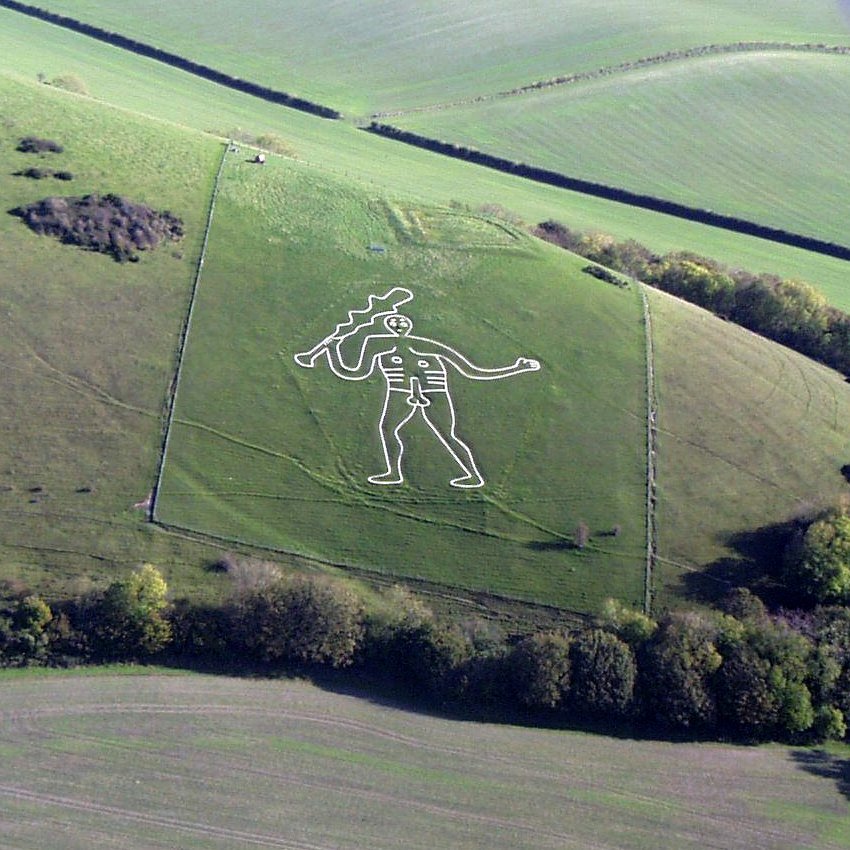
"Ancient chalk figure where fertility seekers encounter masculine earth energy carved into Dorset's hillside"
Cerne Abas Giant
Cerne Abbas, England, United Kingdom
The Cerne Abbas Giant rises from Dorset's chalk downs as one of Britain's most enigmatic monuments. This 180-foot naked figure, club raised and phallus erect, has drawn fertility pilgrims for centuries. Recent dating places its creation in the Saxon period, around 700-1100 AD, though its purpose remains debated. The sheer strangeness of encountering such an explicit ancient image cuts through modern assumptions and opens space for wonder.
Weather & Best Time
Plan Your Visit
Save this site and start planning your journey.
Quick Facts
Location
Cerne Abbas, England, United Kingdom
Site Type
Coordinates
50.8137, -2.4745
Last Updated
Jan 5, 2026
Learn More
The 2021 dating study placed the Giant's creation in the Saxon period (700-1100 AD), ending decades of speculation. The 2024 Hercules identification adds another interpretive layer.
Origin Story
For centuries the Giant's origins remained mysterious. Local legend claimed villagers traced the outline of an actual giant who terrorized the area, killing him as he slept on the hillside. Antiquarians proposed various theories from prehistoric to Roman to medieval origins. The 2021 optically stimulated luminescence study, analyzing soil from the figure's trenches, finally provided scientific dating: 700-1100 AD, the Late Saxon period. This overturned both prehistoric theories and the popular suggestion that the Giant was a 17th-century satire of Oliver Cromwell. In 2024, Oxford scholar Helen Gittos published research identifying the figure as likely Hercules, noting the club, nudity, and pose match classical depictions. The cult of Hercules persisted in Britain through the early medieval period. Gittos suggests the site may have served as a muster point where warriors gathered before military expeditions, invoking the hero's strength.
Key Figures
Hercules (attributed identity)
Helen Gittos
Spiritual Lineage
The Giant represents a tradition of British hill figures that includes the Uffington White Horse and Long Man of Wilmington. These chalk-cut images required regular maintenance and community commitment across centuries. The Giant's survival reflects the value successive generations placed on preserving him, whether for religious, cultural, or practical reasons.
Know a Sacred Site We Should Include?
Help us expand our collection of sacred sites. Share your knowledge and contribute to preserving the world's spiritual heritage.