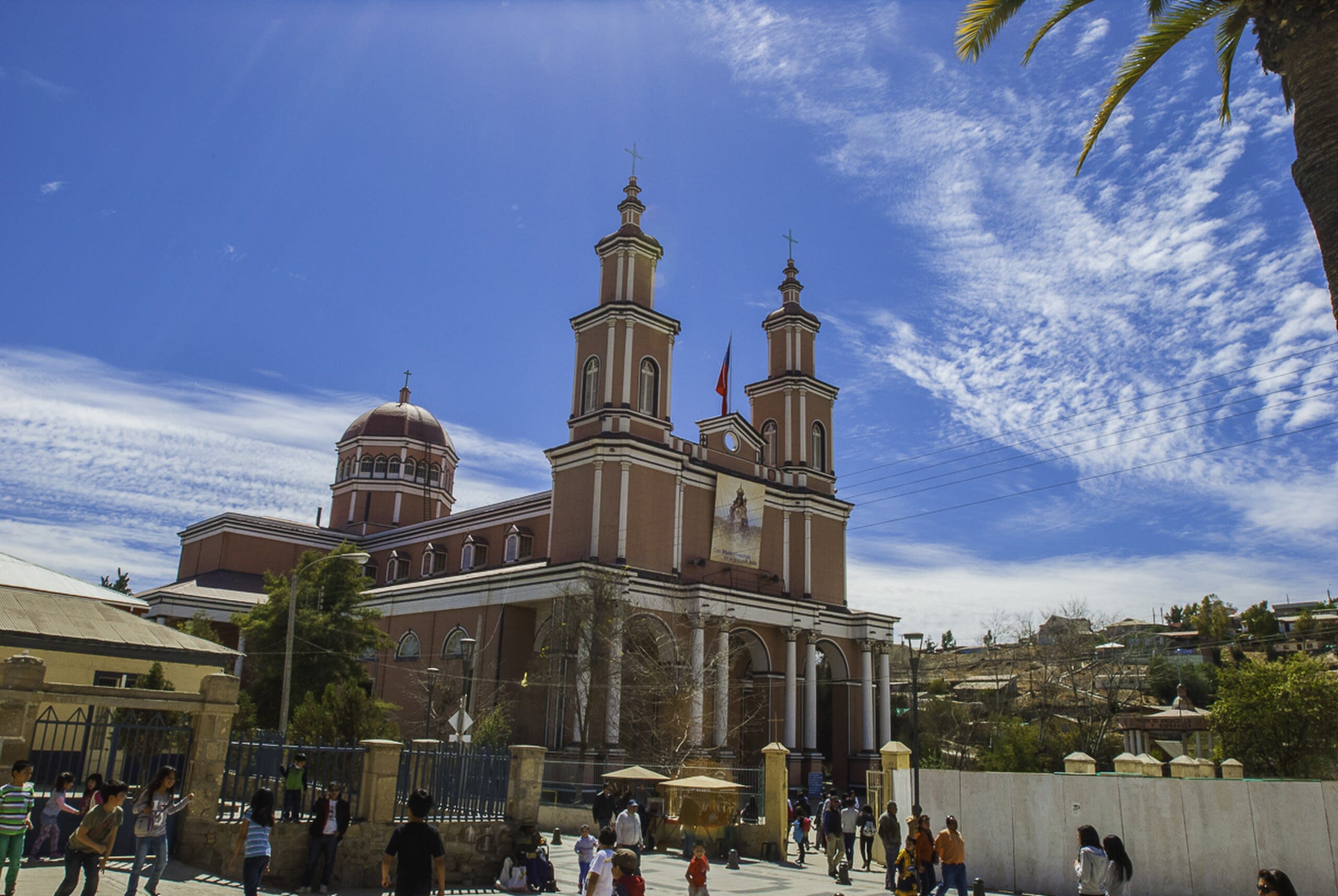
"Where indigenous dancers have served the Virgin with their bodies for over four hundred years in Chile's arid mining hills"
Andacollo, Basilica of Andacollo
Andacollo, Coquimbo Region, Chile
The Basilica of Andacollo, in Chile's arid Coquimbo Region, is the country's most important Marian pilgrimage site. Since the sixteenth century, when an indigenous person found a carved Virgin in the hills, the devotion has drawn miners, farmers, and seekers to this small town. The Bailes Chinos, dance groups whose tradition dates to at least 1584 and is recognized by UNESCO, perform for hours under the sun, offering their physical endurance as prayer. During the December Fiesta Grande, up to half a million pilgrims transform the town into a sea of faith.
Weather & Best Time
Plan Your Visit
Save this site and start planning your journey.
Quick Facts
Location
Andacollo, Coquimbo Region, Chile
Coordinates
-30.2316, -71.0848
Last Updated
Mar 29, 2026
Learn More
A sixteenth-century indigenous discovery of a Virgin Mary statue in Chile's mining hills became the foundation of the country's most important Marian pilgrimage, enriched by the UNESCO-recognized Bailes Chinos dance tradition dating to at least 1584.
Origin Story
The foundational story of Andacollo is a story of finding. During the Spanish conquest of Chile, an indigenous person discovered a carved wooden statue of the Virgin Mary hidden in the hills near Andacollo. The circumstances of the finding and the origin of the statue are unknown. Whether it was left by early missionaries or arrived through other means became part of the devotion's mystique.
The indigenous community and the Spanish Catholic settlers both venerated the image, creating from the outset a shared devotion that crossed the colonial divide. The miners of Andacollo adopted the Virgin as their patron, asking her protection for their work underground. This occupational dimension, the Virgin as protector of those who enter the earth, gave the devotion a particular character: raw, physical, connected to the labor of the body.
The Bailes Chinos tradition emerged from this same context of convergence. By 1584, indigenous communities were performing devotional dances for the Virgin, preserving pre-Columbian dance forms and musical instruments within the framework of Catholic worship. The word chino, from the Quechua for servant, defined the relationship: the dancers served the Virgin through their bodies, and the service was physical endurance as prayer.
Key Figures
The unnamed indigenous finder
discoverer of the Virgin's statue
An indigenous person who found the carved wooden statue of the Virgin Mary in the hills near Andacollo during the Spanish conquest. Their identity has not been recorded, but their discovery established the devotion that became Chile's most important Marian pilgrimage.
Bailes Chinos cofradías
keepers of the dance tradition
The devotional dance groups that have performed for the Virgin of Andacollo since at least 1584. These cofradías maintain their own organizational structures, costumes, choreography, and musical traditions, transmitting the practice across generations. UNESCO inscribed the Bailes Chinos as Intangible Cultural Heritage in 2014.
Spiritual Lineage
The Andacollo devotion belongs to the tradition of Latin American popular Catholicism, in which Marian veneration serves as a vehicle for the syncretism of indigenous and European spiritual traditions. The Bailes Chinos connect to pre-Columbian Andean ritual dance traditions while operating within the framework of Catholic Marian devotion. The mandas system of reciprocal vows mirrors both Catholic votive traditions and indigenous patterns of reciprocal obligation with the sacred.
Know a Sacred Site We Should Include?
Help us expand our collection of sacred sites. Share your knowledge and contribute to preserving the world's spiritual heritage.